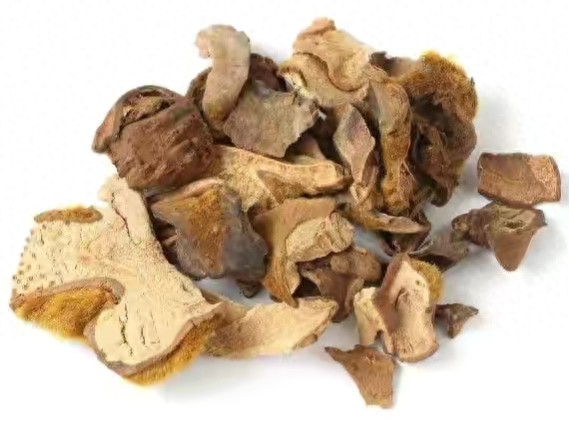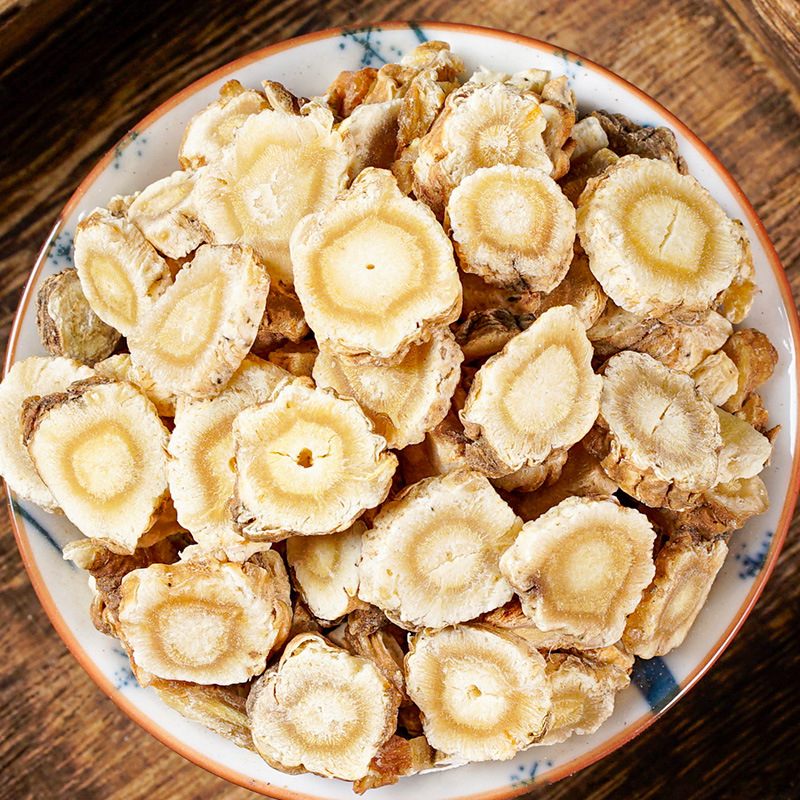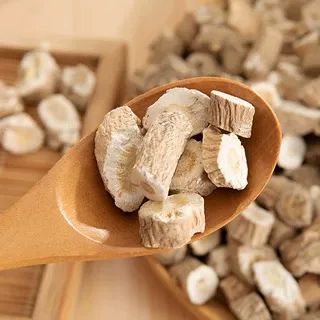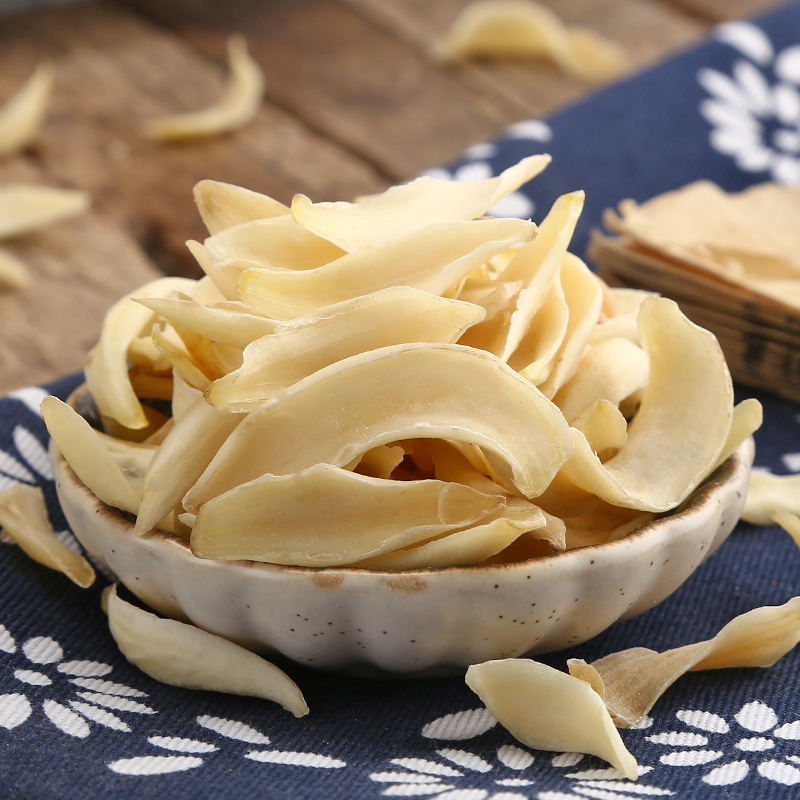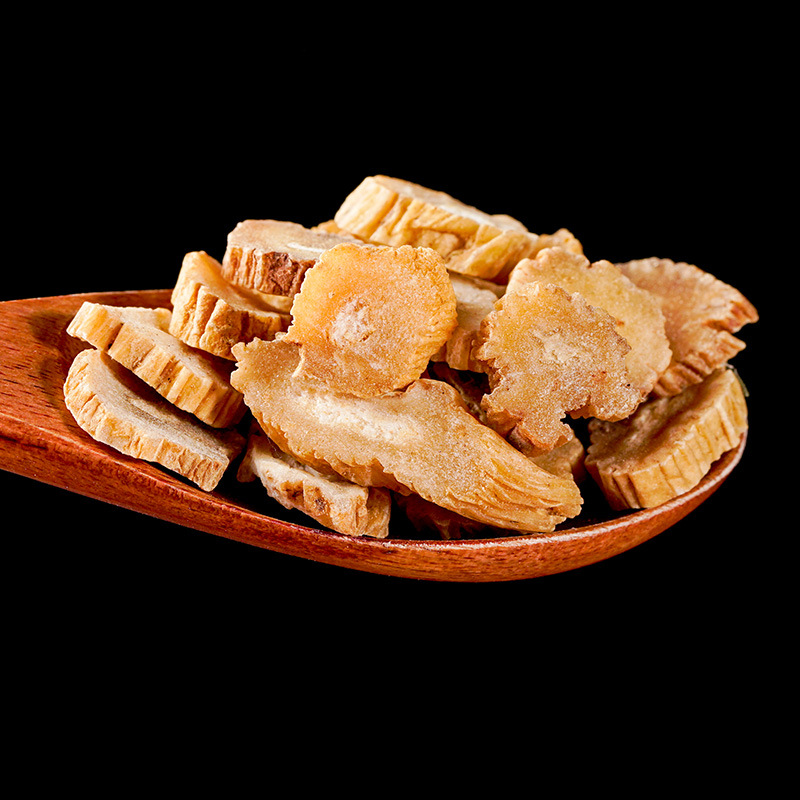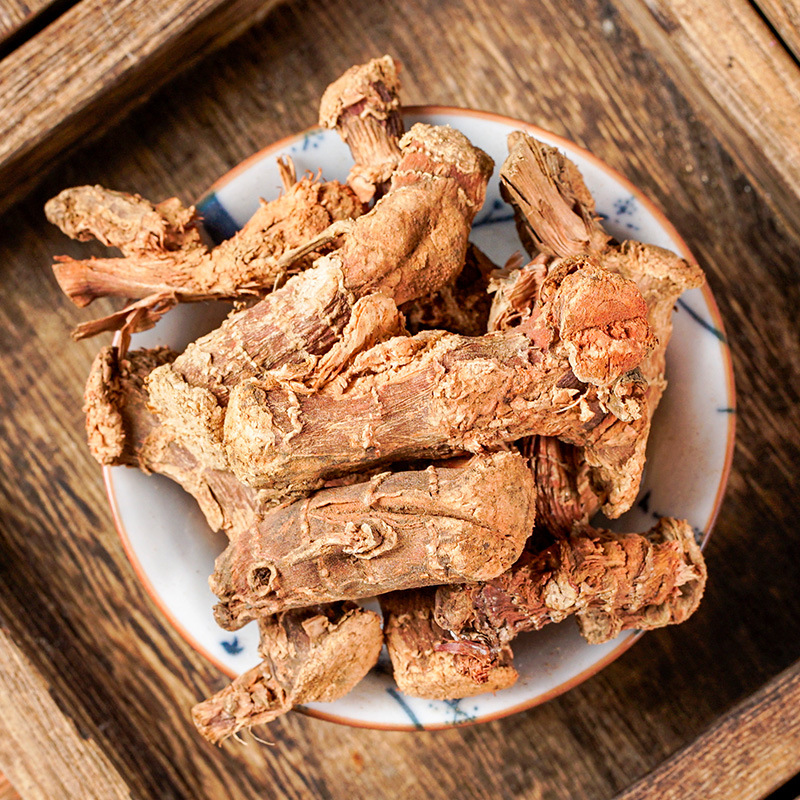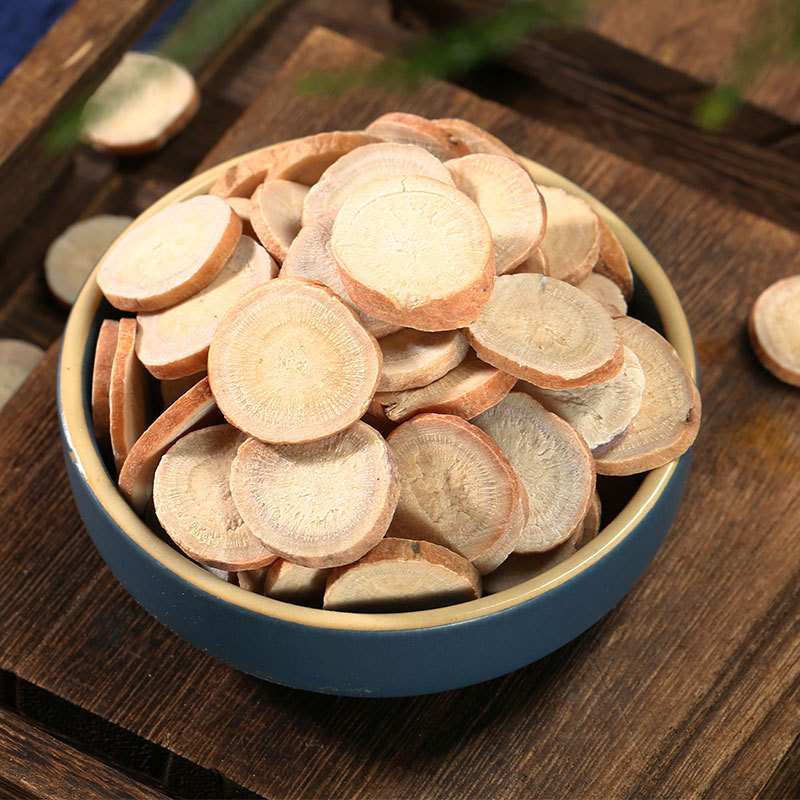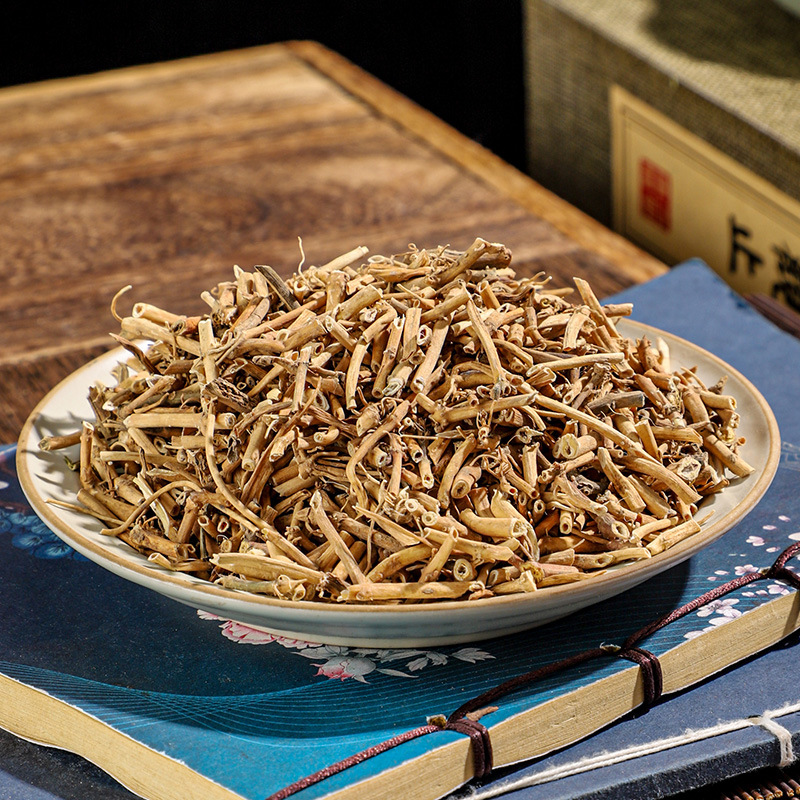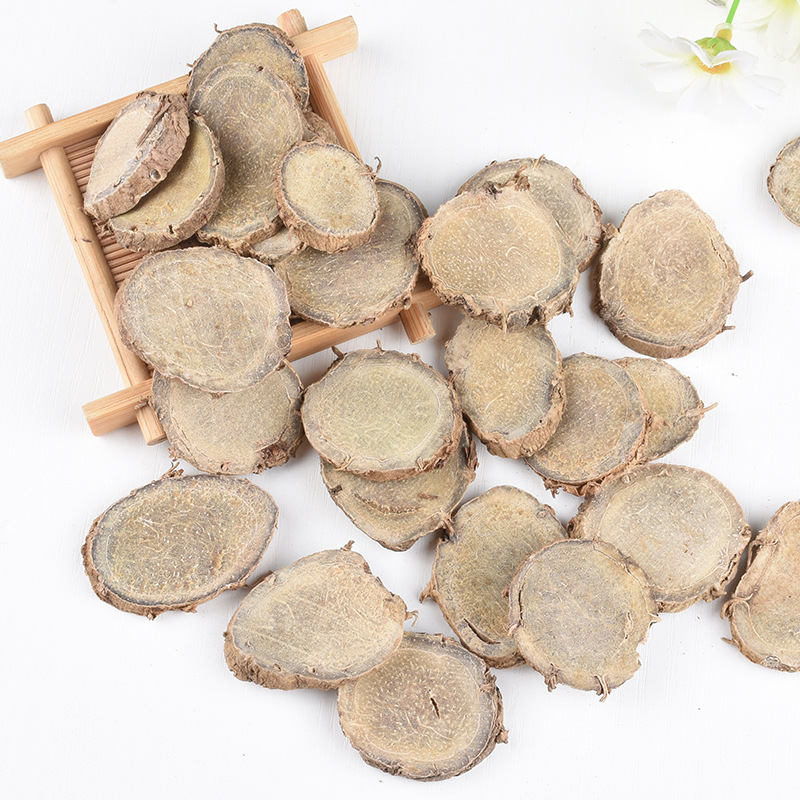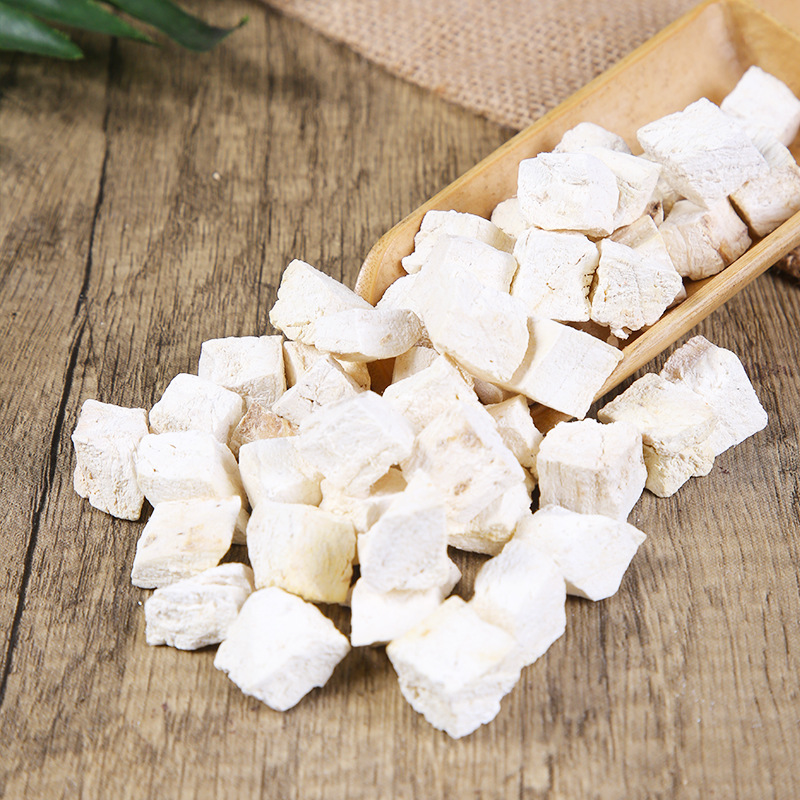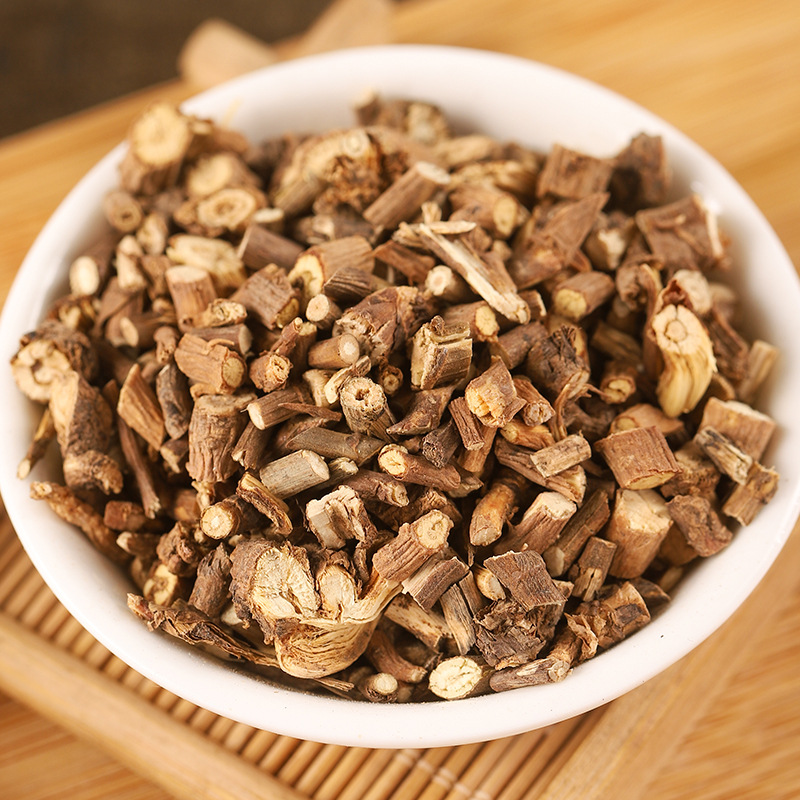
Dogbone, also known as golden-haired dogbone, is the dried rhizome of the plant Cibotium barometz from the Dicksoniaceae family. This product has yellow hairs and resembles a dog in appearance, hence its name. It is mainly produced in Fujian, Sichuan, Yunnan, Zhejiang, and other regions. It is harvested in autumn and winter, with fine roots, petioles, and golden soft hairs removed, then soaked in wine for one day. Sliced and sun-dried, it is called raw dogbone; if steamed and then sun-dried to 60-70% dryness, then sliced and sun-dried, it is called cooked dogbone.
I. Efficacy and Application
Dog spine tastes bitter and sweet, warm. It belongs to the liver and kidney meridians.
Efficacy It can tonify the liver and kidneys, strengthen the waist and knees, and dispel wind-dampness. Its characteristic is particularly effective in strengthening the spine and reinforcing the governor vessel, making it a key herb for treating kidney deficiency and wind-dampness spine pain.
Commonly used for the treatment of conditions such as rheumatic pain, soreness and weakness of the waist and knees, weakness of the lower limbs, and stiffness and pain of the spine.
Summary of Masterpieces by Renowned Authors:
"Ben Jing": "It primarily treats stiffness of the lower back and spine, joint laxity and tension, generalized bi syndrome, and knee pain due to cold-dampness. It is quite beneficial for the elderly."
Bie Lu: "Treats incontinence and irregular urination, weakness in the legs of both men and women, lower back pain, pathogenic wind, and exposure to dampness; strengthens the spine and facilitates bending and stretching."
Compendium of Materia Medica: Strengthens the liver and kidneys, fortifies the bones, treats wind deficiency.
Jade Carving Medicine Explanation Gou Ji drains liver dampness, unblocks passages and orifices, strengthens tendons and bones, treats lower back pain and knee pain, foot swelling and leg weakness, seminal emission and turbid vaginal discharge.
"Compendium of Materia Medica": "Bitter taste strengthens the kidneys, sweet taste benefits the blood, warm nature nourishes qi. It treats incontinence and lack of restraint, weak feet and lower back pain, cold-dampness and general bi syndrome. It dispels wind deficiency, strengthens the joints, and facilitates bending and stretching."
II. Compatibility and Application
1. For low back pain and spinal stiffness, inability to bend forward or backward, and weakness in the legs and knees. Gouji (Rhizoma Cibotii) can tonify the liver and kidneys, strengthen the lower back and knees, and firm the bones and tendons. It also has the ability to warm and disperse wind-dampness. Therefore, it is particularly suitable for liver and kidney deficiency accompanied by wind-cold-dampness obstruction, especially for conditions like ankylosing spondylitis. It is often combined with Duzhong (Cortex Eucommiae), Xuduan (Radix Dipsaci), and Niuxi (Radix Achyranthis Bidentatae) to tonify the liver and kidneys, strengthen the bones and tendons, and dispel wind-dampness, forming the formula known as Gouji Yin. When combined with Bixie (Rhizoma Dioscoreae Hypoglaucae) and Tusizi (Semen Cuscutae), it forms Gouji Wan, which can treat five types of low back pain and benefit the legs and knees.
Mr. Jiao Shude was most adept at treating the condition of Wang Bi and formulated many renowned prescriptions himself. Among them, in the Bushen Qiangdu Zhiwang Decoction, he heavily used Cibotium barometz to treat spinal stiffness, lumbar and spinal pain, or neck and back stiffness and pain, or lumbar and hip pain, limited mobility in both legs, preference for warmth and aversion to cold, and even the condition of Wang Fei caused by kidney deficiency and cold in the Governor Vessel.
Kidney Tonifying and Governor Vessel Strengthening Decoction for Atrophic Syndrome: Prepared Rehmannia Root 15-20g, Epimedium 9-12g, Prepared Aconite Lateral Root 10-12g, Drynaria Rhizome 15-20g, Notopterygium Rhizome or Root 12g, Pubescent Angelica Root 10g, Cinnamon Twig 15g, Red Peony Root and White Peony Root 12g each, Anemarrhena Rhizome 15g, Ground Beetle 6-9g, White Stiff Silkworm 9-12g, Saposhnikovia Root 12g, Cibotium Rhizome 20-40g, Deerhorn Glue 9g or Deerhorn Powder 10-12g, Himalayan Teasel Root 15-18g, Eucommia Bark 15g, Ephedra 3-6g, Prepared Pangolin Scales 9g, Achyranthes Root 12-15g, Coix Seed 30g, Common Clubmoss Herb 20-30g, decoct in water for oral administration.
2. Used for urinary incontinence and excessive leucorrhea in women. Cibotium barometz has the effect of warming and tonifying to secure and astringe. For treating lower back pain and excessive urination, it is often combined with Chaenomeles speciosa, Acanthopanax gracilistylus, Eucommia ulmoides, and other herbs.
If treating soreness and weakness of the waist and knees, weakness of the lower limbs, it is often combined with Eucommia bark, Achyranthes root, prepared rehmannia root, deer antler glue, and other medicines.
If treating women with deficiency and cold in the thoroughfare and conception vessels and leukorrhea, it is often combined with pilose antler and ampelopsis root.
For the treatment of frequent urination and enuresis, it is often combined with drugs such as Yizhiren, Poria, and Eucommia.
III. Usage and Dosage
Dog spine is often used in decoctions, as well as in pills and powders. The usual dosage in decoctions ranges from a few grams to over ten grams; if it serves as the main ingredient in a prescription, it can also be used in amounts exceeding several tens of grams.
When used in medicine, it is necessary to remove the hairs, and steaming with wine is preferable.
IV. Application Precautions
Dog's spine is bitter and warm in nature, possessing the properties of warming, tonifying, and securing. Therefore, it should be avoided by those with kidney deficiency and heat, as well as those experiencing symptoms such as difficult urination, scanty and astringent dark yellow urine, bitter taste in the mouth, and dry tongue.