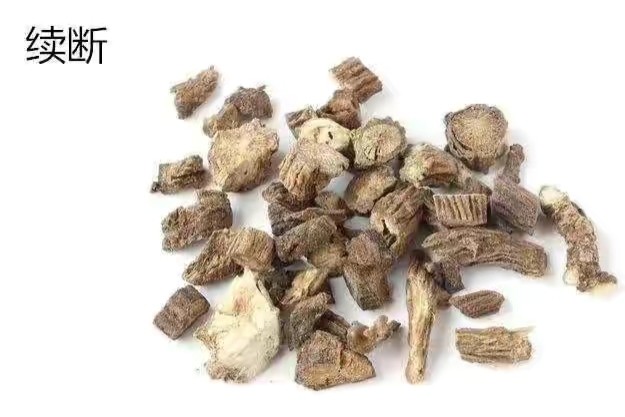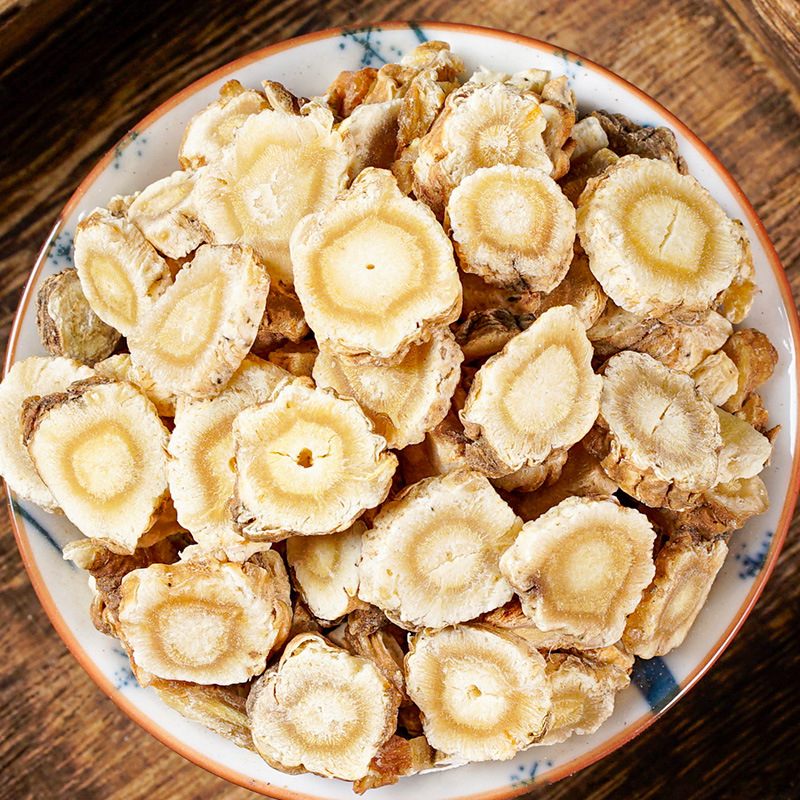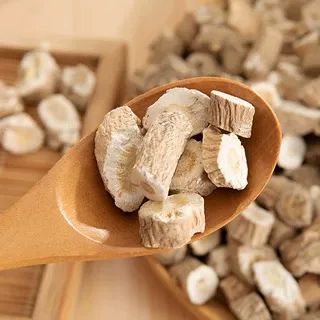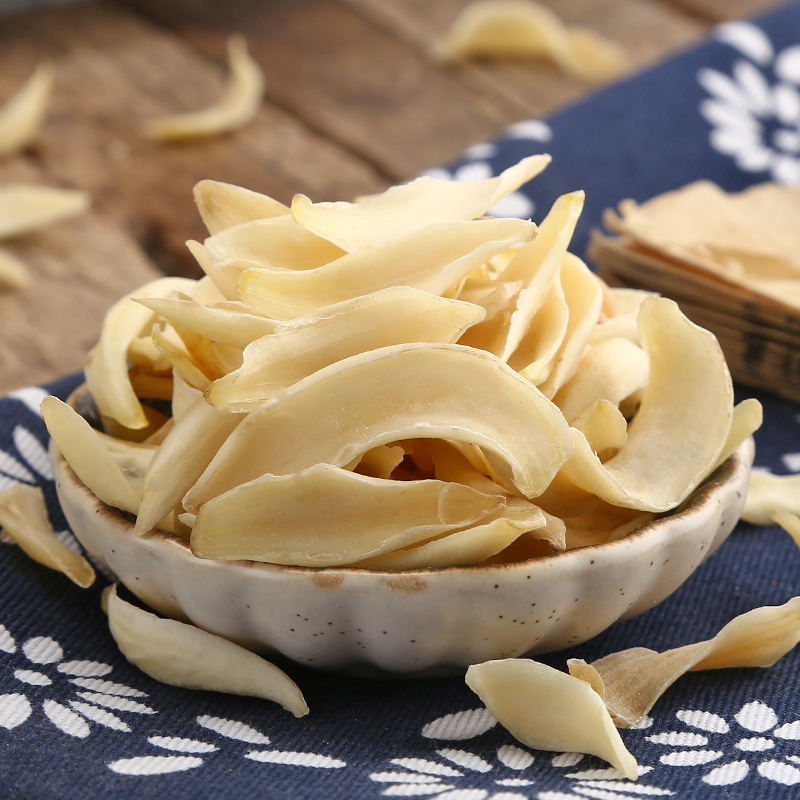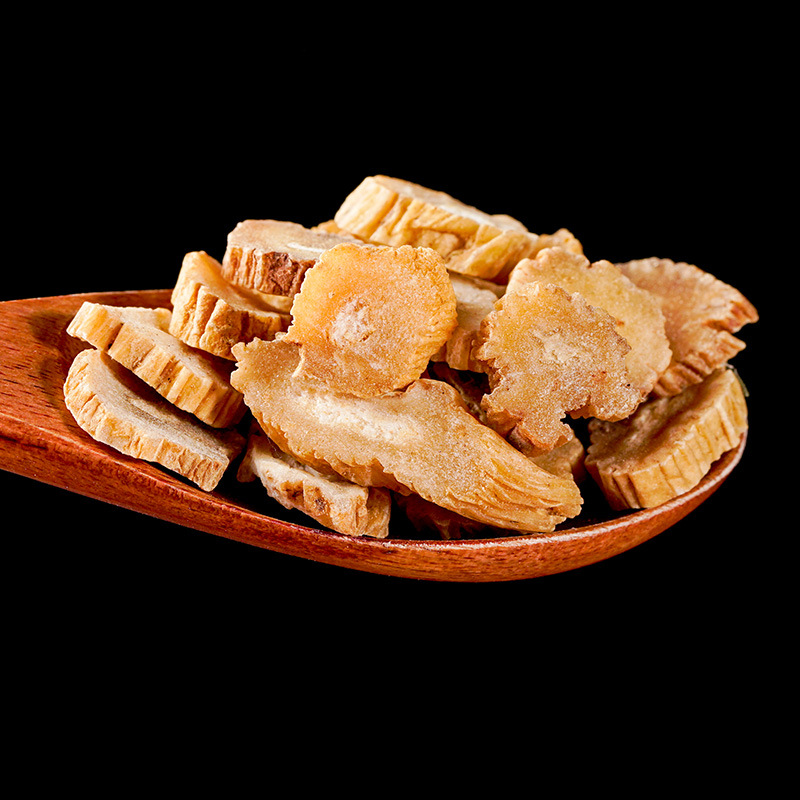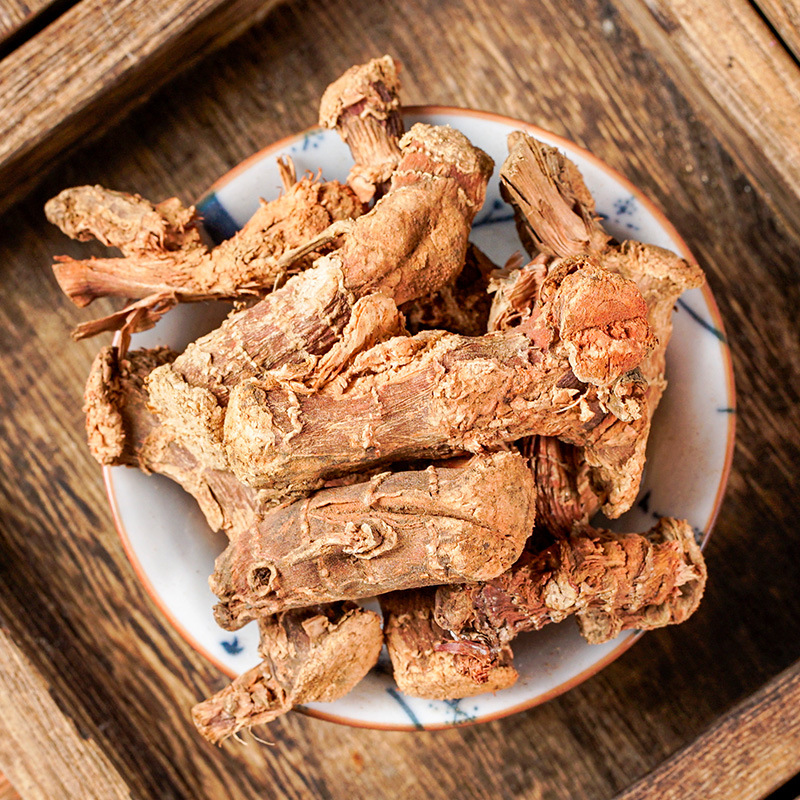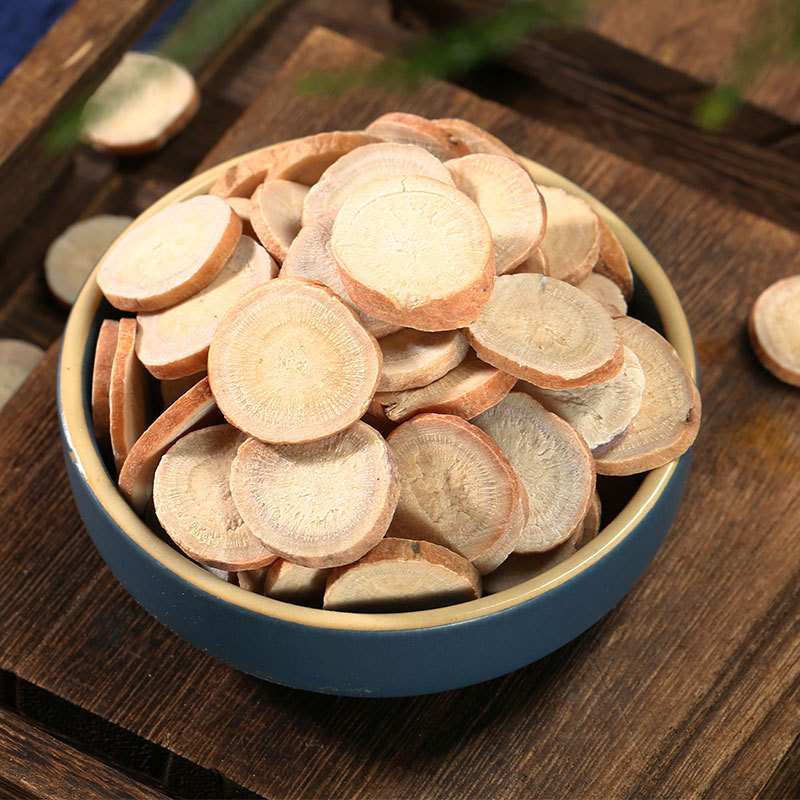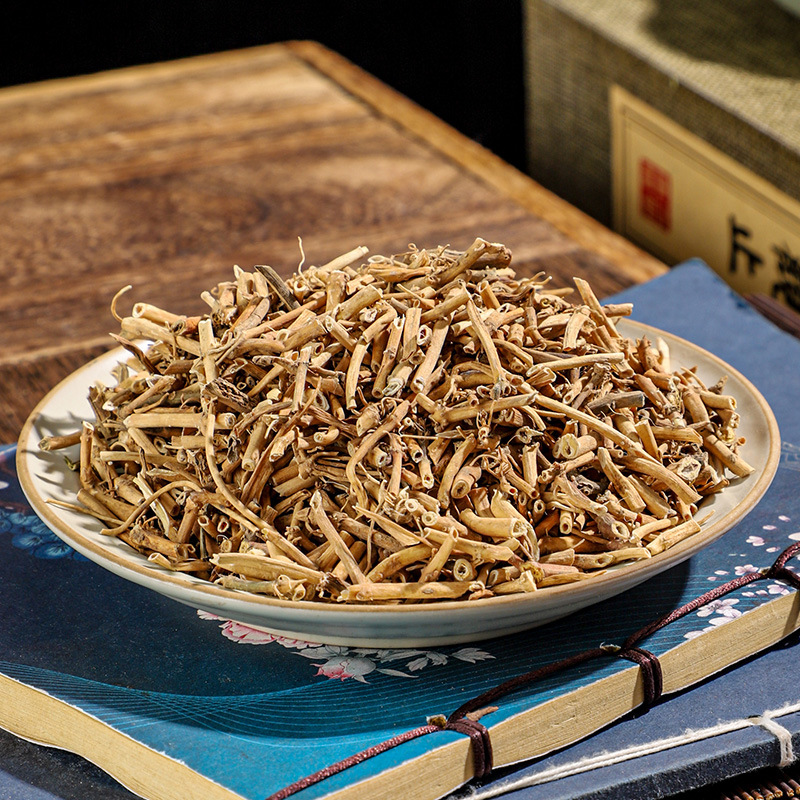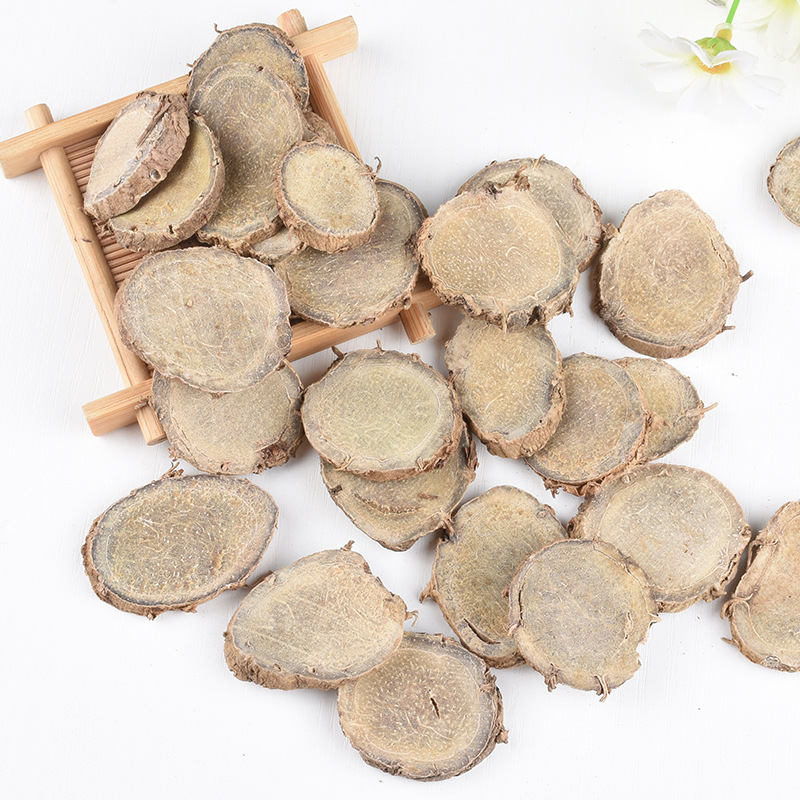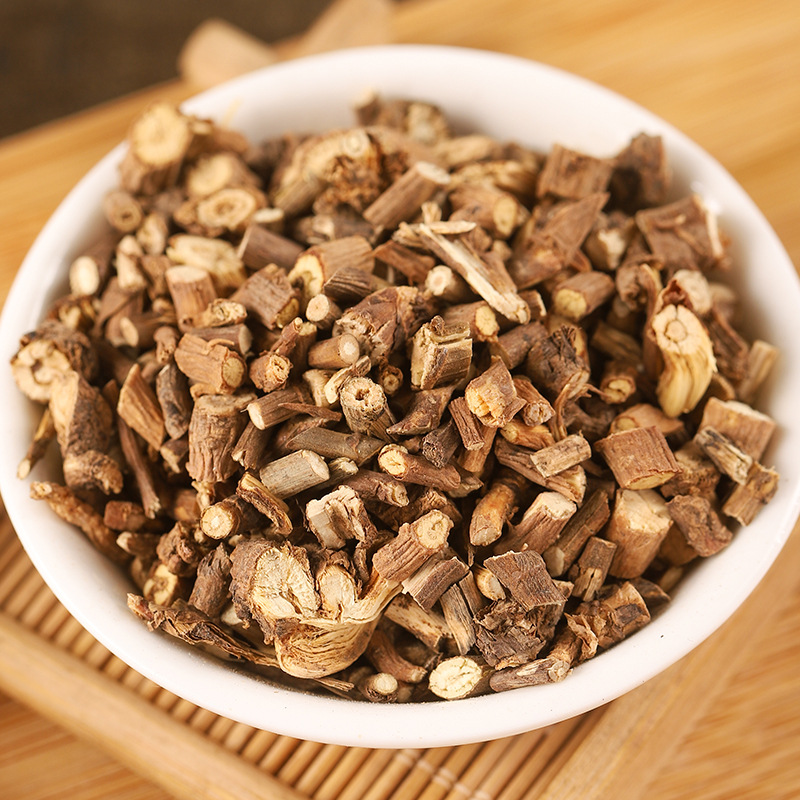
Dipsacus is the root of the herbaceous plant Dipsacus asperoides from the Dipsacaceae family. It is named for its ability to mend bones and tendons. It is mainly produced in Sichuan and Hubei, with Sichuan being the best, also known as Sichuan Dipsacus. For medicinal use, it is often used raw, stir-fried with wine, or stir-fried with salt water.
I. Efficacy and Application
Dipsacus asperoides tastes bitter, sweet, pungent, and is slightly warm.
Efficacy It can tonify the liver and kidneys, promote blood circulation, and strengthen bones and tendons. It also has the effects of stopping uterine bleeding and stabilizing pregnancy. Its characteristic is its strong ability to connect and secure bones and tendons.
Commonly used for the treatment of lumbar and back pain, weakness in the feet and knees, threatened abortion, metrorrhagia, leukorrhea, seminal emission, traumatic injuries, incised wounds, hemorrhoids and fistulas, abscesses, sores, and swellings.
Summary of Masterpieces by Renowned Authors
The Classic of the Materia Medica: "It treats cold damage, replenishes deficiencies, heals metal-inflicted wounds, sores, and ulcers, mends fractures, connects sinews and bones, addresses difficult lactation in women. Long-term use boosts qi and strength."
Bie Lu: "For women with metrorrhagia and metrostaxis, internal bleeding from incised wounds, promoting muscle growth, and for contusions with stagnant blood, lumbago, and joint laxity or tension."
"Treatise on Medicinal Properties": "It primarily treats severe injuries, eliminates various warm toxins, and can promote the flow of the meridians."
"Ben Cao Jing Shu": "It enters the foot jueyin and shaoyin meridians, serving as a crucial herb for treating childbirth, healing injuries, replenishing deficiencies, curing metal wounds, and regulating the waist and kidneys."
Jade Carving Medical Explanation: "Dipsacus promotes blood circulation to remove blood stasis and astringes new blood. It can both stop and promote bleeding in conditions such as metrorrhagia, abdominal masses, abscesses, scrofula, strangury, hemorrhoids and fistulas, traumatic injuries, and incised wounds. It possesses the ability to restore deficiency, repair damage, reconnect bones, and mend tendons."
"Compendium of Materia Medica": "Bitter and warm, it tonifies the kidneys; pungent and warm, it tonifies the liver. It can promote the flow of blood and regulate the sinews and bones. It primarily treats internal injuries and replenishes deficiencies. It warms the uterus, reduces urination, and breaks up stagnant blood. It is used to treat lower back pain, threatened miscarriage, uterine bleeding, leukorrhea, seminal emission, intestinal wind with bloody dysentery, abscesses, hemorrhoids, swelling, and toxins. It also treats metal-inflicted wounds, fractures, and falls, relieving pain and promoting tissue regeneration. It is considered a superior remedy in gynecology and surgery."
II. Compatibility and Application
1. Used for conditions such as low back pain and weak feet, impotence and seminal emission, and metrorrhagia and metrostaxis. Dipsacus not only tonifies the liver and kidneys but also promotes blood circulation, with the characteristic of tonifying without causing stagnation. For treating low back pain and weak feet, it is often combined with Eucommia bark, Achyranthes root, and Dioscorea hypoglauca, as in the Dipsacus Pill.
If treating women's metrorrhagia and metrostaxis, it is often combined with astragalus, prepared rehmannia root, and halloysite, also known as the Dipsacus pill. For prolonged and unceasing metrorrhagia and metrostaxis, it is often combined with carbonized arborvitae leaf, Chinese angelica, and mugwort leaf, which are herbs that warm the meridians, stop bleeding, and nourish blood.
For the treatment of impotence, nocturnal emission, and enuresis, it is often combined with deer antler, Cistanche deserticola, and dodder seeds, which are herbs that tonify yang and promote erection, as seen in the Deer Antler and Dipsacus Pill. Alternatively, it can be paired with Polygala tenuifolia, Cnidium monnieri, and Chinese yam, which tonify yang and nourish yin, as well as harmonize the heart and kidneys, as in the Polygala Pill.
For treating conditions of uncontrollable diarrhea, it is often combined with dragon bone and poria, known as the Locking Essence Pill.
2. For fetal leakage with bleeding and restless fetal movement. Dipsacus has the effect of calming the fetus and stopping leakage. For habitual abortion and restless fetal movement, it is often combined with Taxillus chinensis, Cuscuta chinensis, and donkey-hide gelatin, known as Shoutai Pill.
Zhang Xichun said, "Dipsacus is a kidney-tonifying herb. The broken sections of its nodes are all connected by tendons and bones, which greatly conveys the meaning of connection and maintenance."
3. For injuries from falls, wounds, ulcers, and abscesses. Dipsacus asper promotes blood circulation, strengthens bones and tendons, and has the effects of reducing swelling, relieving pain, and promoting tissue regeneration. Therefore, it is commonly used in surgery and traumatology. For treating injuries from falls, fractures, and wounds, it is often combined with bone-setting and tendon-strengthening herbs such as Drynaria fortunei, pyrite, ground beetle, and dragon's blood.
For treating liver and kidney deficiency, wind-cold-dampness arthralgia syndrome, it is often combined with Astragalus, Ginseng, Eucommia, Asarum, and Pubescent Angelica Root, which is known as Sanbi Decoction.
For treating lumbar disc herniation and lumbar sprain, the Tao Hong Si Wu Tang is often used as the base formula, combined with Xu Duan, Tu Bie Chong, Du Zhong Tan, Mo Yao, and other herbs. New conditions are often treated by promoting circulation, while chronic conditions are often treated by tonifying. Along with limiting movement and resting, good results can be achieved.
"Compendium of Materia Medica": "For the treatment of mastitis, take eight liang of Dipsacus asperoides and four liang of dandelion, grind them into powder, take three qian each morning and evening, and take with warm water."
III. Usage and Dosage
Dipsacus is often used in decoctions and is also suitable for making pills and powders. The common dosage in decoctions ranges from a few grams to several tens of grams, while an appropriate amount is used in pills and powders.
Generally, for treating metrorrhagia and metrostaxis, it should be used after stir-frying; if used to promote blood circulation, it should be stir-fried with wine; for tonifying the kidneys, it should be stir-fried with salt water.
IV. Application Precautions
Although Dipsacus has the effect of stabilizing pregnancy, it should be used with caution by pregnant women.
"Depei Bencao": Do not use at the onset of dysentery; contraindicated for those with anger and depression.