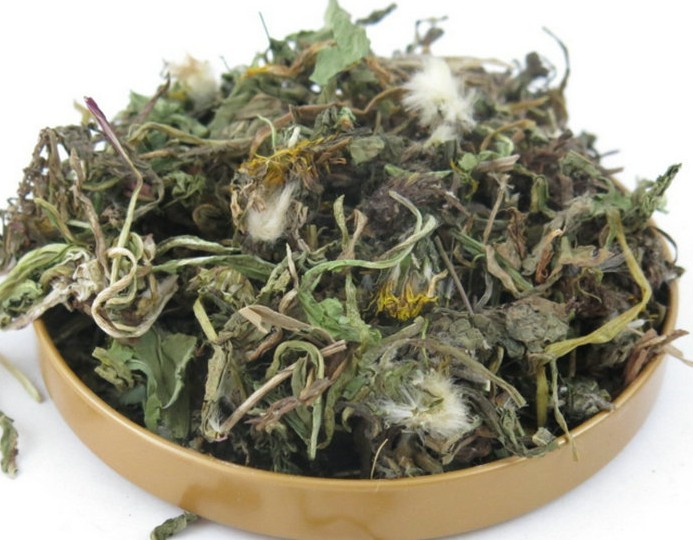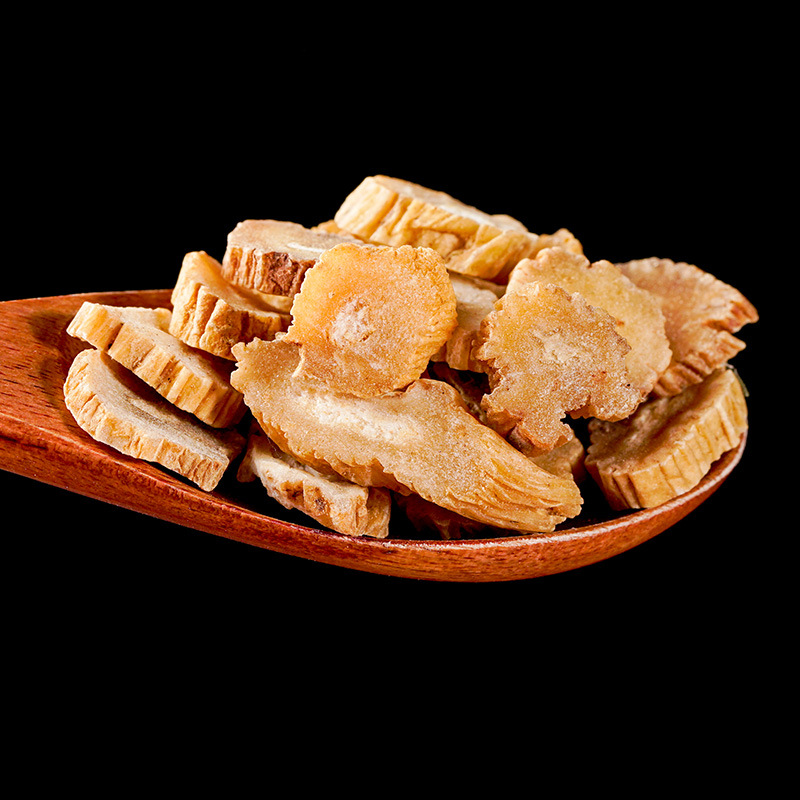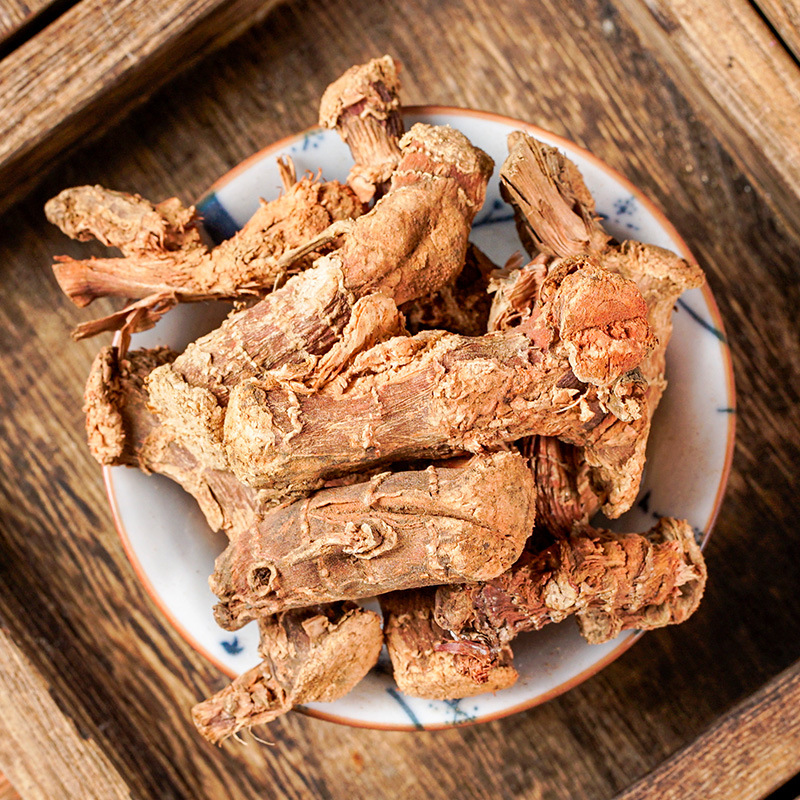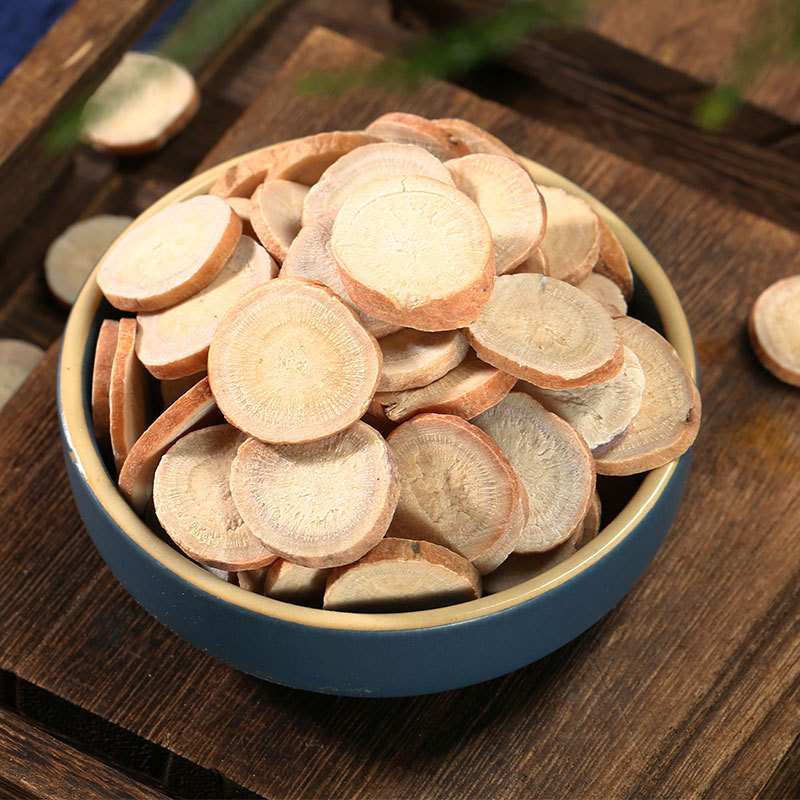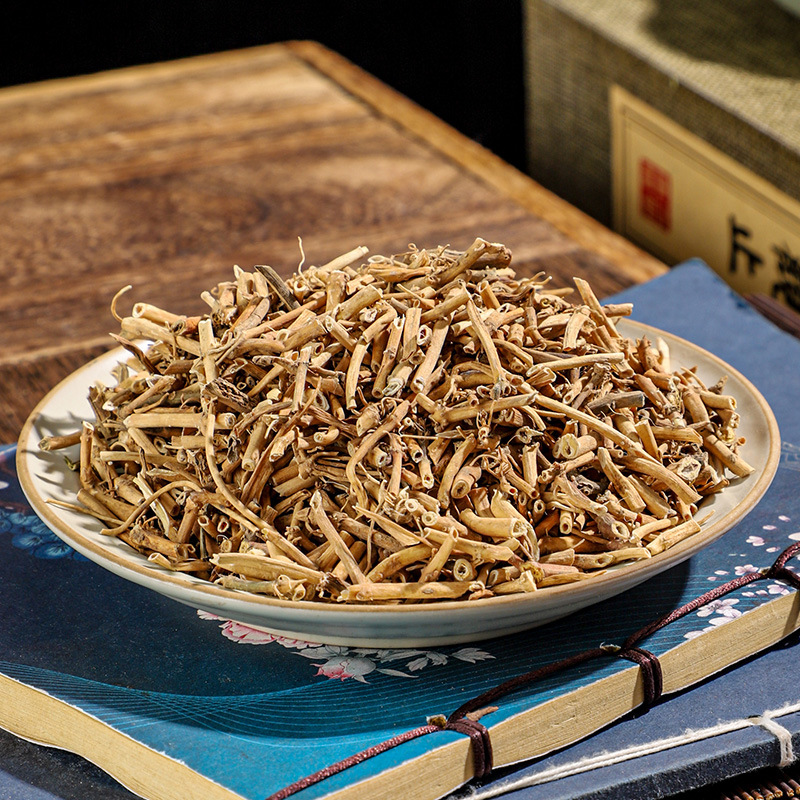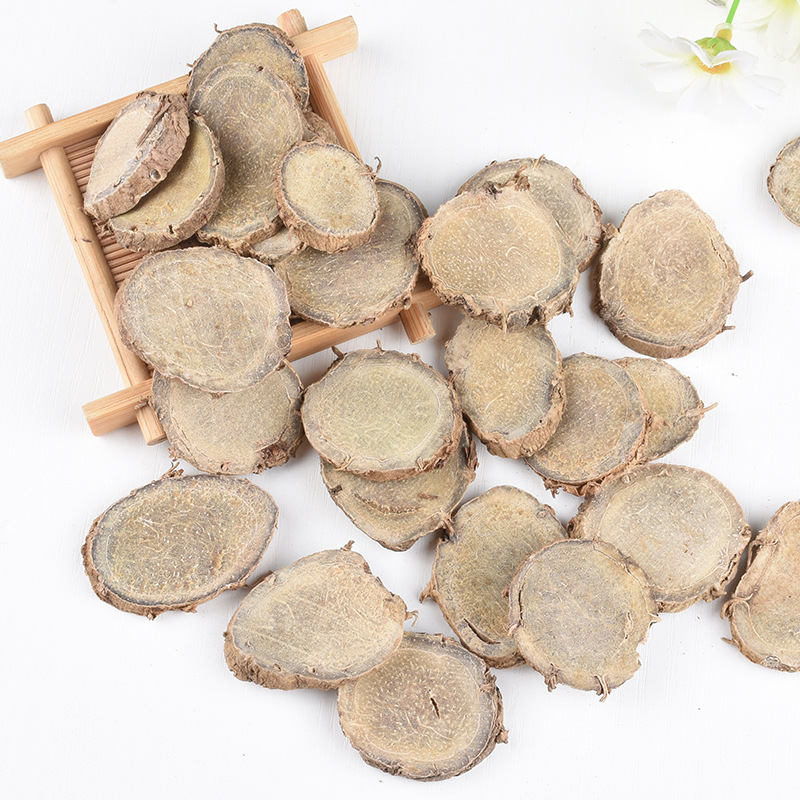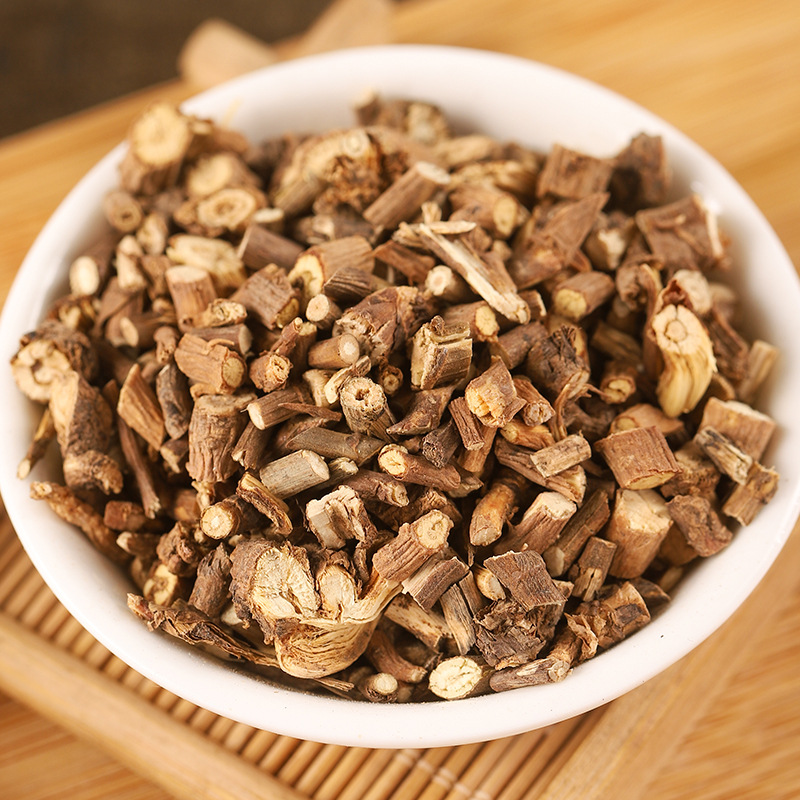
Dandelion is also known as yellow-flowered ground nail, and locally called mother-in-law nail. It is the whole plant with roots of the dandelion from the Asteraceae family. Harvested in early spring, it can be used as a wild vegetable for consumption, known for clearing heat and stimulating appetite, making it a delicacy.
Dandelion was not recorded in ancient medical texts until after the Tang Dynasty's "Newly Revised Materia Medica," when it began to be used as a traditional Chinese medicine. In ancient times, dandelion was called "Diding" because its main root is thick and long, resembling a nail stuck in the ground, hence the name. Because it blooms with yellow flowers, it is also known as "Yellow Flower Diding." It is produced all over the country and harvested when the leaves are lush in summer and autumn. It is often used fresh or dried for medicinal purposes.
I. Efficacy and Application
Dandelion tastes bitter and sweet, and is cold in nature. It belongs to the liver and stomach meridians.
Efficacy: Clears heat and detoxifies, reduces swelling and dissipates nodules, promotes diuresis and relieves strangury. Its characteristics include excellent heat-clearing and detoxifying effects, convenient harvesting and consumption, low cost, making it particularly suitable for dietary therapy and folk promotion. It is known as the essential herb for treating mastitis.
It is commonly used for the treatment of conditions such as boils and sores, breast abscesses, scrofula, red eyes, sore throat, lung abscesses, intestinal abscesses, damp-heat jaundice, and painful urinary dribbling.
Summary of Masterpieces by Renowned Authors
Newly Revised Materia Medica: "It is mainly used for treating women's breast abscesses and swelling. Boil it in water for drinking and apply it topically."
Ben Cao Yan Yi Bu Yi: "Resolves food poisoning, disperses stagnant qi, transforms heat toxins, and eliminates malignant swellings, nodules, and boils."
"Compendium of Materia Medica of Southern Yunnan": "Apply to various sores, swellings, and toxins, scabies, tinea, and skin ulcers; dispel wind, eliminate toxins from various sores, disperse scrofula and tubercles; stop bleeding in urine, treat five types of strangury and urinary retention, and benefit the bladder."
Ben Cao Bei Yao: "It transforms heat toxins, resolves food toxins, reduces swelling and nodules, and is specifically used to treat breast abscesses. It also treats toxic sores and is an excellent remedy for promoting urination."
II. Compatibility and Application
1. Used for heat-toxin abscesses, sores, ulcers, and various internal abscess syndromes. Dandelion can clear heat and resolve toxins, disperse abscesses and dissipate nodules. It is often used in combination with Viola yedoensis, collectively known as the "Two Dings."
For the treatment of carbuncles, swellings, boils, and toxins, it is often combined with honeysuckle flower, Chinese violet, and wild chrysanthemum, known as the Five-Ingredient Detoxification Decoction.
If treating lung abscess with symptoms such as coughing up purulent sputum and chest pain, it is often combined with herbs like Houttuynia cordata, reed rhizome, winter melon seed, and Patrinia scabiosifolia.
For treating intestinal abscess with exuberant heat toxin, it is often combined with red peony root, tree peony bark, rhubarb, and other herbs.
For treating sore throat, it is often combined with herbs such as Isatis root and Scrophularia root.
If treating red, swollen, and painful eyes, it is often combined with chrysanthemum, gentian, and scutellaria.
Dandelion is particularly effective in treating breast abscesses. It can be used alone, either taken internally as a fresh herb or applied externally after being mashed. It can also be combined with other herbs for application.
Zhu Liangchun treats acute mastitis by commonly using a base formula of 30–60 grams of dandelion, 10–15 grams of dried tangerine peel, and 5–10 grams of raw licorice root. For redness, swelling, and burning pain, add rhaponticum root and trichosanthes root. For poor milk excretion, add cowherb seed and tribulus terrestris. For severe local hard nodules, add Chinese honeylocust spine. All are taken with yellow wine as a guide, achieving significant therapeutic effects.
Ben Cao Qiu Zhen: "Dandelion enters the Yangming Stomach and Jueyin Liver meridians, cools the blood, and clears heat. Therefore, it is of primary importance for breast abscesses and breast cancer. This is because the nipple belongs to the Liver, and the breast belongs to the Stomach. Breast abscesses and breast cancer often arise from excessive heat and blood stagnation. Using this herb allows it to directly enter these two meridians. For external application, it disperses swelling and achieves efficacy. For internal resolution, it must be used in combination with other herbs such as Prunella vulgaris, Fritillaria, Forsythia, and Solanum lyratum."
Compendium of Materia Medica: "Dandelion has a cool nature and is used to treat all kinds of sores, carbuncles, swellings, and heat-toxin syndromes. It can be taken orally or applied externally, with notable efficacy. It is particularly effective for treating breast abscesses with redness, swelling, and hard lumps. Fresh dandelion can be mashed to extract its juice and taken warm, while dried dandelion can be decocted and consumed. It can be used alone as a remedy, and it is an indispensable ingredient in decoction formulas."
2. For damp-heat jaundice and dribbling and painful urination. Dandelion can clear heat, promote diuresis, and detoxify. For treating damp-heat jaundice, it is often combined with herbs such as Yin Chen (Artemisia capillaris) and Zhi Zi (Gardenia jasminoides).
If treating heat strangury, it is often combined with herbs such as Lysimachia christinae and Imperata cylindrica.
In recent years, dandelion has also been used as a heat-clearing and fire-purging medicine and a diaphoretic, often applied for wind-heat colds and warm febrile diseases with good efficacy. Today, there are dandelion granule patent medicines available, making purchase and application very convenient.
When using dandelion in large doses (generally over 30 grams), especially when consuming fresh dandelion in large quantities, it also has a mild laxative effect, making it particularly suitable for middle-aged and elderly individuals who typically experience liver and stomach fire excess, bitter taste in the mouth, restlessness, and dry stools. It is truly an excellent example of a food and medicine sharing the same source.
3. Dandelion is effective in clearing stomach heat and can treat epigastric pain. Zhang Cigong, when treating gastric ulcers with symptoms corresponding to the Minor Jianzhong Decoction, often adds 30 grams of dandelion to the prescription, resulting in better therapeutic efficacy.
Zhu Liangchun said: "The analgesic effect of dandelion lies not only in its ability to clear the stomach but also in its ability to disperse stasis. It is most suitable for epigastric pain caused by stasis and heat. For the pain of gastric ulcers, when combined with stomach-nourishing herbs, it can achieve the effects of nourishing the stomach, dispersing stasis, relieving pain, and healing ulcers. If its roots are selected, dried, ground into powder, and taken orally, the effect is even better."
4. In addition to its effect of clearing liver fire, dandelion can also relieve liver stagnation and promote bile flow. Dandelion blooms very early, obtaining the initial spring Shaoyang qi, thus possessing a nature of growth and development. It can be applied according to the syndrome for various hepatitis diseases presenting with liver channel stagnation heat. Dandelion can also be used for acute attacks of cholecystitis, with excellent effects in promoting bile flow and reducing inflammation.
Dandelion can also treat damp-heat dysentery and has the effect of detoxifying and expelling pus. In cases where damp-heat and pathogenic toxins obstruct together, leading to dysentery with red and white pus-like stools and tenesmus, adding dandelion to the formula for clearing the intestines and treating dysentery can promptly curb the progression of the disease and shorten the course of treatment.
Zhu Liangchun said, "For liver cold with stagnation, cinnamon twig should be used; for liver heat with stagnation, dandelion should be used. This must not be mistaken in clinical practice."
III. Usage and Dosage
Dandelion can be used fresh or dried. The usual dosage in decoctions is from over ten grams to several tens of grams; double the amount for fresh use. Apply an appropriate amount externally.
Wang Ang said: "The leaves resemble lettuce, and the flowers are like single-petal chrysanthemums. They bloom throughout the four seasons, and after flowering, they produce flying fluff. When the stem is broken, white sap flows out."
Zheng Fangsheng said, "Pound it to extract the juice and take it with wine to treat dysphagia with miraculous effect."
IV. Application Notes
Large doses of dandelion have a laxative effect, so it is contraindicated for those with constitutional yang deficiency or weak spleen and stomach.