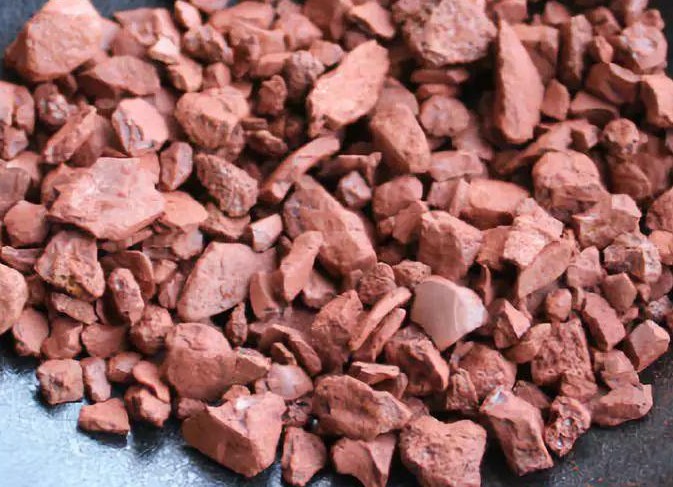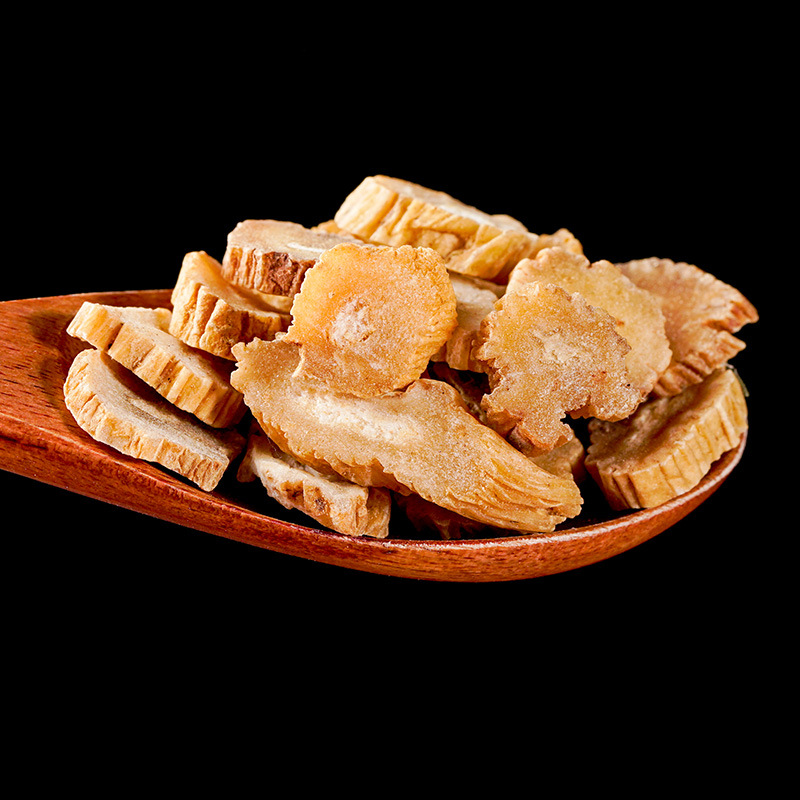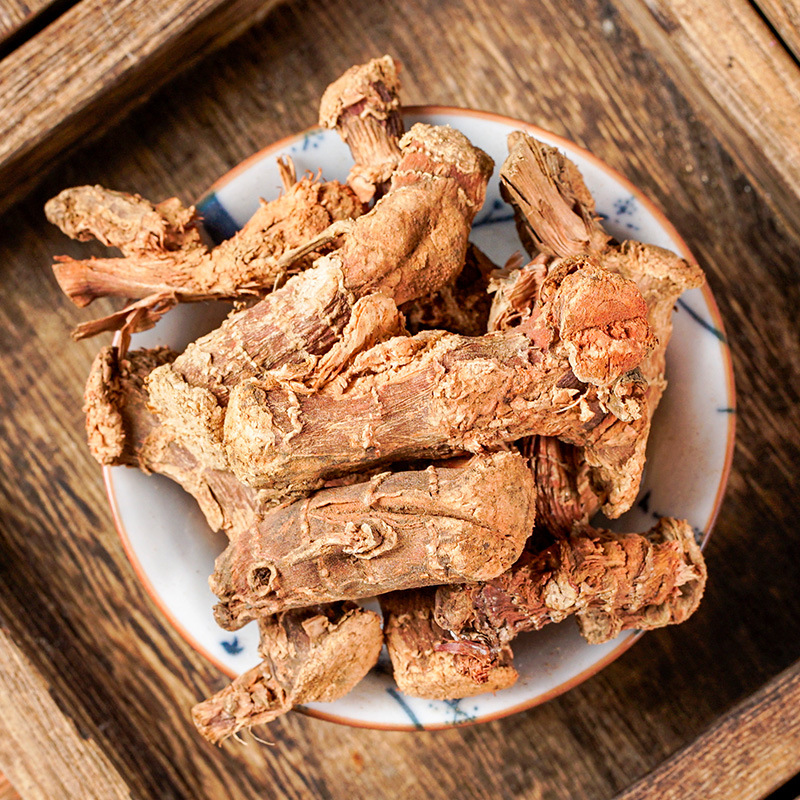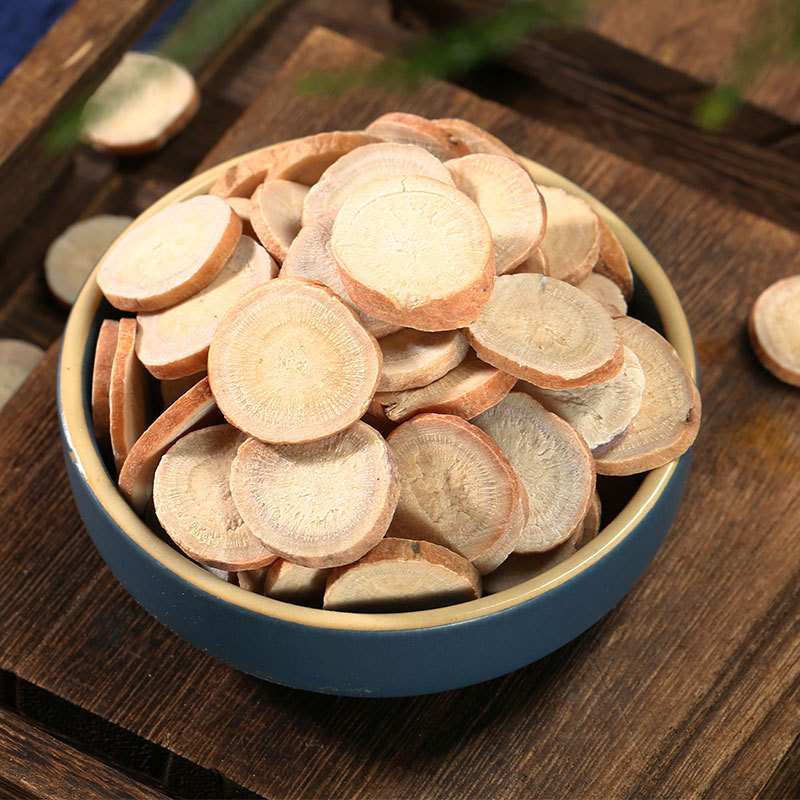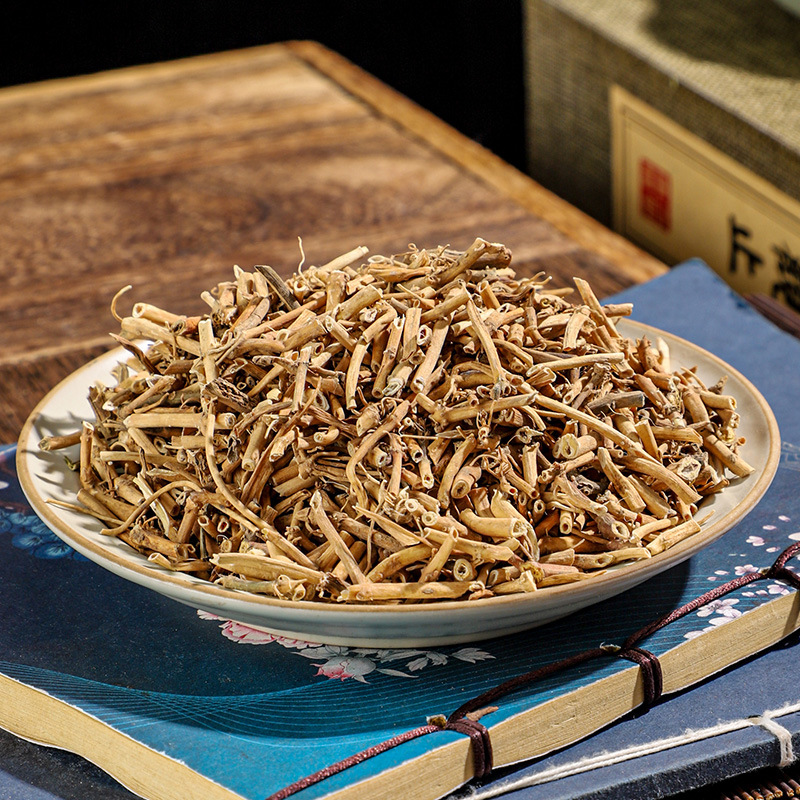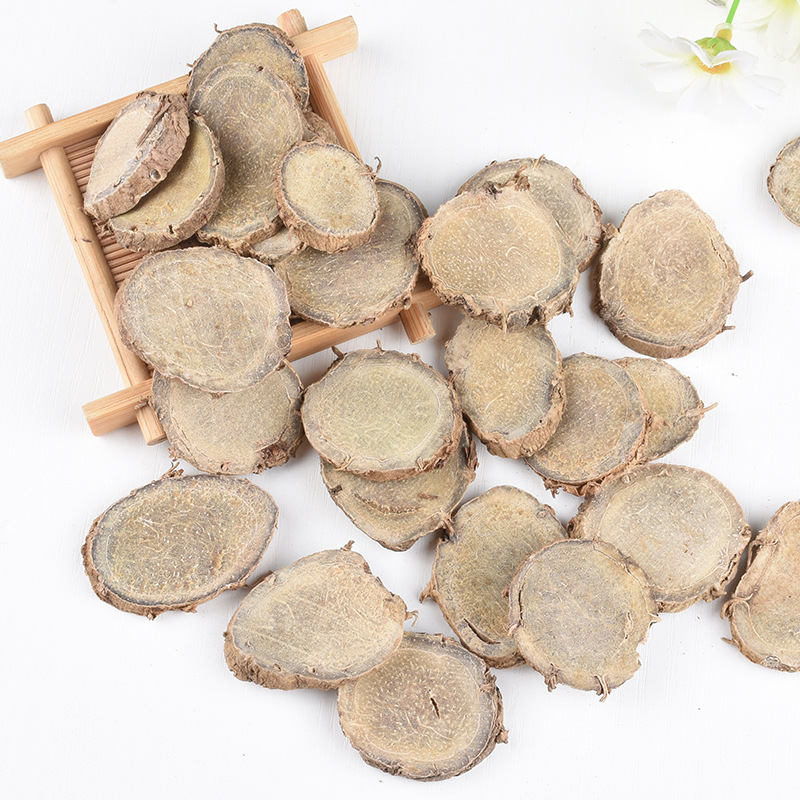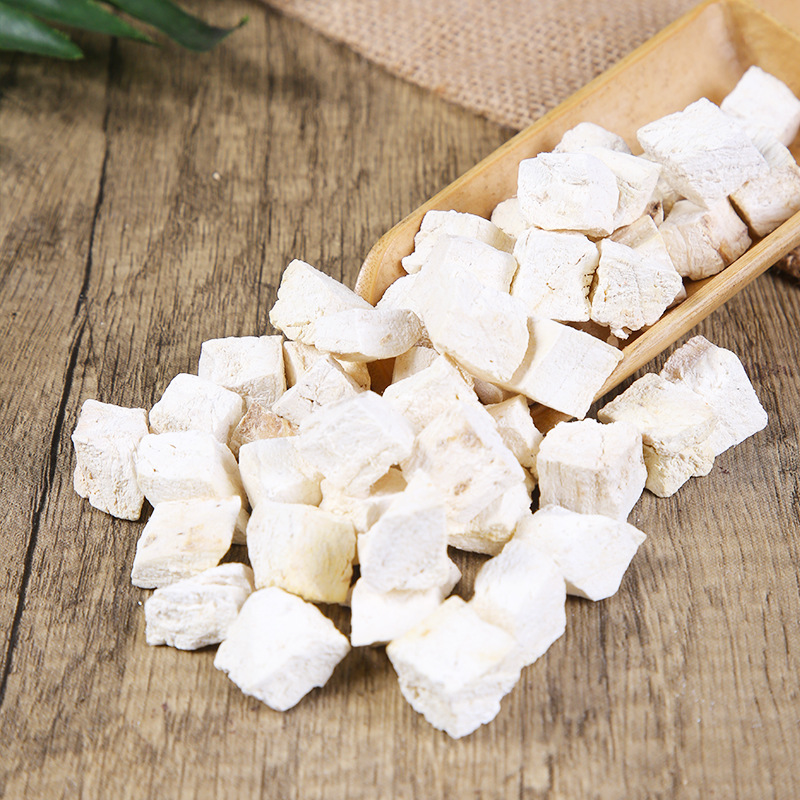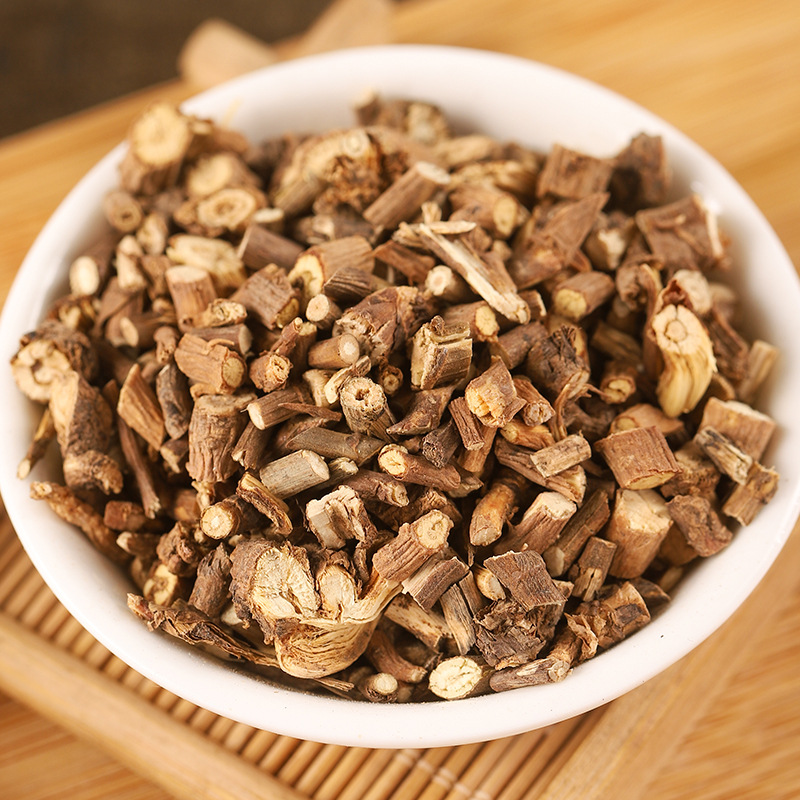
Haematitum, also known as ochre, is an ore of the oxide hematite, primarily composed of ferric oxide. The term "Dai" in its name refers to the ancient production area of Daijun, "Zhe" denotes its dark red color, and "Shi" indicates it is a mineral-based medicine. Currently, it is found in various deposits and rocks in Shanxi, Hebei, Henan, Shandong, and other regions. For medicinal use, it is often crushed raw or processed by quenching with vinegar, then pulverized and dried.
I. Efficacy and Application
Haematitum tastes bitter and is cold in nature. It acts on the liver and heart meridians.
Efficacy It can calm the liver and suppress yang, lower adverse qi, and stop bleeding. Its characteristic is heavy and descending, especially good at calming the liver and lowering adverse qi to stop bleeding. It is an essential medicine for treating excessive heat in the liver meridian and adverse qi causing vomiting and bleeding.
Commonly used for the treatment of conditions such as headache, dizziness, palpitations, mania, epilepsy, vomiting, belching, hiccups, dysphagia, cough, asthma, hematemesis, epistaxis, metrorrhagia, hematochezia, and hematuria.
Summary of Famous Works by Renowned Authors:
"Ben Jing": "It governs ghostly infestations, pathogenic wind, gu toxins, kills essence entities and evil ghosts, abdominal toxic pathogenic qi, and red and leaking discharge in women."
Bie Lu: "Treats various diseases of leucorrhea, difficult childbirth, retained placenta, miscarriage, and nourishes blood and qi."
Changsha Materia Medica: "The heavy and sinking nature of hematite drives turbidity downward and suppresses rebellious qi in the lung and stomach, relieves hiccups and belching while dispelling depression and irritability, stops regurgitation and vomiting, treats palpitations and asthma, and also addresses conditions such as hematemesis, epistaxis, uterine bleeding, hemorrhoids, fistulas, and diarrhea."
Ben Cao Bei Yao: Nourishes blood and qi, calms blood heat, enters the liver and pericardium, specifically treats blood-related disorders of these two meridians, including vomiting blood, nosebleeds, uterine bleeding, leukorrhea, fetal movement, difficult labor, and infantile chronic convulsions. Promotes tissue regeneration in incised wounds.
"Medical Records of Integrating Chinese and Western Medicine": "Cinnabar is red in color and slightly cool in nature. It can generate blood and also cool blood, while its substance is heavy and sinking. It is also excellent at calming rebellious qi, reducing phlegm and saliva, stopping vomiting, and relieving dry constipation. When used appropriately, it can achieve remarkable effects."
II. Compatibility and Application
1. Used for headache, dizziness, and other symptoms caused by liver yang hyperactivity. Hematite is bitter and cold in nature, heavy in quality, and has the function of calming the liver and suppressing yang, as well as clearing liver fire. For treating various symptoms of liver yang hyperactivity, it is often combined with Achyranthes bidentata, raw dragon bone, raw oyster shell, white peony root, etc., as in the Zhengan Xifeng Decoction.
Among all physicians, Zhang Xichun was particularly adept at using hematite and made unique innovations in its efficacy. His work "Records of Integrating Chinese and Western Medicine" contains a large number of self-designed prescriptions that utilize hematite, serving as a valuable guide for practitioners. Examples include the Liver-Sedating and Wind-Extinguishing Decoction for stroke syndrome; the Sedating Counterflow Decoction for upward rebellion of lung and stomach qi; the Hematite and Mirabilite Stagnation-Attacking Decoction for food stagnation with dry stool; the Ginseng and Hematite Qi-Nourishing Decoction for dysphagia with immediate regurgitation; the Soul-Calming Decoction for palpitations and insomnia; the Sedating and Astringing Decoction for spleen deficiency with fullness; the Sweet Spring Decoction for consumptive cough; the Ginseng and Hematite Qi-Sedating Decoction for kidney deficiency with panting and rebellion; the Dragon and Oyster Phlegm-Regulating Decoction for phlegm rebellion and restlessness; the Cold-Descending Decoction, Warm-Descending Decoction, Clear-Descending Decoction, Protective Origin Cold-Descending Decoction, and Protective Origin Clear-Descending Decoction for vomiting blood and nosebleeds; the Phlegm-Purging Decoction for manic psychosis; the Modified Magnetite and Cinnabar Pill for epilepsy; the Wind-Sedating Decoction for infantile convulsions; the Emergency Yang-Restoring Decoction for critical cholera; the Chest-Purging Decoction for cold-warm chest bind; the Sedating Counterflow Qi-Regulating Decoction for yangming fu-organ excess with vomiting; the Great Harmonizing Decoction for difficult labor; and the Secret Red Elixir for prolonged and refractory vomiting blood and nosebleeds. These prescriptions demonstrate the comprehensive and masterful application of hematite's functions.
2. Used for belching, hiccups, vomiting, and asthma. Hematite is heavy and sinking, with the function of suppressing adverse qi. For treating belching, hiccups, and vomiting, it is often combined with Inula japonica, Pinellia ternata, and ginger, as in the Xuanfu Daizhe Decoction.
Shang Han Lun: "If after the sweating method, or the vomiting method, or the purgative method is applied to treat febrile disease, the patient still feels stuffiness and hardness below the heart, and belching does not cease, Xuanfu Daizhe Decoction should be prescribed."
"Tangye Bencao": "Cinnabar enters the Hand Shaoyin and Foot Jueyin meridians. When there is deficiency, qi tends to float, and heavy substances are used to calm it. The heaviness of cinnabar calms deficiency and counterflow, which is why Zhang Zhongjing used it to treat epigastric fullness and persistent belching after vomiting and diarrhea in cases of cold damage, with Xuanfu Daizhe Decoction as the main prescription."
Wang Ang said: "Zhang Zhongjing used the Xuanfu Daizhe Decoction for its heavy nature to suppress rebellion and its red color to nourish yin blood. Nowadays, it is used to treat diaphragmatic obstruction with remarkable efficacy."
3. When combined with ginseng, it is used to guide qi back to its source. For example, in treating wheezing and breathlessness caused by deficiency of both the lung and kidney, it is often combined with Codonopsis pilosula and Cornus officinalis, which tonify the lung and guide qi downward, as seen in the formula Ginseng and Hematite Decoction for Suppressing Qi. In this combination, hematite and ginseng work together, embodying profound principles.
Zhang Xichun said, "Ginseng can rescue the collapse of the qi aspect. However, for those whose qi is about to ascend and collapse, using ginseng alone may have the drawback of assisting the ascent of qi. It must be used together with hematite to guide the qi back to its origin, and further guide the nourishing and beneficial power of ginseng downward, reaching all the way to the Yongquan point."
In Zhang Xichun's works, there is a recorded medical case:
The daughter-in-law of a friend, after overexertion and emotional distress, suddenly experienced severe and exceptionally rapid breathing. Initially, I treated her with tonifying and astringent herbs to consolidate her vital energy, but she felt a sense of obstruction in her chest and could not tolerate them. Another doctor then diagnosed it as an external affliction and prescribed Minor Bluegreen Dragon Decoction, which worsened her breathing. Later, I was invited to examine her. Her pulse was floating, slightly rapid, and disappeared upon pressure, indicating a deficiency of both yin and yang. The yang deficiency prevented the consolidation of vital energy, while the yin deficiency impaired the ability of the liver and kidneys to absorb qi, leading to such severe panting. I then used raw hematite, raw Codonopsis pilosula, raw dragon bone, raw oyster, and other herbs (i.e., Ginseng and Hematite Qi-Settling Decoction). After taking the decoction, before she could even finish the cup, the patient exclaimed, "I am saved!" When asked why, she replied, "Previously, my breathing was only in my throat, but now it has descended to the dantian." Indeed, after one dose, her condition improved by more than half, and after several more doses, she fully recovered. Later, I used this formula to treat panting due to internal injuries, with countless successful cases.
The above medical case not only demonstrates the usage of Ginseng and Ochre Sedative Qi Decoction but also highlights the characteristics of the combination of ginseng and ochre, providing instructive significance.
Zhang Xichun said, "The combined use of ginseng and hematite not only helps to direct qi back to its source but also, in cases where rebellious qi rises upward, filling the chest, or accompanied by vomiting, and where the condition is characterized by excess above and deficiency below, can be treated with the combination of ginseng and hematite."
4. Used for hematemesis, epistaxis, and metrorrhagia. Hematite can cool blood to stop bleeding and also has the function of nourishing blood. For hematemesis and epistaxis caused by blood heat, it is often combined with white peony root, bamboo shavings, and great burdock achene, known as the Hanjiang Decoction.
If treating vomiting and bleeding due to cold causing stomach qi to fail to descend, it is often combined with Atractylodes macrocephala, dried ginger, and Chinese yam, known as the Warm Descending Decoction.
If treating liver depression with frequent anger, stomach depression with qi counterflow, leading to hematemesis, epistaxis, and cases of vomiting and epistaxis that repeatedly fail to respond to other medications, it is often combined with rhubarb and cinnamon, known as Mihong Dan.
If treating prolonged metrorrhagia and metrostaxis with dizziness and blurred vision, it is often combined with Limonitum, Halloysitum Rubrum, and Trogopterus Dung to achieve the effects of astringency, removing stasis, and promoting tissue regeneration, known as Zhenling Dan.
III. Usage and Dosage:
Dai Zhe Shi is often used in decoctions and can also be used in pills and powders. The usual dosage in decoctions ranges from over ten grams to several tens of grams, and it must be crushed and decocted first. When taken as a powder, the dosage is a few grams.
Sometimes decoctions and powders can be used together, such as in Zhang Xichun's Secret Red Elixir, where hematite is decocted into a soup, and at the same time, fine hematite powder is taken with the decoction. This method is worth learning.
According to Mr. Shi Jinmo's experience, when using hematite and inula flower in combination, it is often beneficial to wrap the two herbs together for decoction, which is more conducive to the decoction process. This is indeed a good method and worth promoting.
Dai Zhe Shi can be used in its raw form or calcined form. The raw form is more inclined to clear heat, while the calcined form is more inclined to astringe.
Huang Yuanyu said: "Calcine until red, quench in vinegar, grind finely, wrap in silk, and decoct with the medicine."
Wang Ang said: "Calcined red, quenched in vinegar, and water-fly for use."
Zhang Xichun said, "Taking it raw and ground does not harm the stomach and intestines; even consuming its slightly coarse powder causes no damage to the stomach and intestines. Moreover, taking it raw preserves its pure and complete oxygen, greatly nourishing the blood. If it is calcined and used, it loses this effect. Calcining it and then quenching it with vinegar is particularly inadvisable. Furthermore, its nature is very mild; although it reduces rebellious qi, it does not harm the righteous qi, and it unblocks dry constipation without any breaking or dispersing action. Thus, there is no need to calcine it."
IV. Application Notes
Haematitum is cold in nature and heavy in property, so it should be used with caution in cases of deficiency-cold syndrome and during pregnancy.
Huang Yuanyu said, "It is contraindicated for those with liver and spleen sinking."