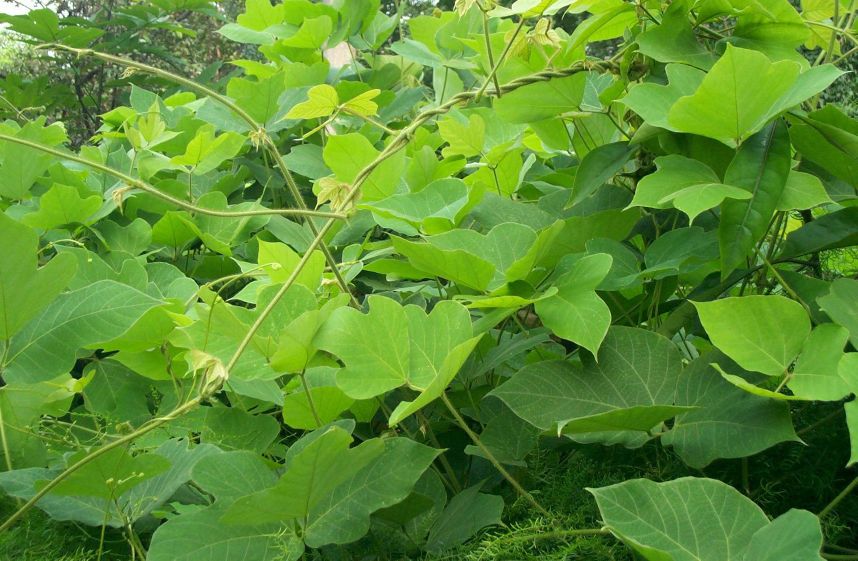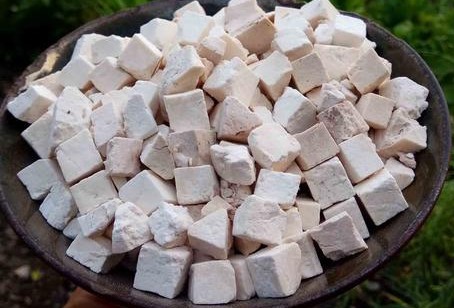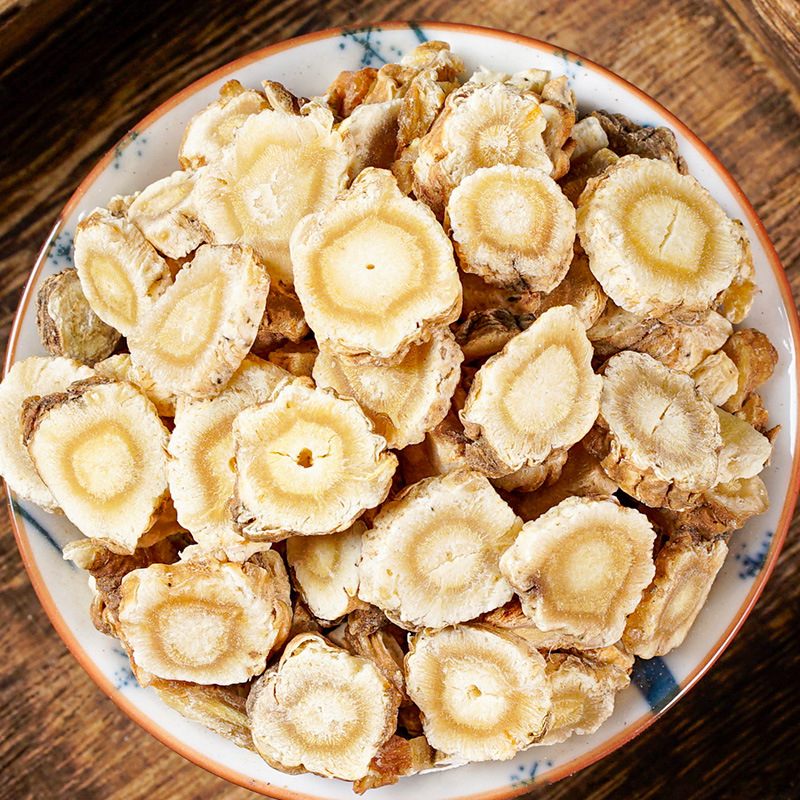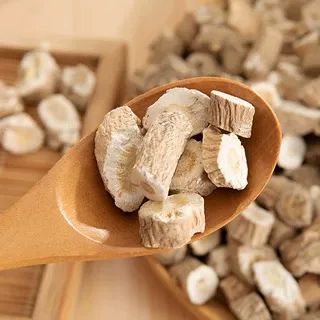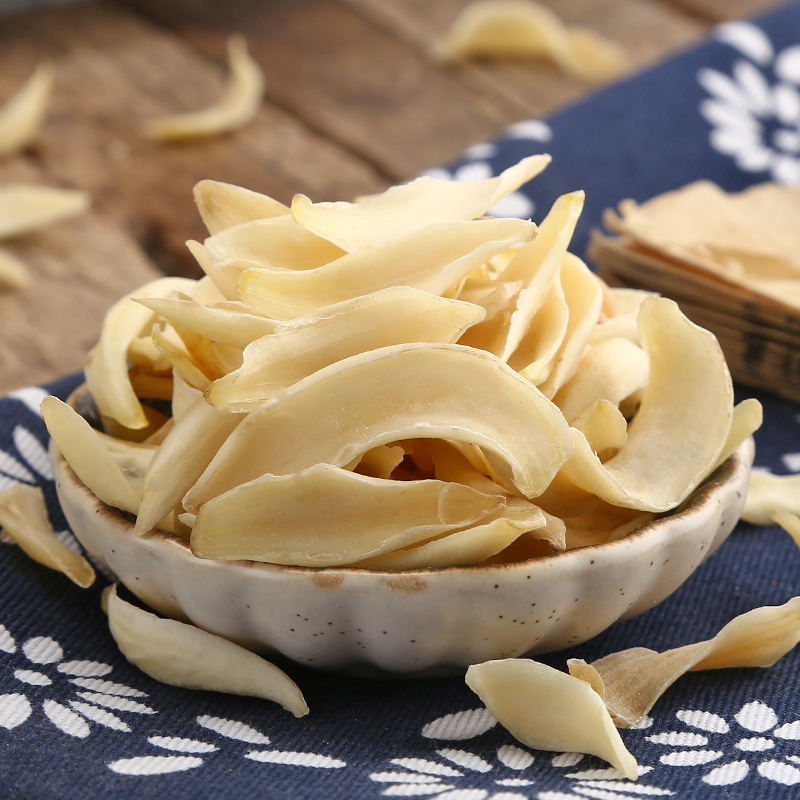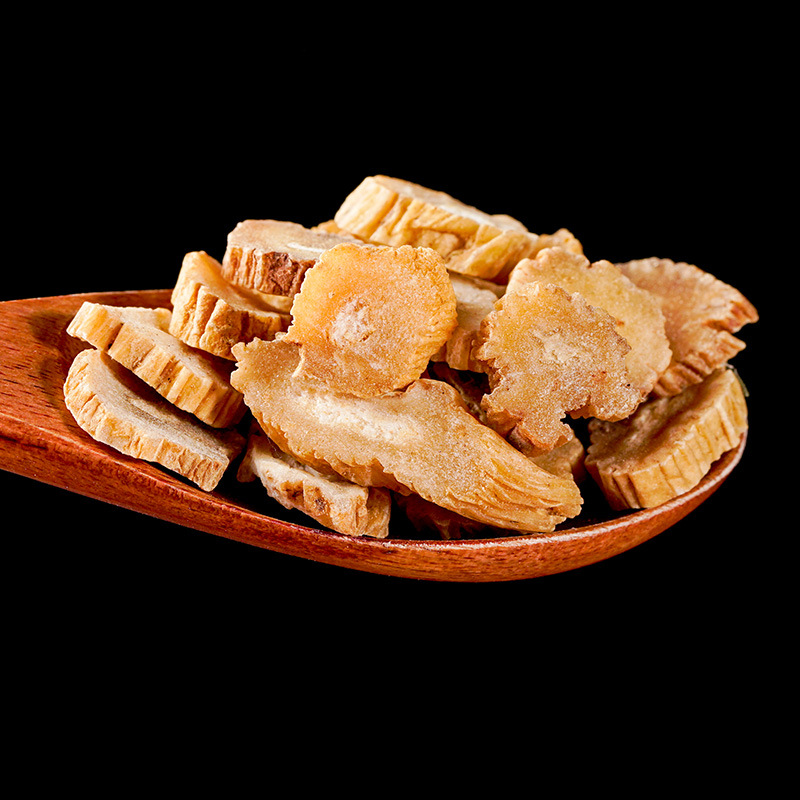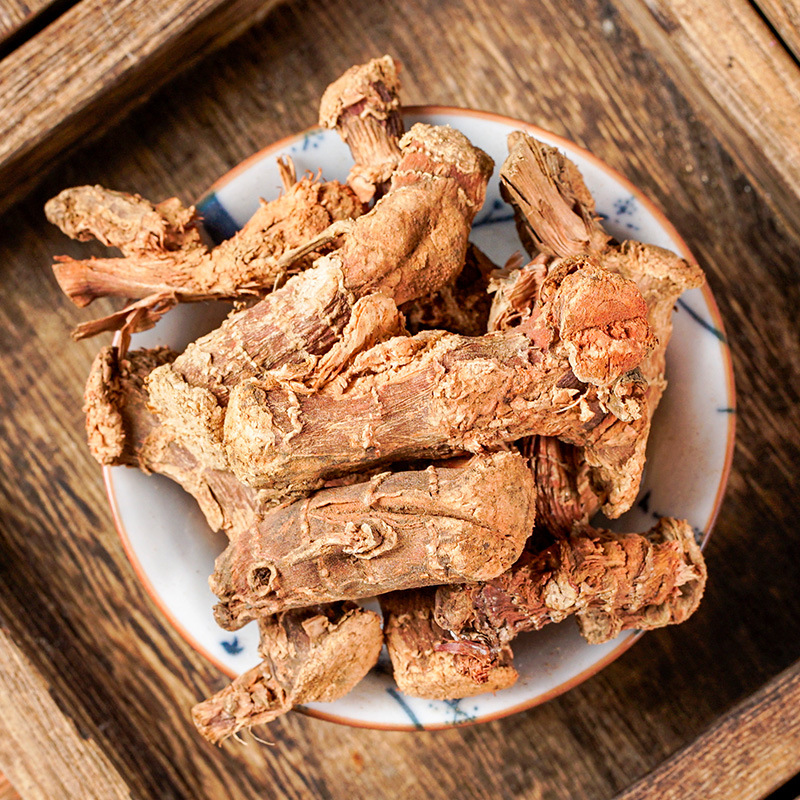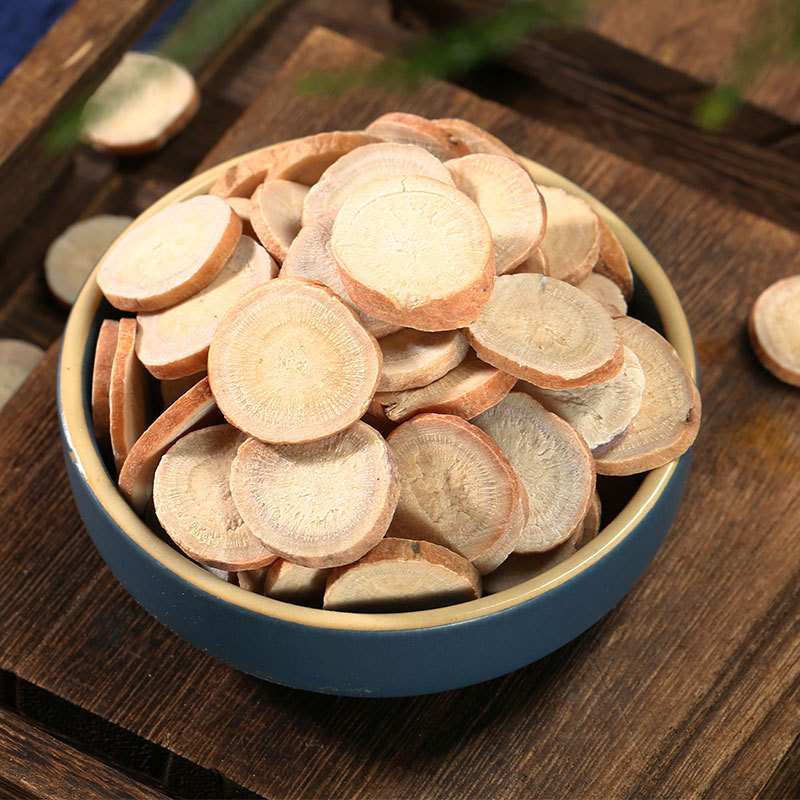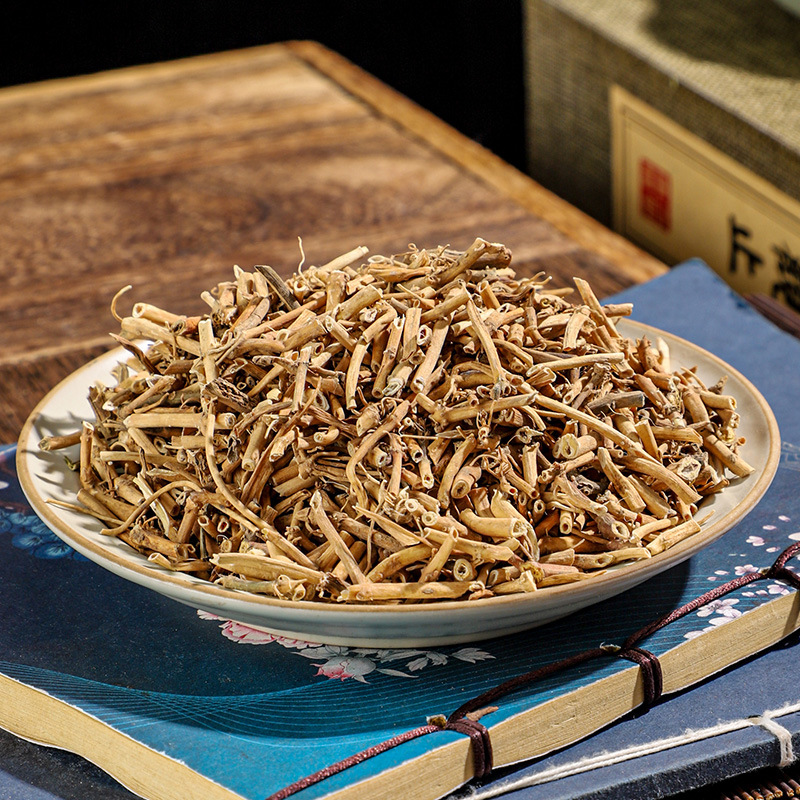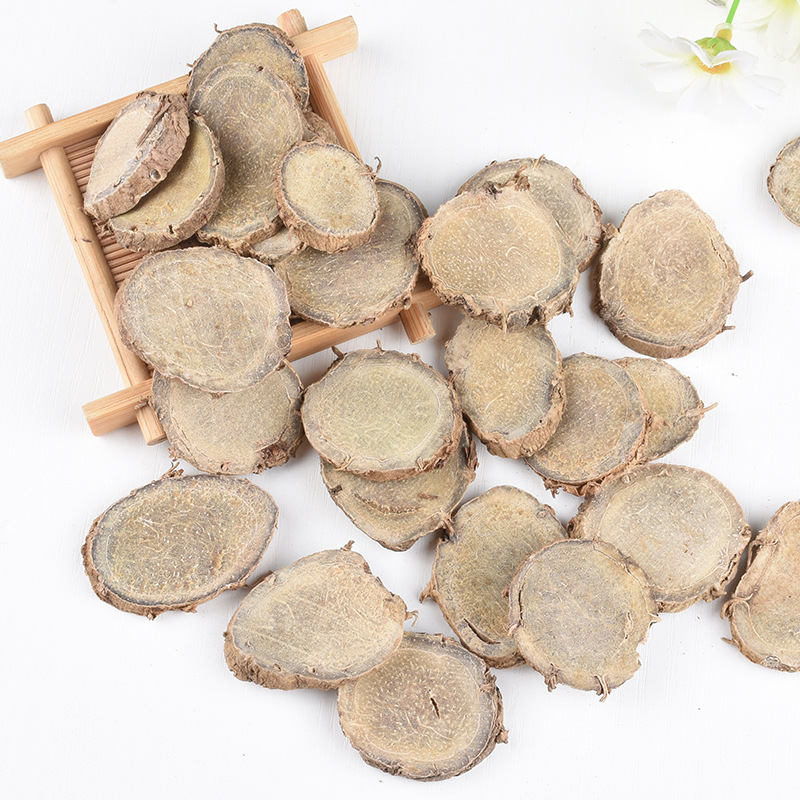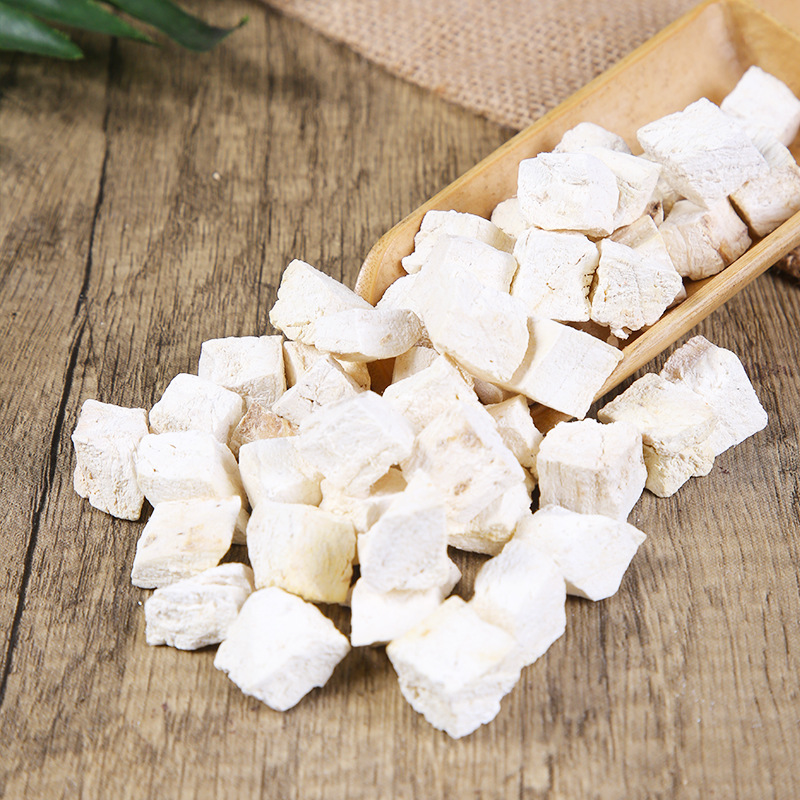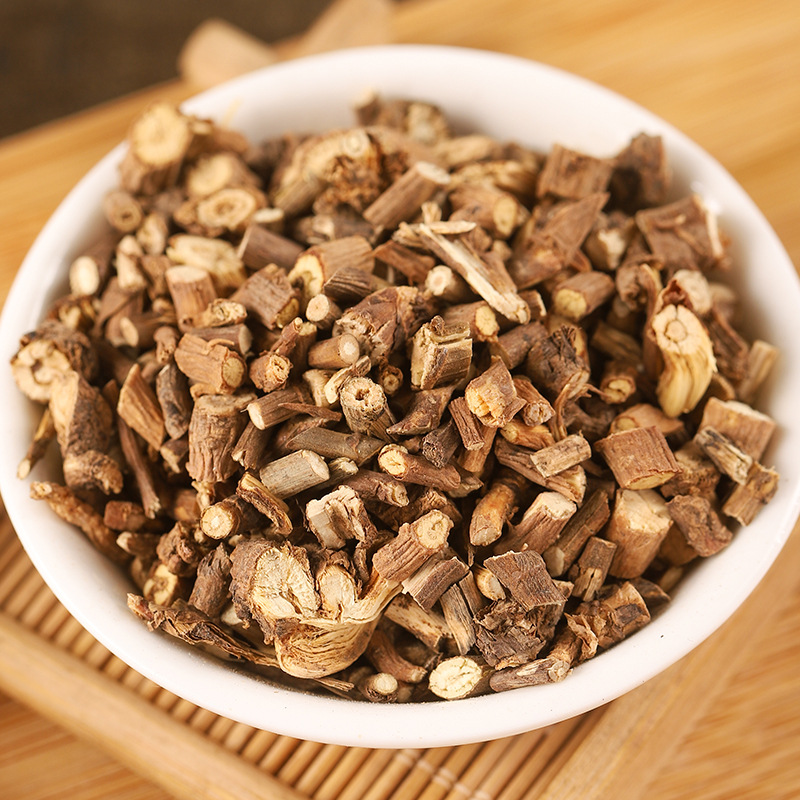
Kudzu root is the tuberous root of the leguminous plant Pueraria. It is called Ge in the Book of Songs and Jiqi root in the Shennong's Classic of Materia Medica. It is produced in both the north and south of China. It is harvested in spring and autumn, sliced, and dried in the sun. There are wild kudzu and powder kudzu varieties, with wild kudzu being more commonly used in medicine.
I. Efficacy and Application
Puerariae Radix tastes sweet and pungent, and has a cool nature. It belongs to the spleen and stomach meridians, and serves as a guiding herb for the Yangming meridian.
Efficacy can promote sweating and relieve muscle tension, elevate yang and promote eruption, clear heat and promote fluid production. Its characteristic is good at entering the Yangming meridian, clearing heat and relieving muscle tension, elevating yang and promoting sweating, making it a key herb for treating neck discomfort, spasms, and pain.
Commonly used for treating symptoms such as fever due to external syndrome, stiffness and pain in the neck and back, incomplete eruption of measles, thirst in febrile diseases, wasting-thirst due to yin deficiency, diarrhea due to pathogenic heat, and diarrhea due to spleen deficiency.
Modern research shows that kudzu root has the effects of improving cardiovascular and cerebrovascular blood supply, as well as strong antipyretic, muscle spasm relief, hypoglycemic, hypolipidemic, antiarrhythmic, and antitumor actions.
Summary of Masterpieces by Renowned Authors:
"The Classic of Materia Medica": "It primarily treats wasting-thirst, great fever in the body, vomiting, various impediments, raises yin qi, and resolves various toxins."
Bie Lu: "Treats cold damage and wind stroke headache, resolves the flesh and releases the exterior, promotes sweating, opens the interstices, treats metal sores to stop pain, and relieves flank wind pain." "The juice of the raw root is greatly cold, treats wasting thirst, and cold damage with severe heat."
Rihuazi Materia Medica: "Stops dysentery with bleeding."
"Ben Cao Jing Shu": "Pueraria root is the primary herb for dispersing and resolving warm disease heat pathogens in the Yangming channel, thus it primarily treats wasting-thirst, severe fever, and vomiting due to heat congestion in the chest and diaphragm. Its nature is to disperse and ascend, characteristic of wind-dispersing herbs, hence it primarily treats various impediment conditions."
Medicine Classification and Image: Treats spleen deficiency with thirst, eliminates stomach heat, resolves alcohol toxicity, and facilitates the passage of the Foot Yangming Meridian.
Changsha Materia Medica: Enters the Foot Yangming Stomach Channel. Resolves congestion of channel qi, clears dryness-heat in the stomach fu, relieves depression and oppression to stop diarrhea, lowers counterflow to calm panting.
"Compendium of Materia Medica": "It enters the Yangming meridian, stimulates stomach qi to ascend, promotes fluid production, and quenches thirst. It also enters the spleen meridian, opens the pores to induce sweating, releases the muscles, and reduces fever. It is a sacred medicine for treating spleen and stomach weakness with diarrhea. It treats cold damage and wind stroke, Yangming headache, bloody dysentery, warm malaria, intestinal wind, and pox rashes. It also raises yin qi, disperses stagnant fire, resolves alcohol toxicity, promotes urination and defecation, and neutralizes the toxicity of various medicines."
II. Compatibility and Application
1. For external contraction fever, headache, absence of sweating, stiffness and pain in the neck and back, etc. Pueraria root can release the flesh and exterior, soften rigidity and relieve pain, and is indeed an essential herb for treating neck and back pain. For wind-cold exterior excess with absence of sweating and discomfort in the neck, it is often combined with ephedra, cinnamon twig, and white peony root, as seen in the representative formula Pueraria Decoction from "Treatise on Cold Damage Disorders" for treating "rigid convulsions."
If treating physical weakness with sweating and discomfort in the neck, it is often combined in the Guizhi Decoction, specifically the Guizhi and Gegen Decoction, which is a representative formula for treating "soft convulsions."
Later generations of physicians often refer to the two formulas, Gegen Tang and Guizhi Jia Gegen Tang, and frequently use a large dose of Gegen in the treatment of various cervical spondylosis to relieve spasms, relax tendons, and alleviate pain, achieving significant therapeutic effects.
If treating wind-heat exterior syndrome with interior heat, it is often combined with Bupleurum, Gypsum, and Scutellaria to enhance the effect of releasing the muscles and clearing heat, as seen in the Bupleurum and Pueraria Decoction for Releasing the Muscles.
2. For febrile diseases with thirst and diabetes. Pueraria is the main herb of the Yangming meridian and also a guiding herb, which clears heat and relieves muscle tension, while promoting fluid production and quenching thirst. For treating the late stage of febrile diseases with deficiency of lung, stomach, and kidney yin, or diabetes, it is often combined with Ophiopogon japonicus, Trichosanthes root, Rehmannia glutinosa, Schisandra chinensis, and raw licorice to nourish yin, clear heat, promote fluid production, and quench thirst, as seen in Ye Tianshi's famous formula Yuquan Powder.
Zhang Xichun treated diabetes by combining Pueraria lobata with Chinese yam, astragalus, anemarrhena, and trichosanthes root, which is known as the Jade Fluid Decoction.
Zhang Xichun said, "The syndrome of diabetes is mostly due to the failure of primordial qi to ascend. This formula is designed to elevate primordial qi to quench thirst. In the formula, Astragalus is the principal herb, and when combined with Pueraria, it can elevate primordial qi."
3. For damp-heat dysentery and spleen deficiency diarrhea, etc. Pueraria can uplift clear yang, invigorate the clear yang qi of the spleen and stomach to ascend, thereby achieving the effect of stopping diarrhea and dysentery. To treat damp-heat dysentery, it is often combined with Coptis chinensis and Scutellaria baicalensis, as in Gegen Qinlian Decoction.
If treating diarrhea due to spleen deficiency and qi weakness, it is often combined with Codonopsis pilosula, Atractylodes macrocephala, and Aucklandia lappa, known as Qiwei Baizhu San.
Huang Yuanyu said, "Pueraria lobata is pungent and cool, descending to relieve restlessness and drain heat, lowering the stagnation of the Yangming meridian and fu organs. When the meridian and fu organs are unobstructed, the qi of the upper abdomen does not rebel, and the qi of the lower abdomen does not sink, thus both vomiting and diarrhea can be treated."
4. For the initial stage of measles, characterized by fever, aversion to cold, and incomplete eruption of rashes. Pueraria root has the property of relieving muscle tension and promoting diaphoresis, which can assist in the eruption of rashes. To treat the aforementioned conditions, it is often combined with cimicifuga, peony, and honey-fried licorice, as in the Cimicifuga and Pueraria Decoction.
5. Modern use for treating hypertension and cardiovascular and cerebrovascular diseases. Pueraria lobata has effects such as improving blood supply, lowering blood lipids, and reducing blood pressure, so it is commonly used for symptoms caused by insufficient blood supply to the heart and brain and hypertension, including headache, dizziness, neck stiffness, tinnitus, and limb numbness.
For elderly patients with hypertension, arteriosclerosis, insufficient blood supply to the heart and brain, or those experiencing discomfort in the neck and back, wild kudzu can be combined with salvia, pseudoginseng, and American ginseng. Grind them together into powder for consumption. This formula effectively reduces lipids, promotes blood circulation, replenishes qi, and nourishes the heart, making it an excellent health-preserving remedy.
6. For sobering up and invigorating the spleen. Pueraria (Pueraria flower) and modern preparations also have the function of clearing the stomach and sobering up. It can be used alone or in combination with other medicines, or in the form of proprietary Chinese medicine preparations, such as Pueraria sobering solution.
If treating excessive alcohol consumption, dampness injuring the spleen and stomach, manifesting as dizziness and vomiting, chest and diaphragm fullness and oppression, reduced appetite, mental restlessness, difficult urination or diarrhea, it is common to combine Puerariae Flos with Aucklandiae Radix, Amomi Fructus, Amomi Rotundus Fructus, and Massa Medicata Fermentata, etc., to collectively achieve the effects of resolving alcohol and dispelling dampness, warming the middle and harmonizing the stomach, which is the famous hangover remedy, Puerariae Flos Decoction for Relieving Alcohol Toxicity.
Wang Ang said: "To relieve alcohol toxicity, Pueraria lobata flower is particularly effective."
III. Usage and Dosage
Puerariae Radix is often used in decoctions, as well as in pills and powders. The usual dosage in decoctions is over ten grams; if used to relieve spasms, unblock meridians, and alleviate pain, it can be used in doses of several tens of grams or even over a hundred grams. Different dosages yield different effects.
Pueraria root can be used either raw or roasted. Generally, the raw form is suitable for relieving the exterior, promoting fluid production, clearing heat, and promoting eruption, while the roasted form is used for raising yang and stopping diarrhea.
Huang Yuanyu said, "Making it into powder is best, and taking the juice from the fresh one is very good."
Wang Ang said: "Fresh kudzu juice is extremely cold in nature, it resolves high fever in warm diseases, and treats various types of bleeding such as vomiting blood and nosebleeds."
IV. Application Precautions
The Pearl Pouch: Benefiting yang and generating fluids, do not use excessively, as it may harm stomach qi.
Wang Ang said: "Excessive use harms stomach qi, causing excessive dispersion."
Practical Notes on Traditional Chinese Medicine: Second Draft on the Evening of January 17, 2021