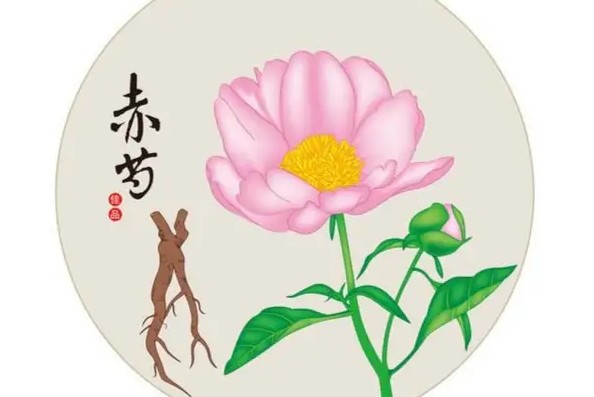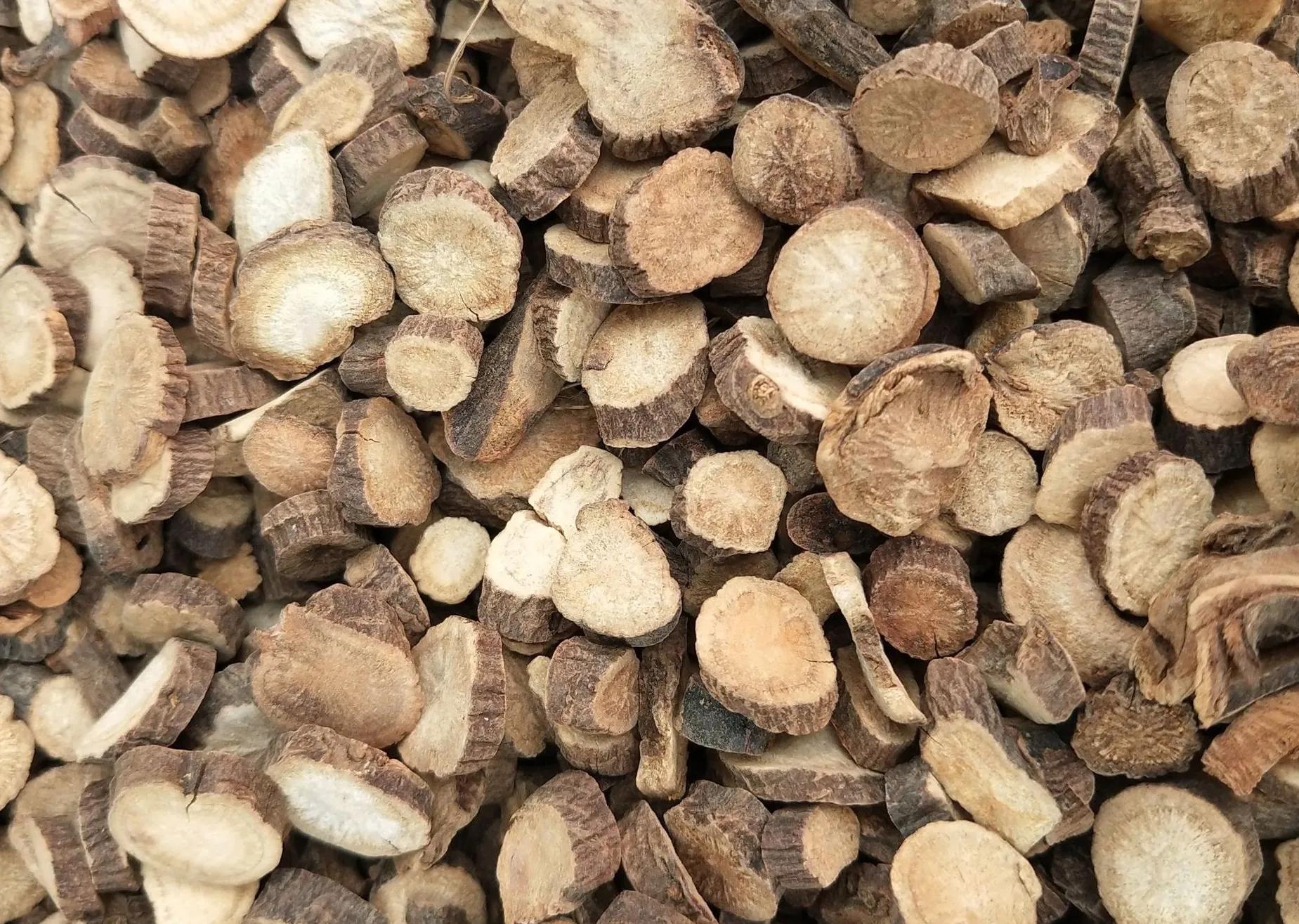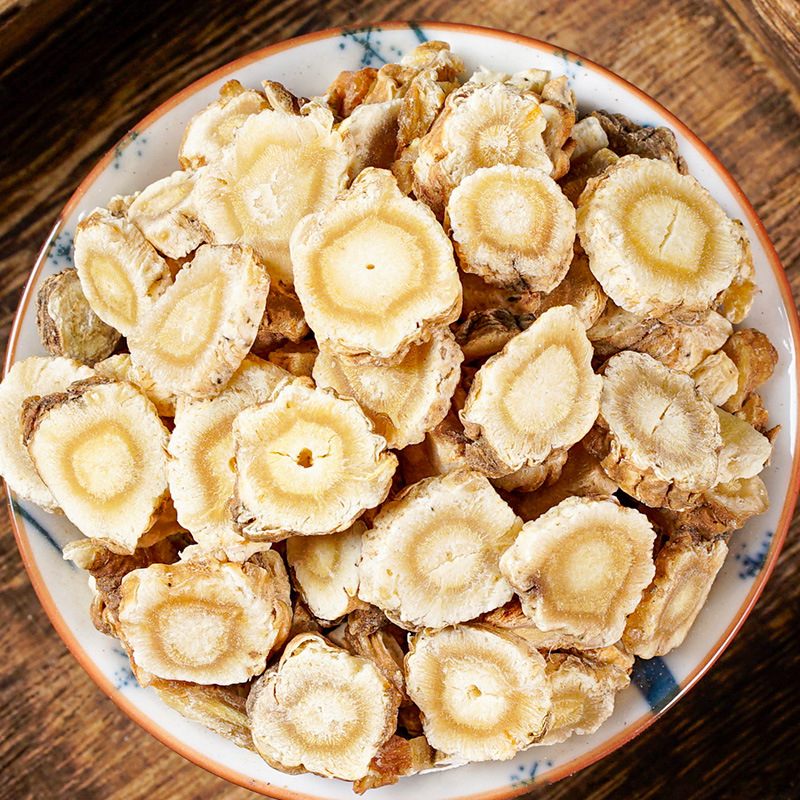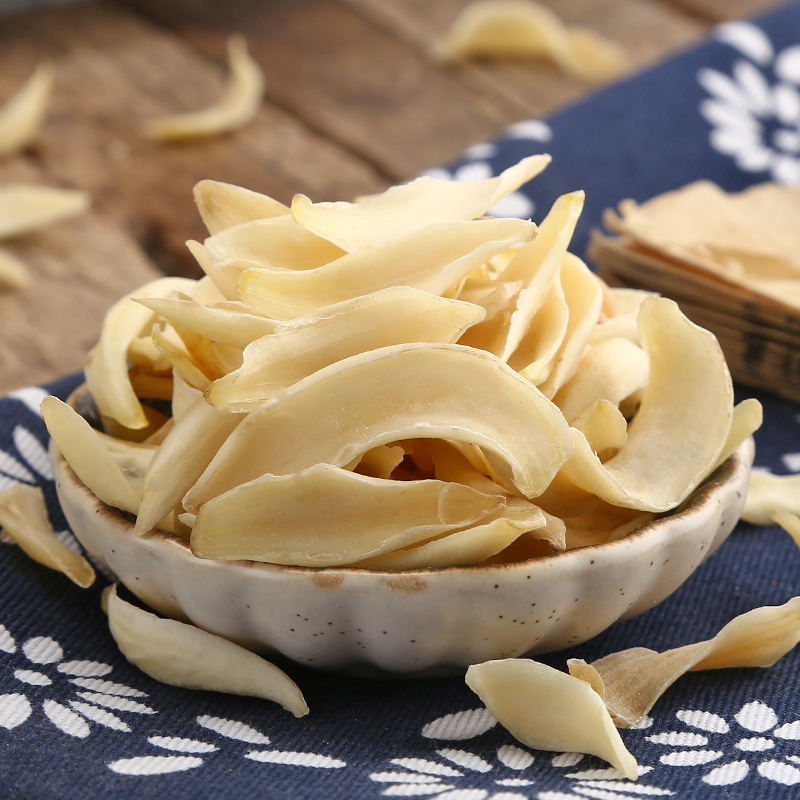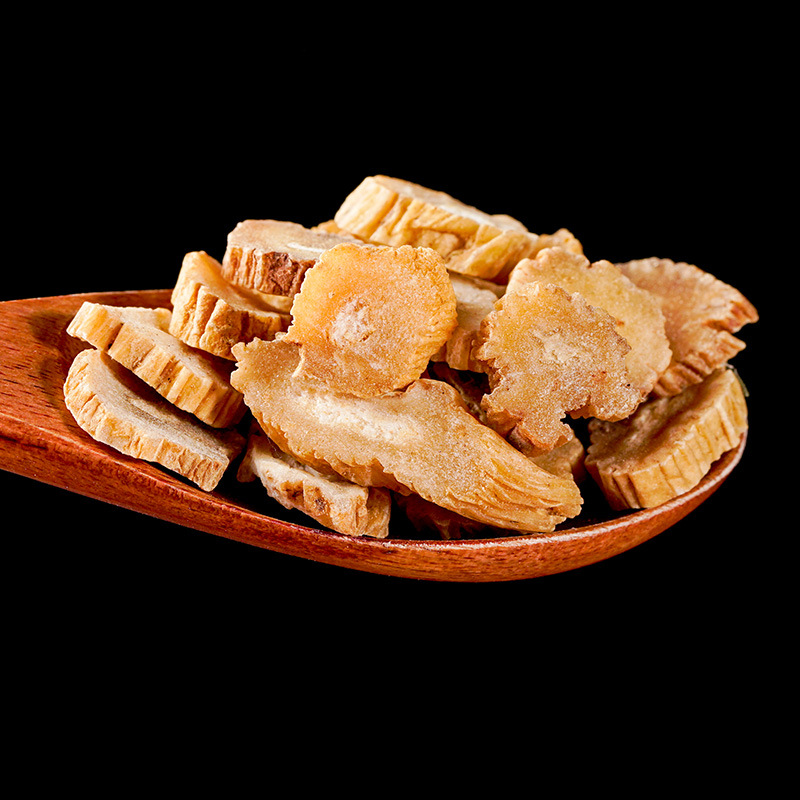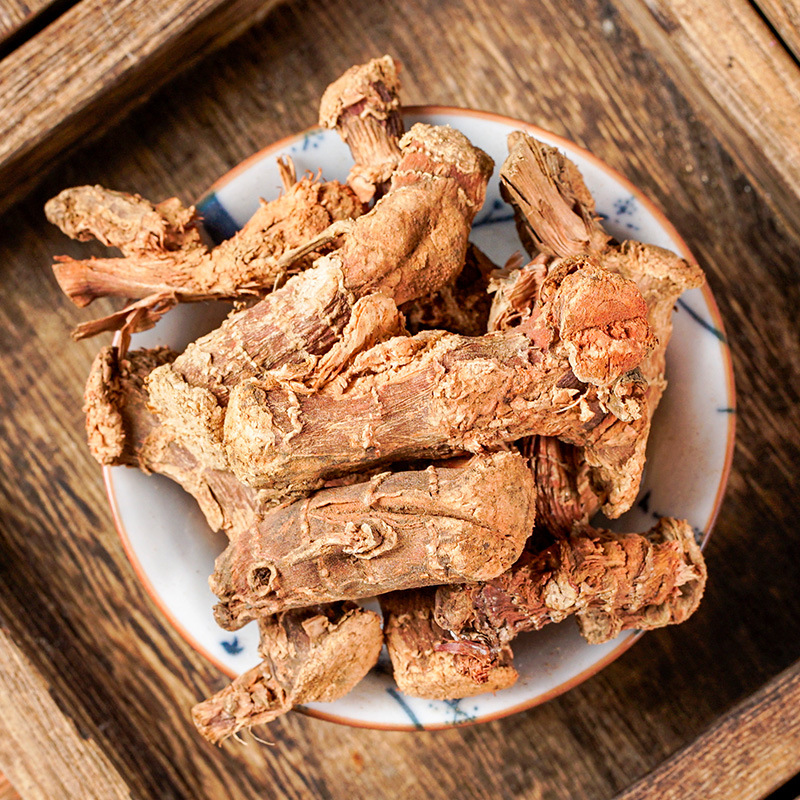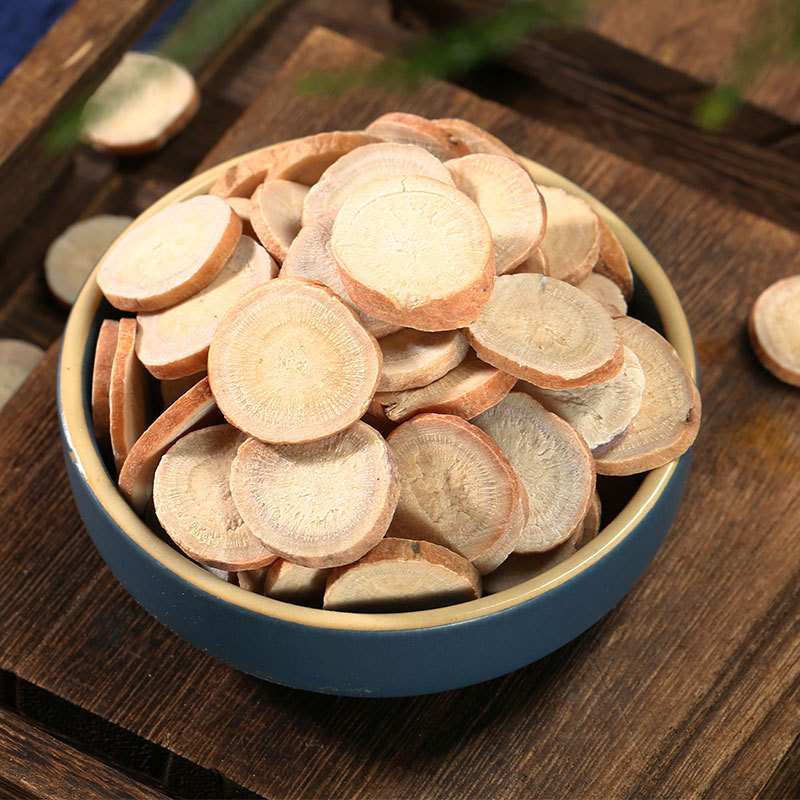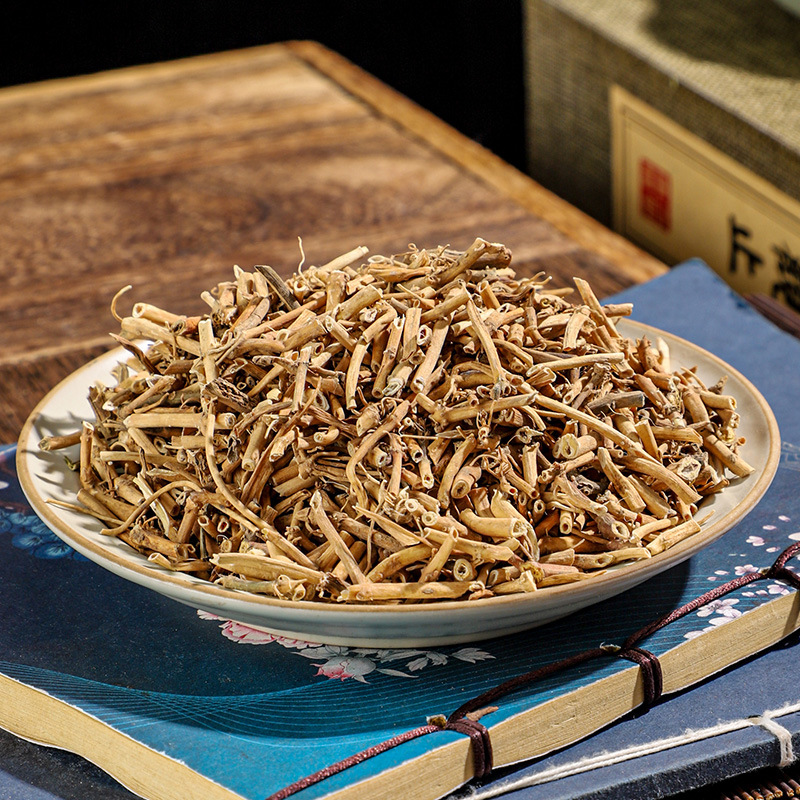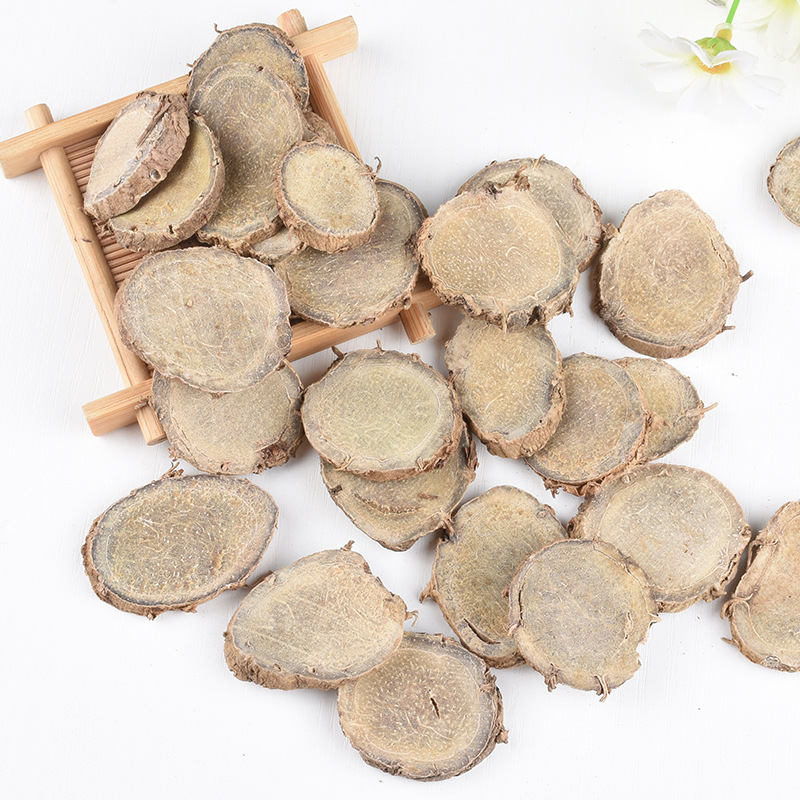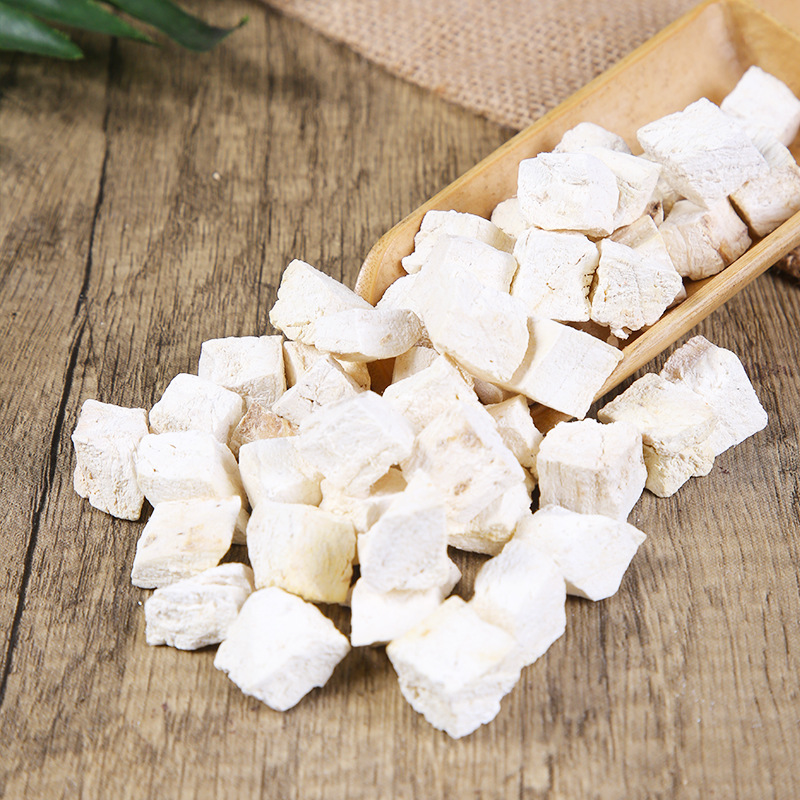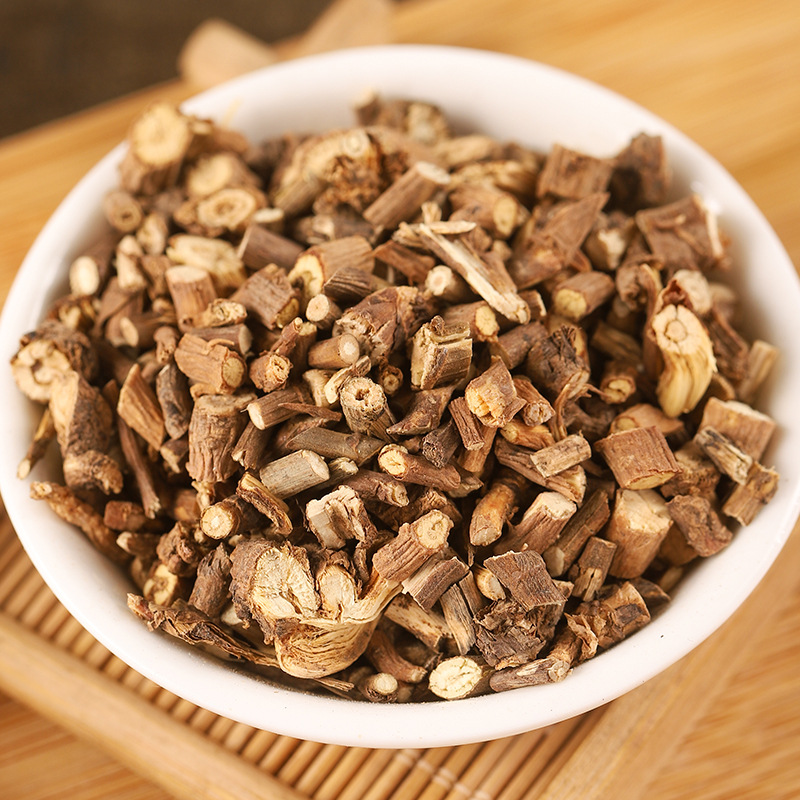
Peony is the root of the perennial plant Paeonia lactiflora. It comes in two varieties, red and white, each corresponding to the color of the flower, with the single-petaled type used in medicine. Red peony refers to the red-colored variety. It is mainly produced in Inner Mongolia, Sichuan, and various regions of Northeast China. After processing, it is often used raw in medicine; if stir-fried with wine, its cold nature can be moderated.
I. Efficacy and Application
Red Peony Root tastes bitter and slightly cold. It belongs to the Liver Meridian.
Efficacy Clears heat and cools blood, dispels stasis and relieves pain. Its characteristic is that it is adept at entering the blood aspect, cooling blood and promoting blood circulation to remove stasis, making it an essential herb for treating heat entering the blood aspect and women's blood stasis amenorrhea.
Commonly used for treating conditions such as heat entering the nutrient and blood levels, warm toxin causing macules, vomiting blood and nosebleeds, red and swollen painful eyes, liver stagnation and flank pain, amenorrhea and dysmenorrhea, abdominal pain due to masses and accumulations, traumatic injuries, abscesses, sores, and ulcers.
Summary of Masterpieces by Renowned Authors:
"The Classic of Materia Medica": "Treats pathogenic qi causing abdominal pain, eliminates blood impediment, breaks up hard accumulations, addresses alternating chills and fever, resolves hernia and abdominal masses, relieves pain, and promotes urination."
"Southern Yunnan Materia Medica": "Purges spleen fire, descends qi, promotes blood circulation, breaks stasis, disperses blood clots, relieves abdominal pain, and attacks abscesses and sores."
Medicinal Properties: "Drains liver fire."
"Compendium of Materia Medica": "Red peony root is particularly effective in draining liver fire, dispersing stagnant blood, treating abdominal pain and hard accumulations, blood impediment and hernia-like masses. It also addresses amenorrhea, intestinal wind, abscesses and swellings, and red eyes."
II. Compatibility and Application
1. For warm-heat diseases with heat in the blood aspect, presenting with fever, maculopapular rash, as well as hematemesis and epistaxis caused by blood heat. Red Peony Root can clear stagnant heat in the blood aspect and is often used in combination with Tree Peony Bark. For treating heat entering the blood aspect, it is commonly combined with Tree Peony Bark, Rehmannia Root, and Buffalo Horn Shavings, as in the Rhinoceros Horn and Rehmannia Decoction.
If treating macules and papules with a dull red color, it is often combined with Arnebiae Radix and Cicadae Periostracum, known as Zicao Kuaiban Decoction.
2. For blood stasis amenorrhea, dysmenorrhea, and traumatic injuries, with symptoms of blood stasis and swelling pain. Red Peony Root can remove blood stasis, promote circulation, and alleviate pain. For promoting blood circulation and regulating menstruation, it is often combined with Chinese Angelica, Tree Peony Bark, and Szechuan Lovage Rhizome, known as Zi Xue Tang.
For treating traumatic injuries with blood stasis and pain, it is often combined with blood-activating and stasis-removing herbs such as peach kernel, frankincense, and safflower.
In the treatment of women's abdominal masses and blood stasis, it is often combined with cinnamon twig, poria, and peach kernel to jointly achieve the effects of resolving stasis and generating new blood, as well as harmonizing qi and blood, which is known as Cinnamon Twig and Poria Pill.
If treating stroke with qi deficiency and blood stasis, presenting symptoms such as hemiplegia, facial deviation, slurred speech, and limb paralysis, it is often combined with Astragalus, Earthworm, Angelica, Peach Kernel, and Safflower, which is Wang Qingren's famous formula Buyang Huanwu Decoction.
"Corrections on Errors in Medical Works": "This formula (Buyang Huanwu Decoction) treats hemiplegia, deviation of the mouth and eyes, slurred speech, drooling from the corners of the mouth, flaccidity and paralysis of the lower limbs, frequent urination, and incontinence of urine."
Zhang Xichun said, "In the Buyang Huanwu Decoction, four liang of astragalus is heavily used to vigorously tonify the qi aspect, which aligns with Li Dongyuan's theory of emphasizing qi. However, Wang's book does not mention the pulse condition at all. If the pulse is deficient and weak, using this formula can be effective; but if the pulse is full and strong, and the patient suffers from cerebral congestion, then using the warm and ascending tonifying properties of astragalus to further promote blood flow upward will inevitably lead to immediate danger. This must be carefully considered."
3. For carbuncles, red and swollen eyes, and other syndromes. Red peony root can cool the blood, dispel stasis, reduce swelling, and eliminate carbuncles, as well as relieve pain and purge liver fire. For example, to treat carbuncles, furuncles, and toxins, it is often combined with honeysuckle, coptis, and Paris polyphylla, known as Duoming Dan.
For treating liver heat with red eyes, it is often combined with chrysanthemum, scouring rush, selfheal, and mulberry leaf, which are herbs that dispel wind and clear heat.
4. For heat strangury, blood strangury, and heat dysentery with bloody discharge due to blood heat syndrome, it is often combined with corresponding formulas.
III. Usage and Dosage
Red Peony Root is often used in decoctions, as well as in pills and powders. The typical dosage in decoctions ranges from a few grams to several tens of grams, adjusted according to the symptoms, and should not be rigidly adhered to.
After being stir-fried, red peony root tends to have a milder medicinal property, promoting blood circulation and relieving pain without harming the middle energizer, and is often used for stasis-induced pain. If stir-fried with wine, it can enhance the effect of promoting blood circulation and dispersing stasis, but its heat-clearing and blood-cooling effects are weakened. It is commonly used for amenorrhea, dysmenorrhea, and traumatic injuries.
Wang Ang said: "The red and white ones follow the color of the flowers, and the single-petaled ones are used in medicine. They are stir-fried with wine to moderate their cold nature. For women's blood disorders, they are stir-fried with vinegar; for dysentery with tenesmus, they are not stir-fried."
IV. Application Precautions
Red Peony Root tastes bitter and is cold in nature, so it should not be taken for conditions such as amenorrhea due to deficiency-cold. It should be used with caution by those with blood deficiency.
In addition, there has been a tradition of opposing Veratrum since ancient times, which needs to be understood.
Practical Notes on Traditional Chinese Medicine: Sorted on the evening of January 7, 2021