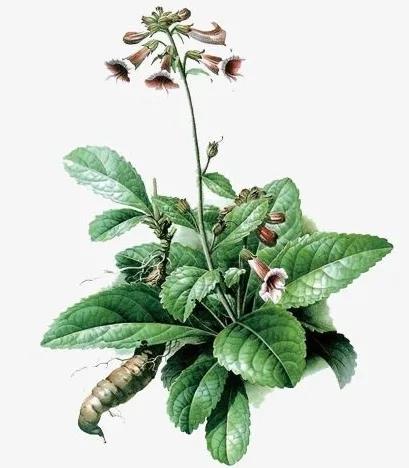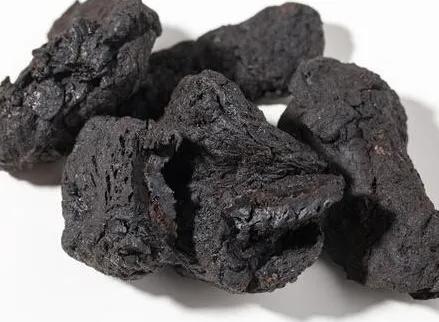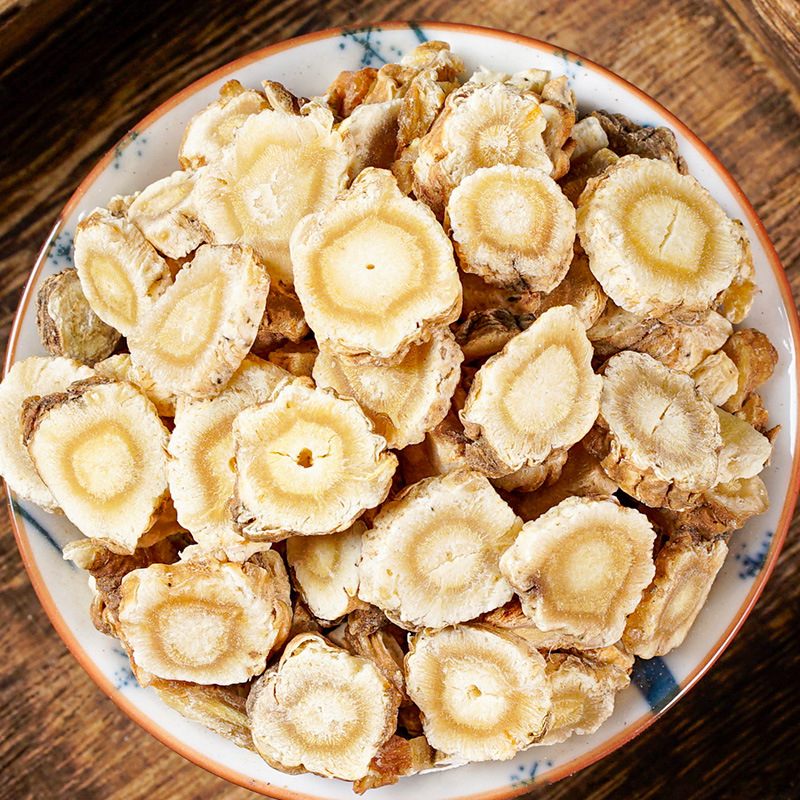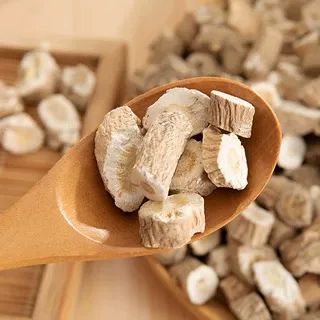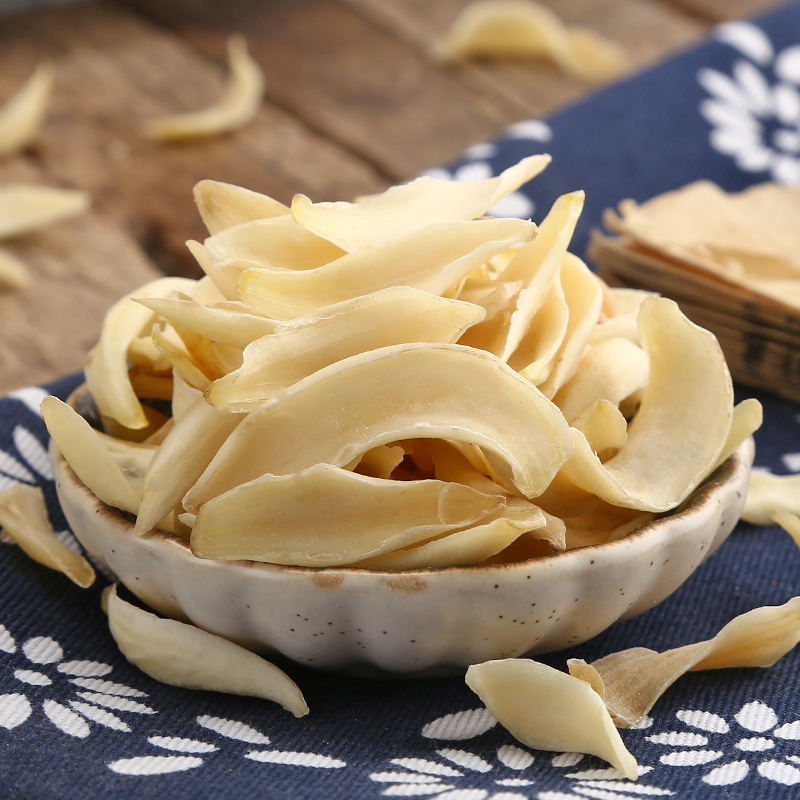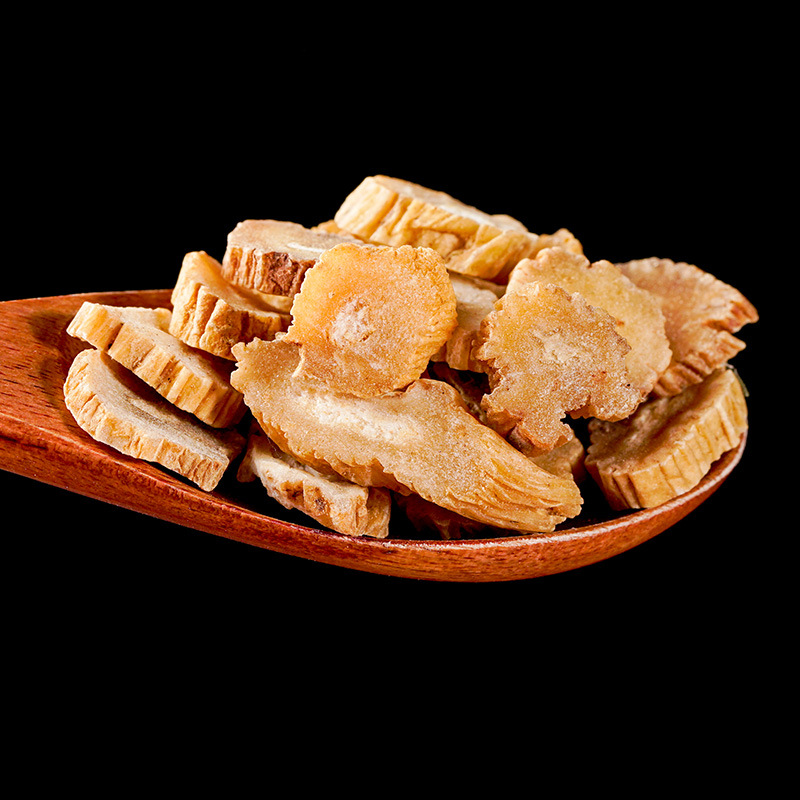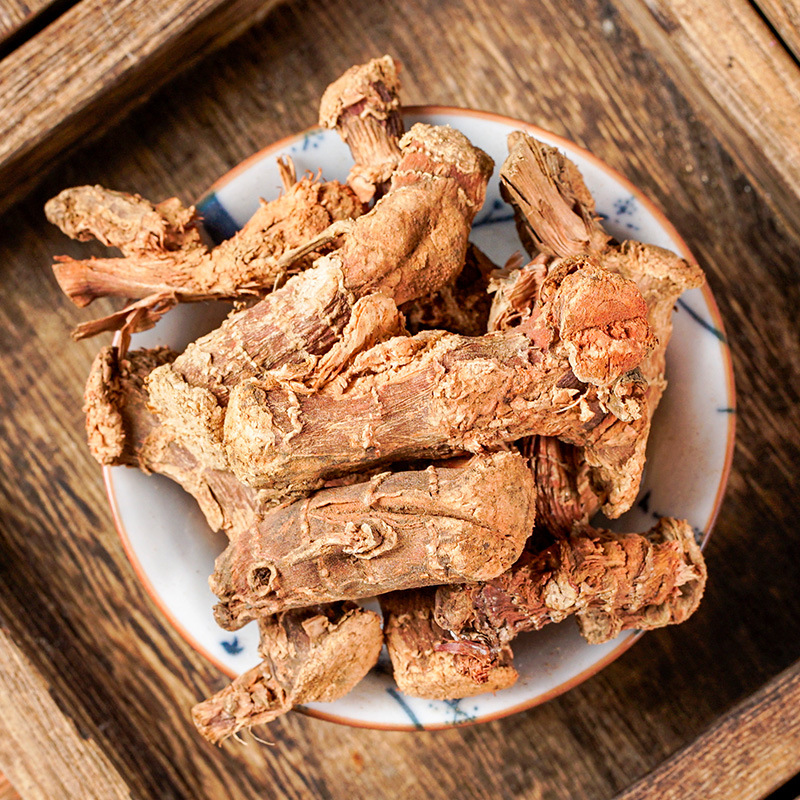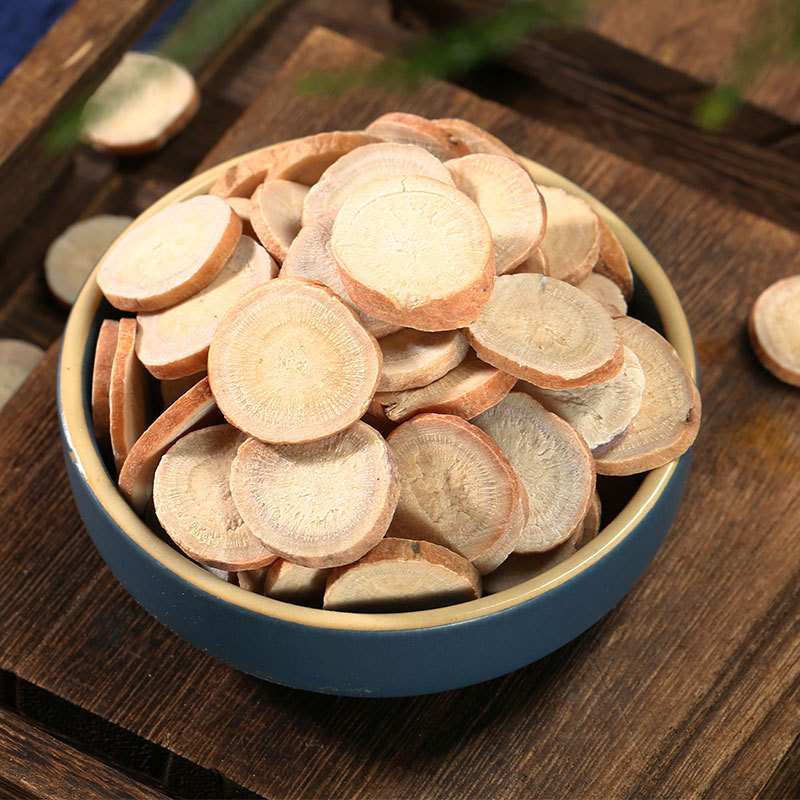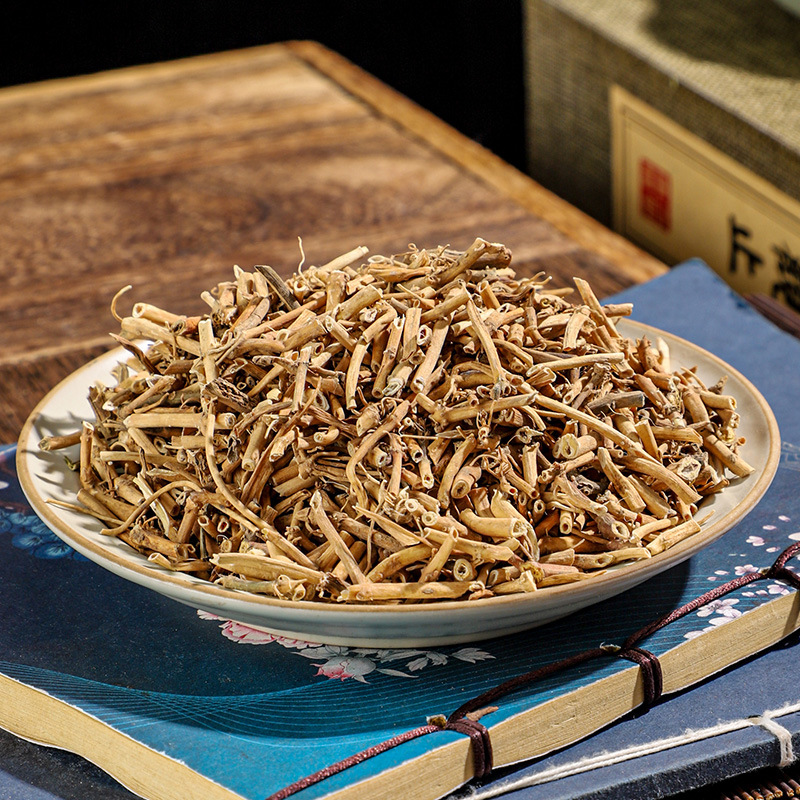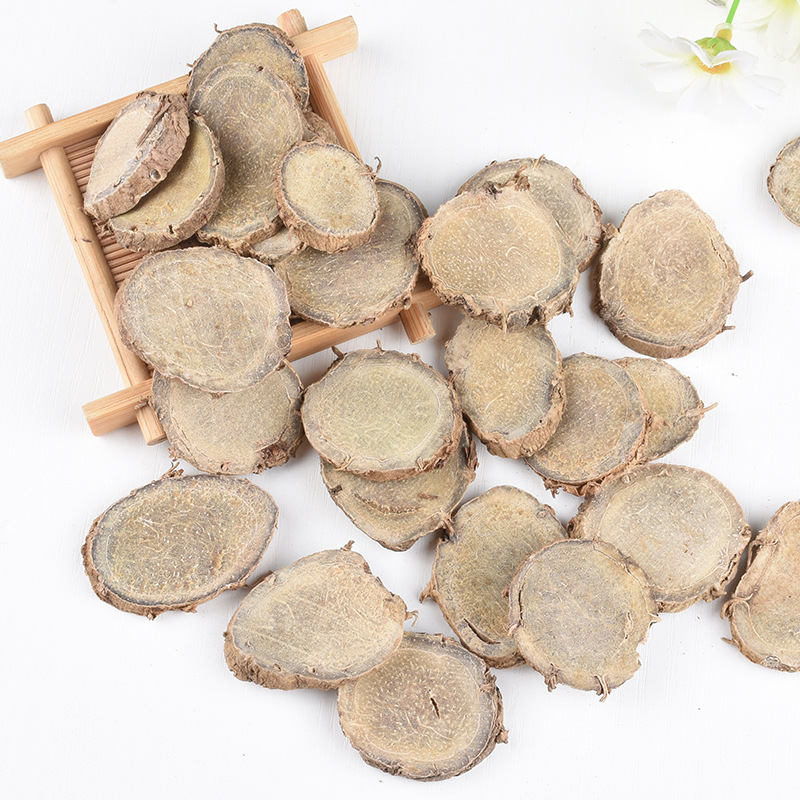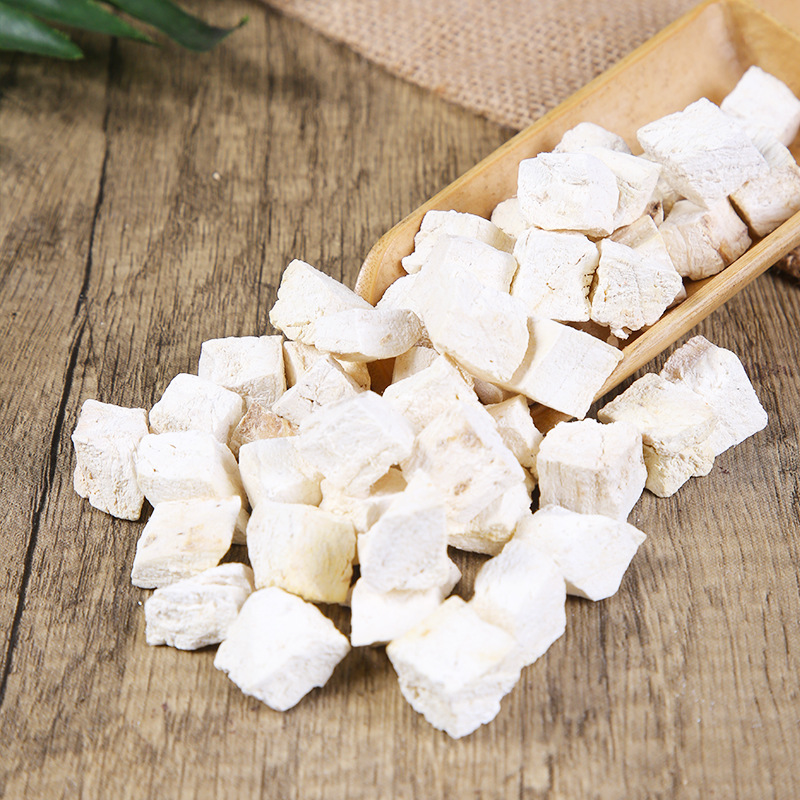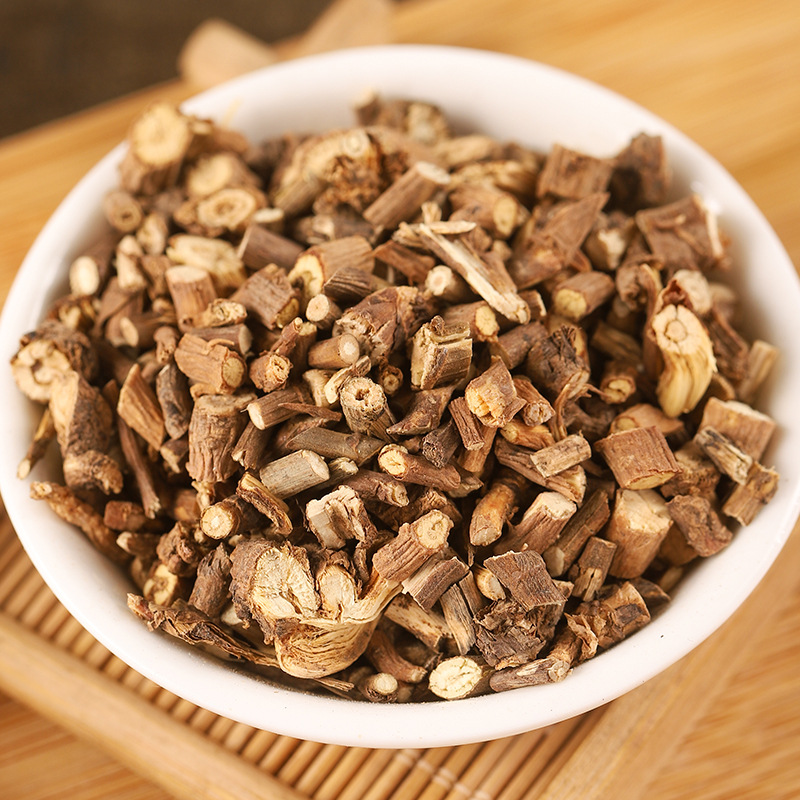
Cooked Rehmannia is processed from Rehmannia glutinosa. It is typically prepared with auxiliary ingredients such as wine, Amomum villosum, and dried tangerine peel, undergoing repeated steaming and sun-drying until it becomes black and oily both inside and out, with a soft and sticky texture. In ancient times, the processing of cooked Rehmannia was said to involve "nine steamings and nine sun-dryings," hence it is also known as Nine-Processed Rehmannia. Raw Rehmannia and cooked Rehmannia are typical examples of how traditional Chinese medicine modifies the properties and efficacy of herbs through processing to expand their application range. Raw Rehmannia and cooked Rehmannia are collectively referred to as "Two Rehmannias." If a medical practitioner writes "Two Rehmannias" in a prescription, it indicates that both are to be used.
I. Efficacy and Application
Cooked Rehmannia Root tastes sweet and is slightly warm. It belongs to the liver and kidney meridians.
Efficacy Nourishes blood and yin, replenishes essence and benefits marrow. Its characteristic is its proficiency in supplementing liver and kidney essence and blood deficiency, making it a key medicinal for blood tonification.
Commonly used for the treatment of blood deficiency with sallow complexion, palpitations and severe palpitations, irregular menstruation, metrorrhagia and metrostaxis, liver and kidney yin deficiency, soreness and weakness of the waist and knees, bone-steaming tidal fever, night sweats and seminal emission, internal heat with thirst, dizziness, tinnitus, premature graying of hair, and other syndromes.
Summary of Famous Works by Renowned Authors
The Pearl Pouch: "Primarily supplements qi and blood, nourishes kidney water, and benefits true yin."
Compendium of Materia Medica: "Nourishes the marrow, promotes muscle growth, generates essence and blood, replenishes deficiencies and internal injuries of the five viscera, unblocks blood vessels, benefits the ears and eyes, and darkens the beard and hair."
The Compendium of Materia Medica states: For those with yin deficiency and scattered spirit, nothing but the stabilizing property of prepared rehmannia root can gather it; for those with yin deficiency and rising fire, nothing but the heavy nature of prepared rehmannia root can subdue it; for those with yin deficiency and restlessness, nothing but the calming effect of prepared rehmannia root can pacify it; for those with yin deficiency and rigidity, nothing but the sweet taste of prepared rehmannia root can soothe it.
"Compendium of Materia Medica": Sweet and slightly warm. Nourishes kidney water, supplements true yin, fills bone marrow, generates essence and blood, sharpens hearing and brightens vision, blackens hair and beard. Treats consumptive injury and wind impediment, various diseases of pregnancy and childbirth, being the supreme formula for supplementing blood.
"Medical Records of Integrating Chinese and Western Medicine": "Cooked Rehmannia is made from fresh Rehmannia and wine, repeatedly steamed and dried. It is slightly warm in nature, sweet but not bitter, and is the main medicine for nourishing yin and tonifying the kidney. It treats yin deficiency fever, asthma due to yin deficiency failing to receive qi, consumptive cough, kidney deficiency failing to filter water, scanty urine leading to edema, and all cases of yin deficiency in the organs. Cooked Rehmannia can tonify all of these."
II. Compatibility and Application
1. For blood deficiency with sallow complexion, dizziness, palpitations, insomnia, irregular menstruation, metrorrhagia, and other conditions. Prepared Rehmannia Root is a key herb for nourishing blood. To treat various blood deficiency syndromes and conditions such as irregular menstruation and metrorrhagia in women, it is often combined with Chinese Angelica Root, Szechuan Lovage Rhizome, and Peony Root, forming the renowned formula Si Wu Tang, a sacred prescription for nourishing blood and regulating menstruation.
If the Rehmannia used in the Si Wu Tang formula is raw Rehmannia and the peony is red peony, its efficacy tends to promote blood circulation and clear heat. If the Rehmannia used in the formula is cooked Rehmannia and the peony is stir-fried white peony, its efficacy tends to nourish blood. The ingenuity of the formula lies entirely in the physician's judgment and should not be rigidly adhered to.
Siwu Decoction is a fundamental formula in traditional Chinese medicine for nourishing blood and regulating menstruation. Based on this formula, modifications can be made according to the symptoms. For example, to treat blood stasis syndrome, additional herbs such as peach kernel and safflower, which promote blood circulation and remove blood stasis, can be added, resulting in Taohong Siwu Decoction, also known as Jiawei Siwu Decoction. If Taohong Siwu Decoction is combined with Sini Powder with modifications, it becomes the renowned Xuefu Zhuyu Decoction, which is highly effective in treating various blood stasis syndromes and difficult miscellaneous diseases.
For the treatment of dual deficiency of qi and blood, it is often combined with the Four Gentlemen Decoction to achieve the effect of supplementing both qi and blood, known as the Eight Treasures Decoction; if astragalus and cinnamon are added to the Eight Treasures Decoction, it becomes the Ten Complete Great Tonifying Decoction.
Wang Shuo said, "Men are often yin deficient, so they should use prepared rehmannia root; women are often blood-heated, so they should use raw rehmannia root."
2. For kidney yin deficiency, tidal fever, night sweats, nocturnal emission, and wasting-thirst. Prepared rehmannia root can nourish yin and tonify the kidney. For treating kidney yin deficiency syndrome, it is often combined with Chinese yam, dogwood fruit, and moutan bark, as in the Six-Ingredient Rehmannia Pill.
If treating panting and shortness of breath due to kidney deficiency failing to grasp qi, or chronic cough with dry throat and shortness of breath, nocturnal emission and night sweats, frequent urination and other symptoms, one can add Schisandra chinensis to the Six-Ingredient Rehmannia Pill to jointly achieve the effects of tonifying the kidney and grasping qi, astringing essence and stopping emission, which is the Duqi Pill.
Li Dongyuan said: "Raw Rehmannia treats heat in the palms and soles as well as heart heat, and it can benefit kidney water and treat blood disorders. It is suitable for those with a full and strong pulse; if the pulse is weak, then prepared Rehmannia is appropriate. Rehmannia is steamed nine times with the aid of wine, thus it can tonify the original qi in the kidney."
Wang Ang said: "Liuwei Wan uses it as the sovereign herb. For those with weak chi pulse, add cinnamon and aconite, which is called 'benefiting the source of fire to eliminate yin shadows.' For those with strong chi pulse, add anemarrhena and phellodendron, which is called 'strengthening the master of water to control sunlight.'"
3. For deficiency of essence and blood, manifested as soreness and weakness of the waist and feet, dizziness and blurred vision, tinnitus and deafness, premature graying of hair, etc. Prepared rehmannia root can nourish blood and yin, as well as replenish essence and marrow. To treat insufficiency of essence and blood and deficiency of nutrient and defense qi in both men and women, large prepared rehmannia root can be combined with eaglewood and wolfberry, soaked in wine and taken, known as Rehmannia Wine.
If treating various deficiencies, abdominal and flank pain, loss of blood and qi deficiency, as well as women's menstrual disorders and irregular menstruation, it is often combined with Angelica sinensis, known as the Wan Wan Pill.
III. Usage and Dosage
Cooked Rehmannia is often used in decoctions and is also suitable for making pills and soaking in wine. The usual dosage in decoctions ranges from over ten grams to several tens of grams.
It is greasy in nature, so it is often used together with spleen and stomach strengthening herbs such as Amomum villosum and dried tangerine peel to prevent its drawbacks.
Huang Yuanyu said, "The preparation of cooked rehmannia root by mediocre practitioners is arbitrary and not worth using."
"Compendium of Materia Medica": "Mix with good wine and Amomum villosum powder, soak, steam, and sun-dry nine times before use. Rehmannia glutinosa is cold in nature; when combined with wine, fire, and sunlight, it becomes warm. It is sticky in nature; when combined with Amomum villosum, it promotes the flow of qi and can enter the dantian."
IV. Application Precautions
Cooked Rehmannia has a sticky and greasy nature, even more so than raw Rehmannia, which can hinder the spleen and stomach's transportation and transformation functions. Therefore, it should be avoided by those with qi stagnation, excessive phlegm, abdominal distension and pain, poor appetite, and loose stools.
For this reason, rehmannia should not be used indiscriminately as a general tonic for deficiency, in order to avoid harming the spleen and stomach.
Introduction to Medicine: "Use with caution in cases of abdominal fullness and excessive phlegm."
Ben Cao Cong Xin: "For individuals with qi stagnation, it can obstruct the chest and diaphragm; use should be carefully considered."
Practical Notes on Traditional Chinese Medicine: 20.11.14