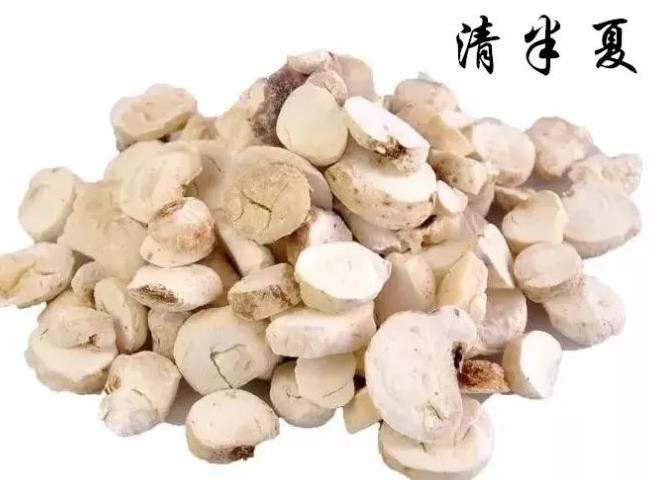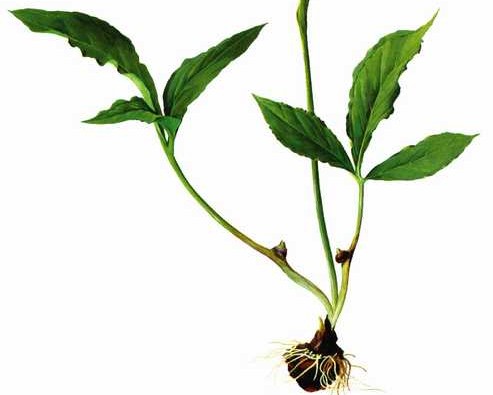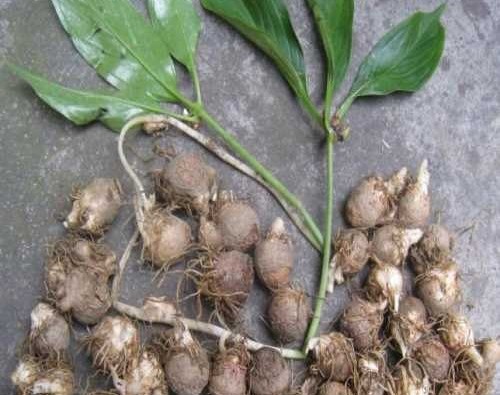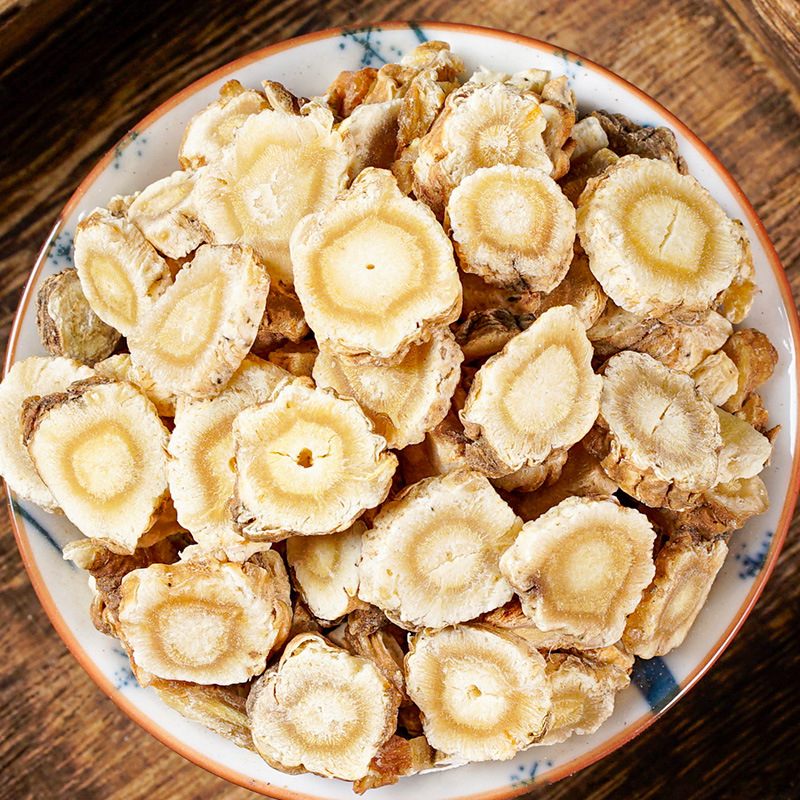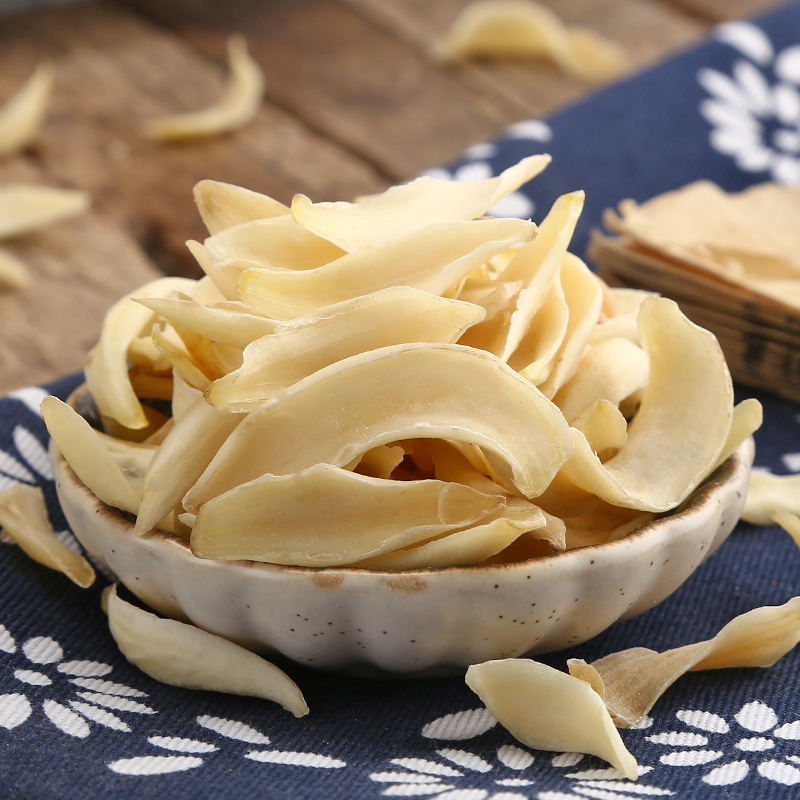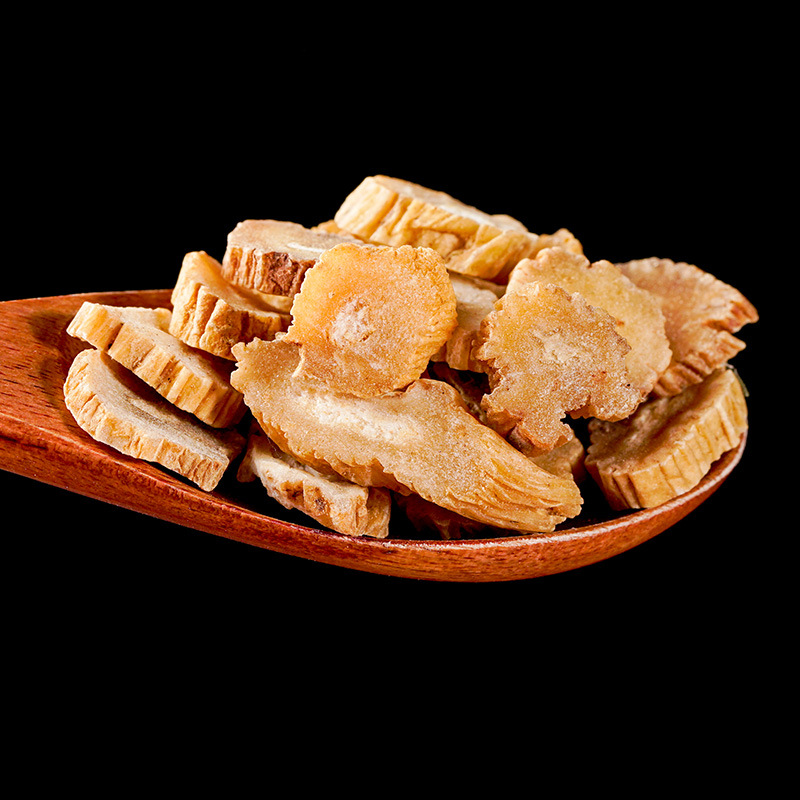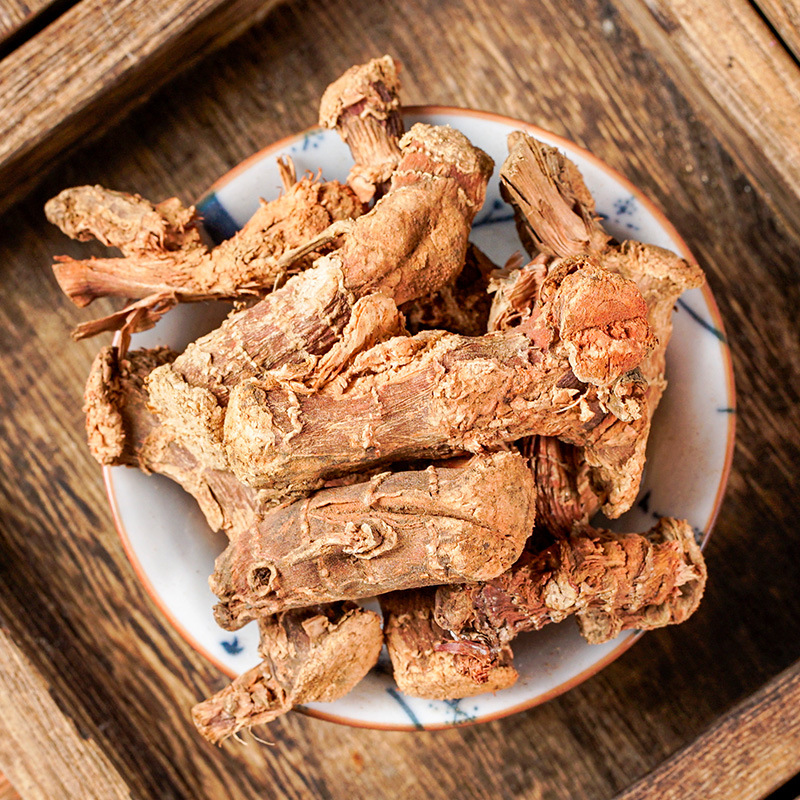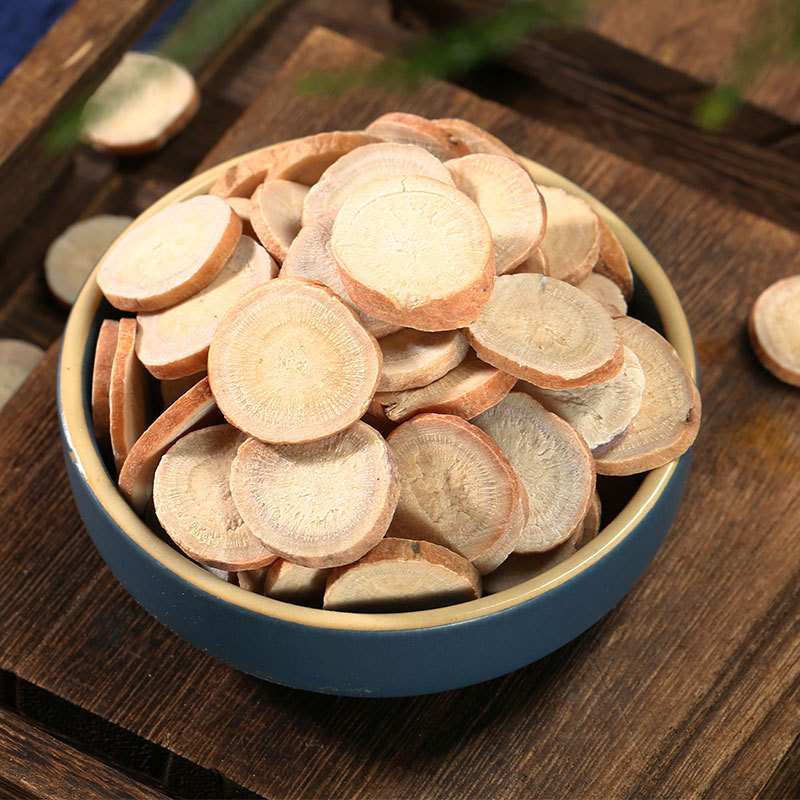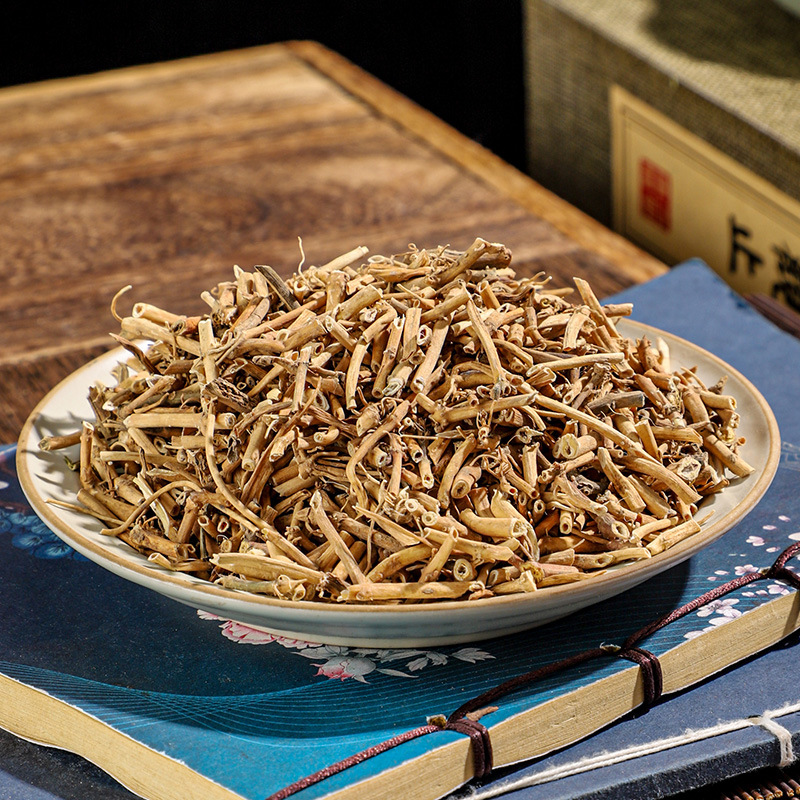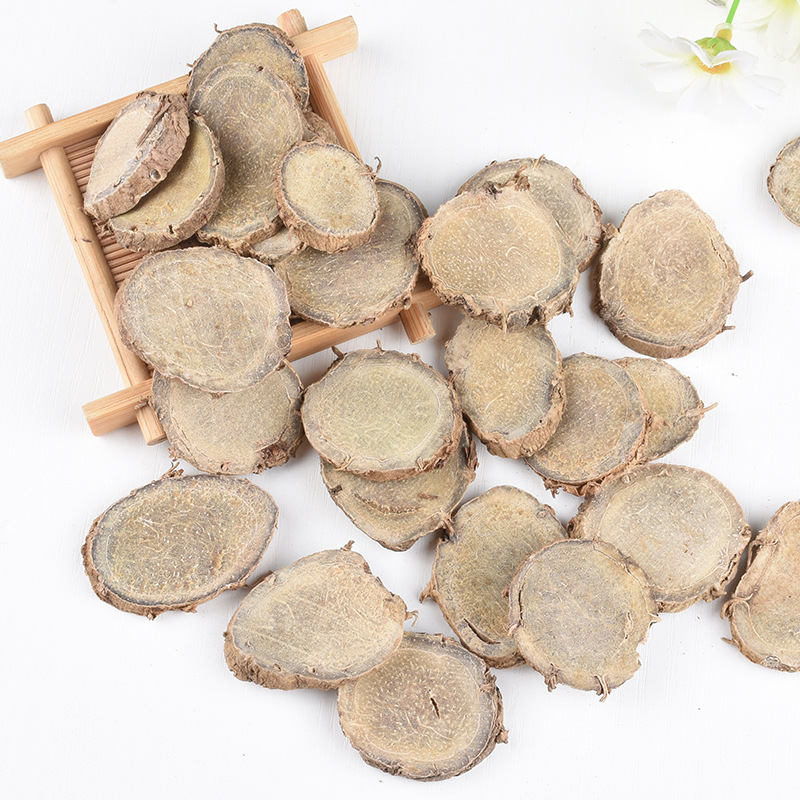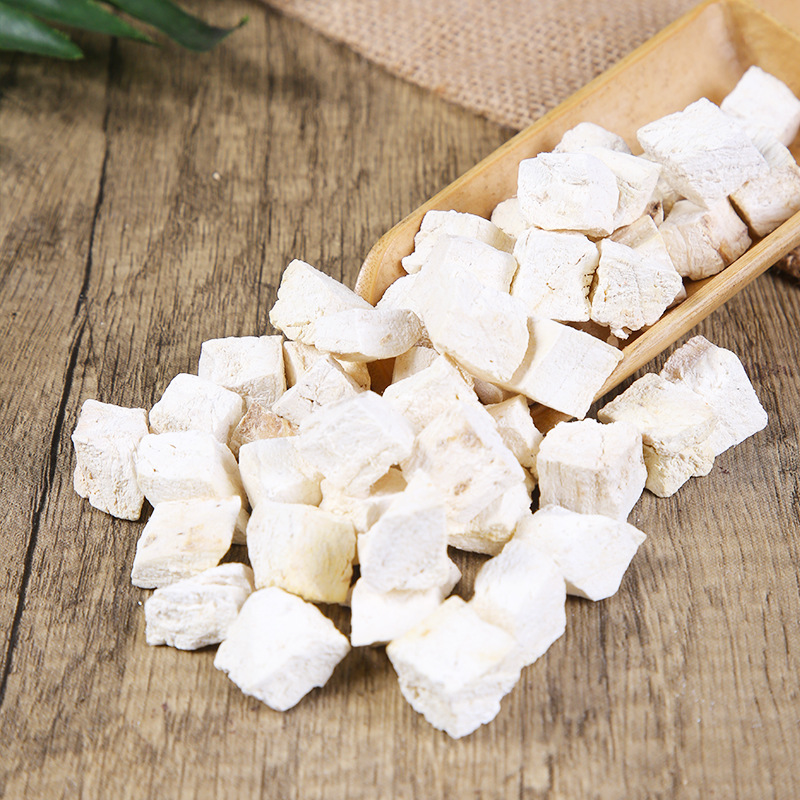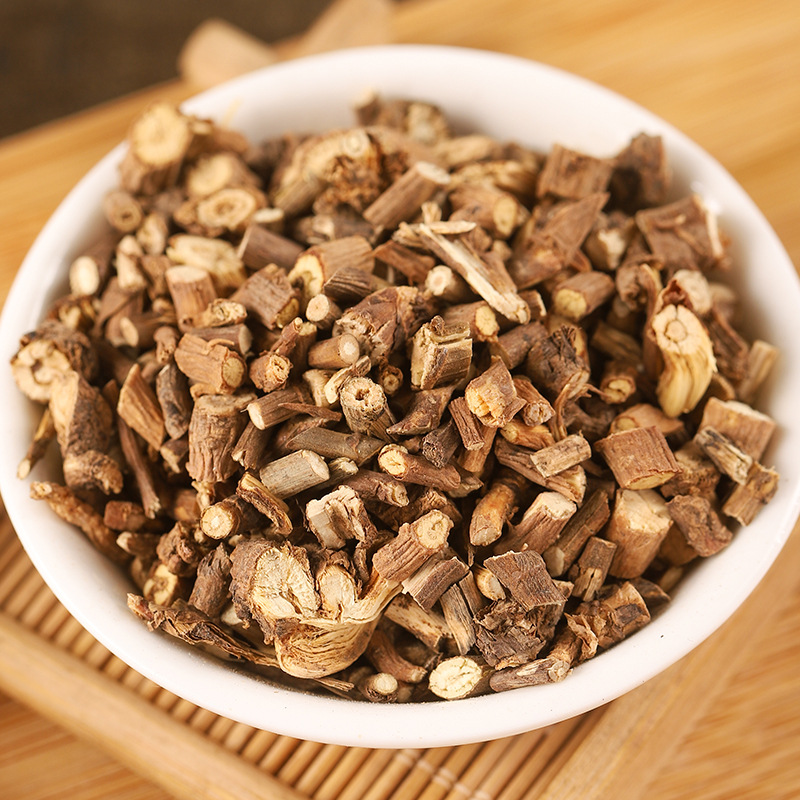
Banxia is the tuber of the perennial plant Pinellia ternata from the Araceae family. The name "Banxia" originates from the phrase "Banxia grows in May" in the Rites of Zhou. According to the lunar calendar, the fourth, fifth, and sixth months are considered summer, with May being the middle of summer. Since it is harvested in this month, it is named accordingly. Similar traditional Chinese medicines in the same category as Banxia include Tiannanxing and Yubaifu, all of which share the same toxicity. Comparatively, Banxia has lower toxicity, while Tiannanxing and Yubaifu are slightly more toxic. Therefore, Banxia is often processed before being used in medicine. Different processing methods result in various forms, such as raw Banxia, processed Banxia, clear Banxia, ginger-processed Banxia, Banxia paste, and bamboo sap-processed Banxia.
I. Efficacy and Application
Banxia tastes pungent, warm in nature, and toxic. It is thick in pungency and light in bitterness, a yin medicine within yang. It belongs to the spleen, stomach, and lung meridians.
Efficacy It can dry dampness and resolve phlegm, descend counterflow and stop vomiting, and dissipate masses and disperse accumulations. Its characteristic is particularly good at dispelling phlegm, descending counterflow and stopping vomiting, and it is praised by physicians as an essential medicine for damp phlegm and an essential medicine for cold-damp vomiting. Sun Simiao called it the holy medicine for stopping vomiting; Zhang Xichun called it the essential medicine for descending the stomach and calming the rushing qi.
Commonly used for treating conditions such as damp phlegm and cold phlegm, cough and asthma with excessive phlegm, phlegm retention causing dizziness and palpitations, wind phlegm dizziness, phlegm syncope headache, vomiting and regurgitation, chest and epigastric stuffiness and fullness, and plum-pit qi.
Pinellia is widely used for its ability to treat various diseases caused by phlegm, whether in the narrow or broad sense, and is particularly renowned for addressing difficult, complex, and severe illnesses.
Banxia and Nanxing can be considered a pair of remarkably unique herbs in traditional Chinese medicine, possessing numerous bidirectional regulatory effects. These two herbs are both cold and warm, both ascending and descending, both moistening and drying, both dispersing and astringing, hence they are often used to treat various perplexing and difficult diseases.
Mr. Jin Xicong once summarized that Pinellia ternata and Arisaema erubescens have eight bidirectional regulatory effects, which are: they can both relax and tense muscles; they can both relieve pain and cause numbness; they can both treat insomnia and excessive sleepiness; they can both alleviate diarrhea and constipation; they can both increase urination and treat urinary retention; they can both tighten and relax the intestines; they can both stimulate appetite and cause loss of appetite; they can both promote sweating and reduce sweating.
Summary of Famous Works by Renowned Authors:
Ben Jing: "It mainly treats cold damage with alternating chills and fever, hardness below the heart, directs qi downward, treats throat swelling and pain, dizziness, chest distention, cough with counterflow, intestinal rumbling, and stops sweating."
Bie Lu: "It dissipates phlegm-heat fullness and accumulation in the heart, abdomen, chest, and diaphragm, relieves cough and upward qi, alleviates urgent pain below the heart, hard masses, seasonal qi-induced vomiting and retching, and reduces abscesses and swellings."
"Treatise on Medicinal Properties": "Dissolves phlegm, descends lung qi, stimulates appetite and strengthens the spleen, stops vomiting, removes phlegm fullness in the chest. Fresh ginger can be applied topically to reduce abscesses and swelling, and eliminate goiter and tumorous qi."
"Compendium of Materia Medica": "Relieves abdominal distension, insomnia, leukorrhea, nocturnal emission, and leukorrhagia."
"Classification of Medicinal Herbs According to Their Properties and Effects": "It treats cold phlegm, cough caused by exposure to cold and consumption of cold drinks that injure the lungs, greatly harmonizes stomach qi, dispels stomach cold, and promotes appetite. It treats Taiyin phlegm syncope headache, which cannot be cured without this."
Changsha Materia Medica: It alleviates upward counterflow and relieves cough, reduces turbid yin and stops vomiting, expels water retention, clears phlegm and saliva, opens chest and diaphragm congestion, reduces throat swelling and pain, calms dizziness in the head, relieves fullness and stuffiness in the chest, effectively treats regurgitation, and wonderfully soothes palpitations.
"Compendium of Materia Medica": "Slippery in texture and drying in nature. It can move and disperse, dry and moisten. Harmonizes the stomach and fortifies the spleen, tonifies the liver and moistens the kidneys, eliminates dampness and transforms phlegm, releases the exterior and opens depression, descends rebellious qi, stops vexing vomiting, promotes vocalization, benefits the water passages, and rescues sudden collapse. Treats cough with counterflow, dizziness, phlegm reversal headache, supraorbital bone pain, and sore throat. Chest distension. Cold damage with alternating chills and fever, phlegm malaria with insomnia. Counterflow stomach with vomiting of food. Disperses glomus and eliminates goiter, reduces swelling and stops sweating."
Medical Records Combining Chinese and Western Medicine: It can lower stomach qi and calm the adverse flow of qi, thus stopping vomiting, guiding damp phlegm from the lungs and stomach to descend, and regulating qi to relieve asthma. It can treat stomach qi reversal, hematemesis, and epistaxis.
II. Compatibility and Application
1. For symptoms such as excessive phlegm, cough, and qi counterflow caused by spleen failing to transform dampness and phlegm-saliva stagnation. Pinellia can dry dampness and transform phlegm, and also has the effect of stopping cough, making it an essential herb for treating damp phlegm. For damp phlegm syndrome, characterized by cough with excessive phlegm, white and easily expectorated phlegm, nausea and vomiting, chest and diaphragm stuffiness and oppression, heavy limbs, or dizziness and palpitations, it is often combined with tangerine peel and poria to enhance the effect of drying dampness and transforming phlegm, as seen in the classic phlegm-treating formula Er Chen Tang. This formula is named "Er Chen" because pinellia and tangerine peel are two of the "six aged herbs" in traditional Chinese medicine.
Erchen Decoction is the general formula for treating phlegm, and with flexible modifications, it can treat various phlegm syndromes. For cold phlegm, it can be supplemented with dried ginger and white mustard seed; for heat phlegm, it can be supplemented with scutellaria and trichosanthes fruit; for damp phlegm, it can be supplemented with atractylodes and poria; for wind phlegm, it can be supplemented with arisaema and peucedanum; for stagnant phlegm, it can be supplemented with immature bitter orange and atractylodes macrocephala. Among all phlegm diseases, only dry phlegm is not suitable for pinellia.
Zhao Jizong said, "The Er Chen Decoction is used to treat phlegm, and it is commonly employed by physicians. It contains Pinellia, which has a drying and potent nature. While it is suitable for phlegm caused by wind, cold, dampness, or food stagnation, it is not appropriate for phlegm resulting from overexertion or blood loss. In such cases, its use may dry the blood and fluids, thereby exacerbating the condition."
In the treatment of phlegm-fluid retention syndrome, characterized by facial edema, clear and thin sputum or copious frothy sputum, cough with mild wheezing, it is often combined with warming lung and resolving fluid-retention herbs such as Asarum, dried ginger, and Schisandra chinensis, as seen in Xiaoqinglong Decoction. The combination of dried ginger, Schisandra chinensis, Pinellia ternata, and Asarum is highly effective for treating phlegm-fluid retention cough and wheezing due to wind-cold constraining the lung. If the condition presents with heat signs, such as thick and yellow sputum, it is often combined with heat-clearing and phlegm-resolving herbs like Scutellaria baicalensis, Anemarrhena asphodeloides, and Trichosanthes kirilowii, with remarkable efficacy.
2. For upward reversal of stomach qi, nausea, and vomiting. Pinellia can both dry dampness and transform phlegm, as well as descend counterflow and harmonize the stomach. To treat vomiting due to cold rheum, it is most commonly combined with fresh ginger, forming the renowned antiemetic formula Xiao Ban Xia Tang. The combination of Pinellia and fresh ginger is truly a model of herbal pairing in traditional Chinese medicine. Fresh ginger not only neutralizes the toxicity of Pinellia but also enhances its antiemetic effect, achieving two benefits with one action.
Wang Ang said, "Pinellia fears ginger, which is used to counteract its toxicity, and its efficacy becomes more pronounced when combined with ginger."
In addition to treating vomiting due to damp phlegm, Pinellia can also be used for various types of vomiting. For example, to treat vomiting due to stomach deficiency, it can be combined with ginseng and white honey, as in the Major Pinellia Decoction.
If treating stomach heat vomiting, it is often combined with Coptis chinensis, bamboo shavings, etc., known as Wendan Decoction; it can also be combined with reed root, bamboo shavings, loquat leaf, and other stomach-clearing and vomiting-stopping herbs.
If treating simple stomach cold vomiting, it is often combined with warming and antiemetic herbs such as clove, amomum fruit, and galangal.
If treating qi stagnation in the spleen and stomach, it is often combined with dampness-resolving herbs such as Huoxiang and Doukou.
If treating food stagnation, it is often combined with digestant herbs such as hawthorn, malt, and medicated leaven.
As for pregnancy vomiting, some doctors are afraid of the so-called toxicity of Pinellia ternata and dare not use it easily. In fact, if the syndrome differentiation and medication are appropriate, it can also be used. It is often combined with Perilla stem and Amomum villosum to regulate qi, calm the fetus, harmonize the stomach, and stop vomiting.
In addition, some people experience vomiting after being jolted or due to motion sickness, and treating it with Pinellia ternata combined with ginger often yields very good results.
3. For chest and epigastric stuffiness, plum-pit qi, as well as goiter and phlegm nodules, abscesses, sores, and swelling toxins, Pinellia has the effect of dispersing with acridity to relieve stuffiness, resolving phlegm, and dissipating nodules. To treat chest and epigastric stuffiness, vomiting, and other symptoms caused by the combination of phlegm and heat, it is often combined with Coptis chinensis and Trichosanthes kirilowii, as in the Minor Chest-Draining Decoction.
If treating plum-pit qi syndrome due to qi stagnation and phlegm binding, with a sensation of obstruction in the throat and no signs of heat, it is often combined with Magnolia Bark, Perilla Leaf, and Poria, as in Pinellia and Magnolia Bark Decoction.
For the treatment of goiter and phlegm nodules, it is often combined with softening and resolving herbs such as seaweed, kelp, and Zhejiang fritillaria.
Today, in the treatment of various tumor diseases, Pinellia is also one of the most commonly used traditional Chinese medicines. In Li Ke's Cancer-Fighting Life-Saving Decoction formulas one and two, raw Pinellia is heavily used. Zhu Liangchun also believes that for stubborn phlegm nodule conditions, raw Pinellia is indispensable. This is because the raw form retains its complete nature and flavor, maximizing its medicinal efficacy. For example, the Five Raw Ingredients Decoction is a representative formula known for its potent and aggressive nature in attacking diseases and expelling pathogens. The two masters of traditional Chinese medicine share a remarkable consensus in their understanding and application of Pinellia.
Banxia can also be used externally to treat carbuncles, back abscesses, and breast sores. For this purpose, raw Banxia can be ground into powder and mixed with egg white to apply on the affected area.
4. Used for insomnia, constipation, emergency treatment, etc. Pinellia can dry dampness and harmonize the stomach. It is used to treat disharmony of the spleen and stomach, restlessness, and insomnia. It is often combined with sorghum to harmonize the stomach and calm the spirit, having the function of connecting yin and yang, known as Pinellia and Sorghum Decoction.
The combination of Pinellia ternata and Prunella vulgaris also has the effect of harmonizing yin and yang and improving sleep.
Medical theory states: "Pinellia grows by obtaining yin, while Prunella vulgaris thrives by obtaining yang, which is the wondrous harmony of yin and yang."
If treating constipation due to deficiency in the elderly, ancient formulas include the method of combining sulfur, such as the Banliu Wan from the Bureau Formulas.
Cheng Wuji said, "Pinellia is pungent and dispersing, promoting water circulation and moistening kidney dryness."
Pinellia can also treat various symptoms of vomiting and bleeding, not only by lowering stomach qi but also by dispersing stasis and stopping bleeding. For symptoms of vomiting and bleeding, treatment often focuses on the spleen and stomach, with lowering stomach qi and dispersing stasis as the primary goal. Among the herbs that lower stomach qi, Pinellia is particularly effective, which is why it has been commonly used by physicians throughout history to treat vomiting and bleeding.
Zhang Xichun treated vomiting and bleeding due to heat causing stomach qi not descending by often combining Pinellia ternata with hematite, Trichosanthes kirilowii seed, white peony root, bamboo shavings, and great burdock achene, known as the Cold Descending Decoction; if treating vomiting and bleeding due to cold causing stomach qi not descending, he often combined it with hematite, white atractylodes rhizome, dried ginger, Chinese yam, and white peony root, known as the Warm Descending Decoction.
In ancient times, Pinellia could also be used as an emergency medicine, but it is rarely used for that purpose today.
Ge Sheng said, "In cases of the five fatal conditions, blowing Pinellia powder into the nose can revive the patient, as it induces sneezing. The five fatal conditions refer to death by hanging, drowning, crushing, nightmare, and childbirth."
5. The Use of Pinellia in "Treatise on Cold Damage Disorders". Zhongjing's use of Pinellia follows the original intent of "The Inner Canon", often employing its functions of warming the middle and transforming fluids, descending counterflow and stopping vomiting. For example, in treating cold damage with alternating chills and fever, it is often combined with Bupleurum and Scutellaria, as seen in formulas such as Minor Bupleurum Decoction, Major Bupleurum Decoction, and Bupleurum plus Dragon Bone and Oyster Shell Decoction.
If treating epigastric fullness and hardness, Pinellia is commonly used to warm the middle, direct qi downward, and expel fluid retention, combined with Trichosanthes fruit and Ginseng.
If treating epigastric fullness, hardness, and rigidity, it is often combined with Coptis chinensis, Trichosanthes kirilowii, and Allium macrostemon, as seen in formulas such as Minor Chest-Draining Decoction, Trichosanthes, Chinese Chive, and Pinellia Decoction, and Pinellia Heart-Draining Decoction.
If treating chest distension, cough with counterflow, retching counterflow, or cold rheum cough and panting, it is often combined with dried ginger, asarum, and schisandra to jointly achieve the effects of downbearing qi, expelling rheum, and transforming phlegm, as seen in formulas such as Minor Green Dragon Decoction, Belamcanda and Ephedra Decoction, and Poria, Licorice, Schisandra, Ginger, Asarum, and Pinellia Decoction.
For treating sore throat, it is often combined with bitter wine (vinegar) or licorice to eliminate phlegm and relieve obstruction, as seen in formulas such as Bitter Wine Decoction and Pinellia Powder.
For treating sore throat due to cold phlegm obstructing the collaterals, it is often combined with Poria, known as Banxia Houpo Tang; for treating swollen and painful throat caused by fire inversion, it is often combined with Ophiopogon, known as Maimendong Tang.
If treating intestinal gurgling and diarrhea, the effects of Pinellia in directing qi downward and expelling fluid retention are often utilized, combined with dried ginger, aconite, fresh ginger, and inula flower, as seen in formulas such as Xuanfu Daizhe Tang, Shengjiang Xiexin Tang, Banxia Xiexin Tang, and Fuzi Jingmi Tang.
III. Usage and Dosage
Pinellia is often used in decoctions and less frequently in pills or powders. It can also be applied externally. The dosage varies significantly depending on the condition being treated. Generally, for decoctions, the common dosage ranges from a few grams to over ten grams. For treating acute and severe conditions, it can be used in doses of several tens of grams or more.
When using Pinellia in large doses, for safety, it can be combined with an equal amount of ginger to neutralize its toxicity and enhance its effects of stopping vomiting and resolving phlegm, which is indeed a good method. At the same time, it can also be used similarly to aconite, by decocting for a long time to remove its toxicity.
Regarding the toxicity of Pinellia, it is essential to refer to the application experience of Zhongjing. In the Treatise on Cold Damage Diseases, Pinellia is used in a total of 43 formulas, including 37 for internal use and 6 for external use. Whether for internal or external use, raw Pinellia is employed, which can be used medicinally after being washed with water, serving as a reference. However, later generations of physicians often fear its toxicity and commonly use it after processing. Although the toxicity is somewhat reduced after processing, its medicinal efficacy is also significantly diminished. For mild conditions or initial illnesses, it may yield temporary effects, but when encountering severe or chronic diseases, it is difficult to achieve efficacy. Therefore, many renowned practitioners of traditional Chinese medicine, when treating stubborn and severe illnesses, often follow Zhongjing's method and use raw Pinellia.
Li Ke has extensive experience in using raw Pinellia ternata, which can serve as a reference especially in treating critical and severe conditions. For general illnesses, using processed Pinellia ternata is more prudent.
Li Keyan: "Classical formulas use raw Pinellia, washing it in hot water can remove its pungent and throat-irritating drawbacks, but washing also removes the thick, sticky, and lubricating juice of Pinellia. The 'Inner Canon' states 'pungency moistens,' and this juice feels slippery to the touch, which is proof of Pinellia's warming and moistening properties. Therefore, since 1961, whenever I use raw Pinellia, I do not wash it in hot water but instead cook it with an equal amount of fresh ginger to counteract its pungency. Based on 48 years of personal experience, this method is harmless and highly effective."
Based on the above, it is evident that raw Pinellia ternata indeed possesses toxicity. For general ailments, using processed Pinellia ternata is sufficient and relatively safe. However, for treating critical and severe conditions, in order to achieve potent medicinal effects, one may refer to the usage methods of Zhang Zhongjing and the experiences of many later generations of traditional Chinese medicine masters, and raw Pinellia ternata can also be employed.
Zhu Liangchun said, "Although it is toxic when used raw, once it is decocted, the raw becomes cooked, and its toxicity is greatly reduced, so what harm is there?"
There are many methods of processing Pinellia ternata, and its efficacy varies accordingly. When used raw in medicine, it is called raw Pinellia ternata, which is highly toxic but also highly potent. Processed with ginger and alum water, it becomes processed Pinellia ternata, which is more inclined to dispel phlegm. When processed Pinellia ternata is further treated with ginger, it is called ginger Pinellia ternata, which is more inclined to stop vomiting. Additionally, there are Xian Pinellia ternata and Qing Pinellia ternata. When ground and fermented, it is called Pinellia ternata ferment, which is more inclined to strengthen the spleen and harmonize the stomach.
Generally, processed Pinellia is the most commonly used, while Pinellia Qu and Qing Banxia have milder warming and drying properties, making them more suitable for children, the elderly, and those with weak constitutions.
Zhang Xichun said, "Pharmacies, due to its toxicity, all boil it with alum water, which overly neutralizes it, leaving no pungent taste but instead a strong alum flavor that induces vomiting. Even clear pinellia contains alum, which may be acceptable for dispelling damp phlegm, but it is unsuitable for stopping vomiting, hematemesis, or epistaxis. In treating such conditions, I always wash it several times with lukewarm water before use. However, repeated washing reduces its potency, so the dosage must be increased accordingly."
IV. Application Precautions
Pinellia is warm and dry in nature (Li Ke disagrees with this view, believing it is inconsistent with the "Neijing"), so it should be avoided or used with caution in cases of yin deficiency with dry cough, blood disorders, and heat phlegm. It should be used with caution during pregnancy.
Since ancient times, there has been a saying that Pinellia ternata is incompatible with Aconitum carmichaelii. However, in the treatment of stubborn and severe diseases such as tumors, many great physicians have consistently combined them, aiming to use their opposing and stimulating properties to counteract toxicity with toxicity, as seen in the Wusheng Decoction. This represents the pinnacle of traditional Chinese medicine, and beginners should not blindly imitate it.
Wang Ang said: "In ancient times, there were three prohibitions: those with blood disorders, those prone to sweating, and those with excessive thirst should avoid it. However, there are occasional cases where it is used."
Practical Notes on Traditional Chinese Medicine: Second Draft on the Evening of January 19, 2021