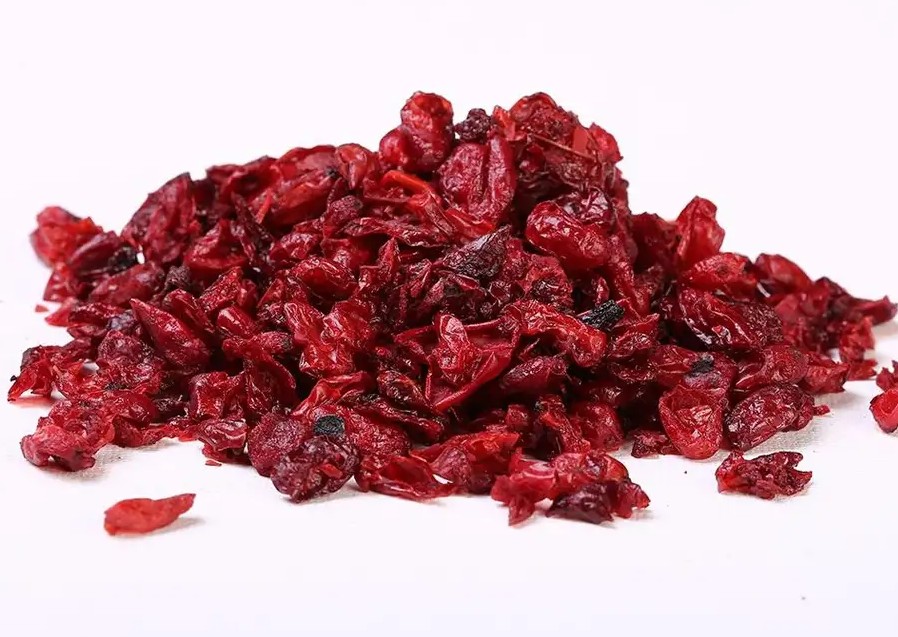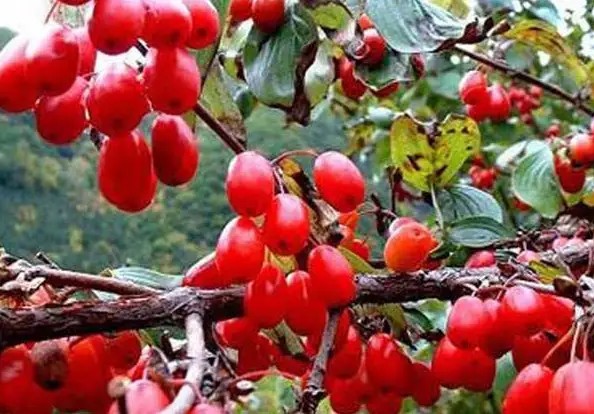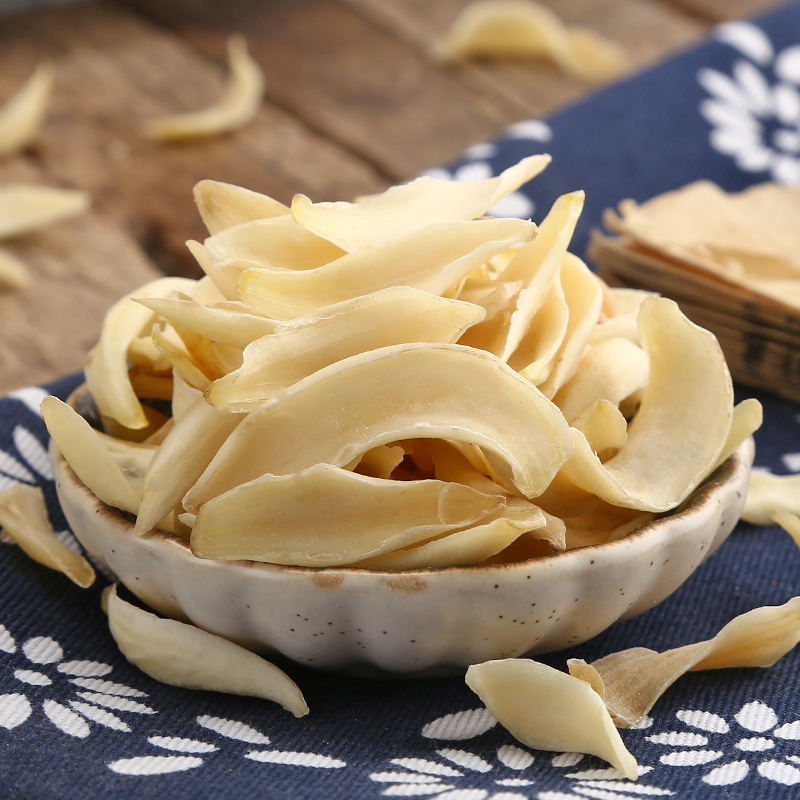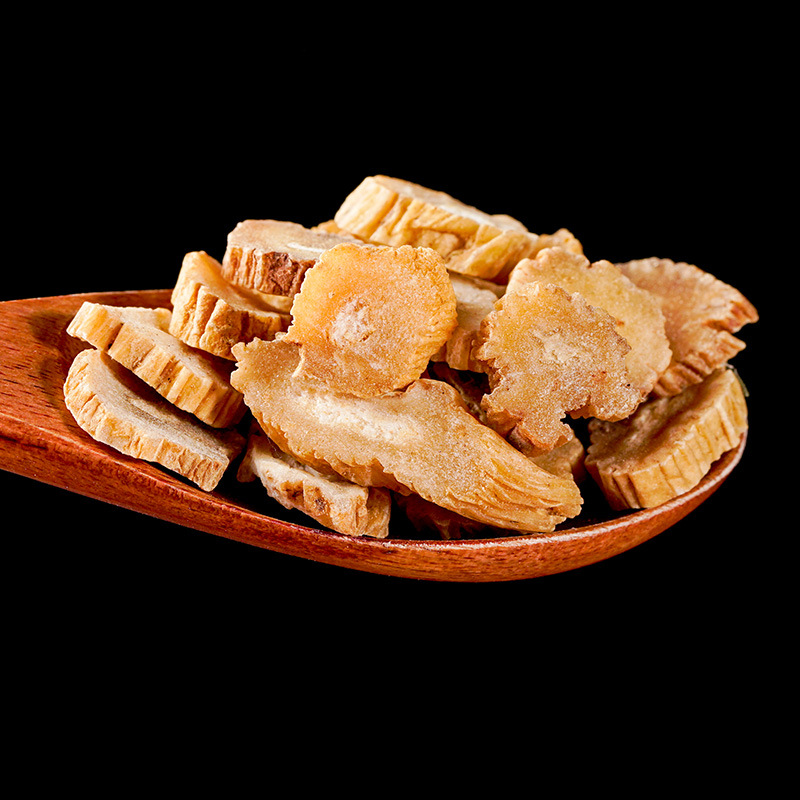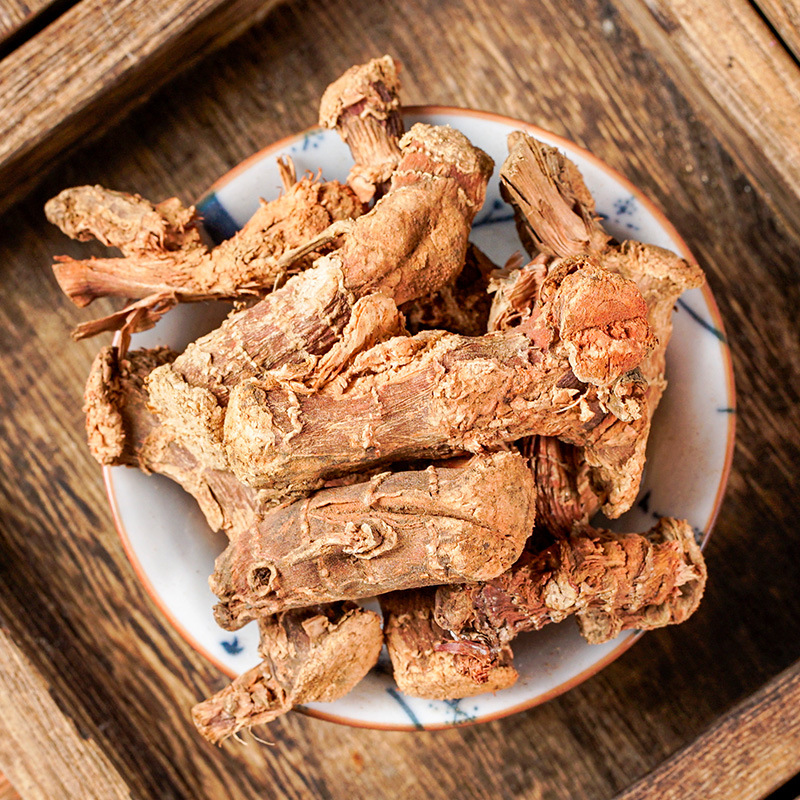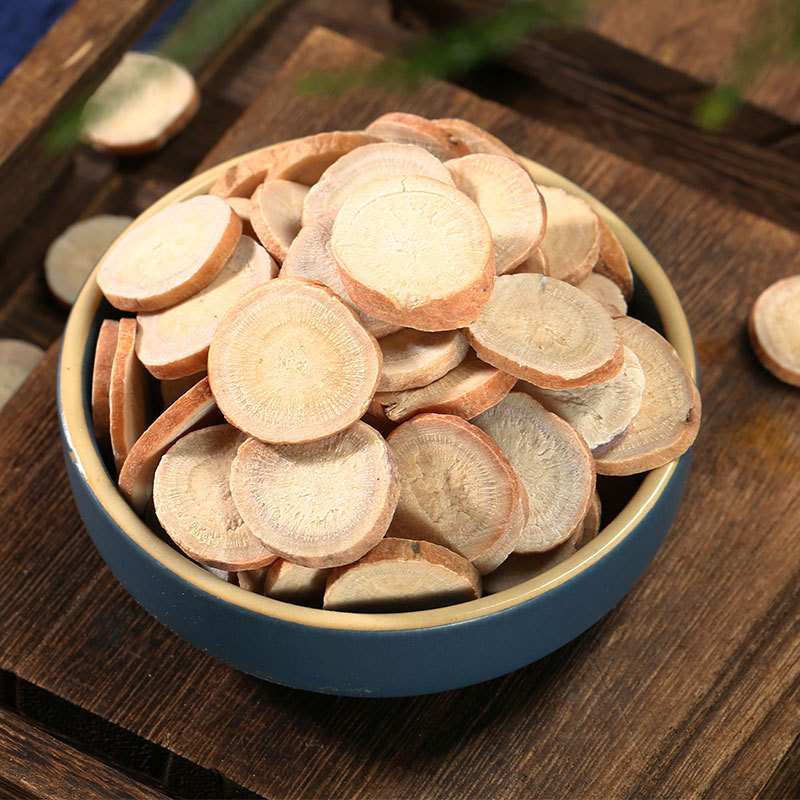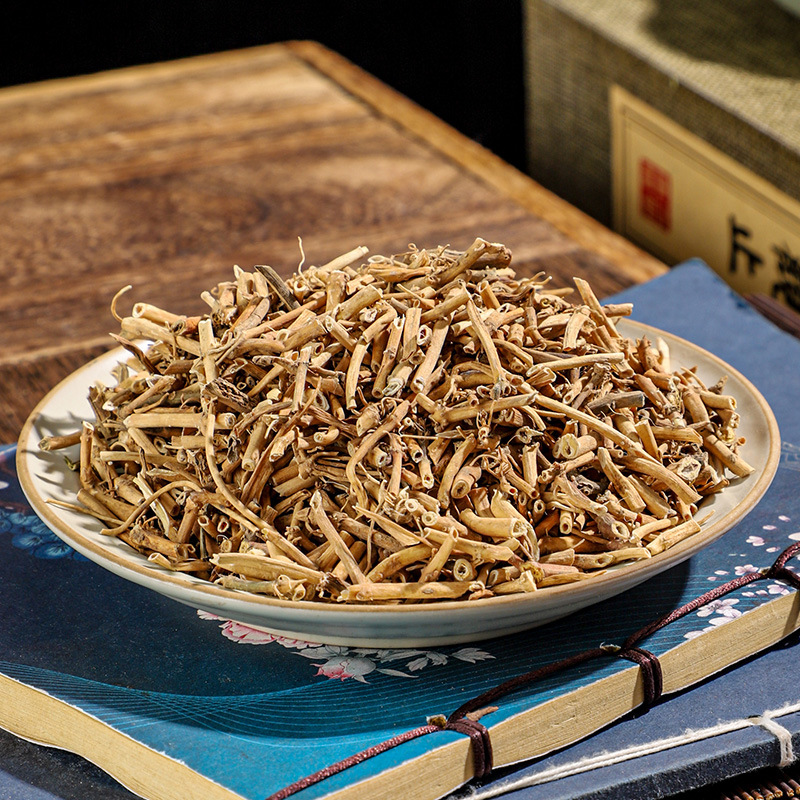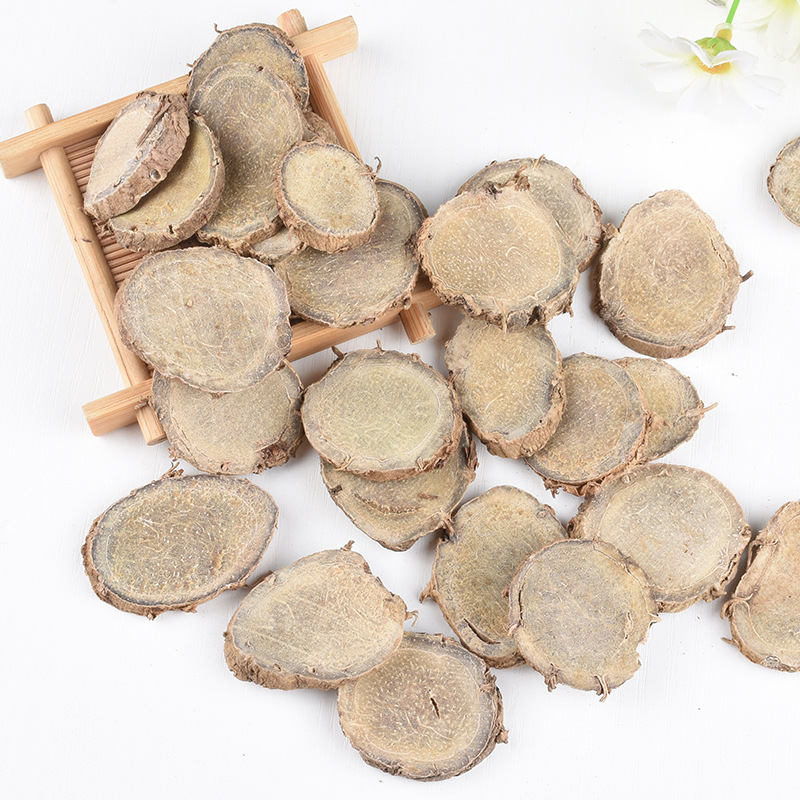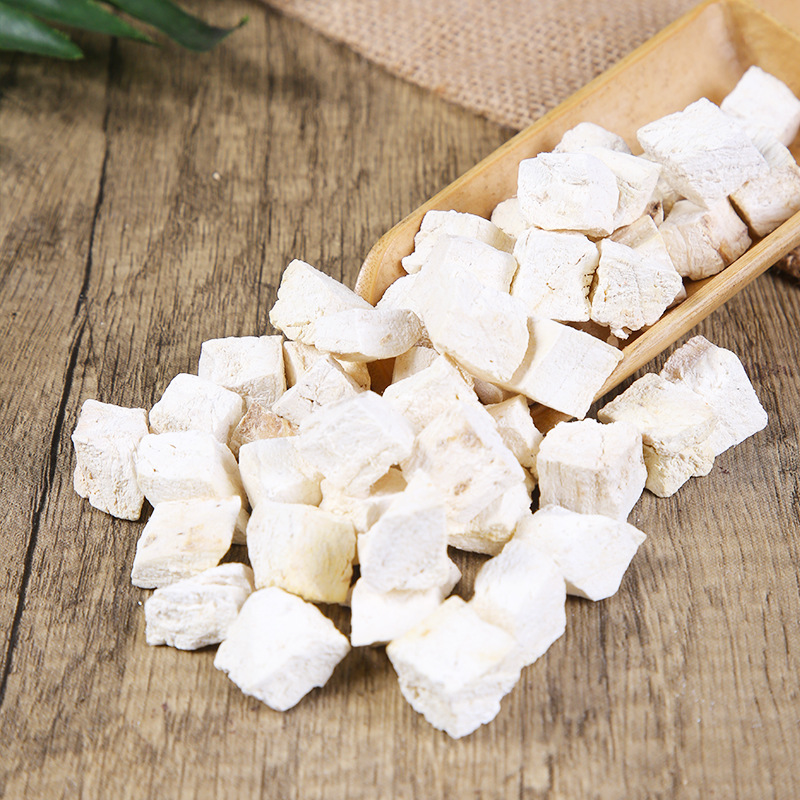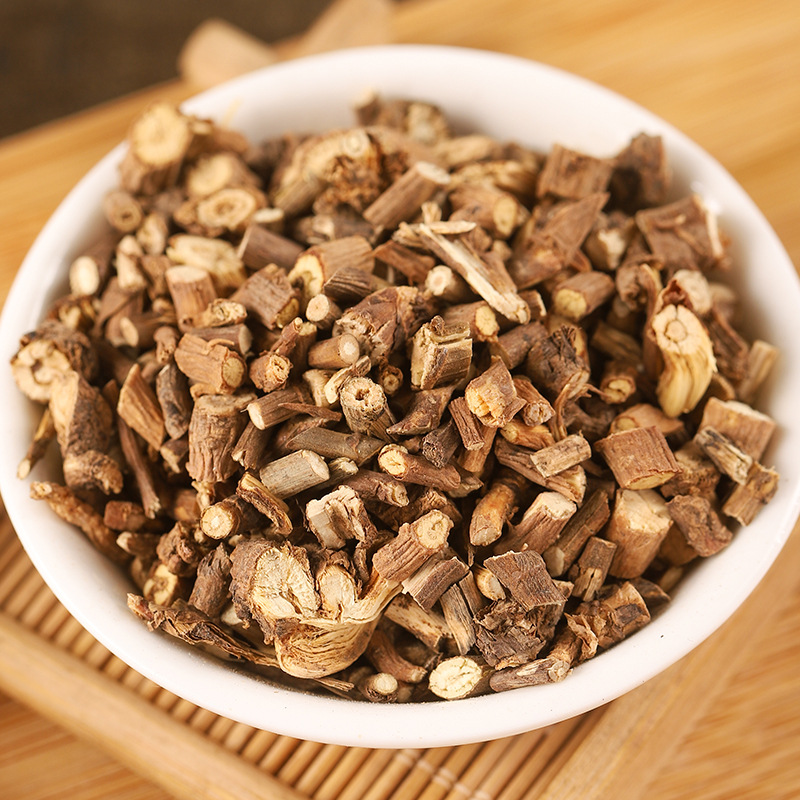
Cornus officinalis, also known as jujube skin, is the mature pulp of the deciduous small tree Cornus officinalis of the Cornaceae family. It is mainly produced in Zhejiang, Anhui, Henan, Shanxi, and other regions. The fruits are harvested in autumn when they ripen. After harvesting, the pits are removed, and the fruit is dried in the sun or by baking for use.
I. Efficacy and Application
Cornus officinalis tastes sour and is slightly warm. It belongs to the liver and kidney meridians.
Efficacy It can tonify the liver and kidneys, and astringe to prevent collapse. Its characteristic is to astringe healthy qi without astringing pathogenic qi, and it is particularly skilled at astringing the liver to prevent collapse. Zhang Xichun called it the premier medicine for rescuing collapse.
It is commonly used for the treatment of symptoms such as soreness in the lower back and seminal emission due to liver and kidney deficiency, dizziness and blurred vision, excessive menstrual flow, frequent urination, as well as panting due to spontaneous sweating, and profuse sweating leading to yang depletion.
Summary of Famous Works by Renowned Authors:
The Classic of Materia Medica: "It primarily treats pathogenic qi below the heart, cold and heat, warms the middle, and expels cold-damp impediment."
"Bie Lu": "It primarily treats deafness, facial sores, warms the center, directs qi downward, promotes sweating, strengthens yin, benefits essence, calms the five viscera, unblocks the nine orifices, stops excessive urination, brightens the eyes, and enhances strength."
Leigong Paozhilun: "Strengthen primordial qi, secure essence."
"Treating brain and bone pain, regulating irregular menstruation, tonifying kidney qi, invigorating yang function, replenishing essence and marrow, addressing tinnitus, and alleviating urinary incontinence in the elderly."
"Pearl Pouch":"Warms the liver."
Tangye Bencao: "Slippery indicates qi collapse, astringent formulas are used to consolidate it. Cornus officinalis stops frequent urination and secures essential qi, taking its sour and astringent flavor to consolidate the slippery condition."
Changsha Materia Medica: Warms the Wood of Yi and stops dispersion, astringes the essence and reduces urination.
"Compendium of Materia Medica": "Secures essence and conserves qi, strengthens yin and assists yang, calms the five viscera, and unblocks the nine orifices. Warms the waist and knees, reduces urination. Treats wind-cold-damp impediment, nasal congestion and yellow eyes, tinnitus and deafness."
"Medical Records of Integrating Chinese and Western Medicine": "Cornus officinalis has a sour taste and warm nature, greatly capable of consolidating primordial qi, invigorating the spirit, and securing and astringing slippery desertion. Because it receives the thickest wood qi, it combines astringency with a smooth and free-flowing nature, thus also opening the nine orifices, promoting blood circulation, and treating liver deficiency with spontaneous sweating, liver deficiency with flank and lower back pain, and liver deficiency with internal wind stirring. Moreover, it consolidates healthy qi without consolidating pathogenic qi, which is different from other sour astringent herbs."
II. Compatibility and Application
1. Used for conditions such as profuse sweating, asthmatic breathing due to deficiency, yang depletion, and critical illness. Cornus officinalis can astringe the liver to prevent collapse, secure and protect the primordial yang, making it an essential medicine for emergency treatment.
For treating external contraction of cold and warm pathogens, inability to recover after a severe illness, alternating chills and fever, profuse sweating; or fever without chills, sweating followed by fever relief, then recurring fever and sweating, upward deviation of the eyes, critical condition nearing collapse; or dyspnea, palpitations, or insufficient qi leading to shortness of breath, large doses of Cornus officinalis are often combined with raw Longgu, raw Muli, white peony root, Codonopsis pilosula, and honey-fried licorice, which is Zhang Xichun's famous prescription, the Laifu Decoction.
The Application of Cornus Officinalis in Ancient and Modern Times, Zhang Xichun can be considered the foremost figure throughout the ages. Zhang's use of Cornus Officinalis was not limited to general tonification; he further explored its effect of "astringing the liver and securing collapse," and he heavily employed Cornus Officinalis in the treatment of many critical and severe conditions. The Laifu Decoction he created remains the most commonly used formula in clinical emergency situations in traditional Chinese medicine today. In Zhang Xichun's writings, there is a recorded medical case:
A pregnant woman contracted cholera, experiencing vomiting and diarrhea for about a day and night. As her condition slightly improved, the fetus suddenly miscarried. She felt her spirit suddenly dissipate, her heart fluttering as if unable to sustain itself, and she sought my diagnosis. Upon arrival, her condition had deteriorated severely, with burial clothes already prepared and her body about to be moved to the bed. The family intended to forgo further treatment. I said, "As long as there is still a breath, there is hope for recovery." Upon examination, her pulse was faint and barely perceptible, her breathing was weak, she was unresponsive to calls, and there was no time to fetch medicine. Her eastern neighbor, my cousin Liu Yuzhen, had two doses of medicine at home that had not been taken, also prescribed by me, containing six qian of Cornus officinalis. I urgently retrieved it, decocted it into a soup, and administered it. Her breathing slightly strengthened, and she became responsive to calls. I then purchased two liang each of pure Cornus officinalis and fresh Chinese yam, decocted them into a large bowl of soup, and had her drink it slowly. Her spirit immediately recovered.
Zhang Xichun said, "The depletion of primordial qi in humans always occurs in the liver. Therefore, when a person is extremely weak, their liver wind will inevitably stir first. The stirring of liver wind is a sign that primordial qi is about to be depleted."
Zhang Xichun said, "The efficacy of Cornus officinalis in rescuing collapse is superior to that of ginseng, Atractylodes macrocephala, and Astragalus. The nature of Cornus officinalis not only nourishes the liver but also has the ability to consolidate the scattered yin, yang, qi, and blood of the human body. Therefore, Cornus officinalis should be considered the foremost herb for rescuing collapse."
Modern master of traditional Chinese medicine, Li Ke, drawing inspiration from Zhang Xichun's Laifu Decoction and incorporating modifications from Zhang Zhongjing's Sini Decoction, created the renowned formula Pogejuxin Decoction, which remains the preferred choice for treating severe heart failure in traditional Chinese medicine today.
Li Keyan: "I learned from my teacher (Zhang Xichun's Laifu Decoction) and added heavy doses of Cornus officinalis, raw Longgu and Muli to the extraordinary Ginseng Sini Decoction, along with live magnetite and musk, thus forming the extraordinary Jiuxin Decoction. Among the ingredients, Cornus officinalis is particularly noteworthy, as it 'greatly helps to consolidate primordial qi, secure and astringe slippage and desertion, and within its astringent properties, it also possesses the ability to regulate and promote flow. Therefore, it can also unblock the nine orifices, promote blood circulation, and consolidate healthy qi without retaining pathogenic qi.' Its use can assist aconite in securing the restored yang and rescuing the collapse of qi and blood in the five zang organs."
2. For deficiency of liver and kidney, dizziness, blurred vision, soreness and weakness of the waist and knees, impotence, and other syndromes. Cornus officinalis can tonify the liver and kidney, both replenishing essence and assisting yang. For treating liver and kidney yin deficiency, dizziness, blurred vision, soreness and weakness of the waist and knees, and other syndromes, it is often combined with prepared rehmannia root, Chinese yam, alisma, etc., as in Liuwei Dihuang Wan.
Based on the theory of "tonifying the kidney and strengthening the brain," Mr. Deng Tietao explored this prescription (Liuwei) for treating conditions such as intellectual disability, delayed speech, and delayed teething in children, as well as periodontitis and post-stroke speech difficulties in the elderly, achieving excellent therapeutic outcomes.
If treating kidney yang deficiency with inhibited urination, add aconite and cinnamon bark to Six-Ingredient Rehmannia Pill, which is Zhang Zhongjing's Kidney Qi Pill.
Huang Yuanyu said, "Cornus officinalis is sour and astringent, consolidating and stabilizing. It assists the cold nature of the Ren and Gui meridians in storing essence, astringing and securing the essential fluids to preserve the root of yang. It is a crucial herb in the Eight-Ingredient Decoction. As for the diuretic effect of the Eight-Ingredient Decoction, that is the function of cinnamon twig, poria, and alisma, not the responsibility of Cornus officinalis."
Wang Ang said, "The Six-Ingredient Pill has the warmth of cooked rehmannia, the coolness of moutan bark, the astringency of Chinese yam, the diuretic effect of poria, the astringent property of dogwood fruit, and the purgative action of alisma. It tonifies the kidney while also tonifying the spleen, ensuring that tonification is accompanied by purgation, harmonizing and balancing to achieve a mild tonifying effect. It is a miraculous formula of simplicity, making it an enduring and effective prescription throughout history."
3. For deficiency syndromes such as seminal emission, spermatorrhea, enuresis, frequent urination, and excessive leukorrhea. Cornus officinalis has astringent and consolidating properties. For example, Liuwei Dihuang Wan can be used for conditions like nocturnal emission and night sweats due to yin deficiency.
If treating kidney deficiency with urinary incontinence, it can also be combined with warming kidney and astringent herbs such as mantis egg-case, raspberry, bitter cardamom, and flatstem milkvetch seed.
If treating kidney yang deficiency, impotence, spermatorrhea, and other conditions, it is often combined with Psoralea corylifolia, Angelica sinensis, musk, etc., known as Caohuan Dan.
If treating women's metrorrhagia and excessive menstruation, it is often combined with Astragalus, cuttlebone, and madder, known as the Guchong Decoction.
III. Usage and Dosage
Cornus officinalis is often used in decoctions and can also be made into pills or powders. The dosage in decoctions should be flexibly determined, as different amounts yield different effects. The general common dosage is around ten grams, but if it serves as the main ingredient in a formula or is used for emergency stabilization, it can be increased to several tens of grams or even over a hundred grams.
In the treatment of acute and critical conditions with traditional Chinese medicine, the primary goal is to achieve therapeutic effects. To ensure safety, it is common to administer small doses frequently, closely observe the patient's response to the medication, and adjust the prescription flexibly based on the observed progress. It is essential not to rigidly adhere to the dosages specified in textbooks, as doing so would contradict the principles of traditional Chinese medicine.
The medicinal use of Cornus officinalis does not include its kernel.
Leigong said, "The kernel can cause seminal emission, so it is removed."
Wang Ang said: "Remove the core for use, as the core can cause seminal emission."
Zhang Xichun said, "The nature of its core and flesh are opposite, so the core must be completely removed when using it."
IV. Application Notes
Cornus officinalis tends to be warm and tonifying with astringent properties, so it is not suitable for those with inherent damp-heat or difficulty in urination.
Practical Notes on Traditional Chinese Medicine: Second Draft, January 26, 2021