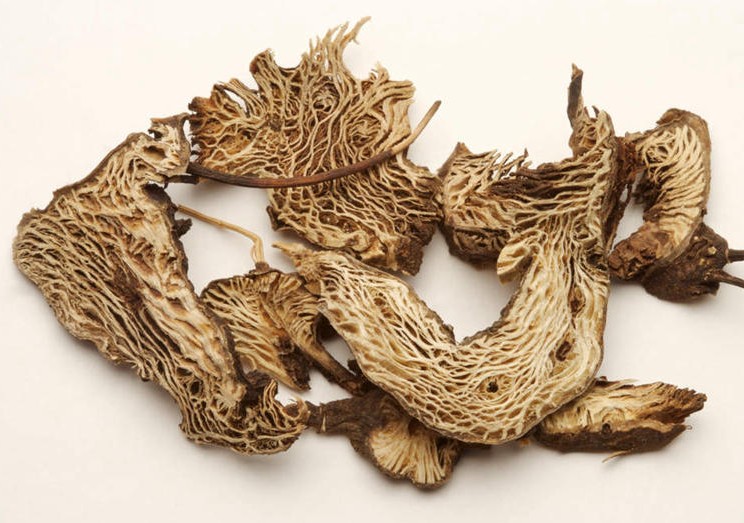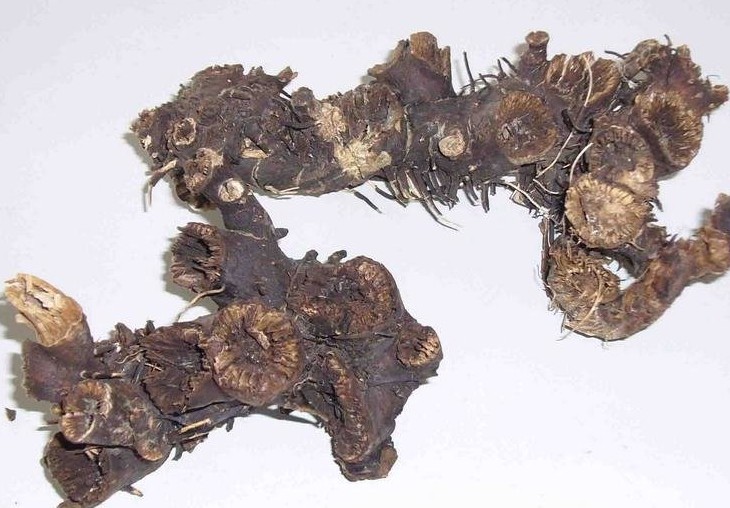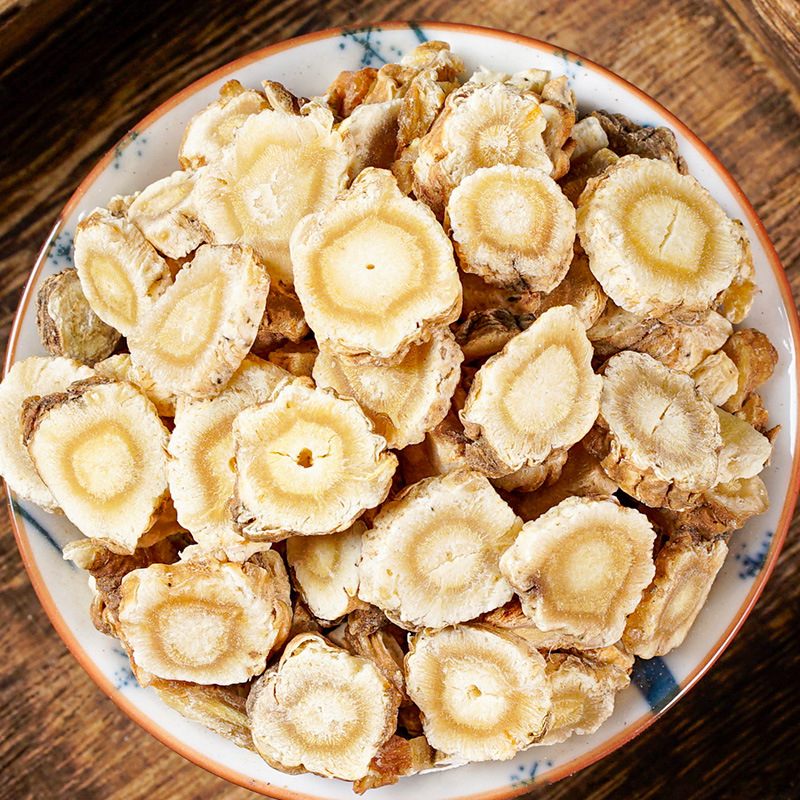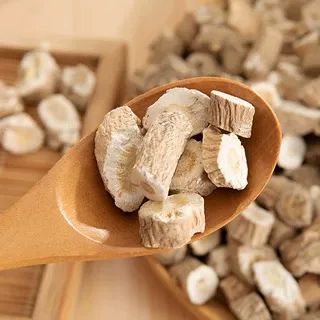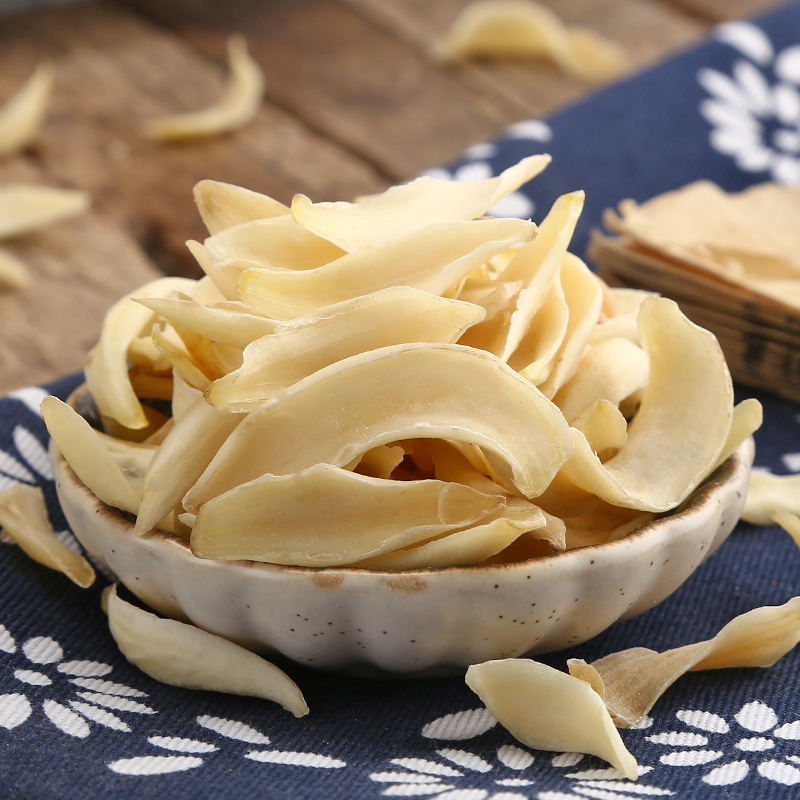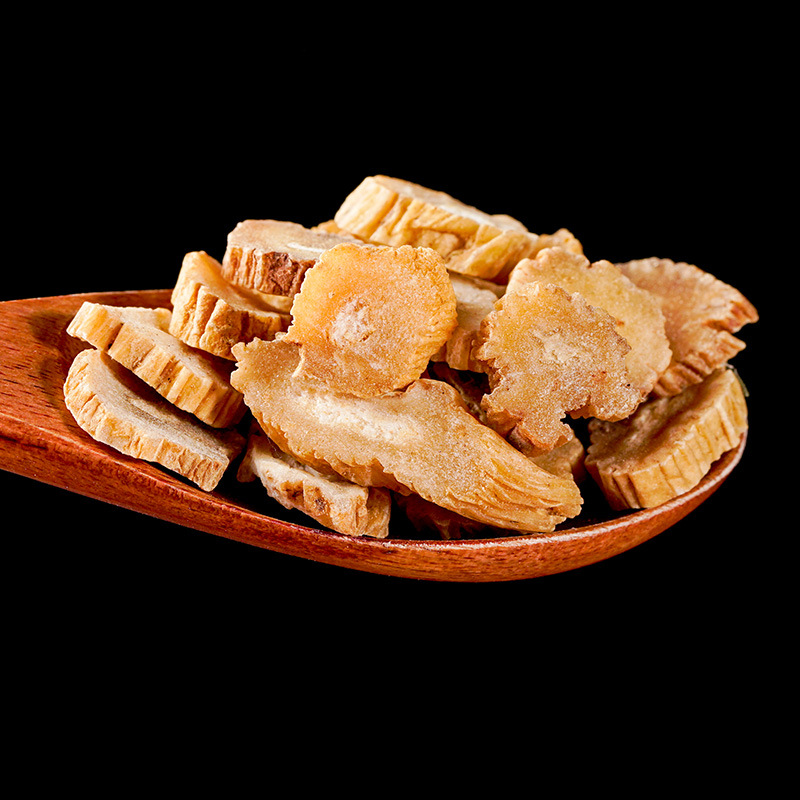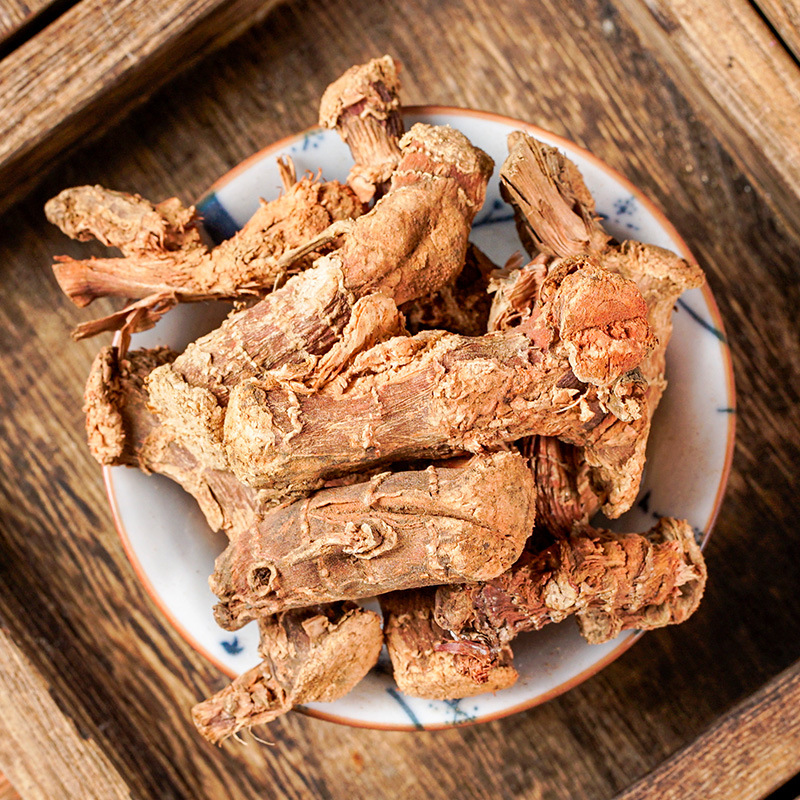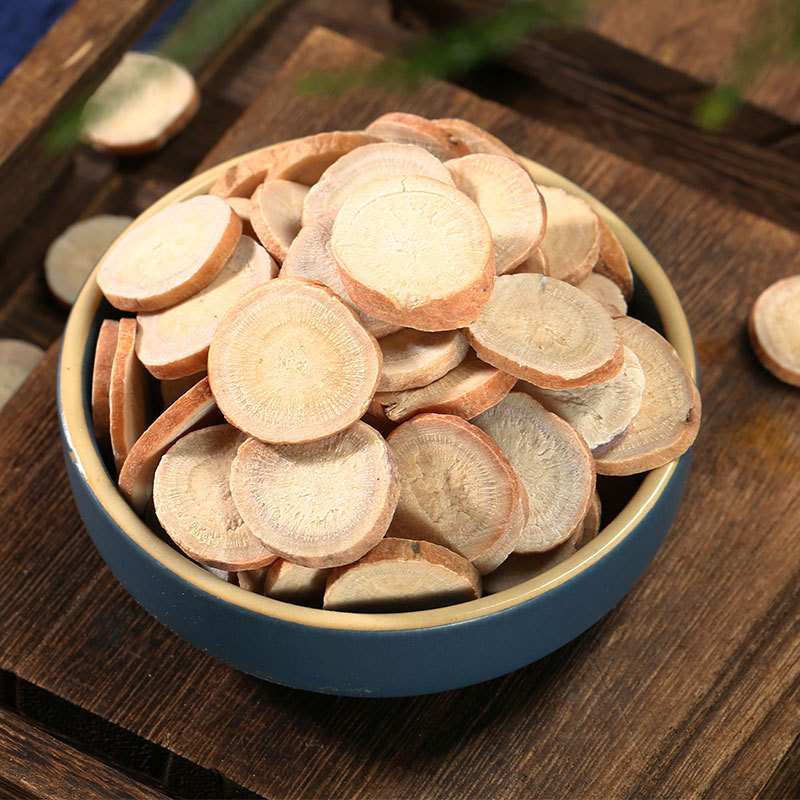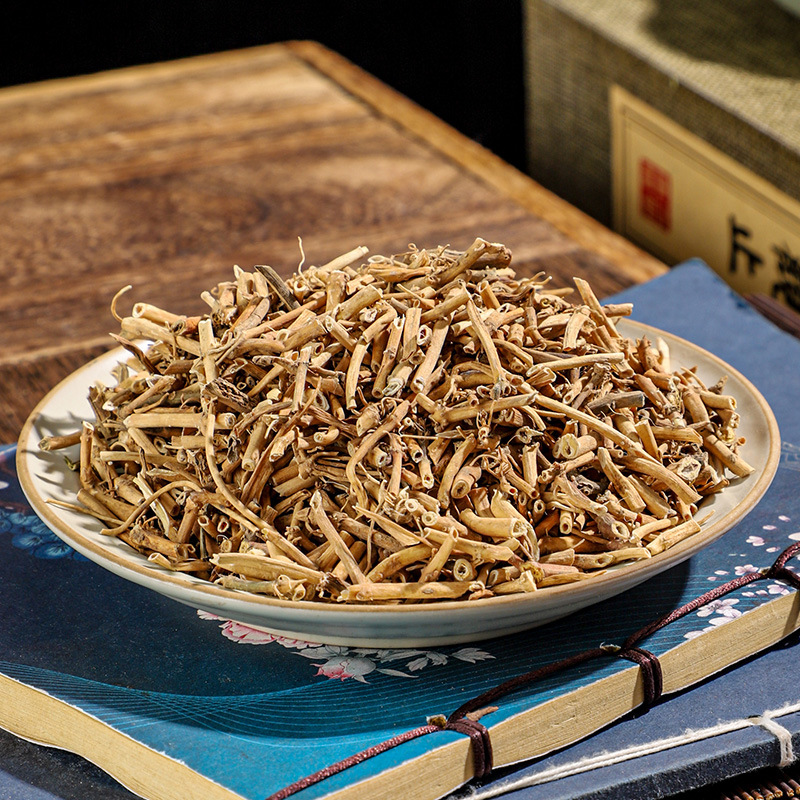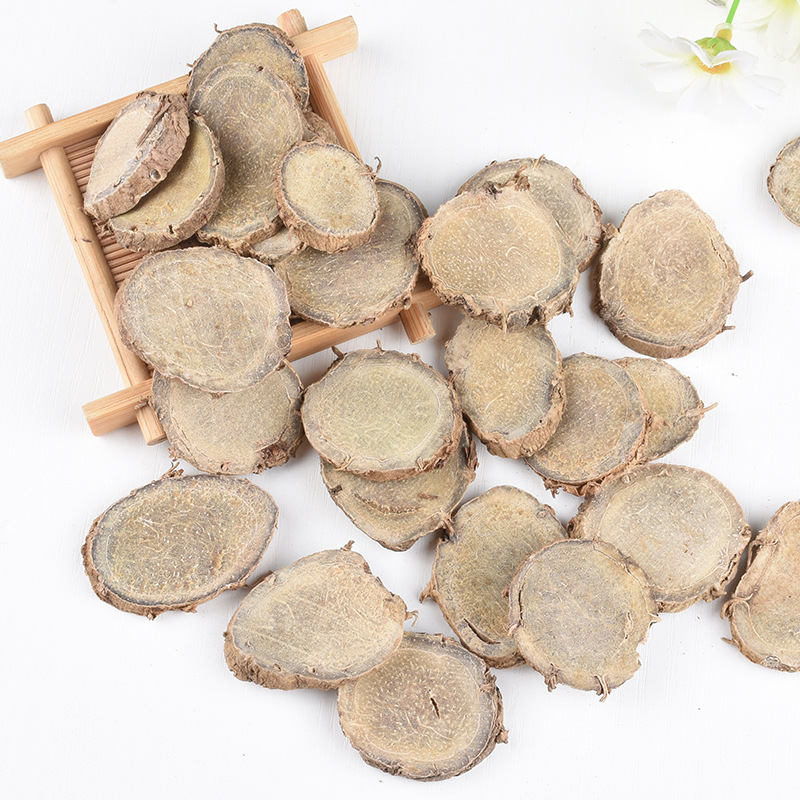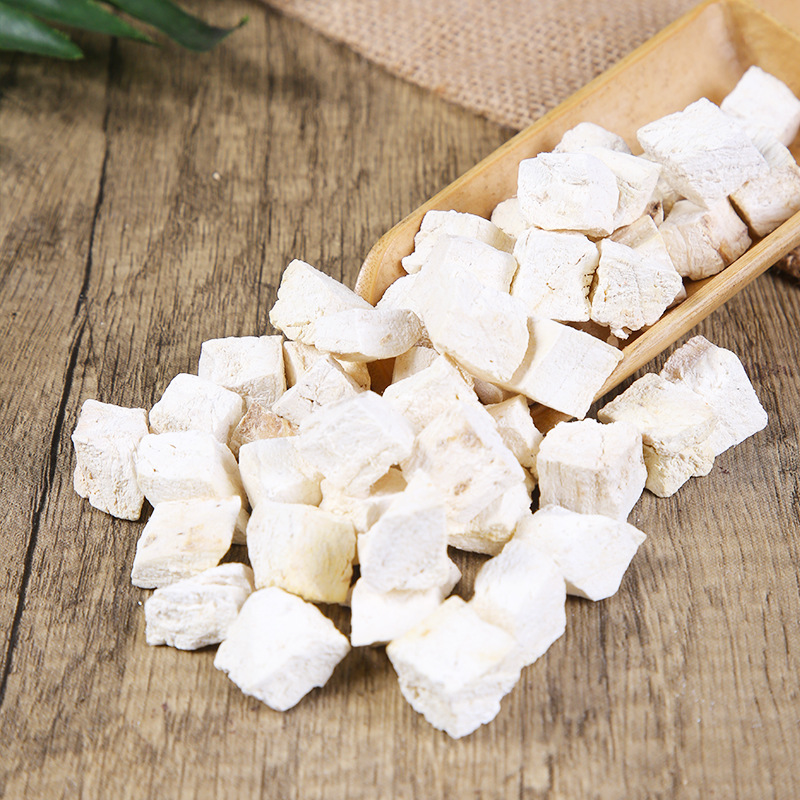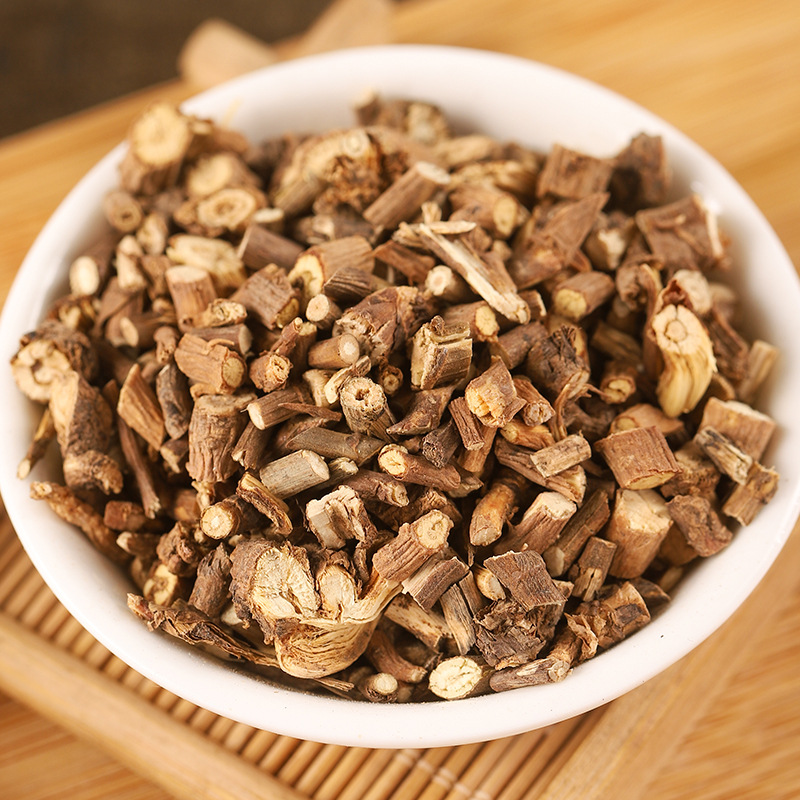
Rhizoma Cimicifugae is the rhizome of the plant Cimicifuga foetida L. of the Ranunculaceae family. It is named for its ascending and dispersing medicinal properties. It is mainly produced in Liaoning, Heilongjiang, Hunan, Shanxi, and other regions. It is often used raw or processed with honey.
I. Efficacy and Application
Shengma tastes pungent and sweet, slightly cold. It is a meridian-specific herb for the Yangming Meridian. It belongs to the Lung, Spleen, Large Intestine, and Stomach Meridians.
Efficacy can promote eruption, clear heat and detoxify, and lift yang to raise prolapse. Its characteristic is good at lifting, can guide various medicines upward, so it is often used as a guide for meridian.
Commonly used for treating seasonal epidemic diseases, headache with fever and chills, sore throat, mouth ulcers, incomplete eruption of rashes, as well as sinking of middle qi, chronic diarrhea and dysentery, rectal prolapse, women's metrorrhagia and metrostaxis, uterine prolapse, or abscesses, sores, and toxic swellings.
Summary of Famous Works by Renowned Authors
"Ben Jing": "It resolves all toxins, kills all spirits and old creatures, calamitous ghosts, and wards off epidemic miasmas, evil influences, and gu poison."
"Compendium of Materia Medica": "Eliminates macules and rashes, promotes blood circulation to remove stasis, treats dizziness due to yang deficiency, chest and hypochondriac pain, chronic diarrhea, tenesmus after dysentery, turbid urine, and abnormal vaginal discharge."
"Changsha Materia Medica": "The lifting property of Shengma (Cimicifuga) is appropriate for the Hand Yangming meridian but inappropriate for the Foot Yangming meridian. For throat ailments, as well as those of the mouth, tongue, and teeth, which are located in the upper part of the body, Shengma should be used along with descending and clearing herbs to guide fire downward and return it to its root. For other diseases of the Foot Yangming meridian, descending herbs are generally preferred, and Shengma should not be used, except in formulas designed to induce vomiting."
"Compendium of Materia Medica": "It disperses wind pathogens from the exterior, elevates and releases fire stagnation, can raise yang qi from the deepest yin, guiding sweet and warm herbs upward to replenish the scattered defensive qi and strengthen the exterior. It treats seasonal epidemic toxins, headaches, chills and fever, lung atrophy with pus expectoration, dysentery with tenesmus, rectal prolapse, uterine bleeding and leukorrhea, cold feet and impotence, red eyes and mouth sores, smallpox sores, wind-heat sores and abscesses. It resolves toxins from various herbs, expels parasitic toxins, and eliminates malevolent spirits."
II. Compatibility and Application
1. For symptoms such as shortness of breath, fatigue, chronic diarrhea with rectal prolapse, and uterine prolapse due to deficiency of middle qi or qi deficiency with sinking. Shengma can lift qi and raise sinking, often used in combination with Chaihu to enhance the lifting effect. For treating symptoms of sinking middle qi or qi deficiency failing to control blood, such as shortness of breath, fatigue, lassitude, metrorrhagia, rectal prolapse, and uterine prolapse, it is often combined with Renshen, Huangqi, and Baizhu, as in the formula Buzhong Yiqi Tang.
Li Dongyuan said: "Internal injury to the spleen and stomach damages their qi, while external contraction of wind-cold damages their form. Injury from external factors is considered an excess condition, and excess should be drained; injury from internal factors is considered a deficiency condition, and deficiency should be supplemented... One should use pungent, sweet, and warm formulas to supplement the center and raise yang, and sweet and cold herbs to drain fire, thus achieving recovery. The Classic states: 'For fatigue, warm it; for damage, warm it.' Indeed, warmth can eliminate great heat, and it is strongly cautioned against using bitter and cold medicines that may damage the spleen and stomach. In cases of spleen and stomach disorders, the initial manifestation is heat in the center; now, a treatment for the initial onset of this condition is established."
Zhang Xichun, inspired by the Ginseng and Astragalus Decoction for Tonifying the Middle and Augmenting Qi, made further innovations. For treating severe conditions of great qi (i.e., pectoral qi) sinking, characterized by shortness of breath insufficient for respiration, or symptoms resembling asthma, or imminent cessation of breathing with critical danger, he often used large doses of astragalus as the sovereign herb, combined with anemarrhena, bupleurum, cimicifuga, and platycodon, which is known as the Decoction for Lifting the Sinking.
Mr. Deng Tietao applied the theory of "spleen and stomach deficiency and damage, five organs interrelated" to treat myasthenia gravis (known as flaccidity syndrome in traditional Chinese medicine). Based on the Buzhong Yiqi Decoction, he added the herb Wugualong, naming the formula Qiangji Jianli Yin. This treatment has shown significant efficacy and is worthy of study.
Zhu Liangchun often pairs Atractylodes Rhizome in the treatment of visceral ptosis, leukopenia, and thrombocytopenia. When combined with Pueraria Root, it can lower transaminase levels and treat liver diseases. Additionally, it shows excellent efficacy in treating chronic rhinitis, sinusitis, gum swelling, ulceration caused by Yangming stagnation heat, as well as headaches and trigeminal neuralgia.
2. For headache caused by external wind-heat, as well as early stages of measles with poor eruption, etc. Shengma has the property of ascending and dispersing, and can clear heat toxins, thus relieving the exterior and promoting eruption. It is often combined with Gegen, as in the Shengma Gegen Decoction.
If treating measles with intense heat toxins, it can be combined with herbs that clear heat and cool blood such as Arnebia root, Great Burdock Achene, and Isatis leaf.
For the treatment of major head pestilence, it is often combined with Arctium lappa, Scutellaria baicalensis, Isatis indigotica, and Bombyx mori, which is known as the Universal Relief Toxin-Dispersing Beverage.
In the treatment of lung qi stagnation, cough and asthma, difficulty in urination, edema, constipation, and other syndromes, it is often combined with apricot kernel. The combination of these two herbs, one ascending and one descending, regulates the flow of qi and unblocks the water passages. This method of "descending after ascending" and "lifting the lid to pour the pot" truly embodies the wisdom of traditional Chinese medicine.
3. Used for various conditions caused by heat toxins. Shengma can clear heat and detoxify. For symptoms such as headache, swollen and painful gums, and mouth sores caused by Yangming heat pathogens, it is often combined with Huanglian, Shengdi, and Danpi, known as Qingwei San.
If treating toothache due to excessive fire, it can be combined with raw gypsum to achieve the effect of "dispersing fire stagnation."
If treating wind-heat headache in the Yangming meridian, it is often combined with herbs such as Bai Zhi and Huang Qin.
For treating wind-heat ascending obstruction, sore throat and other symptoms, it is often combined with Arctii Fructus, Platycodonis Radix, Scrophulariae Radix, etc., which is known as Arctii Fructus Decoction.
For treating heat-toxin sores and ulcers, and skin itching, it is often combined with heat-clearing and toxin-removing herbs such as honeysuckle flower, forsythia fruit, and dandelion.
If treating warm disease with macules, it is often combined with gypsum, dyers woad leaf, figwort root, and other heat-clearing and blood-cooling medicines.
The severity of heat evil varies, and so does the medication. Differentiating syndromes to prescribe accordingly is the foundation of Traditional Chinese Medicine.
III. Usage and Dosage
Shengma is often used in decoctions and can also be made into pills or powders. The usual dosage in decoctions ranges from a few grams to over ten grams. For external use, apply an appropriate amount.
For external use, it can be ground into powder and applied topically, decocted for gargling, or used for washing.
For relieving the exterior and clearing heat and detoxification, it should be used raw; for lifting yang qi, it should be used roasted.
Wang Ang said, "When using ginseng and astragalus as tonics, it is necessary to include cimicifuga and bupleurum, but there is concern that they may be too stimulating. In such cases, both cimicifuga and bupleurum should be stir-fried with honey water."
IV. Application Precautions
Shengma has an ascending and floating nature, so it should be avoided in cases of yin deficiency with yang floating, wheezing and fullness with qi counterflow, and when measles have already erupted.
Wang Ang said, "It is contraindicated for those with yin deficiency and hyperactivity of fire."
Practical Notes on Traditional Chinese Medicine: Second Draft, January 23, 2021