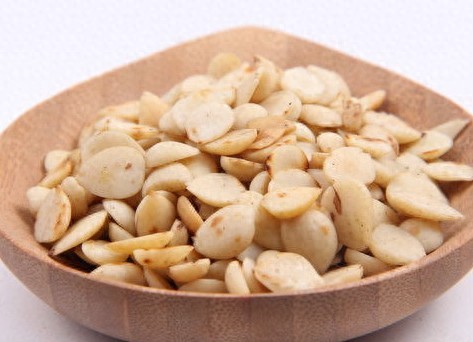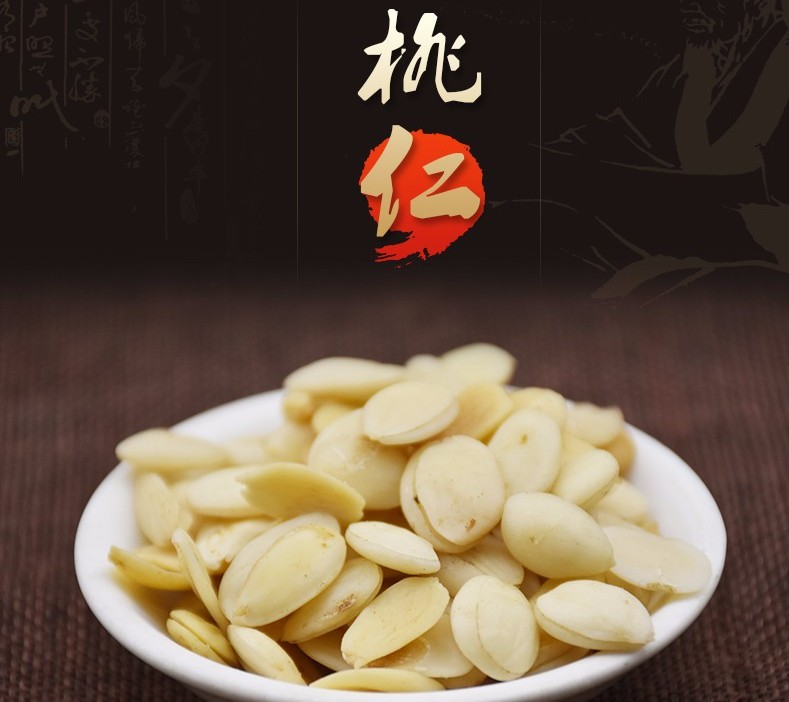
Peach kernel is the seed kernel of the deciduous small tree peach or mountain peach of the Rosaceae family. It is produced in most regions across the country. After extracting the seed kernel, it is scalded with boiling water to remove the seed coat, a process known as blanching. It is commonly used raw, stir-fried, or blanched.
I. Efficacy and Application
Peach kernel tastes bitter and sweet, and is neutral in nature. It belongs to the heart, liver, lung, and large intestine meridians.
Efficacy It can activate blood circulation and remove blood stasis, moisten the intestines to relieve constipation, relieve cough and calm asthma. Its characteristic is being good at attacking blood stasis, while containing oil to moisten the intestines, especially suitable for those with blood stasis accompanied by intestinal dryness and cough with counterflow.
It is commonly used in the treatment of amenorrhea and dysmenorrhea, abdominal masses and lumps, lung abscess and intestinal abscess, traumatic injuries, intestinal dryness and constipation, cough and asthma, among other conditions.
Summary of Famous Works by Renowned Authors:
Ben Jing: "Primarily treats blood stasis, amenorrhea, abdominal masses, pathogenic factors, and kills small parasites."
Pearl Pouch: Treats blood stasis, blood constipation, blood dryness, promotes bowel movement, and breaks up stagnant blood.
The Heart Method of Medicinal Use: Bitter to drain stagnant blood, sweet to generate new blood, therefore it must be used for coagulated blood. It also removes heat from the blood.
Changsha Materia Medica: "Peach kernel is pungent, bitter, slippery, and lubricating. It unblocks the channels and promotes blood circulation, effectively moistening dryness and breaking up masses and stasis. Its various therapeutic effects include relieving cough and counterflow, calming panting and wheezing, stopping flooding and spotting, treating heart pain, curing abdominal pain, alleviating menstrual block, and moistening dry stool."
"Compendium of Materia Medica": "Bitter taste outweighs sweet taste, it is a medicine for the blood aspect of the Jueyin channel. Bitterness is used to purge blood stagnation, while sweetness is used to soothe liver qi and generate new blood. It unblocks blood stasis in the large intestine. It treats heat entering the blood chamber, blood dryness and blood masses, injuries and accumulated blood, bloody dysentery and amenorrhea, cough and rebellious qi rising upward. It addresses skin blood heat, dryness and itching with blood accumulation, and fever with mania."
II. Compatibility and Application
1. Used for promoting menstruation, amenorrhea due to blood stasis, postpartum abdominal pain due to blood stasis, abdominal masses, traumatic injuries, pain due to blood stasis, and other conditions.
Peach kernel is adept at dispelling stasis, particularly suitable for treating local blood stasis excess syndrome in the human body, and is most commonly paired with safflower. The combination of peach kernel and safflower is one of the most frequently used herb pairs for promoting blood circulation and removing blood stasis. Peach kernel breaks blood stasis and promotes blood flow, moistens dryness, and lubricates the intestines; safflower activates blood circulation, unblocks meridians, removes stasis, and relieves pain. Peach kernel excels in breaking stasis, while safflower is superior in promoting blood flow. When used together, the two herbs complement each other effectively.
For treating gynecological disorders and abdominal masses caused by blood stasis, it is often combined with safflower, Chinese angelica, Szechuan lovage root, and red peony root, known as the Peach Kernel and Safflower Four Substances Decoction. This formula serves as a foundational prescription for promoting blood circulation and removing blood stasis. With modifications based on clinical presentations, its applications are extensive. Building upon this foundation, Wang Qingren integrated it with the Four Counterflow Powder, creating the renowned Blood Mansion Stasis-Expelling Decoction. This formula is a versatile remedy for treating stubborn, chronic illnesses and complex syndromes, particularly those characterized by "substantial disease" and "chronic illness with multiple stasis." It is widely applicable and often yields remarkable results.
If treating women with long-standing abdominal masses, or blood stasis causing amenorrhea, dysmenorrhea, or postpartum lochiorrhea, it is often combined with cinnamon twig, poria, moutan bark, and peony root to collectively promote blood circulation, resolve stasis, and eliminate masses, as seen in the Cinnamon Twig and Poria Pill.
If treating injuries from falls and bruises with blood stasis pain, it is often combined with safflower, Chinese angelica, and wine-processed rhubarb, known as the Fuyuan Huoxue Decoction.
2. Used for the initial stage of intestinal abscess and pulmonary abscess. For treating syndromes of heat stagnation and blood stasis, when using heat-clearing drugs, adding peach kernel to remove blood stasis can help discharge heat and eliminate abscess.
In the treatment of lung abscess, it is often combined with fresh reed rhizome, winter melon seed, and coix seed, which is known as Reed Stem Decoction.
For treating intestinal abscess, it is often combined with rhubarb, moutan bark, winter melon seeds, and mirabilite, as seen in the formula Rhubarb and Moutan Decoction.
3. For intestinal dryness and constipation. Peach kernel contains 30% fat oil, so it has the effect of moistening dryness and lubricating the intestines. To treat intestinal dryness and constipation, it is often combined with hemp seed, trichosanthes seed, almond, and other seed medicines, namely the Five Seed Pill.
If treating the syndrome of blood stasis in the bladder with heat binding, where the patient appears manic, it is often combined with rhubarb, mirabilite, cinnamon twigs, and licorice, known as the Peach Kernel Qi-Guiding Decoction.
For treating various pains due to qi stagnation and blood stasis, or intestinal dryness and constipation, or cough and asthma, it is often combined with apricot kernel to enhance the effects of promoting blood circulation and relieving pain, moistening the intestines and promoting bowel movements, and relieving cough and asthma, known as the Double Kernel Pill.
Traditional Chinese medicine states that the lungs and large intestine are interiorly and exteriorly related. Peach kernel can moisten dryness, relieve cough, and promote blood circulation to remove stasis and regulate menstruation. Therefore, for cases of local blood stasis, cough, asthma, or accompanied by constipation, the inclusion of peach kernel in the prescription often yields good results.
III. Usage and Dosage
Peach kernel can be used in decoctions and is also suitable for making pills. The usual dosage in decoctions ranges from a few grams to over ten grams. If used for promoting blood circulation, removing blood stasis, or relieving constipation, it can be used in doses of several tens of grams or more. However, it should not be taken for a long time, as it may cause diarrhea and harm the body's vital energy. When used in decoctions, it should be crushed.
Wang Ang said: "For promoting blood circulation, use the whole seed with skin and tip, raw; for moistening dryness, remove the skin and tip, stir-fry, then use, both should be ground into pieces, or charred until the original properties are preserved for use."
IV. Application Precautions
Peach kernel is slightly toxic, so it is often stir-fried or scalded for medicinal use. Due to its laxative and blood-activating properties, it should be used with caution in cases of loose stools and is contraindicated for pregnant women.
Wang Ang said: "Double kernels are toxic and should not be consumed. Those with insufficient blood are prohibited from using them."
Practical Notes on Traditional Chinese Medicine: Second Draft, January 21, 2022