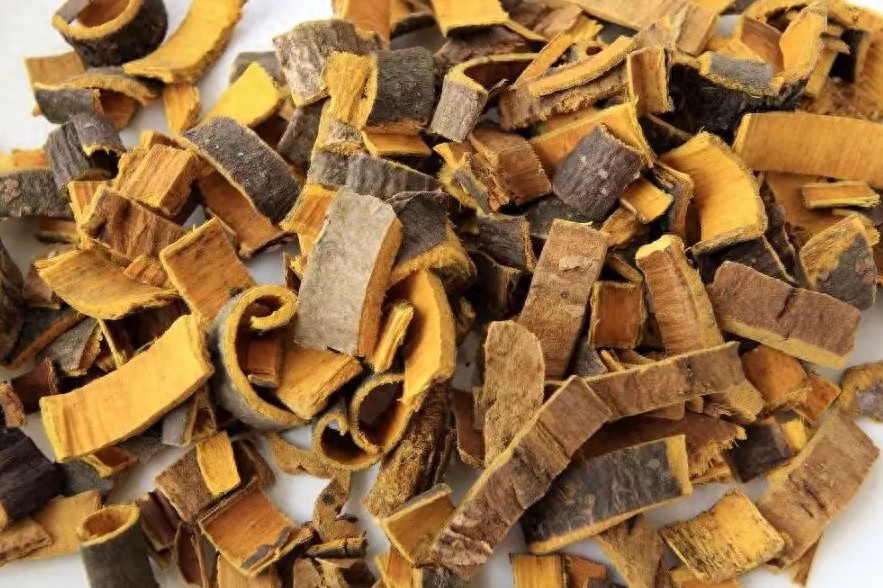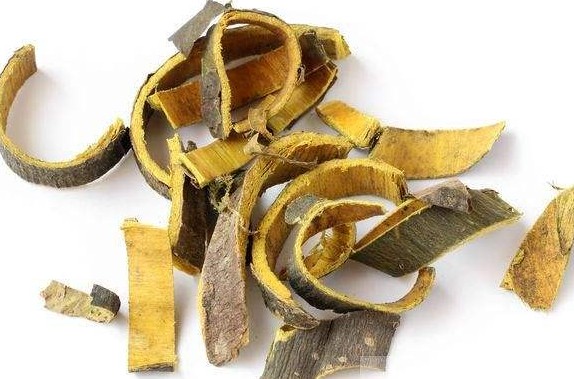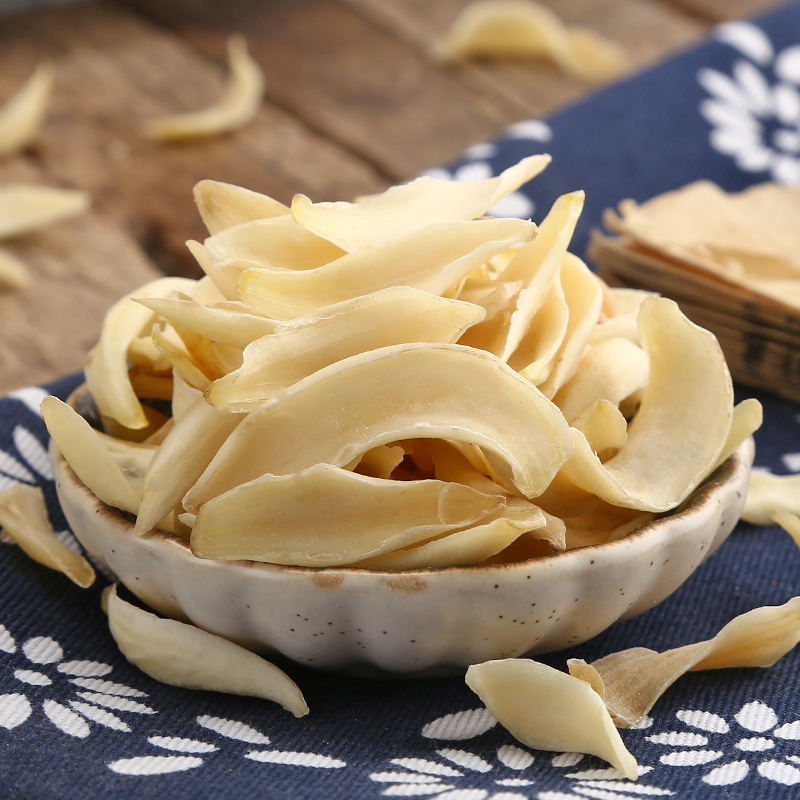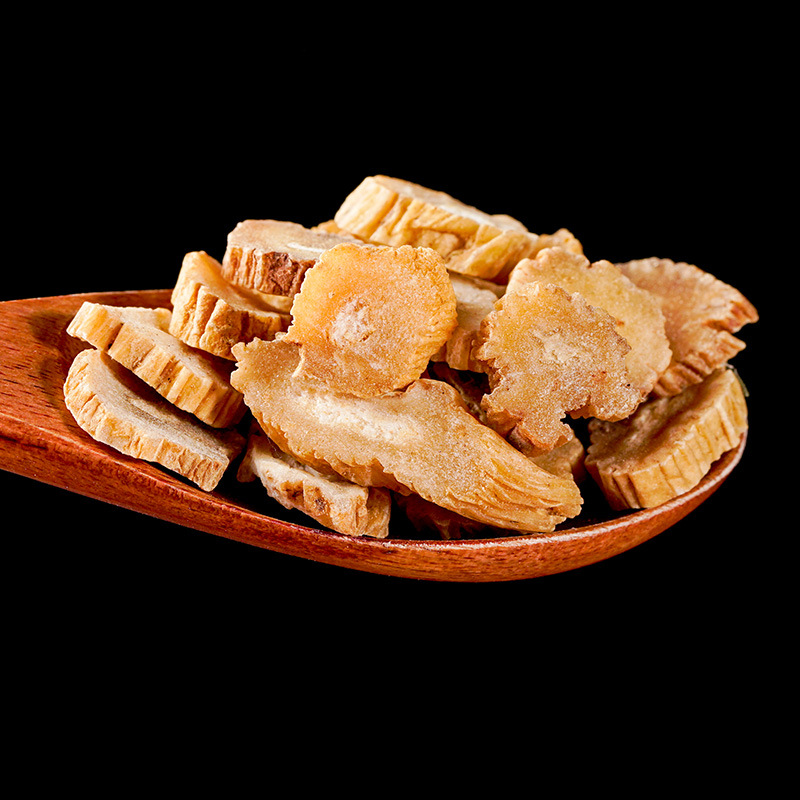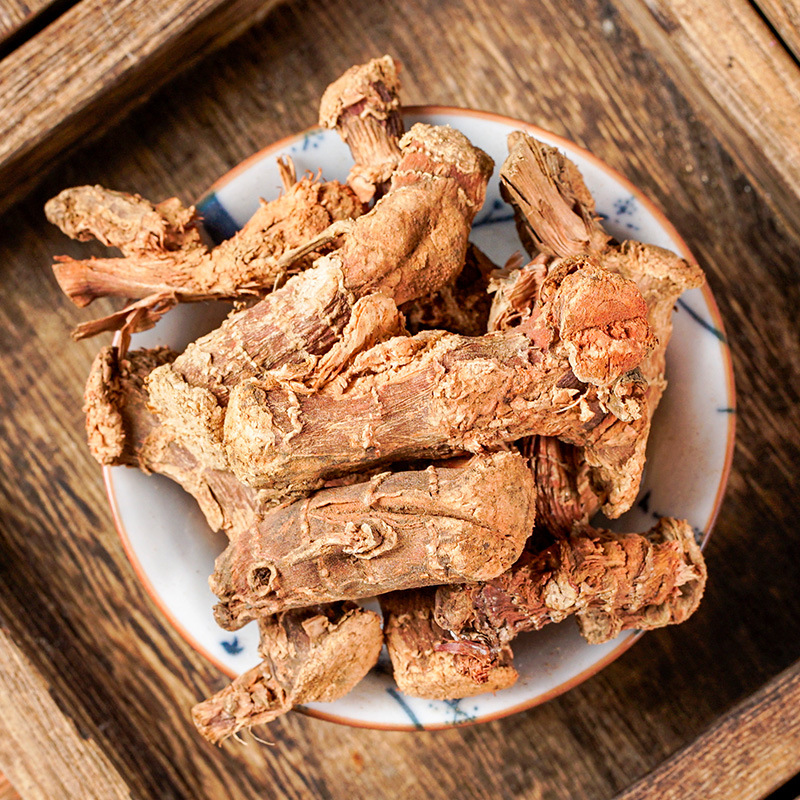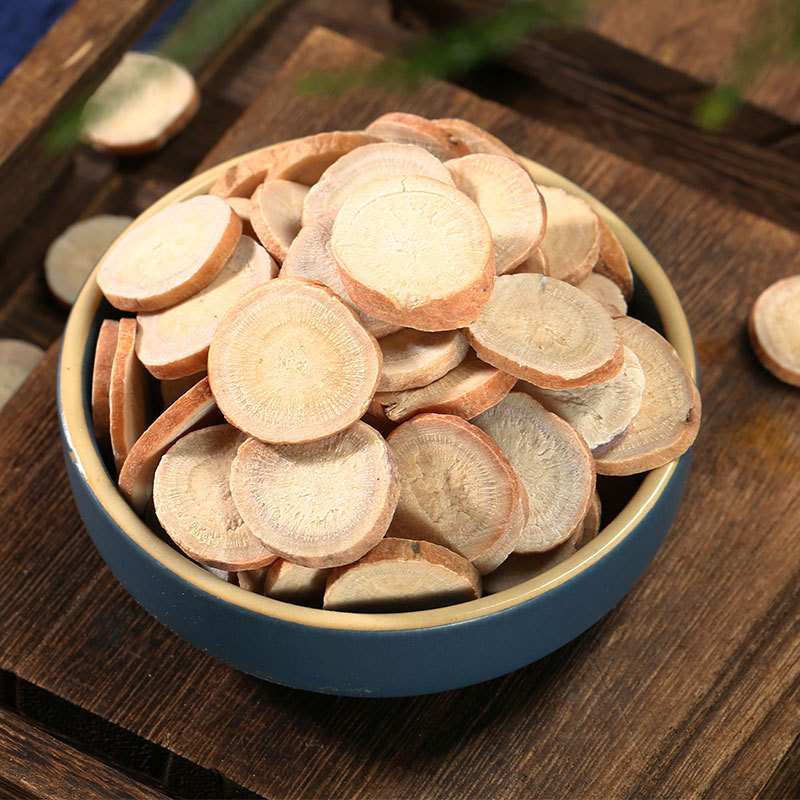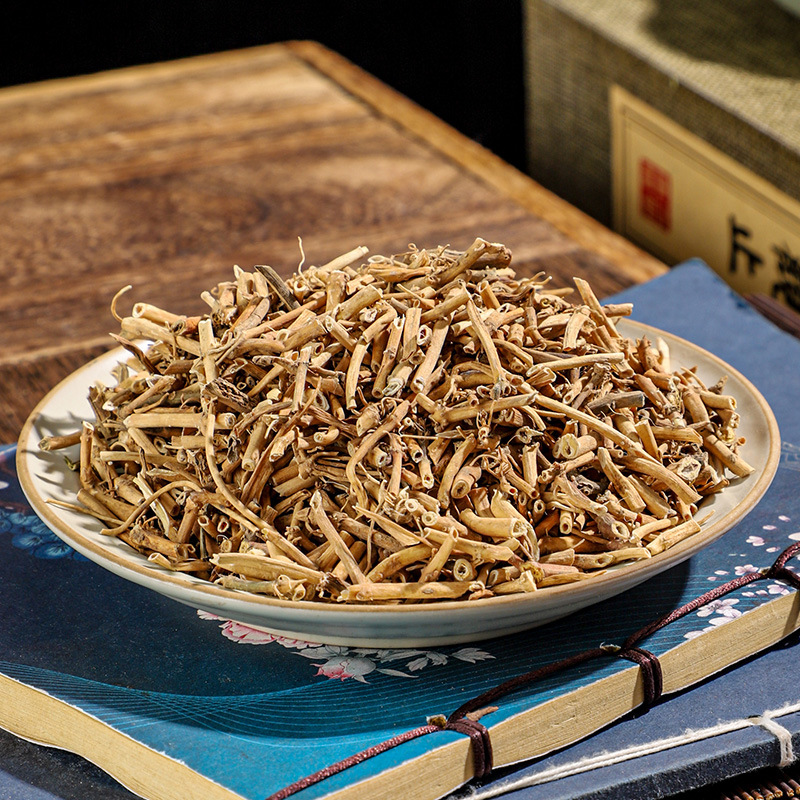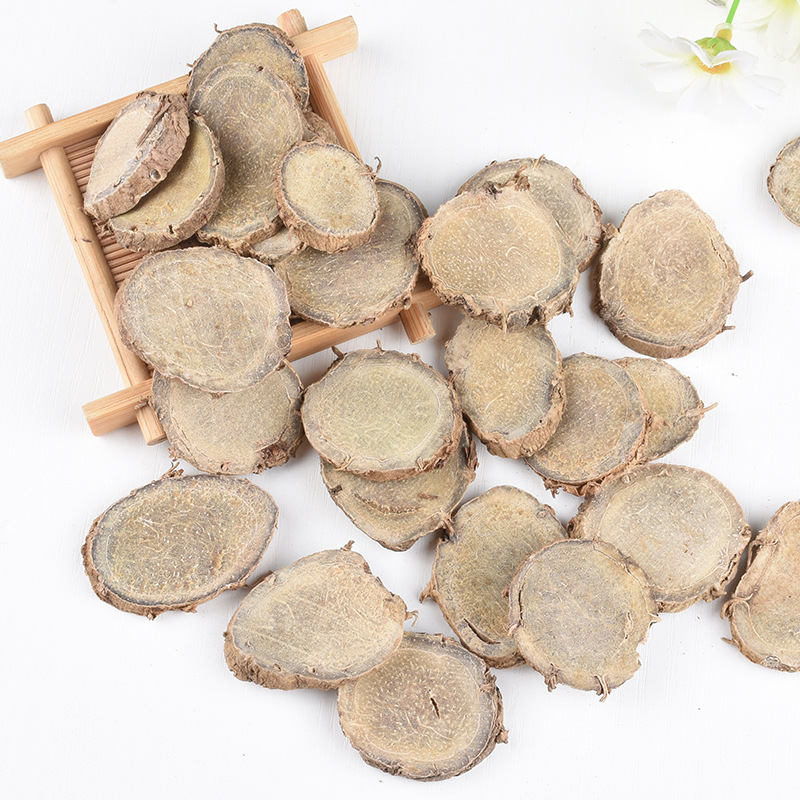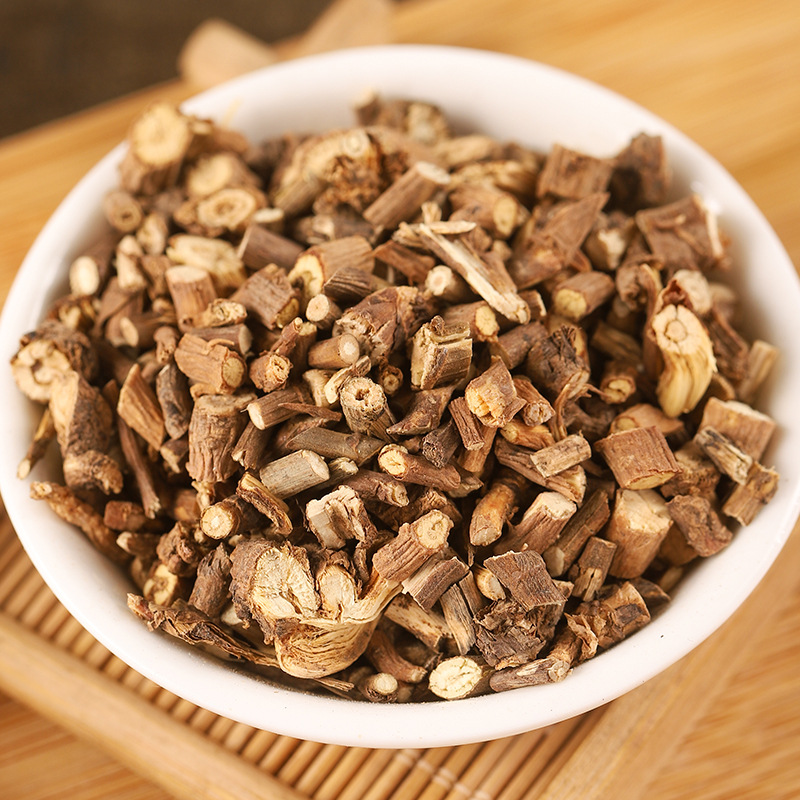
Phellodendron chinense is the bark of the deciduous tree Phellodendron amurense or Phellodendron chinense of the Rutaceae family. It is referred to as Huangbo in the "Shennong Bencao Jing" and as Bopi in the "Treatise on Cold Damage Diseases." Guan Huangbo is mainly produced in Liaoning, Jilin, Hebei, and other regions, while Chuan Huangbo is primarily produced in Sichuan, Guizhou, Hubei, Yunnan, and other areas. The bark is stripped around the Qingming Festival, the rough outer layer is scraped off, and it is dried for medicinal use. It is often used raw or stir-fried with salt.
I. Efficacy and Application
Phellodendron tastes bitter, cold, and sinks yin downward. It belongs to the kidney, bladder, and large intestine meridians.
Efficacy Clears heat and dries dampness, drains fire and resolves toxins, reduces deficiency heat. Its characteristic is particularly effective at clearing damp-heat in the lower jiao, strengthening yin and draining fire, making it a key medicinal for treating damp-heat in the lower jiao.
Commonly used for treating conditions such as damp-heat dysentery, jaundice with dark urine, leukorrhea with vaginal itching, painful urinary dribbling, beriberi with muscle atrophy, bone-steaming consumptive fever, night sweats, seminal emission, sores and abscesses with swelling and pain, eczema and damp sores.
Summary of Famous Works by Renowned Authors
The Classic of Materia Medica: "It primarily treats heat from stagnant qi in the five viscera and intestines, jaundice, hemorrhoids, stops diarrhea and dysentery, addresses red and white vaginal discharge in women, and treats erosive sores of yin and yang."
Bie Lu: "Redness and pain in the eyes, mouth sores."
Rihuazi's Materia Medica: "Treats bone steaming, clears the liver, brightens the eyes, excessive tearing, dry mouth and heart heat, kills gan worms, treats roundworm-induced heart pain, scabies and tinea. Honey-fried treats nosebleeds."
Changsha Medicine Explanation: "Drain the damp-heat of the spleen, clear the stagnation and steaming of the liver, regulate heat-induced dysentery with tenesmus, and treat jaundice with abdominal fullness."
"Compendium of Materia Medica": "Drains the ministerial fire of the bladder, supplements insufficiency of kidney water. Strengthens the kidneys and moistens dryness. Eliminates dampness and clears heat. Treats deficiency of the lower jiao, steaming bone tidal fever, various types of flaccidity and paralysis, red eyes and tinnitus, wasting-thirst and constipation, jaundice and edema, watery diarrhea and heat dysentery, hemorrhoidal bleeding and intestinal wind, red and white vaginal discharge, various sores with pain and itching, head sores, mouth sores. Kills parasites and calms roundworms."
II. Compatibility and Application
1. Used for damp-heat dysentery, jaundice, leukorrhea, swelling and pain in the feet and knees, and heat strangury. Phellodendron bark clears heat, dries dampness, and detoxifies, with effects similar to coptis. For treating damp-heat dysentery, it is often combined with coptis and pulsatilla root, as in Pulsatilla Decoction.
If treating damp-heat jaundice, it is often combined with Gardenia and Licorice, known as Gardenia and Phellodendron Decoction.
If treating yellow and thick leukorrhea, it is often combined with Ginkgo Biloba, Plantago Seed, and Chinese Yam, known as Yi Huang Tang.
If treating damp-heat pouring downward, swollen and painful feet and knees, it is often combined with Atractylodes, known as Ermiao Wan. If accompanied by qi deficiency, blood deficiency, spleen deficiency, kidney deficiency, damp phlegm, dead blood, etc., it can be modified according to symptoms, with significant therapeutic effects.
For treating damp-heat in the lower jiao, flaccidity and numbness, damp scrotum, yellow vaginal discharge, and beriberi, the Two Marvels Pill can be combined with Achyranthes bidentata and Coix seed to form the Four Marvels Pill.
If treating heat strangury, it is often combined with bamboo leaf and wood bucket and other heat-clearing, diuretic, and strangury-relieving medicines.
If there is a sensation of knife-like stabbing and burning in the anterior genital area, with urine flowing uncontrollably onto the floor, it is often combined with Anemarrhena asphodeloides and cinnamon, known as Zishen Wan.
Supplement to the Amplification of Materia Medica: "When combined with Anemarrhena, it nourishes yin and reduces fire; when combined with Atractylodes, it eliminates dampness and clears heat, making it a key herb for treating atrophy; when combined with Asarum, it purges bladder fire and treats oral ulcers."
Li Shizhen said, "Anemarrhena assists Phellodendron in nourishing yin and reducing fire, embodying the principle of mutual generation between metal and water. Phellodendron can suppress the fire in the gate of life and the yin aspect of the bladder, while anemarrhena can clear lung metal and nourish the source of kidney water transformation."
2. For sores, ulcers, swelling, and toxins, eczema, etc. Phellodendron can purge fire toxins and remove damp-heat. To treat sores, ulcers, swelling, and toxins, it is often combined with Coptis chinensis and Gardenia jasminoides, ground into fine powder, and applied externally mixed with pig bile.
If treating damp sores and eczema, it is often combined with wind-dispelling and dampness-drying herbs such as Schizonepeta and Sophora flavescens.
3. For symptoms such as yin deficiency fever, bone-steaming night sweats, and nocturnal emissions, Phellodendron bark can strengthen yin, reduce deficiency heat, and restrain ministerial fire. To treat kidney yin deficiency with exuberant fire, manifesting as five-center heat, it is often combined with Anemarrhena rhizome in the Six-Ingredient Rehmannia Pill to enhance the effects of nourishing yin, tonifying the kidneys, reducing fire, and clearing heat, known as the Anemarrhena and Phellodendron Rehmannia Pill.
If treating yin deficiency with effulgent fire, tidal fever, night sweats, cough, tinnitus, and other symptoms, it is often combined with anemarrhena rhizome, rehmannia root, and tortoise plastron, which is known as the Great Yin-Nourishing Pill.
If treating kidney failing to store essence, ministerial fire moving recklessly, nocturnal emission and other patterns, it is often combined with Amomi Fructus and Glycyrrhizae Radix et Rhizoma, which is the Cinnabar and Amomum Pill. This formula has the function of harmonizing water and fire, connecting the heart and kidney, containing profound principles within.
Zheng Qin'an said, "This formula (Feng Sui Dan) should not be underestimated. I have personally experienced its ability to treat all symptoms of deficient fire rising, such as toothache, cough, asthma, facial swelling, throat obstruction, ear swelling, facial redness, nasal congestion, enuresis, and seminal emission. It has repeatedly achieved remarkable effects, often beyond expectation and difficult to comprehend. After careful contemplation, I came to understand that the intention behind this formula lies in harmonizing water and fire. It is extremely balanced and ordinary, yet profoundly divine and miraculous. I have tested it myself and hope that you all will also give it a try."
III. Usage and Dosage
Phellodendron bark is often used in decoctions, as well as in pills and powders. The typical dosage for decoctions ranges from a few grams to over ten grams. For external use, apply an appropriate amount.
Ben Cao Bei Yao: "When used raw, it reduces excess fire; when honey-fried, it does not harm the stomach. When stir-fried until black, it can stop uterine bleeding and leukorrhea. When processed with wine, it treats upper body ailments; when processed with honey, it treats middle body ailments; when processed with salt, it treats lower body ailments. When ground into powder and mixed with milk, it can be applied to treat frostbite."
Tangye Bencao Gardenia and Scutellaria baicalensis enter the lung Coptis chinensis enters the heart Phellodendron amurense enters the kidney
IV. Application Precautions
Phellodendron is extremely bitter and cold, easily damaging the middle yang, so it is contraindicated for those with spleen and stomach deficiency cold.
Today, the concept of "Fuyang" in Traditional Chinese Medicine is gaining increasing attention and is more suitable for guiding the current physical characteristics of people. Therefore, bitter and cold herbs like Phellodendron should not be used blindly, nor should they be mistakenly considered as kidney-tonifying substances.
Zhang Jingyue said, "It is better to err on the side of supplementation than on the side of purgation."
Huang Yuanyu said, "Phellodendron is bitter and cold, swiftly and effectively dispersing the liver and spleen, draining damp-heat, clearing the bladder, and expelling turbid stagnation, with remarkable efficacy. It most strongly drains the yang of the liver, kidney, spleen, and stomach. Later generations of mediocre practitioners have mistakenly used it as a formula to nourish yin and supplement water, writing books and establishing theories, perpetuating this error continuously, leading to many misdiagnoses."
Wang Ang said: "Long-term use harms the stomach, contraindicated for those with weak chi pulse."
Practical Notes on Traditional Chinese Medicine: Second Draft, January 14, 2021