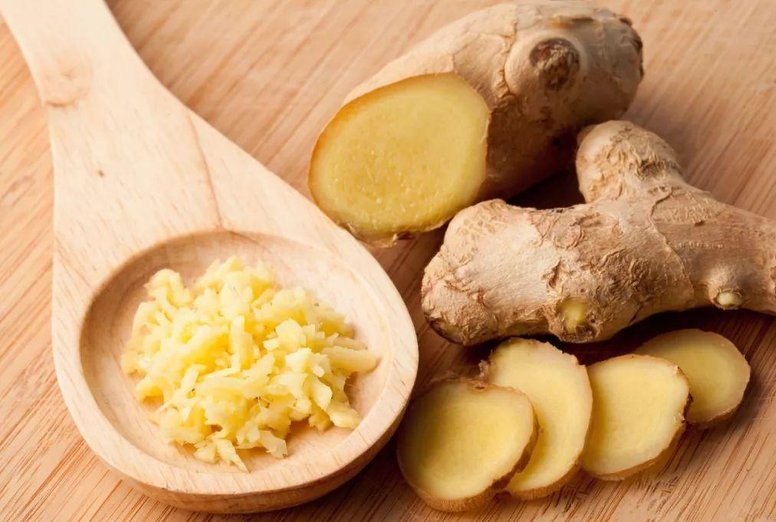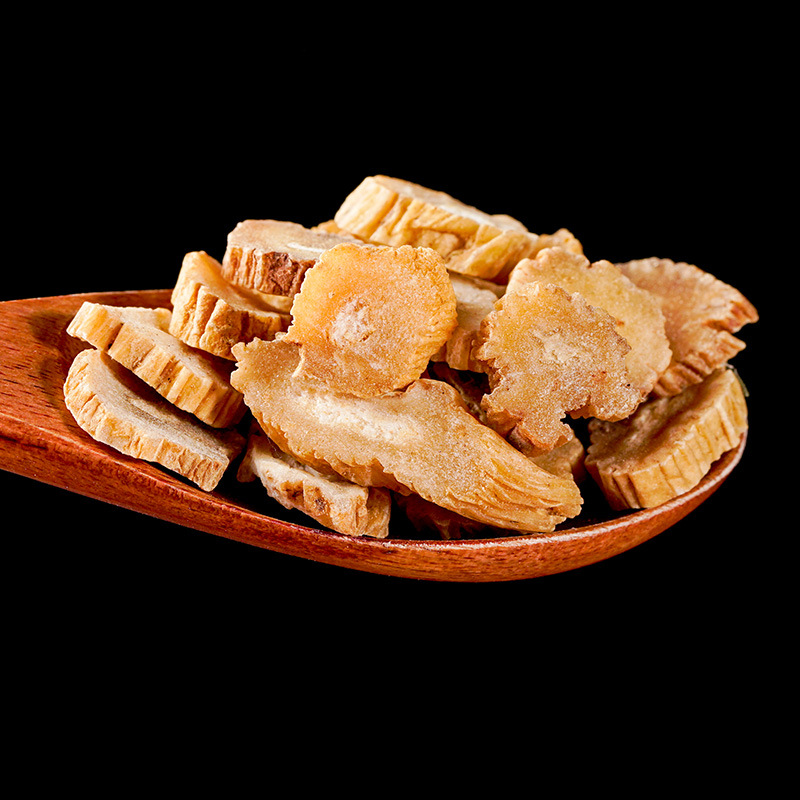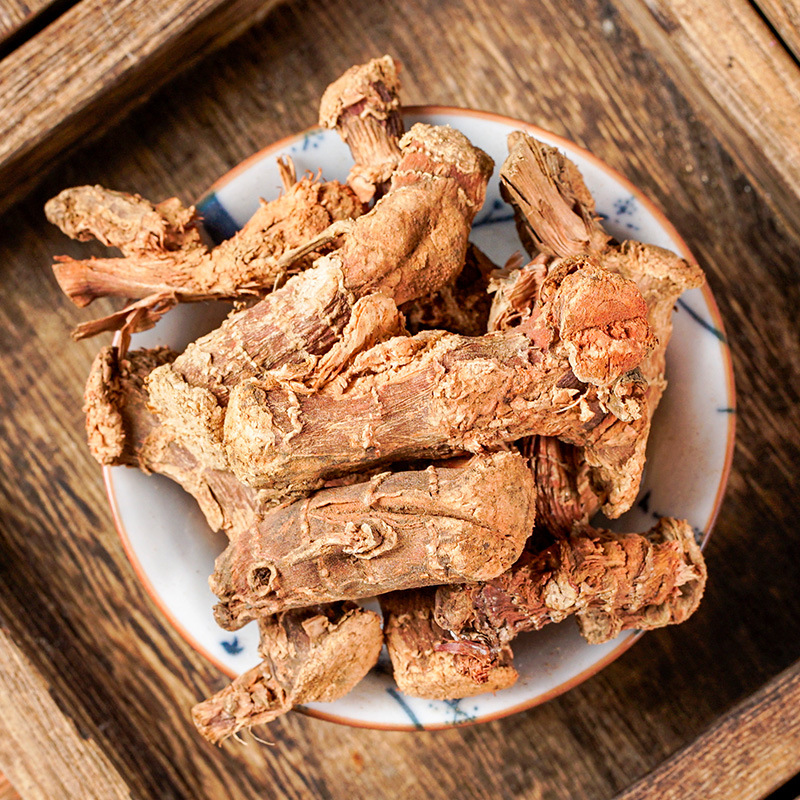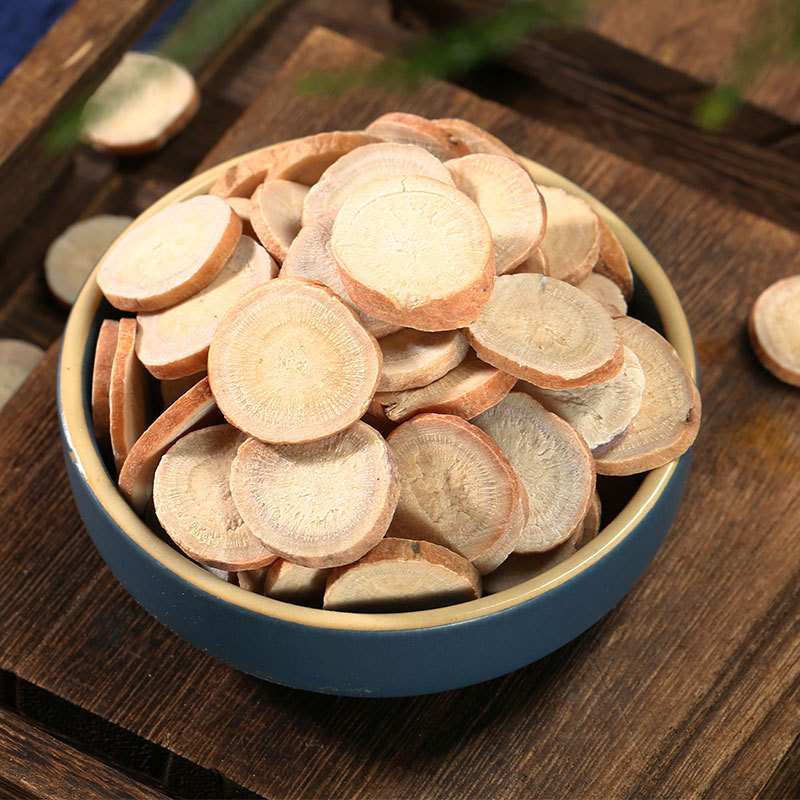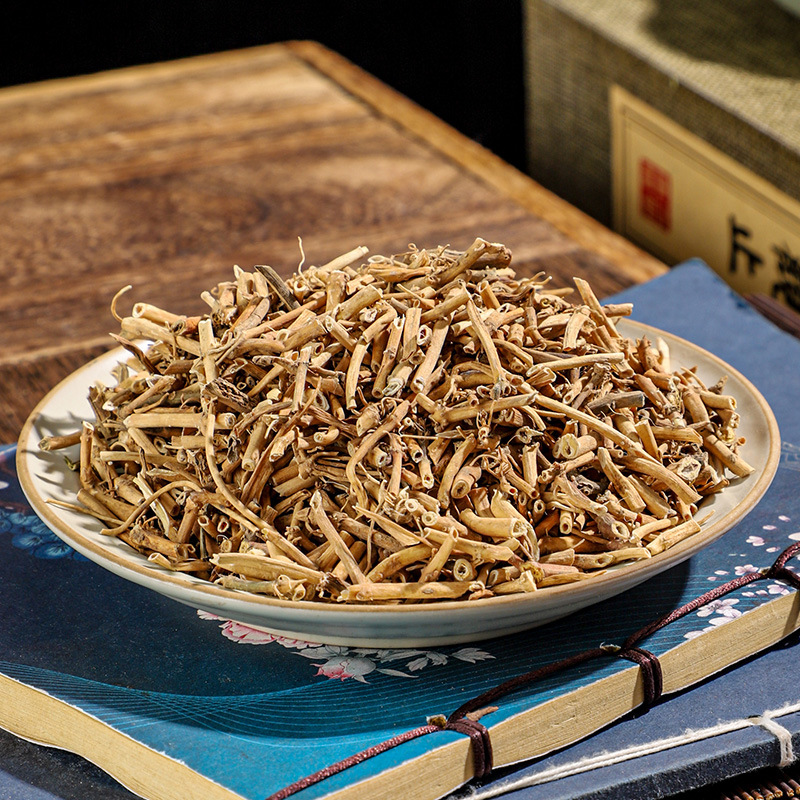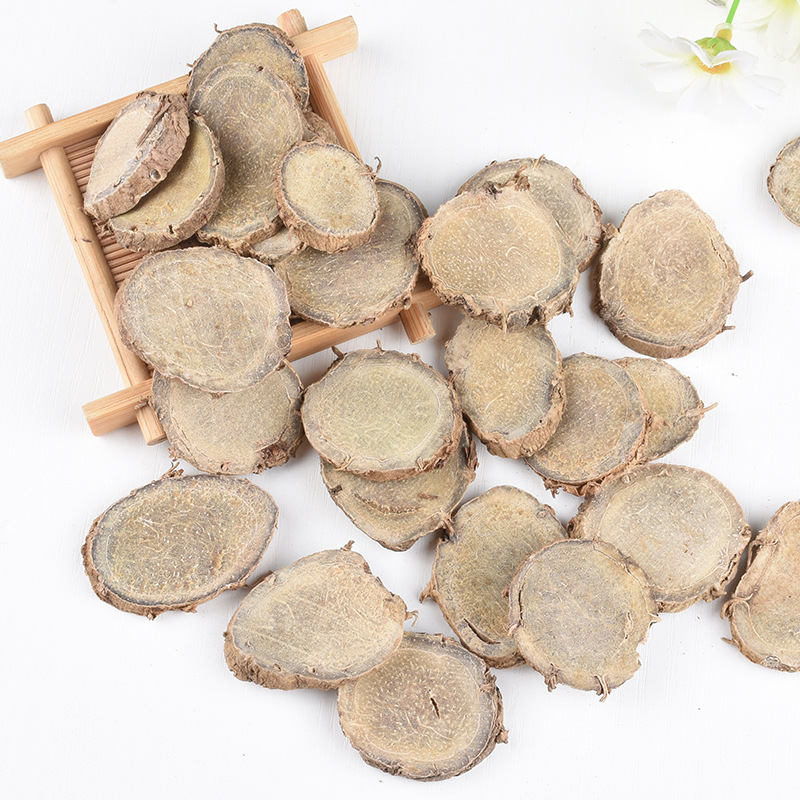
Ginger is also known as fresh ginger, which is the rhizome of the ginger plant. As one of the traditional Chinese medicines that serve both medicinal and culinary purposes, it has a history of thousands of years of consumption in China and holds an important place in people's daily lives. It is produced all over the country. It is harvested in autumn, with fibrous roots removed and washed clean, then sliced for medicinal use. The juice extracted from crushed ginger is called ginger juice, while only the skin used is referred to as ginger peel, and when it is roasted, it is called roasted ginger.
Zhang Xichun said, "Fresh ginger is planted in the ground and dug out after autumn, then peeled and dried to become dried ginger. The sprouts that grow on the ginger are planted in the ground, and the ginger that grows in the same year is dug out after autumn to become fresh ginger. Thus, dried ginger is the mother ginger, while fresh ginger is the offspring ginger. Dried ginger is old, while fresh ginger is tender."
I. Efficacy and Application
Ginger has a pungent taste and is slightly warm. It belongs to the lung and spleen meridians.
Efficacy can induce sweating to relieve the exterior, warm the middle to stop vomiting, warm the lungs to relieve cough. Its characteristics include being usable as medicine, as well as removing fishy, muttony, and cold properties, often used as an ingredient in cooking. It is particularly effective in warming the middle to stop vomiting and relieving the exterior to dispel cold. It is truly a fine product that serves both as medicine and food, beneficial for health preservation. Hence, there is an ancient saying: "Eat radish in winter and ginger in summer, and you won't need a doctor's prescription." Sun Simiao called ginger the holy medicine for vomiting.
Commonly used for treating conditions such as wind-cold common cold, spleen and stomach deficiency cold, aversion to cold and vomiting, lung cold cough, and food poisoning.
Summary of Masterpieces by Renowned Authors:
Bie Lu: "Ginger is used for treating cold-induced headaches, nasal congestion, cough with rebellious qi, and it stops vomiting."
Bencao Shiyi: "The juice detoxifies medicinal toxins, breaks blood stasis and regulates the middle, dispels cold and eliminates phlegm, and opens the appetite."
"Compendium of Materia Medica": "Raw use disperses, cooked use harmonizes the middle."
Changsha Materia Medica: "It lowers adverse flow and stops vomiting, relieves fullness and opens depression, enters the lung and stomach to expel turbidity, moves through the liver and spleen to promote qi and resolve stagnation, clears stasis and fullness in the chest, removes obstruction in the stomach, effectively clears nasal congestion, best relieves abdominal pain, harmonizes the organs, promotes the circulation of ying and wei, is an essential herb for regulating menstruation, and a good medicine for inducing sweating."
"Compendium of Materia Medica": "It moves in the yang aspect to dispel cold and release the exterior, diffuses lung qi to relieve stagnation and regulate the middle, promotes appetite to resolve phlegm and aid digestion. It treats cold damage headache, wind damage nasal congestion, cough and retching, chest congestion and phlegm obstruction, cold pain and damp diarrhea. It eliminates water qi, moves blood impediment, clears the spirit, removes foulness and evil, rescues sudden collapse, neutralizes the toxicity of Pinellia ternata, Arisaema erubescens, mushrooms, and wild fowl, and wards off fog, dew, mountain miasma, and pestilential qi. Pounded juice is mixed with yellow gelatin and boiled to apply for wind-damp impediment pain."
"Medical Records of Integrating Chinese and Western Medicine": "It is good at resolving phlegm and regulating qi, stopping vomiting, and expelling all external pathogenic qi. If only the peel is used, its warm nature is slightly reduced, and it is also good at promoting urination. It can detoxify the poison of Pinellia ternata and various mushrooms. Adding a small amount to food can serve as a stomach-strengthening and appetite-enhancing ingredient."
II. Compatibility and Application
1. For external contraction of wind-cold, with symptoms such as aversion to cold, fever, headache, and nasal congestion. Ginger, being pungent and warm, promotes sweating and is added to pungent-warm diaphoretic formulas to enhance the diaphoretic effect. For treating Taiyang wind-strike syndrome in patients with weak constitution and external contraction, it is often combined with cinnamon twig, peony root, licorice, and jujube, forming the renowned "Cinnamon Twig Decoction," which is hailed as the "crown of all formulas." For mild colds, it can also be decocted alone or with a small amount of brown sugar and perilla leaf, serving to disperse wind-cold.
In the compatibility of traditional Chinese medicine, ginger and jujube are considered classic. Both ginger and jujube are medicinal and edible substances, but ginger tends to be warm and dispersing, and when used alone, it has the drawback of being dissipative. Jujube, on the other hand, tends to be sweet and warm, and when used alone, it has a sticky and stagnant nature. When the two herbs are used together, ginger can counteract the stagnation of jujube, while jujube can mitigate the dissipative drawback of ginger. At the same time, the combination of pungent and sweet flavors can transform into yang, enhancing the function of warming the middle and tonifying deficiency. This can be described as mutually showcasing strengths and mutually restraining weaknesses, fully demonstrating the ingenuity of traditional Chinese medicine compatibility.
Ginger and jujube are used together to tonify deficiency with sweet and warm properties, having the function of supplementing the acquired spleen and stomach. Therefore, in a broad sense, all individuals with physical deficiency can use them. If taken regularly to regulate the body, it is indeed a good prescription for health preservation.
If one usually has a cold stomach and weak constitution, one can use a few slices of ginger, a few jujubes (broken open), and a piece of rock sugar, often brewed as a tea substitute for drinking, which has the effect of warming the stomach and dispelling cold, and strengthening the constitution. For elderly people, or those with dry eyes, one can add some wolfberries and chrysanthemums, and drink them together, which can nourish the liver and kidneys, and nourish the liver to improve eyesight.
In the "Treatise on Cold Damage Disorders," there are numerous references to the use of ginger and jujube. Zhang Zhongjing employs ginger and jujube in three primary ways: First, to support the body's vital energy and expel pathogenic factors, as seen in formulas such as Guizhi Decoction, Chaihu Decoction, and Xinjia Decoction. In addition to strengthening the body's foundation, ginger and jujube are also used to enhance the power of expelling pathogens. Second, they are used purely to support the body's vital energy, as in the Jianzhong Decoction series. The combination of ginger and jujube, with their pungent and sweet properties, transforms into yang energy to fortify the body's foundation. Third, they are used to detoxify, essentially to control "toxic" herbs, as seen in formulas such as Shizao Decoction, Banxia Decoction, and Shengjiang Xiexin Decoction. The sweet and moderating properties of ginger and jujube nourish the middle energizer, mitigating the harshness of potent formulas. Therefore, when using purgative or attacking herbs, these two ingredients are often added to the formula.
Zhang Xichun said, "When used together with jujube, it is good at harmonizing the nutrient and defensive systems. This is because the sweet and moderating nature of jujube prevents it from penetrating the surface to induce sweating, allowing it to circulate within the nutrient and defensive systems, thereby harmonizing them."
2. Used for various types of vomiting. Ginger can warm the stomach, harmonize the middle, descend counterflow, and stop vomiting, making it an essential herb for warming the stomach and stopping vomiting. For treating stomach-cold vomiting, characterized by vomiting of phlegm and saliva, absence of thirst, or dry retching and hiccups with inability to ingest food, it is most commonly combined with Pinellia (Banxia), forming the renowned antiemetic formula Xiao Banxia Tang. In this combination, ginger and Pinellia not only enhance the antiemetic effect but also mutually restrain and neutralize each other, with ginger counteracting the toxicity of Pinellia, achieving a dual benefit.
For treating vomiting due to heat syndrome, it is often combined with bamboo shavings, coptis root, and other herbs that clear stomach heat, using both cold and warm properties, and applying both attacking and tonifying methods.
If treating disharmony in the stomach, hardness and fullness below the heart, or water qi below the hypochondrium, rumbling in the abdomen with diarrhea, it is often combined with ginseng, scutellaria, coptis, pinellia, jujube, etc., which is Shengjiang Xiexin Decoction.
Huang Yuanyu said, "Ginseng, licorice, ginger, and jujube warm and tonify the deficiency and cold of the middle qi, while coptis and scutellaria clear and purge the stagnant heat in the upper burner. Pinellia and ginger descend the rebellious turbid qi, dissipate fullness and hardness, and stop hiccups and belching."
Wang Ang said: "Vomiting with sound and substance is called 'ou', retching with sound but no substance is called 'yue', and expelling substance without sound is called 'tu'. The condition may arise from cold, heat, food, or phlegm, causing rebellious qi to surge upward. Ginger can disperse rebellious qi and is the sacred medicine for those who vomit."
3. For cough due to wind-cold invading the lungs. Ginger has the effect of warming the lungs, eliminating phlegm, and relieving cough. It is often combined with other herbs that disperse cold and relieve cough.
If treating continuous clear nasal discharge and incessant sneezing, ginger and cinnamon twigs can be combined to specifically support the yang of the upper burner, as in Zheng Qin'an's famous formula, Ginger and Cinnamon Twig Decoction.
Tang Buqi understood the essence of Zheng's teachings. For treating lung yang deficiency with cough and wheezing, characterized by coughing up clear, frothy phlegm, inability to lie down at night, facial puffiness, and coldness in the back and both feet, he often used large doses of fresh ginger combined with dried ginger and cinnamon twigs. These were then incorporated into the Ephedra, Aconite, and Asarum Decoction to achieve the effects of warming the lungs, dispelling cold, promoting the transformation of phlegm and fluid retention, and addressing both the exterior and interior. The results were remarkable, truly embodying the mastery of a divine physician of fire.
4. For detoxifying Pinellia ternata, Arisaema erubescens, and fish and crab toxins. Ginger can detoxify the aforementioned toxins, especially when using Pinellia ternata and Arisaema erubescens. It is often combined with an equal amount of ginger, as they mutually restrain and neutralize each other, thereby counteracting their toxicity and enhancing the antiemetic effect. This is considered an excellent method.
If vomiting or other discomfort occurs after consuming fish, crab, seafood, wild fowl, etc., ginger can be decocted and taken alone, or a small amount of perilla leaf can be added to alleviate the symptoms.
III. Usage and Dosage
Ginger is often used in decoctions, and can also be pounded into juice for consumption. Nowadays, there are instant granules available that can be directly dissolved in water or used to make pills and powders. Taking traditional decoctions as an example, if used for health maintenance, a few slices are sufficient. If used to disperse external cold or warm the interior and tonify deficiency, it is commonly used in amounts ranging from over ten grams to several tens of grams. If used to lower adverse qi, stop vomiting, or detoxify and moderate other herbs, it is often used in amounts exceeding several tens of grams.
Ginger is paired with Pinellia to counteract the toxicity of Pinellia, and its dosage is often the same as that of Pinellia. In the Pinellia and Magnolia Bark Decoction by Zhongjing, a single dose of the medicine once used more than 125 grams.
IV. Application Notes
Ginger is pungent and warm in nature, so it should not be used in cases of yin deficiency with internal heat or excessive heat syndromes.
Li Dongyuan said, "Do not eat ginger at night, as night is for closing and ginger is for opening. Do not eat ginger in autumn, as autumn is for gathering and ginger is for dispersing. Pregnant women who eat too much ginger may cause their children to have forked fingers, a phenomenon of resemblance in form."
Zhu Danxi said, "Cough due to yin deficiency mostly belongs to yin deficiency, and it is advisable to use Fritillaria, not ginger, because of its acrid dispersing nature."
Wang Ang said, "People only know that dried tangerine peel and ginger can stop vomiting, but they do not know that there are times when they can also induce vomiting. This is because their nature is ascending, which is not suitable for those with stomach heat. The same applies to patchouli." He also said, "Consuming them for a long time along with alcohol can lead to eye diseases and hemorrhoids. For those with sores and ulcers, eating them can cause the growth of malignant flesh."
Zhang Xichun said, "If a pregnant woman eats it, it will cause the child to be born with extra fingers. If a person with sores eats it, it will lead to the growth of malignant flesh. This must be known."
Attached Medicine: Efficacy and Application of Ginger Peel
Ginger Peel is the outer skin cut from ginger. Its nature and flavor are pungent and cool. Its function is to harmonize the spleen and promote water circulation. It is often used for edema conditions, taking the meaning of "using the skin to reach the skin." For treating edema, it is commonly combined with diuretic and edema-reducing herbs such as Poria Peel, Mulberry Root Bark, and Areca Peel, as in the Five Peel Decoction. The usual dosage is over ten grams.
Ben Cao Bei Yao: Ginger peel is pungent and cool, harmonizes the spleen and promotes water circulation, treats edema and distension.
Practical Notes on Traditional Chinese Medicine: Modified on the evening of January 11, 2021