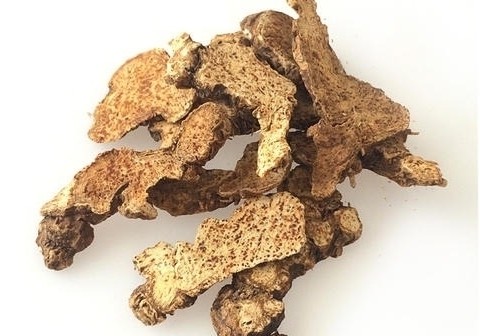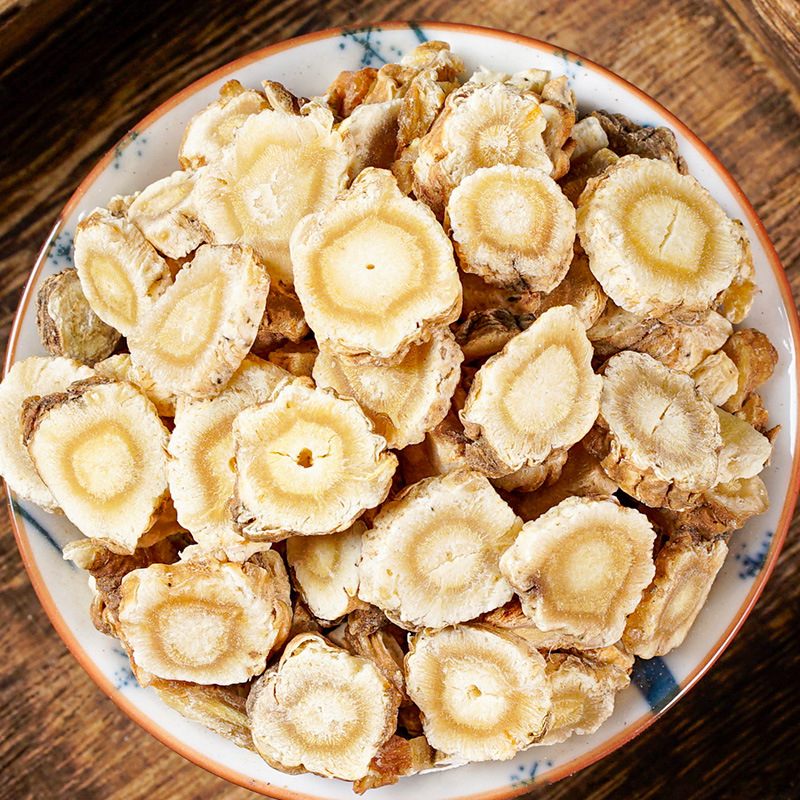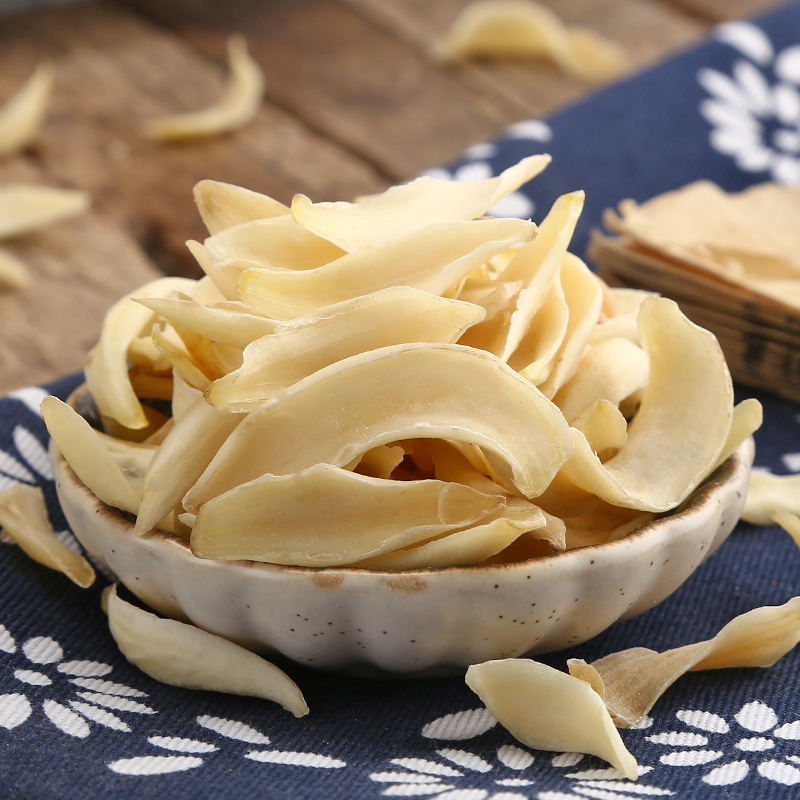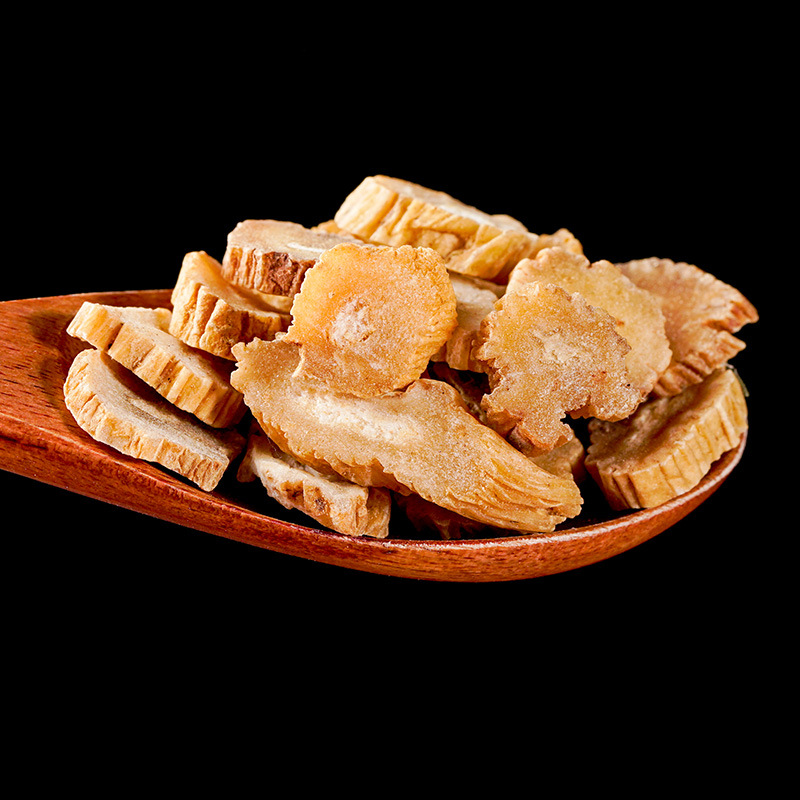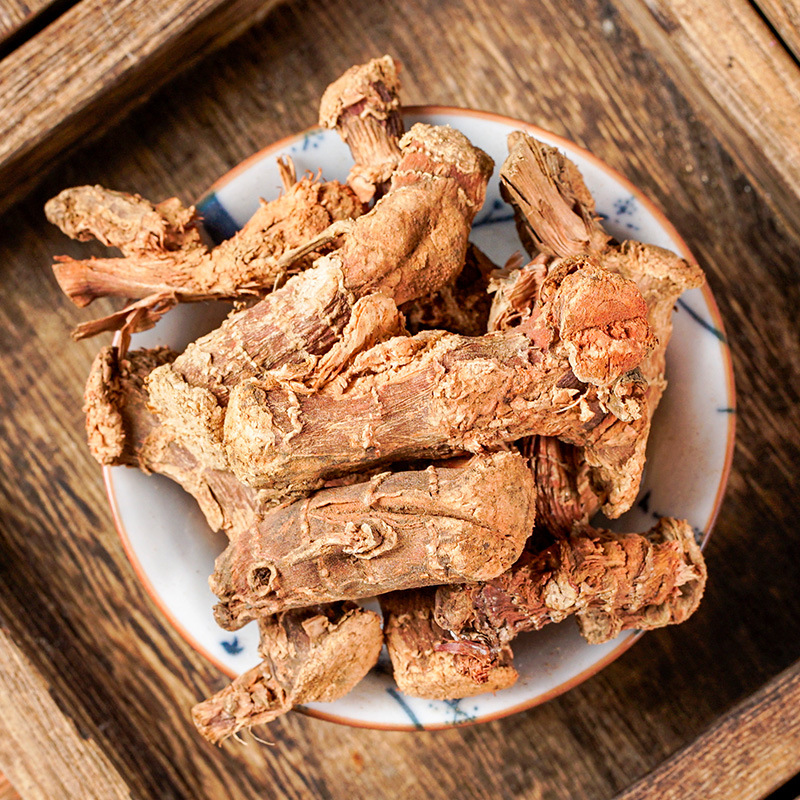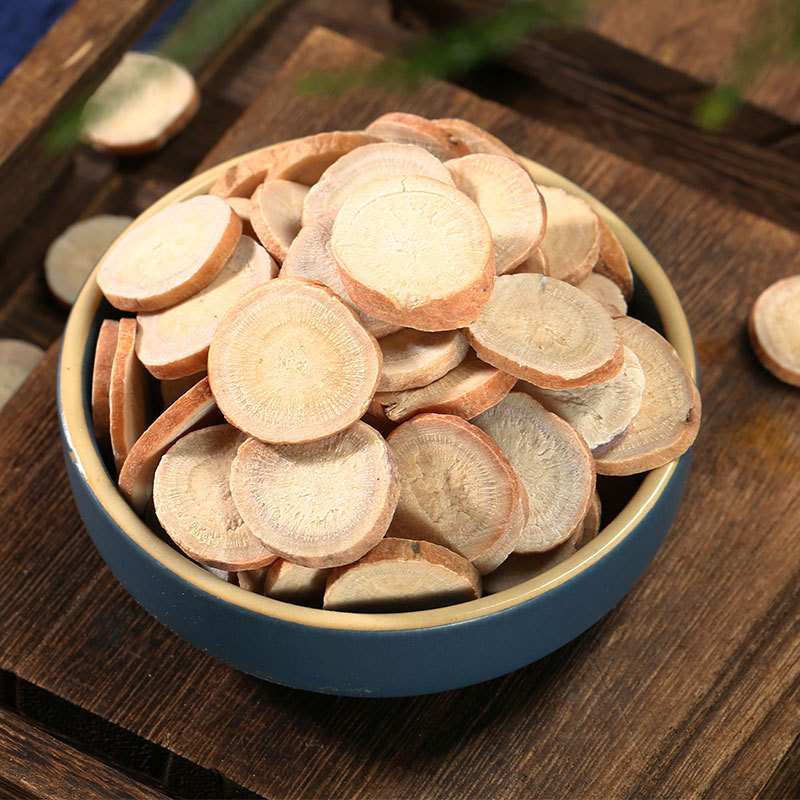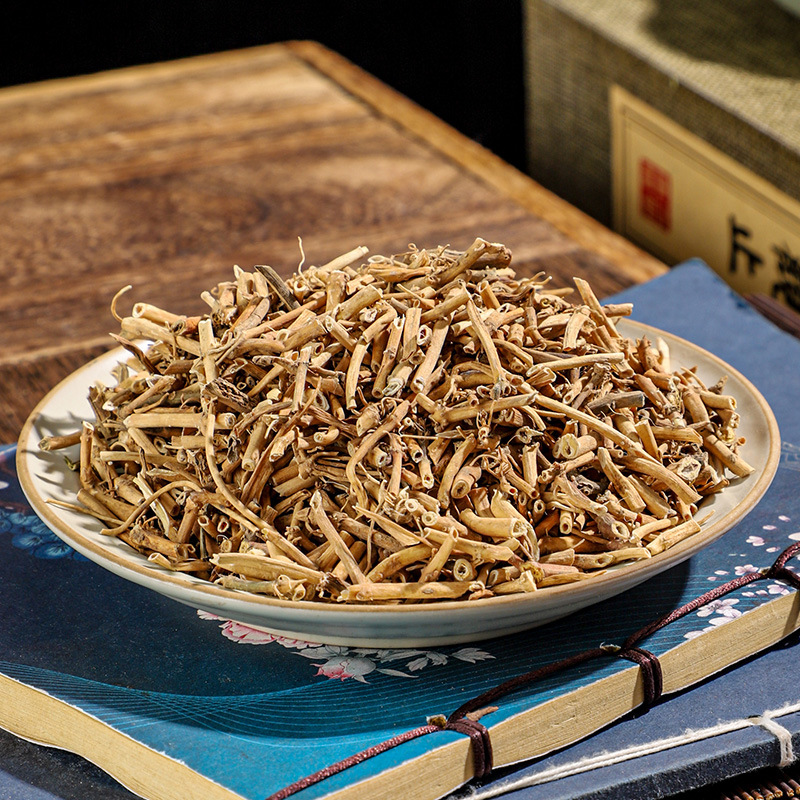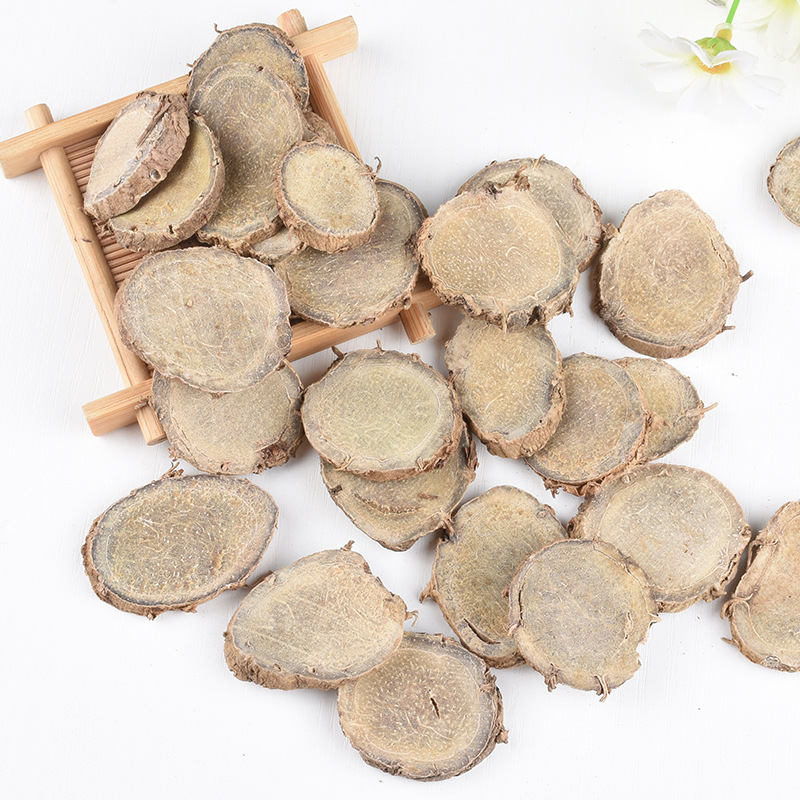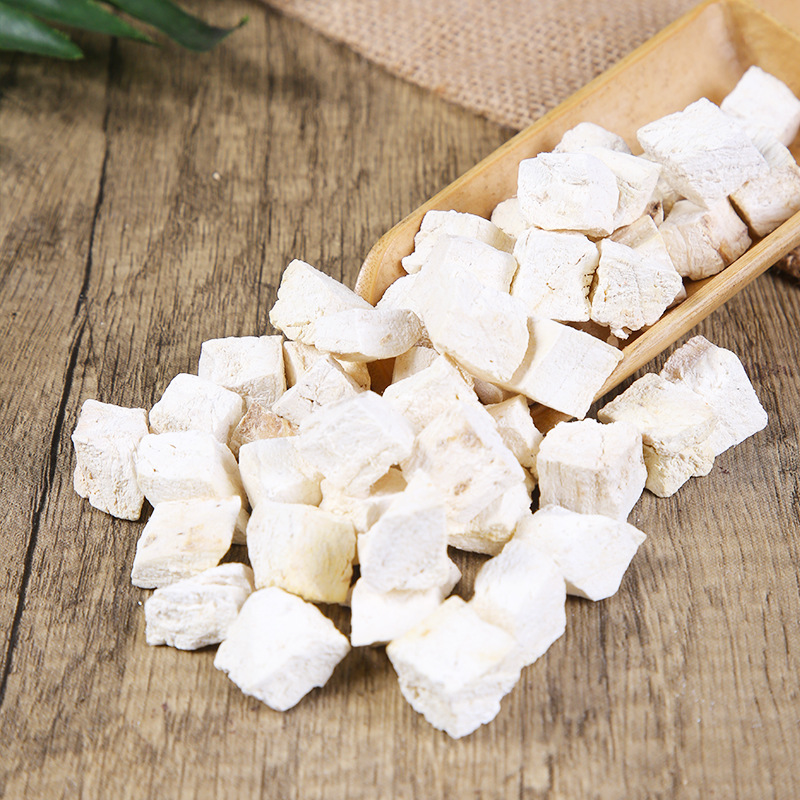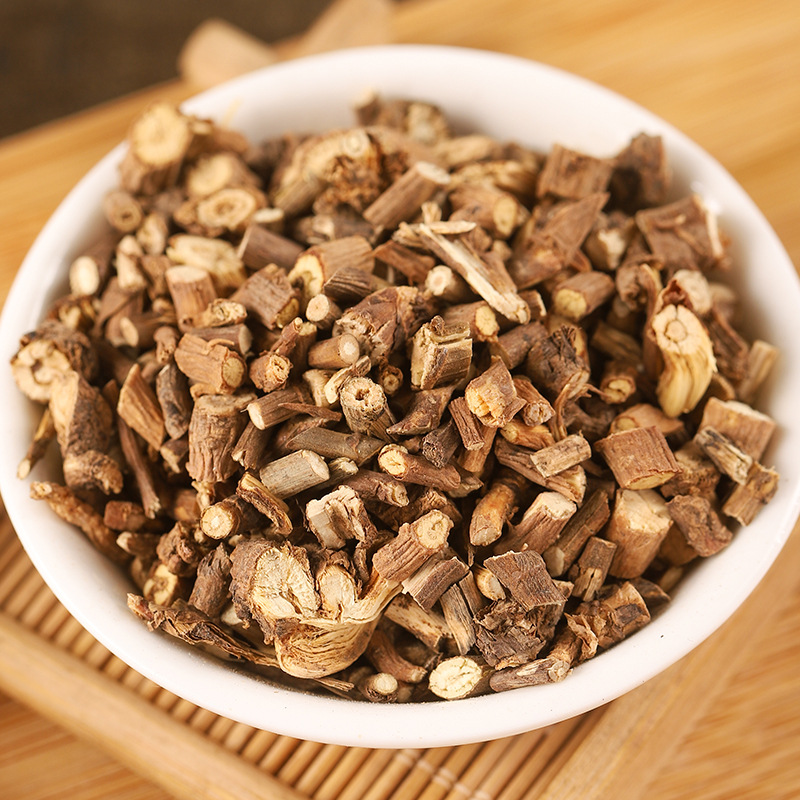
Atractylodes is the rhizome of the plant Atractylodes lancea from the Asteraceae family. It is primarily produced in provinces such as Jiangsu, Hubei, and Henan. The quality of Atractylodes produced in the Maoshan area of Jiangsu is considered the best, hence it is also known as Maoshu. White Atractylodes and Atractylodes are collectively referred to as the "Two Atractylodes." When some medical practitioners prescribe "Two Atractylodes" in their formulas, it means both are used. The best time for harvesting is in autumn. For medicinal use, it is often stir-fried until slightly yellow.
I. Efficacy and Application
Atractylodes Rhizome is pungent and bitter in flavor and warm in property. It acts on the spleen and stomach meridians.
Efficacy It can dry dampness, strengthen the spleen, dispel wind, and disperse cold, and improve eyesight. Its characteristic is particularly effective in drying dampness, and it is praised by physicians as an essential medicine for dampness obstruction in the middle jiao.
Commonly used for treating dampness obstructing the middle burner, abdominal distension and fullness, diarrhea, edema, beriberi and flaccidity, wind-damp impediment pain, wind-cold common cold, night blindness, blurred vision and other syndromes.
Summary of Famous Works by Renowned Authors:
Ben Jing: "It mainly treats wind-cold-damp impediment, dead flesh, tetany, jaundice, stops sweating and eliminates heat, disperses food."
"Pearl Pouch": "It can strengthen the stomach and calm the spleen; no other remedy can eliminate all types of dampness and swelling."
Compendium of Materia Medica: "Treats damp phlegm and fluid retention, as well as spleen dampness flowing downward, turbid vaginal discharge, and slippery diarrhea with intestinal wind."
Ben Cao Zheng Yi: "Spleen depression and dampness, or as swelling and fullness, or as diarrhea, dysentery, and malaria, or descending to cause heavy feet and swollen ankles... but if there is a sign of a turbid tongue without thirst, Atractylodes lancea alone is the most essential item."
Jade Qiao's Explanation of Medicinals: "Atractylodes dries dampness and promotes water metabolism, drains fluid retention and disperses phlegm, opens stagnation and eliminates fullness, transforms accumulations and removes concretions, regulates acid regurgitation and putrefaction, repels miasma and pestilence from mountains and rivers, revives limp and weak sinews and bones, and clears turbid urine."
Ben Cao Bei Yao: "It dries the stomach and strengthens the spleen, induces sweating and removes dampness, can uplift the stomach's yang energy, stops vomiting and diarrhea, expels phlegm and water, reduces swelling and fullness, wards off foul qi, disperses wind-cold-dampness, and is an essential medicine for treating atrophy. It also comprehensively resolves the six stagnations of phlegm, fire, qi, blood, dampness, and food, as well as spleen dampness flowing downward, intestinal wind, and vaginal discharge."
II. Compatibility and Application
1. For dampness obstructing the middle jiao syndrome. Atractylodes is aromatic, dry, and potent, with a strong ability to dry dampness and strengthen the spleen. Whenever dampness obstructs the middle jiao, leading to impaired transportation and transformation, and symptoms such as abdominal distension and fullness, poor appetite, nausea and vomiting, fatigue and weakness, and a greasy tongue coating, Atractylodes is indeed an essential herb. It is often combined with qi-moving and dampness-drying herbs such as Magnolia Bark, Tangerine Peel, and Licorice Root, forming the famous formula Ping Wei San for treating dampness obstructing the middle jiao. This formula can also treat phlegm retention, edema, and other conditions characterized by excessive spleen dampness.
Li Dongyuan said: The strong and ascending nature can eliminate dampness, pacify the Taiyin below, and prevent pathogenic factors from entering the spleen.
Xu Shuwei said, "Atractylodes can treat the fluid retention in the body. It works by drying the spleen to remove dampness and strengthening the earth element to fill the hollows. Atractylodes and jujube made into pills are called Shenshu Pills."
Zhu Danxi said, "Strengthening the spleen earth and drying spleen dampness are the root of treating phlegm."
Wang Ang said: "Reddish vaginal discharge is due to dampness injuring the blood aspect, originating from the heart and small intestine; white discharge is due to dampness injuring the qi aspect, originating from the lung and large intestine. Both conditions include cold and heat patterns, and there are also cases of vaginal discharge caused by phlegm, for which Er Chen Tang with Atractylodes and Poria, as well as Cimicifuga and Bupleurum, is appropriate."
Zhu Liangchun treats spleen deficiency and sinking of middle qi leading to gastroptosis by often prescribing the Buzhong Yiqi Decoction and additionally instructing patients to drink a tea brewed with 20 grams of Atractylodes rhizome daily, achieving remarkable results.
In addition, Dr. Zhu often combines Atractylodes and Scrophulariae Radix, one drying and one moistening, claiming they have the effect of lowering blood sugar, used in the treatment of diabetes.
2. For wind-cold impediment pain, swelling and pain in the feet and knees, weakness and lack of strength, etc. Atractylodes is acrid and dispersing, warm and drying, capable of dispelling wind-dampness, and is suitable for treating impediment patterns with predominant cold-dampness. Because it also promotes sweating, it is also applicable to external contraction patterns with predominant wind-cold-dampness pathogens and severe limb soreness. It is often combined with Notopterygium, Saposhnikovia, Asarum, and Ligusticum chuanxiong, as in the Nine Ingredients Notopterygium Decoction.
For the treatment of damp-heat pouring downward, with symptoms of swollen and painful feet and knees, flaccidity and weakness, it is most commonly combined with Phellodendron bark, using both cold and warm properties, which is known as Ermiao Wan. If the disease is located in the lower jiao, with damp-heat causing foot flaccidity, Ermiao Wan is further combined with coix seed and achyranthes root, which is known as Simiao Wan.
In the treatment of arthralgia syndrome with predominant dampness, it is often combined with dampness-removing and wind-dispelling herbs such as Coix Seed and Pubescent Angelica Root.
If treating chest and diaphragm stuffiness and oppression, epigastric and abdominal distention and pain, belching and acid regurgitation, nausea and vomiting, and indigestion caused by "six stagnations," it is often combined with Cyperus Rhizome, Chuanxiong Rhizome, Medicated Leaven, and Gardenia, which is known as Yueju Pill.
Zhu Danxi said, "All types of stagnation arise from abnormal transformation and transportation, causing qi to fail in ascending and descending. The disease is located in the middle jiao. To ascend, one must first descend; to descend, one must first ascend. Yueju Pill uses Atractylodes and Cyperus. Atractylodes can directly enter all meridians, disperse dampness from the Yangming channel, and promote circulation to relieve astringency; Cyperus is a medicine that swiftly moves qi within the yin aspect. One ascends and the other descends, thus stagnation disperses and becomes balanced."
3. For night blindness and blurred vision, it can be used alone or cooked with pork liver or sheep liver for certain therapeutic effects.
III. Usage and Dosage
Atractylodes is often used in decoctions and is also suitable for making pills and powders. The usual dosage in decoctions ranges from a few grams to over ten grams. If it is the main ingredient in a prescription, it can also be used in amounts of several tens of grams or more.
Regarding the distinction between "Er Zhu" (two types of Atractylodes), the earliest works such as "Shennong Bencao Jing" and "Shanghan Lun" only mentioned "Zhu" without differentiating between Baizhu (white Atractylodes) and Cangzhu (black Atractylodes). Later, Tao Hongjing pointed out that there are two types of Zhu: Baizhu and Chizhu, with Chizhu being Cangzhu. Baizhu and Cangzhu have similar effects, both capable of invigorating the spleen and drying dampness. However, Baizhu primarily focuses on invigorating the spleen and replenishing qi, often used for spleen deficiency with dampness, leaning towards tonifying deficiency. In contrast, Cangzhu primarily focuses on drying dampness, with invigorating the spleen as a secondary function, often used for excessive dampness and fullness in the middle jiao, leaning towards dispelling excess. Baizhu can strengthen the exterior, often used for spontaneous sweating due to exterior deficiency; Cangzhu can release the exterior and induce sweating, suitable for external contraction of wind-cold. Additionally, Baizhu excels in promoting urination and calming the fetus, while Cangzhu can dispel wind-dampness and improve vision, indicating distinct differences in their effects.
Huang Yuanyu said, "White Atractylodes stays without moving, while Black Atractylodes moves without staying. Therefore, White Atractylodes excels in tonifying, while Black Atractylodes excels in promoting movement. Both are similar in aiding digestion, promoting appetite, stopping vomiting, and halting diarrhea, but when it comes to draining water and relieving stagnation, Black Atractylodes is uniquely effective."
IV. Application Precautions
Cangzhu has a strong drying and dampness-removing effect, which can easily damage yin. Therefore, it is not suitable for individuals with yin deficiency and internal heat or those experiencing fluid depletion and excessive thirst.
Wang Ang said, "It is contraindicated for those with dry constipation and excessive sweating."
Practical Notes on Traditional Chinese Medicine: Second Draft of 21.1.10