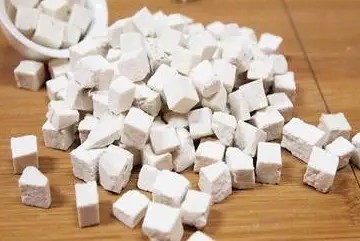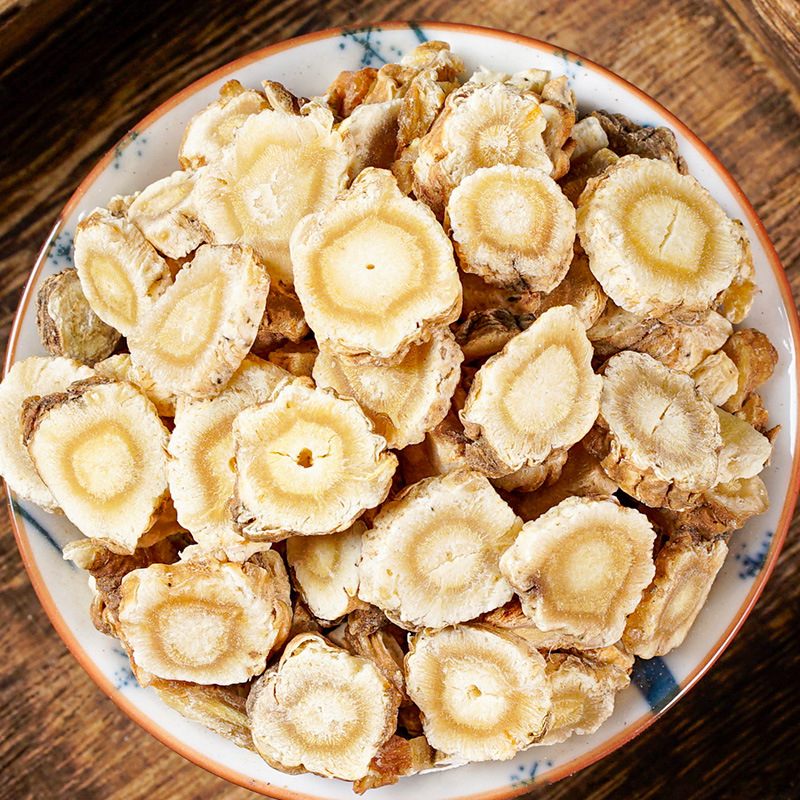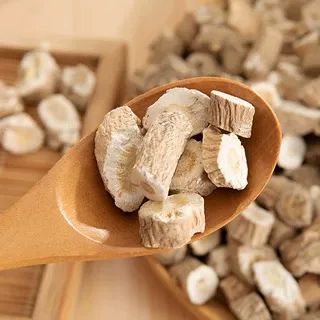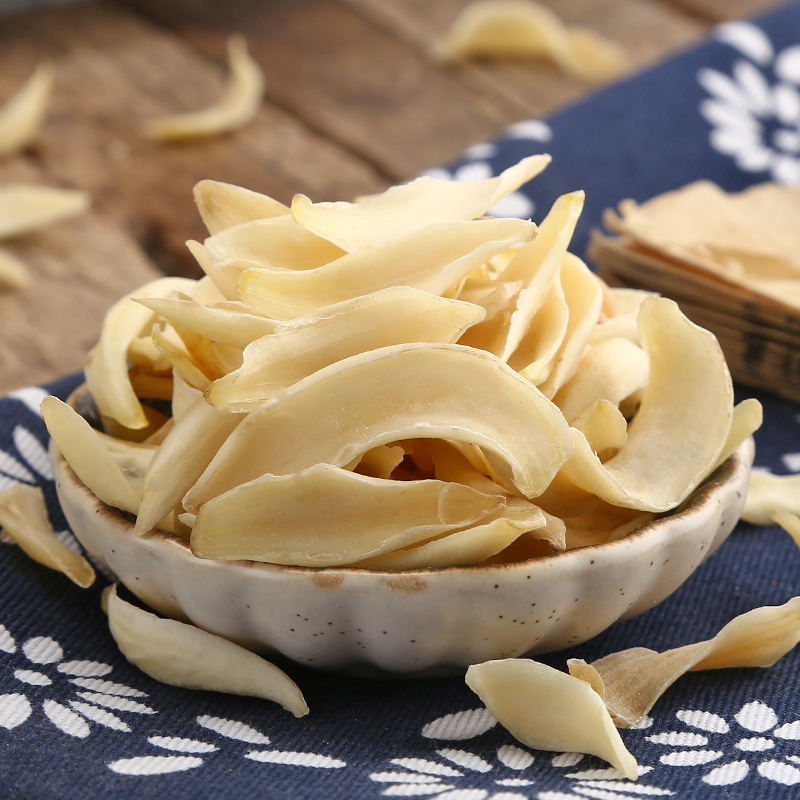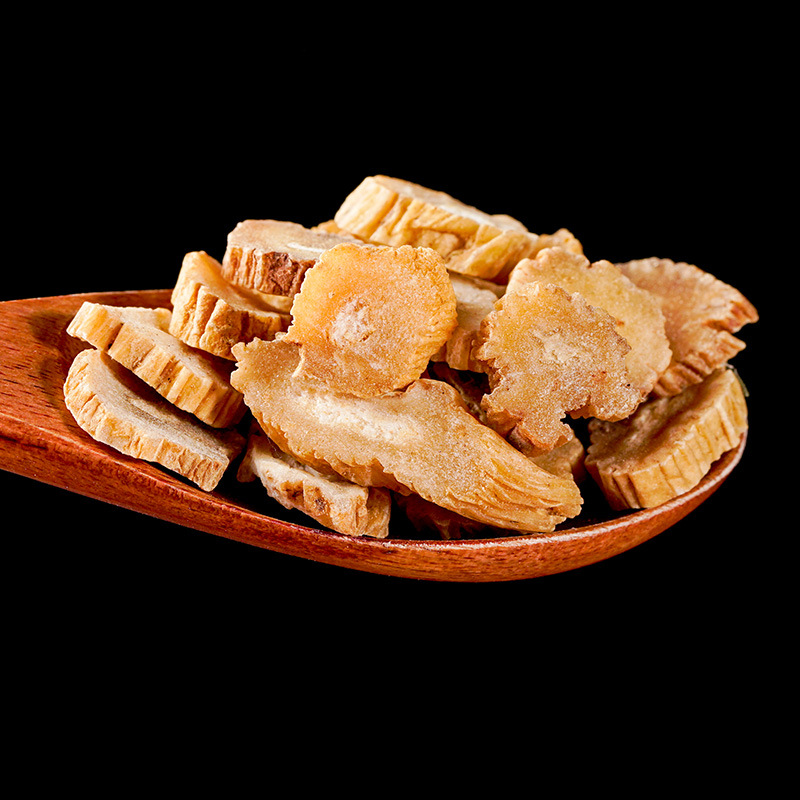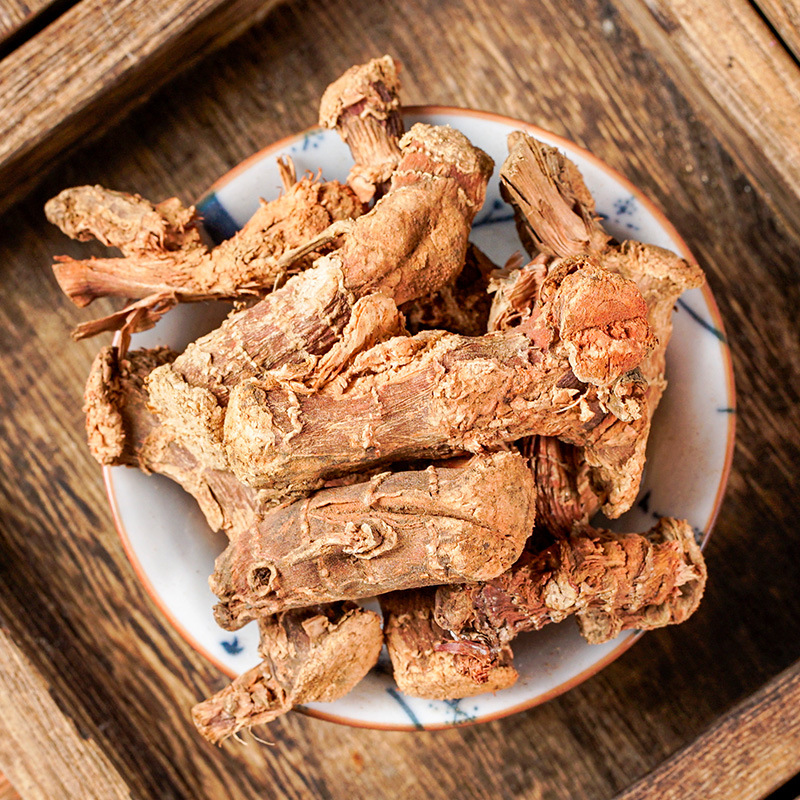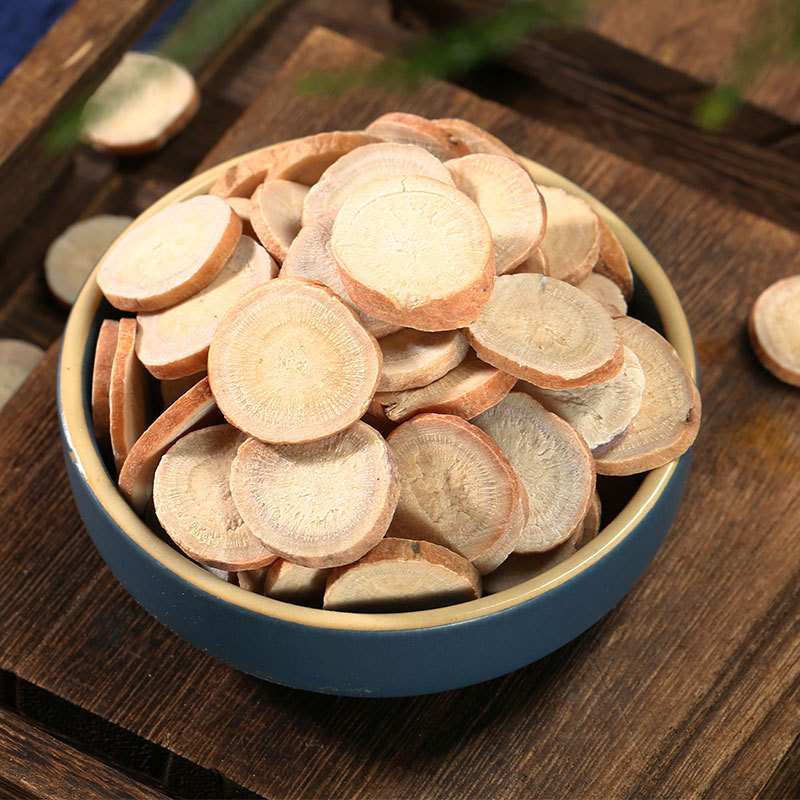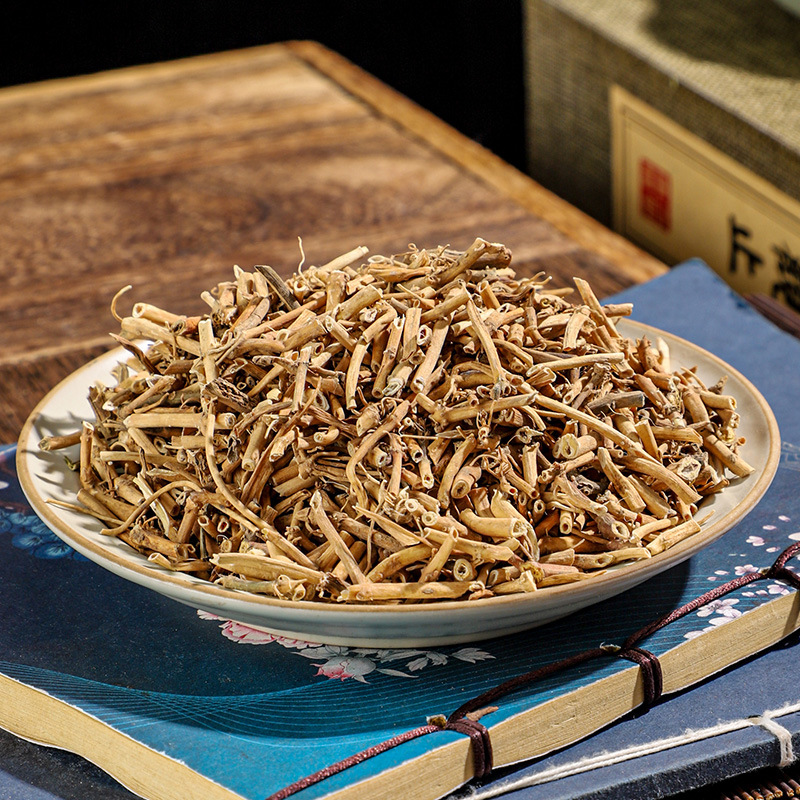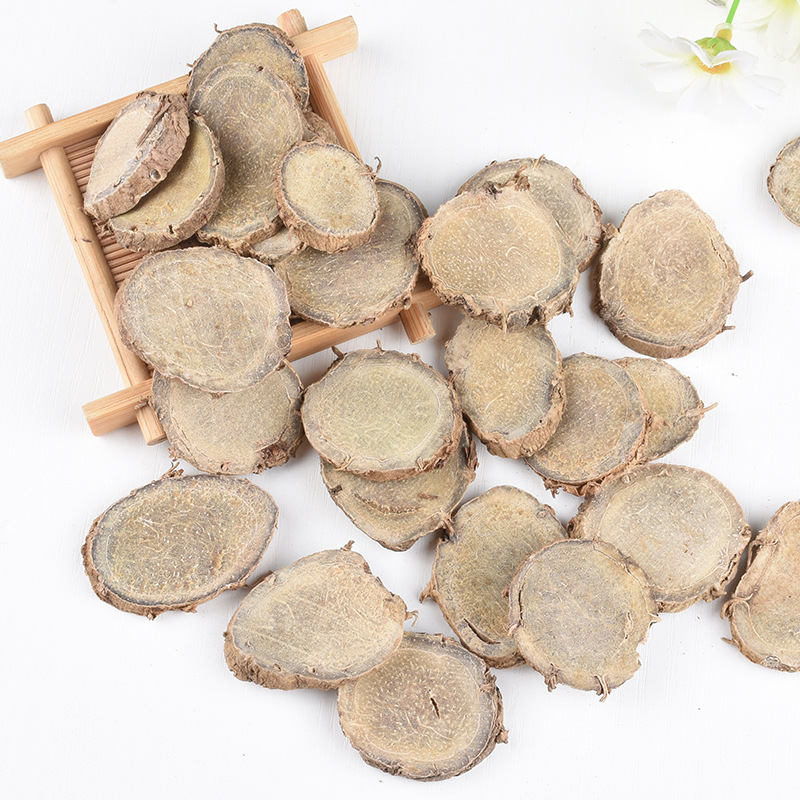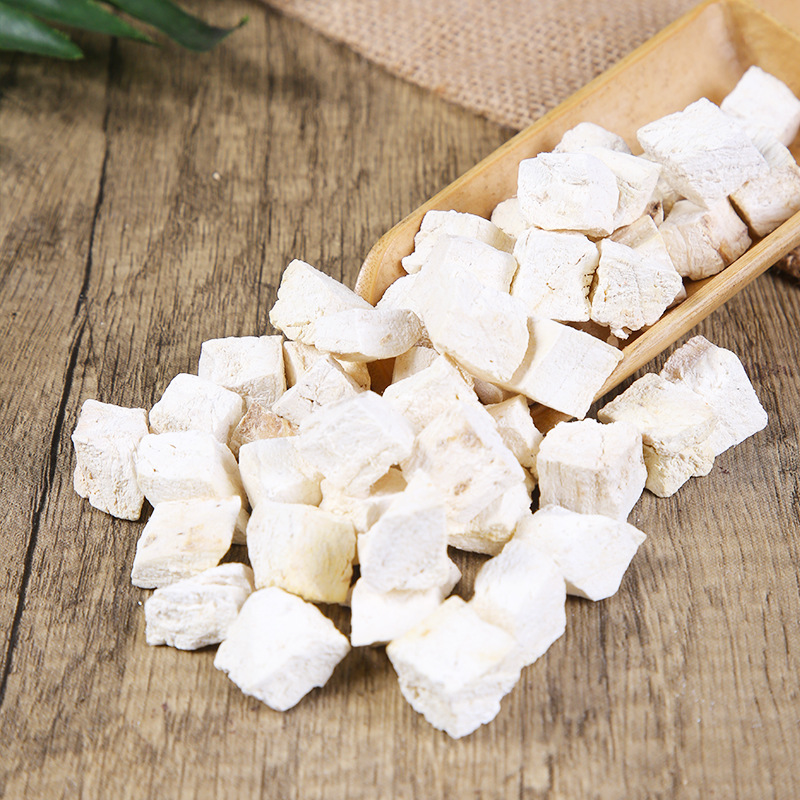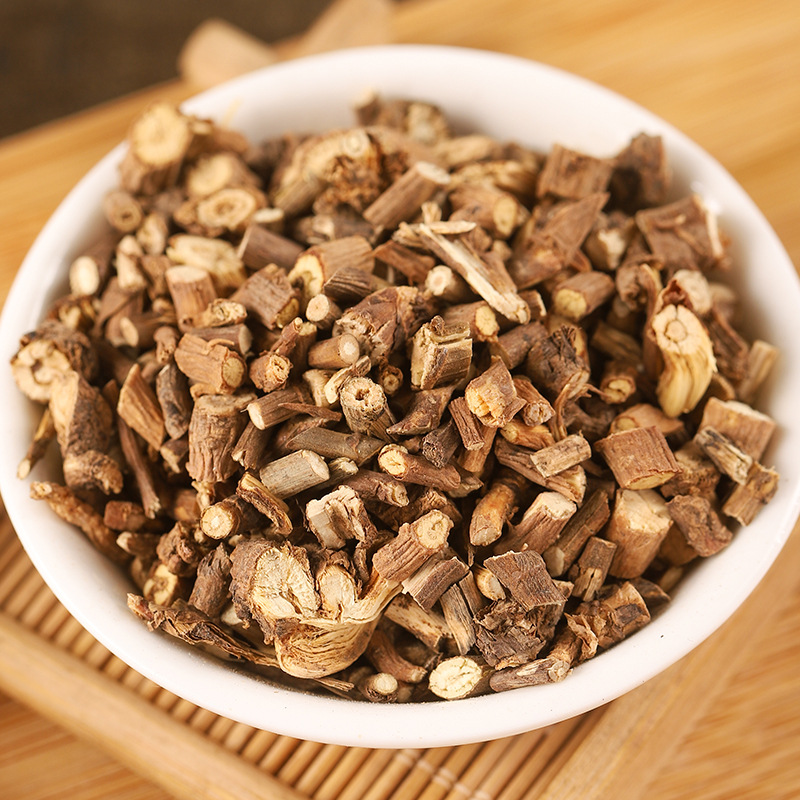
Poria is the sclerotium of the fungus Poria cocos, belonging to the Polyporaceae family. It often parasitizes on decaying pine roots and is called "Ling" due to its resemblance to pig feces. There is also a legend that ancient people had a special affection for pine trees, and since Poria grows after the decay of pine trees, it carries the meaning of "pine death, spirit birth," hence the name "Fu Ling." Poria can be either wild or cultivated, mainly produced in Yunnan, Anhui, Henan, and other regions. Poria produced in Yunnan is also known as Yun Ling and is considered an authentic medicinal material. It is commonly used sliced or cut into small pieces. Depending on its color and characteristics, it is classified into White Poria, Red Poria, Poria Skin, and Fu Shen.
I. Efficacy and Application
Poria tastes sweet and bland, with a neutral nature. It belongs to the heart, spleen, and kidney meridians.
Efficacy It can promote diuresis and drain dampness, strengthen the spleen, and calm the mind. Its characteristics are mild medicinal properties, promoting diuresis and draining dampness while also tonifying the spleen and calming the mind, making it an essential herb for tonifying and draining dampness.
Commonly used for the treatment of conditions such as edema with scanty urine, phlegm retention with dizziness and palpitations, spleen deficiency with reduced appetite, loose stools and diarrhea, restlessness of the mind, palpitations and insomnia.
Summary of Famous Works by Renowned Authors:
"Ben Jing": "It primarily treats rebellious qi in the chest and flanks, melancholy and anger, fright and evil influences, fear and palpitations, binding pain below the heart, alternating chills and fever, vexation and fullness, cough and counterflow, stops parched mouth and dry tongue, and promotes urination. Long-term consumption quiets the ethereal and corporeal souls, nourishes the spirit, prevents hunger, and prolongs life."
Bencao Yanyi: "Poria and Poria Spirit, their function in promoting water circulation is significant, and they are indispensable for benefiting the heart and spleen."
"Supplement to Medical Books": "Poria is the main medicine for treating phlegm. The root of phlegm is water, and poria can promote water circulation; the movement of phlegm is dampness, and poria can also promote dampness circulation."
Changsha Medicine Explanation: "Promotes urination and dries dampness, expels fluid retention and resolves phlegm, effectively calms palpitations, most effectively relieves depression and fullness, eliminates restlessness from sweating and purging, stops thirst from fluid retention, a divine remedy for strangury, dysuria, diarrhea, and dysentery, a wonderful medicine for metrorrhagia, leukorrhea, and abnormal vaginal discharge, effective for both qi distension and water swelling, effective for both regurgitation and dysphagia, its efficacy is recorded in hundreds of diseases, its effectiveness is evident in thousands of prescriptions."
"Compendium of Materia Medica": "Sweet, warm, benefits the spleen and supports yang, mild and diuretic to clear dampness. White in color, enters the lung to purge heat and connect with the bladder, calms the heart and boosts qi, regulates the nutritive and defensive levels, stabilizes the ethereal and corporeal souls. Treats anxiety, anger, palpitations, pain and knots below the heart, alternating chills and fever, irritability and fullness, dry mouth and tongue, cough and hiccups, phlegm and water in the diaphragm, edema and dribbling urination, diarrhea, and seminal emission. For blocked urination, it can unblock; for excessive urination, it can stop. Promotes fluid production and quenches thirst, reduces fever and calms the fetus."
"Medical Records of Integrating Chinese and Western Medicine": "Its property can transform phlegm and fluid retention in the stomach into water and fluid, guiding it to be transported to the spleen, stomach, and lungs. It is also adept at calming the floating and restless heart qi to tranquilize the mind and stabilize the spirit, while also being capable of draining water and fluid below the heart to eliminate palpitations, making it an essential herb for the heart meridian. Furthermore, it can restrain and suppress externally escaping water qi, redirecting it downward to prevent it from being discharged as sweat, thus also serving as a key herb for stopping sweating."
II. Compatibility and Application
1. Used for dysuria, edema, and water-dampness syndromes such as fluid retention. Poria cocos promotes diuresis without harming healthy qi, with a mild medicinal nature, making it a key herb for promoting diuresis and draining dampness. It is suitable for all water-dampness and fluid retention syndromes, regardless of cold or heat. It is often combined with Polyporus umbellatus and Alisma orientale to enhance its diuretic and dampness-draining effects, and is widely used in clinical practice.
For treating cold-dampness, it is often combined with warm and pungent herbs such as processed aconite, cinnamon twigs, and dried ginger; for treating damp-heat, it is often combined with herbs that clear and drain damp-heat, such as plantain herb, akebia, lygodium spore, and phellodendron bark.
In the "Treatise on Cold Damage Diseases," the Ling Gui series of formulas are commonly used to treat water qi disorders, and the application of Poria cocos in combination is most worthy of study. For example, to treat symptoms such as impaired bladder qi transformation, dysuria, and edema caused by kidney yang deficiency, it is often combined with Polyporus umbellatus, Alisma orientale, Cinnamomum cassia, and Atractylodes macrocephala, which constitutes the Wu Ling San formula that promotes internal dispersion and external drainage, resolving both the exterior and interior.
If treating dysuria caused by the interaction of water and heat, fever, thirst with desire to drink, or restlessness and insomnia, or painful and difficult urination with dribbling, even hematuria, it is often combined with Polyporus, Alisma, Talcum, and Colla Corii Asini, which is the Polyporus Decoction for nourishing yin, clearing heat, and promoting diuresis.
If treating kidney yang deficiency with edema, it is often combined with prepared aconite, peony, white atractylodes, ginger, etc., which is the primary formula for warming yang and promoting diuresis, known as Zhenwu Decoction.
If treating kidney qi deficiency, with symptoms of lower back soreness, fatigue, and difficulty urinating, it is often combined with prepared aconite, cinnamon, cornus officinalis, peony, and moutan bark, which constitutes the renowned formula for warming and tonifying kidney qi, known as Shen Qi Wan.
If treating phlegm-fluid retention due to insufficiency of middle yang, with symptoms such as fullness in the chest and hypochondrium, dizziness, palpitations, shortness of breath, and coughing, it is often combined with cinnamon twig, white atractylodes rhizome, and licorice root, forming the renowned formula Ling Gui Zhu Gan Tang, which warms yang to resolve fluid retention, strengthens the spleen, and promotes diuresis.
In various applications of classical prescriptions, the combination of Poria cocos and cinnamon twig can enhance the power of warming yang and promoting diuresis; when combined with Atractylodes macrocephala, it can strengthen the ability to invigorate the spleen and eliminate dampness; when paired with Polyporus umbellatus, it can boost the effect of promoting diuresis and reducing swelling; and when used with ginseng, it can enhance the power of calming the mind and soothing the spirit.
2. For spleen deficiency syndrome. Poria can strengthen the spleen. For treating spleen deficiency with fatigue, poor appetite, and loose stools, it is often combined with Codonopsis pilosula, Atractylodes macrocephala, and licorice, forming the famous spleen-tonifying and qi-boosting formula, Four Gentlemen Decoction.
Medicinal Properties: Poria is the most important medicinal herb for promoting diuresis and eliminating dampness. The book says it strengthens the spleen, which means that once water is removed, the spleen naturally becomes strong.
3. For palpitations and insomnia. Poria can calm the heart and tranquilize the mind. To treat palpitations, insomnia, timidity, and susceptibility to fright, it is often combined with sedative herbs such as cinnabar, wild jujube seed, and polygala root, as seen in formulas like Baizi Yangxin Pills, Guipi Decoction, and Tianwang Buxin Pills.
"Compendium of Materia Medica": "Later generations must use Poria with Hostwood to treat heart disease, so Zhang Jiegu said that for dizziness due to wind and heart deficiency, it cannot be cured without Poria with Hostwood, yet Poria does not fail to treat heart disease either."
4. In the Treatise on Cold Damage Disorders, there are numerous prescriptions that utilize Poria cocos. In addition to the aforementioned formulas such as Wuling San, Shenqi Wan, and Linggui Zhugan Tang, there are many other classical prescriptions worth studying.
For example, in treating drinkers with water retention below the heart, who experience thirst first and then vomiting, it is often combined with Pinellia ternata and ginger, as seen in the Minor Pinellia Decoction with Poria.
If treating regurgitation and vomiting with thirst and desire to drink water, it is often combined with Alisma, Cinnamon Twig, Fresh Ginger, and Atractylodes Macrocephala, known as Poria and Alisma Decoction.
If treating phlegm and retained fluid in the chest and epigastrium, after vomiting water, there is a sensation of emptiness and fullness in the chest and epigastrium, and inability to eat, it is often combined with ginseng, white atractylodes, tangerine peel, and immature bitter orange, which is known as the Waital Fuling Decoction.
If the disease remains unresolved after sweating and purging, with symptoms of restlessness and agitation, it is often combined with Ginseng, Aconite, Dried Ginger, and Licorice, known as Poria Four Counterflows Decoction.
If treating Shaoyin disease with internal water qi, abdominal pain and diarrhea, dysuria, heavy and painful limbs, or vomiting, it is often combined with aconite, peony, atractylodes, and ginger, known as Zhenwu Decoction.
Huang Yuanyu said, "Poria cocos drains water and dries earth, harmonizes and soothes, suitable for all ailments, an excellent medicine indeed. Taoists claim it has the power to prolong life, and this is not an exaggeration."
III. Usage and Dosage
Poria is often used in decoctions and can also be made into pills or powders. The dosage range for decoctions is quite broad, ranging from a few grams to several tens of grams, or even over a hundred grams, all with established guidelines. In clinical application, it entirely depends on the physician's diagnosis and adaptation to the situation, and should not be rigidly adhered to.
When used for calming the mind, there is a method of coating Poria with cinnabar, which is the origin of Cinnabar Poria or Cinnabar-coated Poria.
Poria has red and white varieties. Ancient texts mention "red for purging, white for tonifying," but there is still debate about this today. Generally, it is believed that white poria is more inclined to strengthen the spleen, while red poria is more inclined to promote diuresis.
Wang Ang said, "The white variety enters the lung and bladder qi aspects. The red variety enters the heart and small intestine qi aspects. For tonifying the heart and spleen, the white is superior; for promoting diuresis and clearing damp-heat, the red is superior."
Zhang Xichun said, "If poria is used in decoctions, when cut into chunks, it will not be fully decocted even after boiling all day. It must be sliced thinly or ground into powder to be thoroughly decocted."
IV. Application Notes
Poria is bland in flavor and promotes diuresis to eliminate dampness, so it is contraindicated for those with yin deficiency and fire excess.
"Classification of Drugs According to Their Properties": "If taken when urination is frequent or excessive, it greatly damages the eyes; if taken when sweating is profuse, it depletes true qi and shortens life."
Attached Medicines: Efficacy and Application of Tuckahoe Peel and Poria Spirit
I. Poria Peel
Poria peel is the outer skin of Poria cocos, and its function is particularly effective in promoting diuresis and reducing swelling. It is commonly used for various types of edema syndromes, such as in combination with ginger peel, mulberry root bark, tangerine peel, and areca peel, which is known as the Five-Peel Decoction. The usual dosage is over ten grams.
"Compendium of Materia Medica": "Poria peel is specifically effective in promoting water circulation and treating edema and skin distension. It follows the principle of 'using the peel to treat the skin,' as seen in the Five-Peel Powder. For swelling accompanied by irritability, thirst, constipation, and dark urine, which belongs to yang-type edema, Five-Peel Powder or Shuzuo Drink is recommended. For swelling without irritability or thirst, with loose stools, frequent urination, and no dark or difficult urination, which belongs to yin-type edema, Shipi Drink or Liuqi Drink is suitable. For swelling above the waist, sweating is advised; for swelling below the waist, promoting urination is recommended."
II. Poria with Hostwood
Poria that grows embracing pine roots is called Fushen, also known as "embracing wood spirit." It is generally considered to be more inclined to nourish the heart and calm the mind. The usual dosage ranges from a few grams to over ten grams.
Zhang Xichun said, "The power of nourishing the heart is superior to that of Poria."
Ben Cao Bei Yao: "The main indications are similar to those of Poria, but Poria is more often used for the spleen and kidney, while Fushen is more often used for the heart. It opens the heart and benefits wisdom, calms the soul and nourishes the spirit. It treats wind dizziness and heart deficiency, forgetfulness, and frequent anger."
Practical Notes on Traditional Chinese Medicine: Revised Draft on the Evening of January 9, 2021