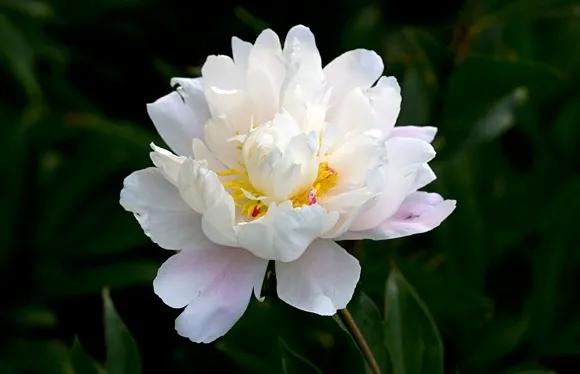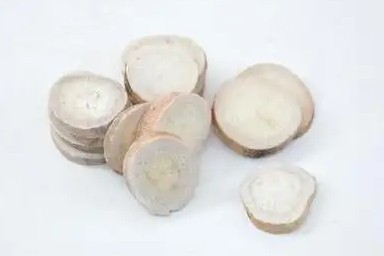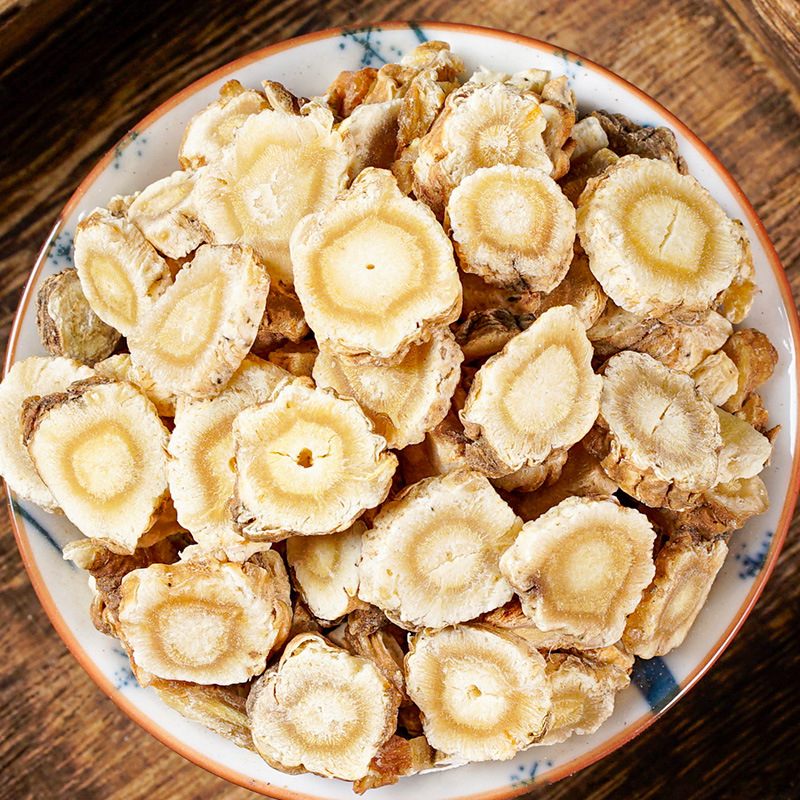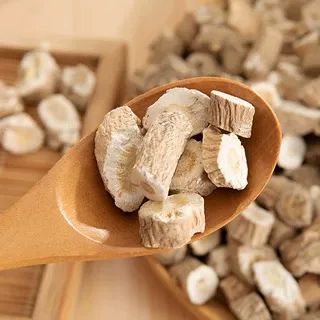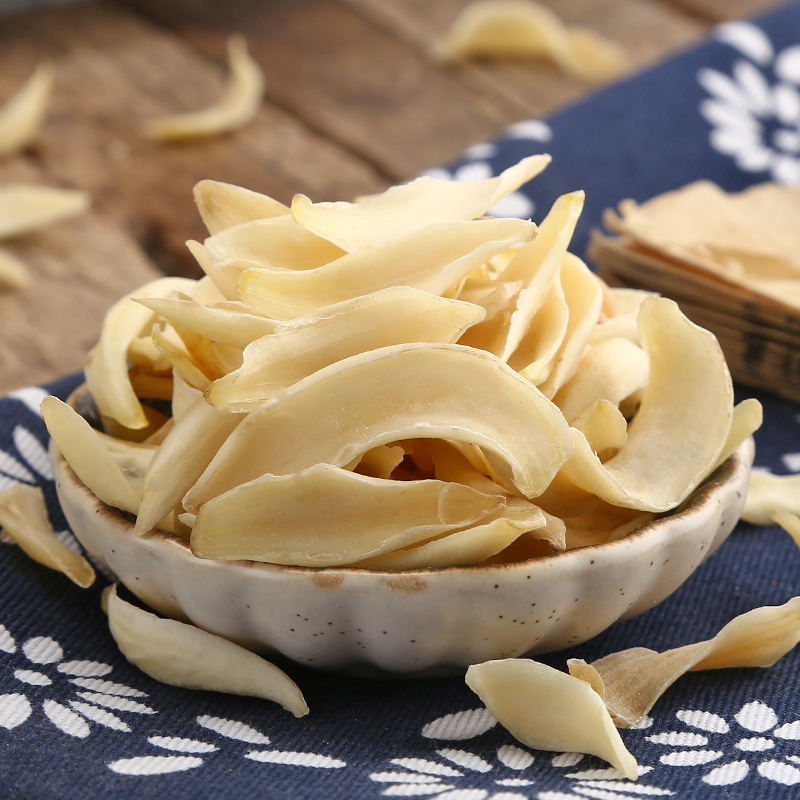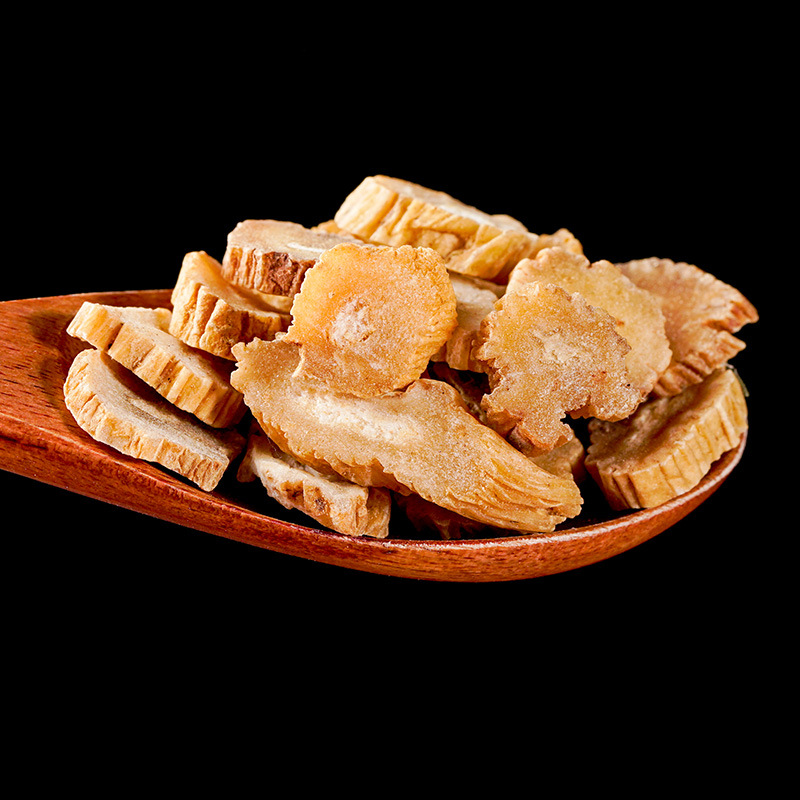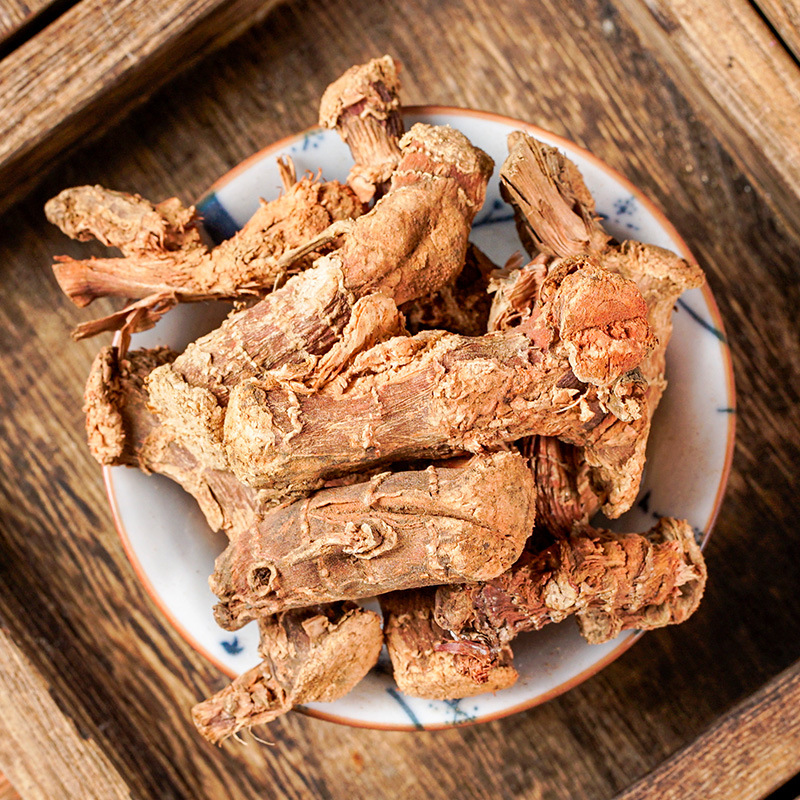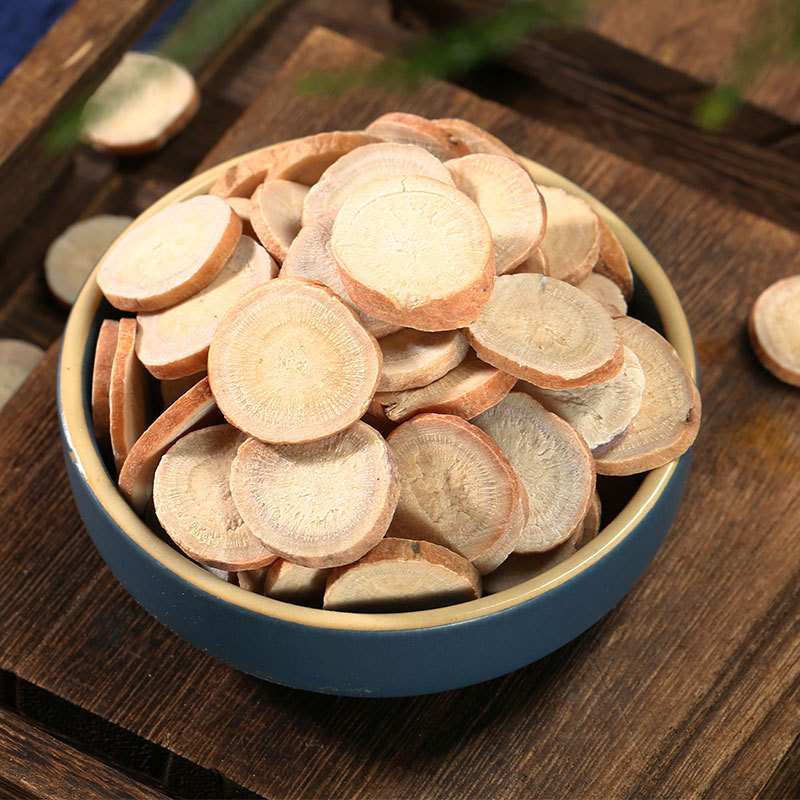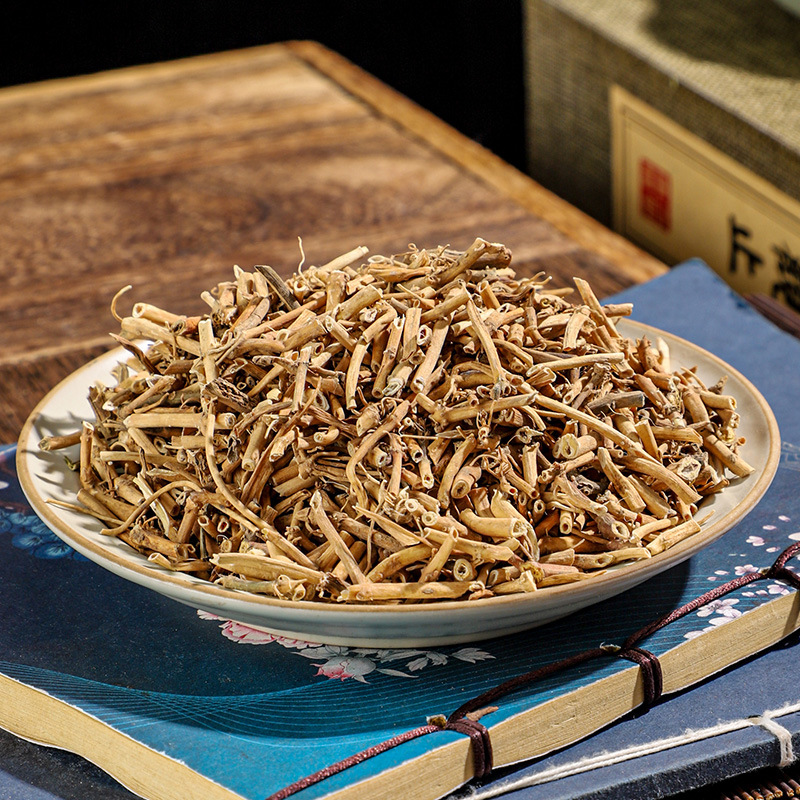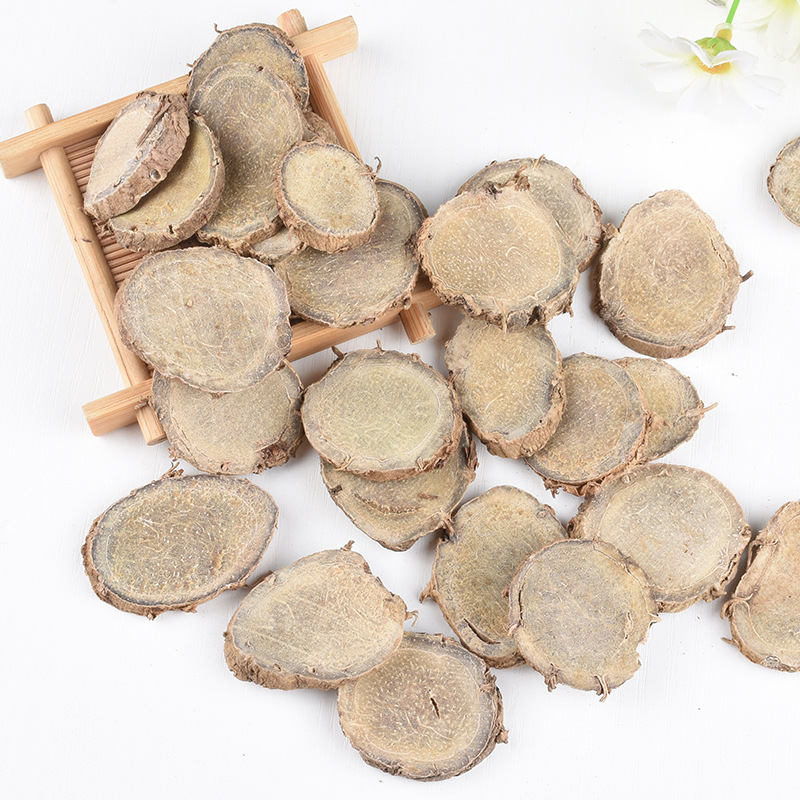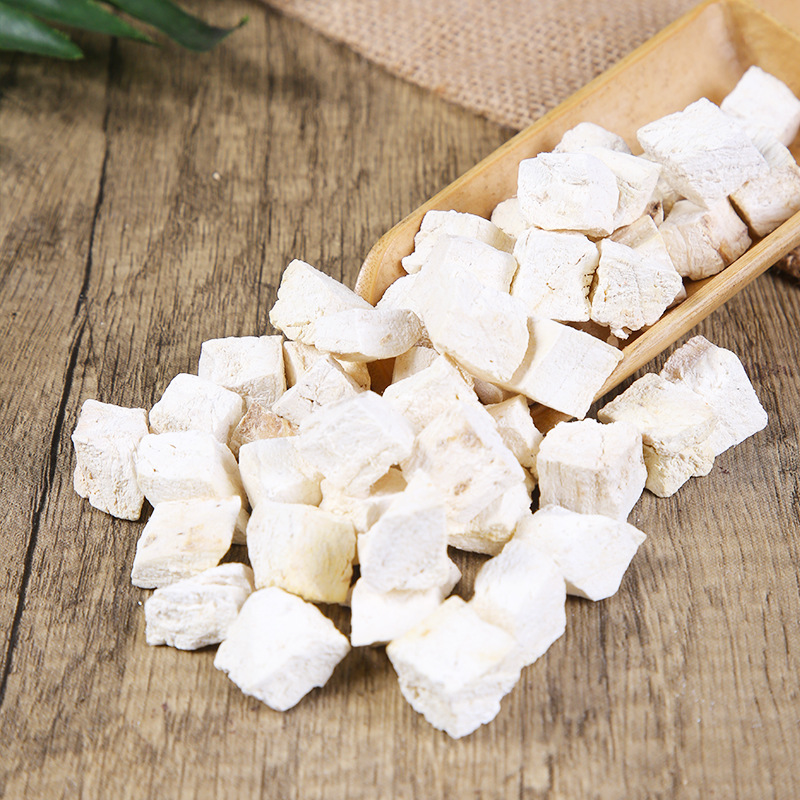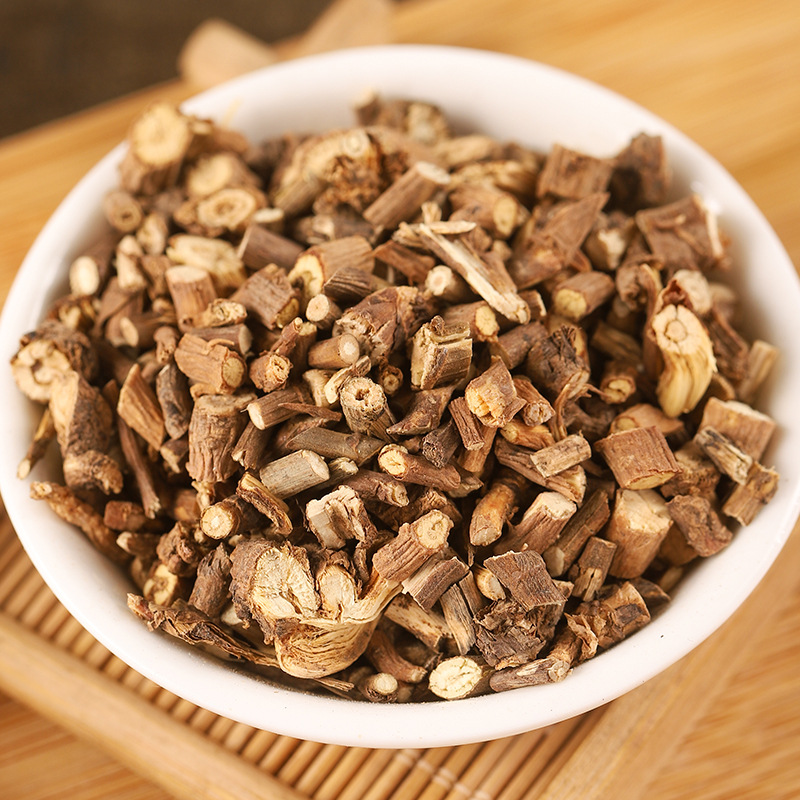
White Peony Root is the root of the peony plant. Its origin is the same as that of Red Peony Root, and it is named for its white color. Some medical practitioners prescribe "Two Peonies," meaning both White Peony Root and Red Peony Root are used. Nowadays, it is mostly cultivated in Zhejiang, Anhui, Sichuan, and other regions. It is harvested in summer and autumn, dried, and processed for medicinal use. It can be used raw, stir-fried, or stir-fried with wine.
Zhang Xichun said: "White peony root is produced in the south, with the best quality coming from Hangzhou. Its color is white with a slight red tint, and its skin is red with a slightly deeper hue. Red peony root is produced in the three northeastern provinces of the north, found in various mountains. Its flesh is red, and its skin is crimson, with a very coarse texture, resembling the roots of wild grass."
I. Efficacy and Application
White Peony Root tastes bitter, slightly sour, and is cool to slightly cold in nature. It belongs to the liver and spleen meridians.
Efficacy It can nourish blood and astringe yin, soften the liver and relieve pain, and calm liver yang. Its characteristic is that it nourishes blood while also having astringent properties, especially excelling in entering the liver meridian's blood aspect to soften the liver and relieve pain, thus being hailed as the "essential medicine for the liver."
Commonly used for the treatment of blood deficiency with sallow complexion, irregular menstruation, spontaneous sweating, night sweats, hypochondriac pain, abdominal pain, spasm of the limbs, headache, and dizziness.
Summary of Famous Works by Renowned Authors:
The Pearl Bag: "It has six functions: first, calming the spleen meridian; second, treating abdominal pain; third, regulating stomach qi; fourth, stopping diarrhea and dysentery; fifth, harmonizing blood vessels; sixth, consolidating the interstices."
"Compendium of Materia Medica": "Stops dysentery, abdominal pain, and tenesmus."
Changsha Materia Medica: It enters the liver system to clear wind, travels to the gallbladder organ to purge heat, excels at regulating restlessness and palpitations in the heart, most effectively relieves abdominal pain and fullness, disperses oppressive heat in the chest and flanks, alleviates cramps and tension in the legs and feet, cures vomiting of blood and nosebleeds, stops uterine bleeding and abnormal discharge, proves effective for diarrhea, dysentery, and urinary issues, and works well for hemorrhoids, fistulas, and scrofula.
Compendium of Materia Medica: "Tonifies blood, drains the liver, benefits the spleen, astringes liver yin, treats abdominal pain due to blood deficiency."
"Medical Records Combining Chinese and Western Medicine": "Peony has a bitter and slightly sour taste, a cool nature, and is rich in fluids. It excels at nourishing yin and blood, reducing fever, and alleviating restlessness. It can guide the floating heat from the upper burner downward and expel it through urination, making it a key herb for those with yin deficiency, heat, and difficulty urinating. Due to its sour taste, it can enter the liver to generate blood; due to its bitter taste, it can enter the gallbladder to benefit bile; and due to its sour, bitter, and cool nature, it is also effective at clearing heat from the liver and gallbladder, thereby relieving tenesmus after dysentery."
The Ancient Chinese Medicine of Circular Movement: "Peony lowers Wood A, while cinnamon twig raises Wood B."
II. Compatibility and Application
1. Used for irregular menstruation, dysmenorrhea, metrorrhagia and metrostaxis, spontaneous sweating, night sweats, and other conditions. White Peony Root can nourish blood, regulate menstruation, soothe the liver, and relieve pain, commonly used in various gynecological diseases. For treating blood deficiency disorders, it is often combined with Chinese Angelica, Prepared Rehmannia Root, and Szechuan Lovage Rhizome, forming the renowned blood-tonifying formula, Si Wu Tang.
If treating menstrual pain, one can add Yuanhu and Xiangfu to the Siwu Decoction to promote qi circulation and relieve pain.
If treating abdominal cold and incessant uterine bleeding, it is often combined with donkey-hide gelatin, carbonized mugwort leaf, and honey-fried licorice in the Four-Substance Decoction, which is then called the Gelatin and Mugwort Decoction.
If treating abdominal pain in women, or abdominal pain during pregnancy accompanied by difficulty urinating and lower limb edema, it is often combined with Angelica sinensis, Atractylodes macrocephala, and Ligusticum chuanxiong, known as Danggui Shaoyao San.
If treating disharmony of ying and wei, external contraction of wind stroke, or spontaneous sweating due to exterior deficiency, night sweats, and other conditions, it is often combined with cinnamon twig, licorice, ginger, and jujube, forming what later physicians have called the "ancestor of all formulas" and the "crown of all formulas"—the Cinnamon Twig Decoction. In this formula, the combination of cinnamon twig and peony, one warm and one cool, one dispersing and one astringent, one opening and one closing, one ascending and one descending, works together to harmonize yin and yang and regulate ying and wei, fully demonstrating the ingenuity of the formula composition. If oyster shell, dragon bone, and arborvitae seed are added to the Cinnamon Twig Decoction, it can further enhance the effect of astringing yin and stopping sweating, making it suitable for night sweats caused by yin deficiency and yang floating.
2. For disharmony of liver qi, pain in the hypochondrium, epigastrium, and abdomen, or spasmodic pain in the limbs. White Peony Root is most effective at nourishing blood and softening the liver, relieving urgency and alleviating pain. For example, in treating blood deficiency and liver stagnation with hypochondriac pain, it is often combined with Chinese Angelica Root, Largehead Atractylodes Rhizome, Bupleurum Root, and Licorice Root, forming the famous formula for nourishing blood and softening the liver, known as Xiaoyao Powder.
If treating disharmony of the liver and spleen, cramping pain in the epigastric region and abdomen, or limb spasms and pain caused by blood deficiency, a large dose of peony is often combined with honey-fried licorice, known as the Peony and Licorice Decoction. Because this formula is particularly effective for treating leg pain and calf cramps, later physicians also refer to it as the "Cane-Dispelling Decoction."
If treating deficiency fatigue with internal urgency and abdominal pain, often based on Guizhi Decoction, increase the dosage of Paeoniae Radix Alba to utilize its function of relieving urgency and stopping pain, while adding an appropriate amount of maltose to relieve urgency and tonify deficiency, which is Xiao Jianzhong Decoction. Based on Xiao Jianzhong Decoction, for treating many deficiency and damage syndromes, it is often combined with Angelicae Sinensis Radix, Astragali Radix, Aconiti Lateralis Radix Praeparata, etc., forming formulas such as Danggui Jianzhong Decoction, Huangqi Jianzhong Decoction, and Fuzi Jianzhong Decoction.
If treating abdominal pain and diarrhea, it is often combined with Fangfeng, Baizhu, and Chenpi, which is the formula for pain and diarrhea.
If treating dysentery with abdominal pain, it is often combined with herbs such as Aucklandia root, Areca seed, and Coptis root to dry dampness, stop diarrhea, regulate qi, and relieve pain.
3. For liver yang hyperactivity, headache, dizziness, and other syndromes. White peony root can suppress liver yang and soothe the liver to relieve pain. For treating headache, dizziness, and other syndromes caused by liver yang hyperactivity, it is often combined with rehmannia root, achyranthes root, and hematite, as in Jianling Decoction.
If treating hyperactivity of liver yang, with symptoms such as dizziness, distension of the eyes, tinnitus, hot pain in the brain, or dizziness and falling, or inability to recover after waking, and a wiry, long, and forceful pulse, it is often combined with Achyranthes bidentata, Os Draconis, Concha Ostreae, Plastrum Testudinis, and Haematitum, which is known as the Zhengan Xifeng Decoction.
Zhang Xichun said: "When used together with Angelica sinensis and Rehmannia glutinosa, (Paeonia lactiflora) promotes the generation of new blood; when used together with peach kernel and safflower, it disperses stagnant blood; when used together with licorice, it harmonizes qi and blood, effectively treating lower back pain; when used together with bamboo shavings, it effectively stops vomiting and nosebleeds; when used together with aconite, it gathers and returns the original yang to its source. However, its effect is relatively mild, so it must be used in large doses to achieve results." This can be described as concise and comprehensive.
Wang Ang said: "Peony, when combined with Atractylodes, tonifies the spleen; when combined with Ginseng and Astragalus, tonifies qi; when combined with Angelica and Rehmannia, tonifies blood; when combined with Ligusticum, drains the liver; when combined with Licorice, relieves abdominal pain; when combined with Coptis, stops diarrhea and dysentery; when combined with Saposhnikovia, promotes the eruption of measles; when combined with Ginger and Jujube, warms the meridians and dispels dampness."
III. Usage and Dosage
White Peony Root is often used in decoctions, as well as in pills and powders. The usual dosage in decoctions ranges from a few grams to over ten grams. To achieve its effects of calming the liver or relieving pain and spasms, it is often used in doses of several tens of grams or more to be effective.
Regarding the difference between red peony and white peony, ancient physicians often believed that "white peony tonifies while red peony disperses." If entering the blood aspect, red peony is preferred for its cooling and activating blood properties. For soothing the liver, relieving urgency and pain, or promoting urination and defecation, white peony is suitable. If the aim is to nourish liver blood, then stir-fried white peony is recommended.
"Compendium of Materia Medica": "White tonifies and astringes, red disperses and purges. White benefits the spleen, capable of draining wood from within earth; red disperses pathogens, capable of moving stagnation in the blood."
Ben Cao Qiu Zhen: "Red peony root and white peony root have similar primary treatments, but the white one has the ability to astringe yin and benefit the nutrient qi, while the red one only has the intention to disperse pathogenic factors and promote blood circulation; the white one can drain wood from earth, while the red one can activate stagnation in the blood."
IV. Application Notes
White Peony Root tastes bitter and slightly cold, with an astringent nature, which can easily hinder the spleen and stomach's transformation and transportation. Therefore, it should not be used alone in cases of yang deficiency and cold deficiency syndrome.
Zhu Danxi said, "Because of its sour and cold nature, it can damage the vital energy of growth and development. If absolutely necessary, it can be used after being stir-fried with wine."
Li Shizhen said, "After childbirth, the liver blood is already deficient, and it should not be further purged (not suitable for use)."
Furthermore, since ancient times, there has been a saying that peony is incompatible with black false hellebore, which is important to understand.
Practical Notes on Traditional Chinese Medicine: Sorted on the Evening of January 7, 2021