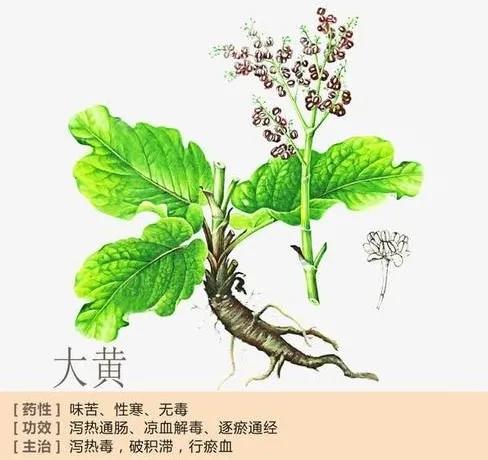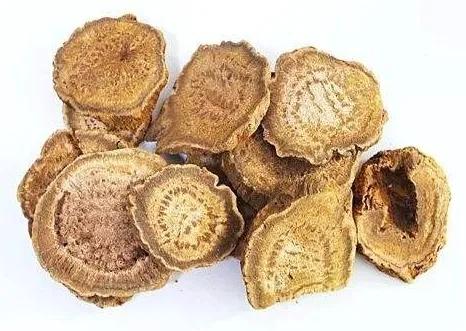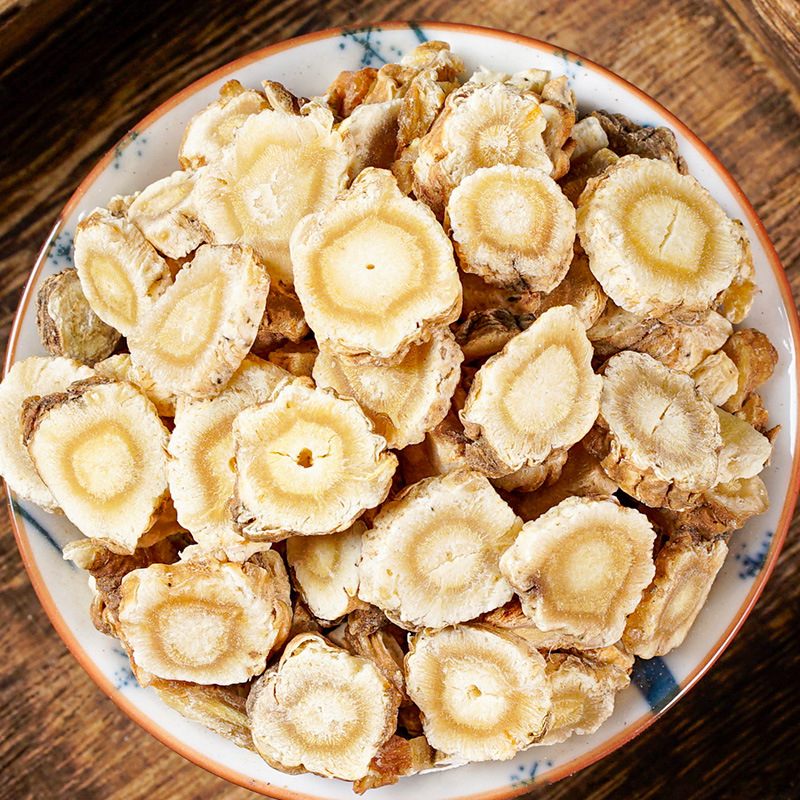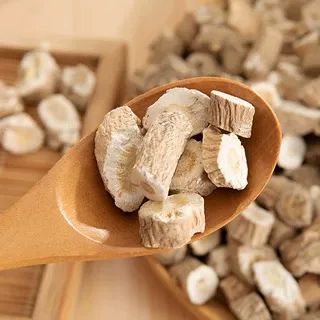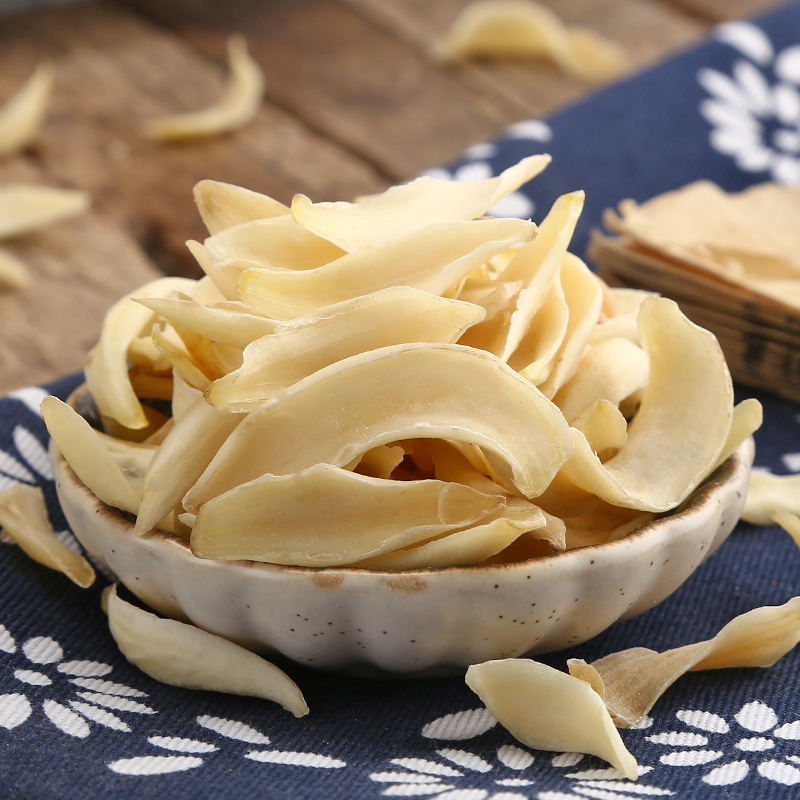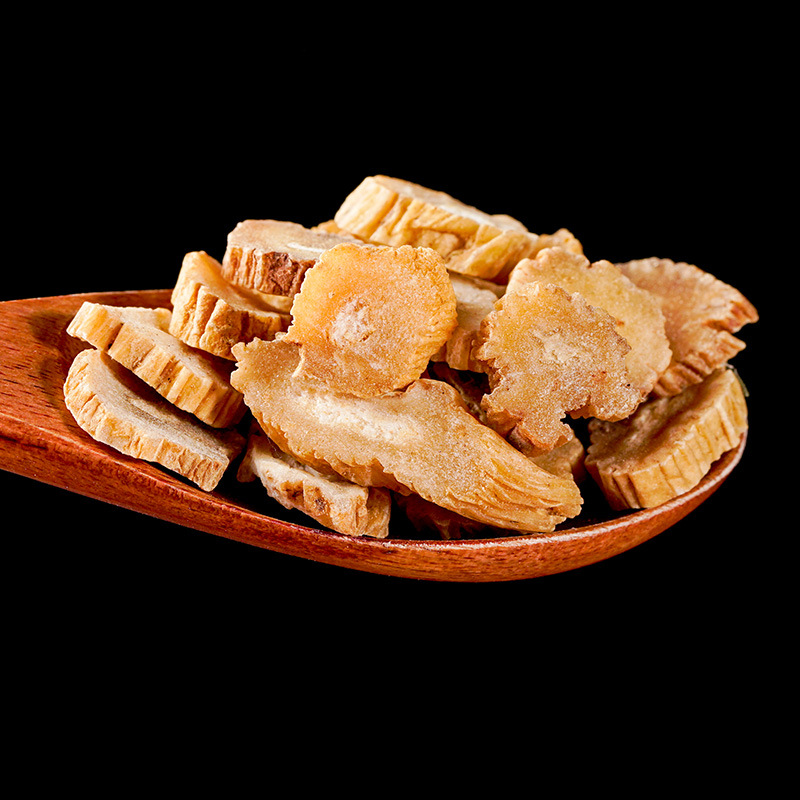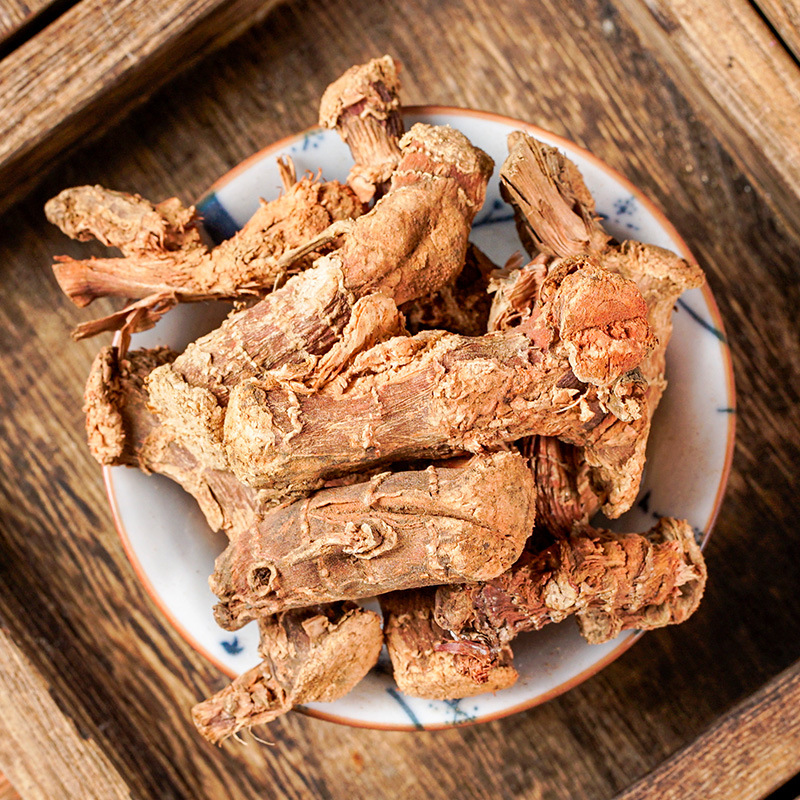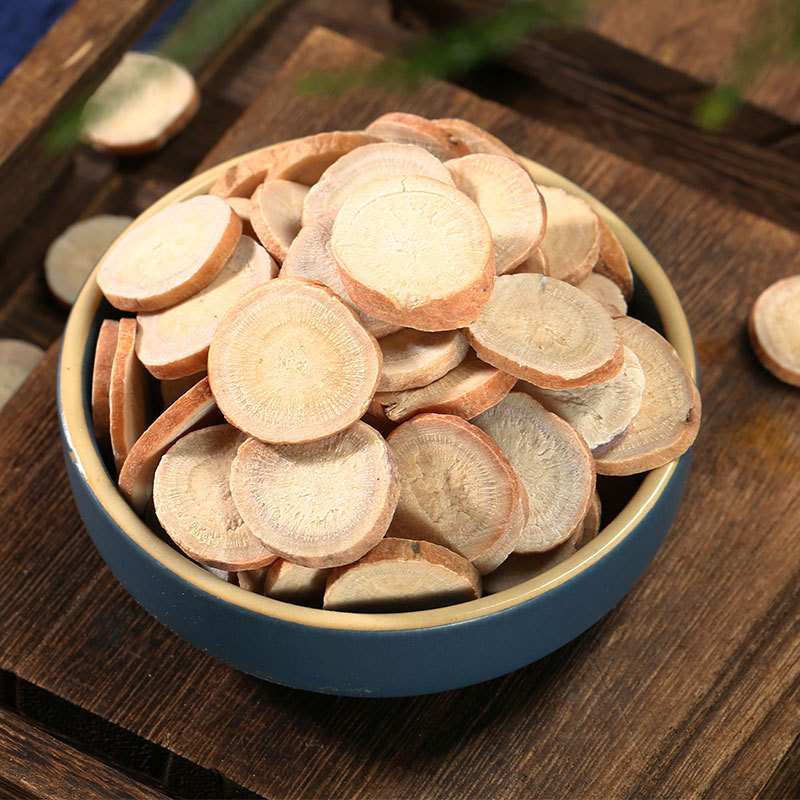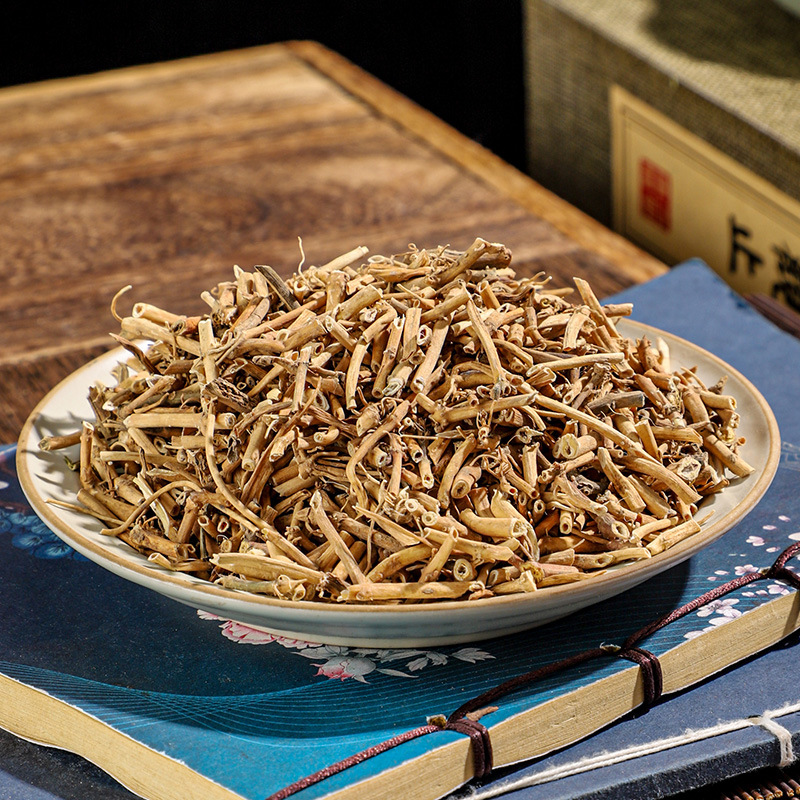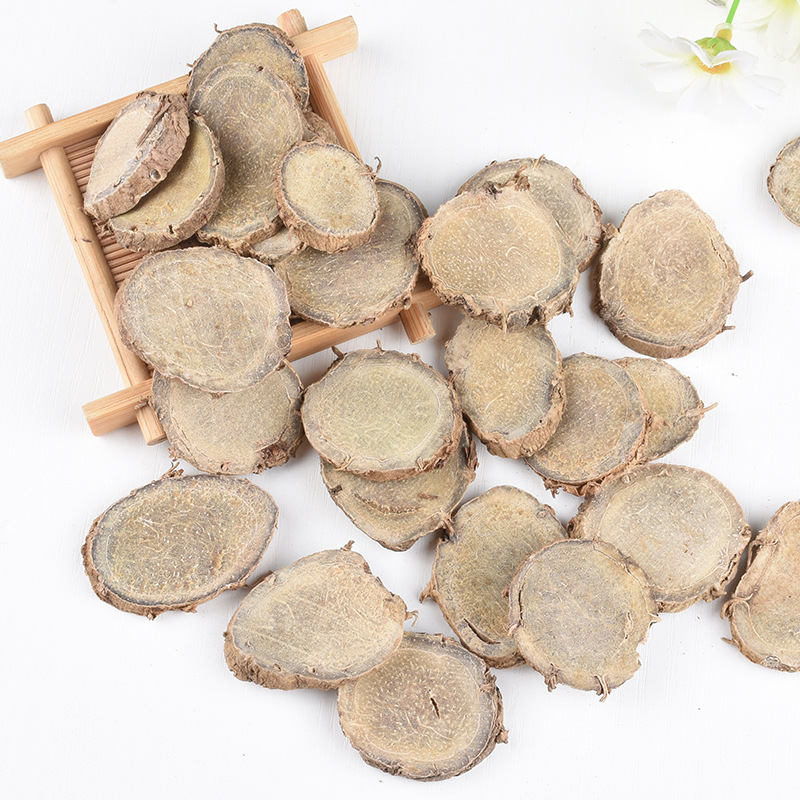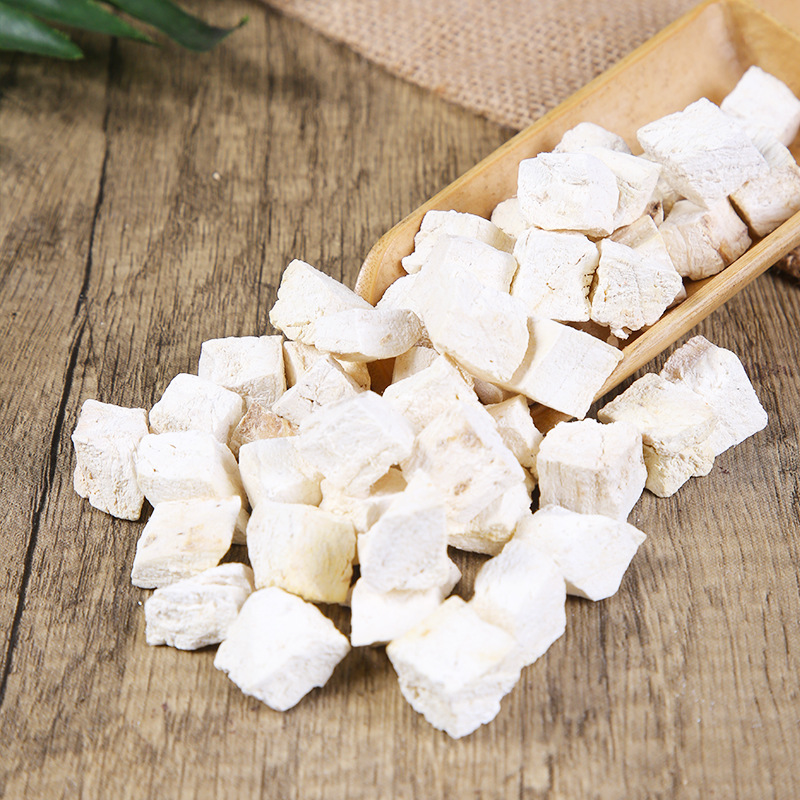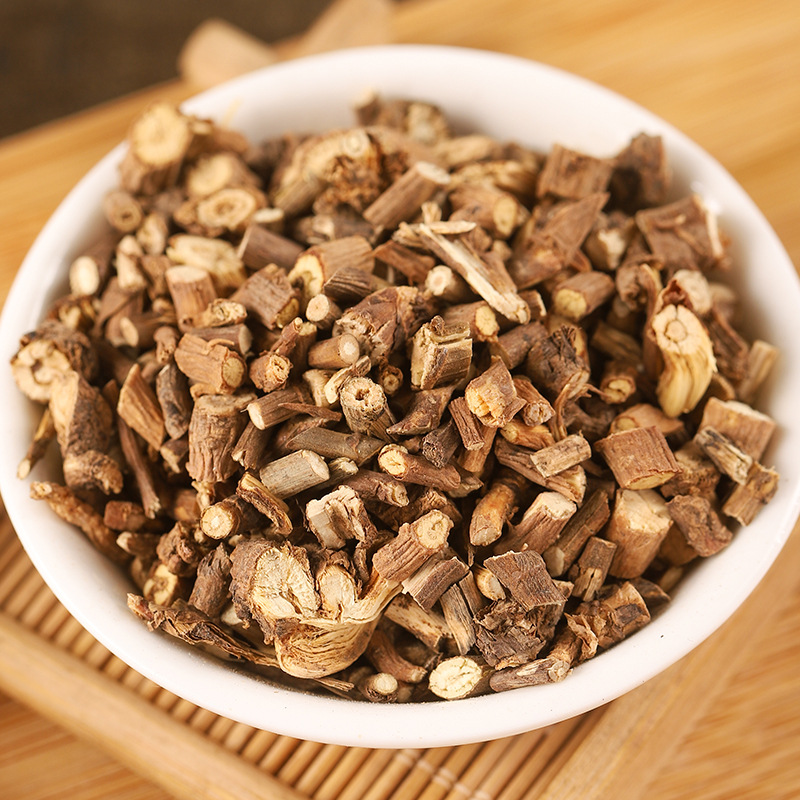
Rhubarb is the root and rhizome of Rheum palmatum, Rheum tanguticum, or Rheum officinale from the Polygonaceae family. Known for its powerful "gate-breaking" effect, it is called "General." The variety produced in Sichuan is considered the best, hence also known as "Sichuan General." It is mainly produced in Qinghai, Gansu, Sichuan, and other regions. Different processing methods result in varying effects, including raw use, wine-fried, charcoal-fried, or cooked use.
I. Efficacy and Application
Rhubarb tastes bitter and is cold in nature. It belongs to the spleen, stomach, large intestine, liver, and heart meridians.
Efficacy: It can purge accumulation, clear heat and purge fire, detoxify and reduce swelling, activate blood and remove stasis. Its characteristics include a heavy and turbid odor, entering both the qi and blood aspects. The medicinal nature directly descends and moves downward, moving without staying, especially effective in clearing the bowels and discharging turbidity, making it a key herb for attacking diseases and expelling pathogens; one of the "Four Pillars" in traditional Chinese medicine.
It is commonly used for the treatment of various severe conditions such as constipation due to excess heat and stagnation, hematemesis and epistaxis due to blood heat, red eyes and swollen throat, abscesses, boils, and sores, intestinal abscess with abdominal pain, amenorrhea due to blood stasis, postpartum blood stasis, traumatic injuries, dysentery due to damp-heat, jaundice with dark urine, strangury and edema, and stroke with obstruction.
Zhang Jingyue said, "Rhubarb and aconite are like good generals." Wu Peiheng called rhubarb one of the "ten great commanders of traditional Chinese medicine." In the treatment of many serious illnesses, the application of rhubarb is commonly seen.
Summary of Famous Works by Renowned Authors:
"The Classic of Materia Medica": "It dispels stagnant blood, treats amenorrhea with alternating chills and fever, breaks up abdominal masses and accumulations, eliminates retained fluids and undigested food, cleanses the stomach and intestines, expels the old and promotes the new, facilitates the passage of water and grain, regulates the middle burner to aid digestion, and harmonizes the five zang organs."
Bie Lu: "It calms the stomach, directs qi downward, eliminates phlegm accumulation, clears heat from the intestines, relieves abdominal distension and fullness, treats amenorrhea due to cold and blood stasis in women, alleviates lower abdominal pain, and resolves various types of stagnant old blood."
Rihuazi's Materia Medica: "It promotes the flow of all qi, regulates blood vessels, benefits the joints, expels stagnant water qi, addresses imbalances of cold and heat in the limbs, warms malarial heat phlegm, facilitates urination and defecation, and can be applied topically to treat all sores, boils, abscesses, and toxins."
"Compendium of Materia Medica": "Dysentery with red and white discharge, tenesmus and abdominal pain, dribbling urination, excess heat and dry constipation, tidal fever and delirium, jaundice, various fire sores."
"Specialized in treating abdominal distension and fullness, heat accumulation in the chest and stomach, phlegm accumulation and solid masses, constipation and blood stasis, and amenorrhea in women."
The Compendium of Materia Medica: "Swift and agile, it reaches the lower jiao directly, penetrates deeply into the blood aspect, breaks through all obstructions, and cleanses accumulated impurities, achieving the effect of plowing the courtyard and sweeping the dwelling."
Changsha Materia Medica: "Draining heat and moving stasis, breaking through accumulations and opening blockages, precipitating Yangming dryness and bind, eliminating Taiyin dampness and steaming, freeing the channels and vessels and breaking concretions and conglomerations, dispersing welling abscesses and flat abscesses and expelling pus and blood."
"Compendium of Materia Medica": "Its nature is heavy and not floating, its function is moving and not stationary. If soaked in wine, it can also be led to the highest regions. It is used to cleanse the intestines and stomach, relieve dryness and stagnation, and remove stagnant heat. It treats febrile diseases and seasonal epidemics, fever and delirium, warm and damp malaria, dysentery with red and white stools, abdominal pain with urgency, jaundice and edema, abdominal masses and accumulations, retained fluids and undigested food, fullness and discomfort in the heart and abdomen, obstruction of urination and defecation, vomiting of blood and nosebleeds, blood stagnation and blood depletion, injuries and accumulated blood, all types of excess heat, hidden fire in the blood, promoting water circulation and eliminating phlegm, eroding pus and reducing swelling, capable of expelling the old and bringing forth the new. For those seeking to promote free flow."
Medical Records of Traditional Chinese and Western Medicine in Combination: It can enter the blood aspect and break all kinds of blood stasis. Because of its fragrant qi, it also enters the qi aspect; even a small amount can regulate qi and treat pain caused by qi stagnation. Its action is sinking rather than floating, functioning to attack and resolve, and it can eliminate all types of abdominal masses and accumulations. It can open up heat-phlegm in the chest to cure mania, and reduce heat excess in the intestines and stomach to relieve dry constipation. Its fragrant and penetrating properties also promote urination. Although its nature tends to descend, it is also good at clearing heat in the upper body, making it an essential medicine for eye pain and toothache. It is also effective in resolving heat toxins from sores and ulcers, particularly as a specific remedy for furuncles. Its property can lower stomach heat and guide stomach qi downward, making it effective in stopping vomiting and nosebleeds.
II. Compatibility and Application
1. For intestinal stagnation and constipation. Rhubarb, with its bitter and cold nature and descending properties, has a strong purgative effect and is a key herb for treating constipation due to stagnation. Due to its bitter and cold nature, which helps clear heat, it is particularly suitable for constipation caused by heat accumulation. In the treatment of warm febrile diseases with heat accumulation, constipation, persistent high fever, delirium, and unconsciousness, it is often combined with Mirabilite, Magnolia Bark, and Immature Bitter Orange to enhance its purgative and draining effects, as seen in the formula Da Cheng Qi Tang.
After modifications and variations of the Da Chengqi Decoction, many Chengqi-type formulas remain widely used today for treating various excess syndromes characterized by fullness, distension, dryness, and excess, such as Xiao Chengqi Decoction, Tiaowei Chengqi Decoction, and Da Chaihu Decoction.
If treating excess heat with qi and blood deficiency, it can be combined with Codonopsis pilosula, Angelica sinensis, and other herbs that tonify qi and nourish blood, which is known as Huanglong Decoction.
For treating the syndrome of heat accumulation damaging yin, it is often combined with nourishing yin and promoting fluid production herbs such as Shengdi, Xuanshen, and Maidong, as seen in the Zengye Chengqi Decoction.
If treating spleen yang deficiency with cold accumulation and constipation, it is often combined with mirabilite, angelica, etc., in the Aconite Center-Regulating Decoction, known as the Spleen-Warming Decoction.
In the treatment of syndromes caused by congealing cold of yin nature, it is often combined with aconite and asarum, as seen in the Major Rhubarb Aconite Asarum Decoction, which employs both cold and warm herbs and integrates attacking and tonifying methods.
In addition, at the onset of heat dysentery, when damp-heat accumulates in the intestines and fails to resolve, rhubarb can also be used to promote bowel movements and eliminate damp-heat accumulation. This is the traditional Chinese medicine method known as "treating diarrhea with purgatives."
Ben Cao Zheng: "For those who desire a rapid effect, raw rhubarb should be used, steeped in hot water and swallowed; for those who desire a slower effect, cooked rhubarb should be used, decocted with other herbs. For qi deficiency, combine with ginseng, known as Huanglong Decoction; for blood deficiency, combine with Chinese angelica, known as Yuzhu Powder. When combined with licorice and platycodon, its action can be slowed; when combined with mirabilite and magnolia bark, its potency is further enhanced. The dosage should be adjusted according to the individual's constitution; misuse in cases of false excess is akin to consuming poison."
2. For bleeding syndromes such as hematemesis and epistaxis due to reckless movement of heat in the blood. Rhubarb can clear heat and purge fire, guiding heat downward. To treat reckless movement of heat in the blood caused by upward disturbance of qi and fire, it is often combined with raw cattail pollen and bletilla striata, ground into powder and taken orally, which can treat upper gastrointestinal bleeding.
If treating hematemesis and epistaxis caused by liver depression with frequent anger and stomach depression with qi counterflow, and other medicines have been repeatedly ineffective, regardless of cold or heat, it is often combined with oil cinnamon and raw hematite, known as Mihong Dan.
For the treatment of mouth and tongue sores, and bleeding gums, it is often combined with Coptis chinensis and Scutellaria baicalensis, known as Xie Xin Tang.
Li Shizhen said, "Zhang Zhongjing's Xiexin Decoction, used to treat vomiting and bleeding due to insufficiency of heart qi, employs rhubarb, coptis, and scutellaria to purge the latent fire in the blood of the four meridians: the pericardium, liver, spleen, and stomach."
Li Shicai said, "The ancients used rhubarb to treat consumptive disease with hemoptysis and epistaxis, which is profound and subtle. If turbid yin does not descend, clear yang cannot ascend; if stagnant blood is not removed, new blood cannot be generated."
3. For symptoms such as red eyes, sore throat, and swollen and painful gums caused by fire pathogen flaming upward. Rhubarb is bitter and cold in nature and has a descending effect, which can help discharge the upward-flaming fire. To treat the above symptoms, it is often combined with Coptis chinensis and Scutellaria baicalensis, forming the Rhubarb, Coptis, and Scutellaria Heart-Purging Decoction. In traditional Chinese medicine, it is said that "the upper burner is like a feather, and only light methods can lift it." Therefore, Peng Ziyi used this formula with very light doses and adopted the method of soaking rather than decocting to avoid damaging the middle burner. This is indeed an excellent method for treating fire syndromes in the upper burner and is worth referencing.
4. For heat-toxin sores and ulcers and burns. Rhubarb can clear heat and resolve toxins, unblock the fu organs and drain heat. For early-stage back carbuncles with constipation and a replete pulse, it is often combined with Dahurian angelica root for internal use, known as Shuangjie Guijin Wan.
If treating intestinal abscess with heat accumulation, it is often combined with Mirabilitum, Moutan Cortex, and Persicae Semen, known as Dahuang Mudanpi Decoction.
The Yijian Zhi Prescription for Treating Scalds and Burns: Pound raw rhubarb and mix with vinegar for application, relieves pain and leaves no scars.
In Zhang Xichun's writings, there is a recorded case: A young woman from the Yang family contracted a strange illness. She lay naked inside a curtained bed, with her back swollen and hot. If even a single thread touched her body, she would feel unbearable heat, and no medicine proved effective. Later, a passing provincial examination candidate, who was proficient in medicine, was invited to examine her. He diagnosed it as yang toxin and instructed her to use ten jin of rhubarb, decocted into ten bowls of soup, and drink it liberally. After several days of consuming it all, she unexpectedly recovered completely.
5. For blood stasis syndrome, such as amenorrhea due to blood stasis in women, postpartum lochiorrhea, abdominal masses and accumulations, and traumatic injuries. Rhubarb can promote blood circulation and remove blood stasis, making it a commonly used medicine for treating blood stasis syndrome. It can be applied regardless of whether the stasis is recent or long-standing. It can be used alone or in combination with other blood-activating and stasis-removing drugs. For postpartum abdominal pain with blood stasis fixed around the navel, it is often combined with peach kernel and ground beetle, as in the formula Xia Yuxue Tang.
If treating abdominal mass and amenorrhea due to internal stagnation of blood stasis, with symptoms such as emaciation, abdominal fullness, scaly skin, dark circles under the eyes, and amenorrhea, it is often combined with Eupolyphaga seu Steleophaga, leech, peach kernel, and grub, as in Dahuang Zhechong Wan.
If treating injuries from falls and blows, with blood stasis inside, distension, fullness, and pain, it can be ground into powder with Chinese angelica root and taken mixed with yellow wine.
If treating the syndrome of blood stasis in the lower energizer, with symptoms such as acute pain and fullness in the lower abdomen, dysuria, manic-like mental state, or even restlessness and delirium, fever at night, as well as amenorrhea due to blood stasis, and a deep, replete, and choppy pulse, it is often combined with Semen Persicae, Ramulus Cinnamomi, Natrii Sulfas, and Radix et Rhizoma Glycyrrhizae, which is known as Taobe Chengqi Decoction.
6. For jaundice, gonorrhea, and other damp-heat syndromes. Rhubarb is bitter and cold, with purgative and descending properties, capable of clearing and draining damp-heat. For treating jaundice, it is often combined with Yin Chen (Artemisia capillaris) and Zhi Zi (Gardenia jasminoides), as in the Yin Chen Hao Tang (Artemisia Capillaris Decoction).
If treating heat strangury, it is often combined with Akebia, Plantago Seed, Gardenia, etc., known as Bazheng Powder.
7. Used for treating stroke syndrome. It also takes advantage of its effects in promoting blood circulation, removing blood stasis, and clearing the bowels to eliminate turbidity.
Yan Dexin said, "Stroke is often discussed in terms of wind, fire, phlegm, qi, and blood. Its symptomatic attributes are mostly characterized by root deficiency and branch excess. At the onset of the disease, the branch excess syndrome is urgent, especially in hemorrhagic stroke, where the condition is often severe. This is due to blood leaving its normal pathways and obstructing the brain's orifices, leading to chaotic qi and blood, and imbalance in ascending and descending functions. This often manifests as severe congestion, obstruction, and blockage. At this stage, it is essential to unblock the bowels and expel stasis, especially for those with long-term blood stasis transforming into heat. Unblocking the bowels and expelling stasis is particularly appropriate, and the use of rhubarb is especially fitting at this time. Once the bowel qi is unblocked, wind and fire are subdued. Although this does not directly remove stasis, smooth bowel movements allow the expulsion of waste, regulate ascending and descending functions, and harmonize qi and blood, thereby eliminating blood stasis and curing the stroke."
8. For the syndrome of obstruction and rejection caused by renal failure. Rhubarb has the function of promoting urination and defecation, can clear the bowels and discharge turbidity, and promote the excretion of toxins in the body. For the syndrome of internal accumulation of turbid toxins caused by kidney disease, it is often combined with aconite, using both cold and warm properties, attacking and tonifying simultaneously, which is the Rhubarb and Aconite Decoction.
Zhu Liangchun treats patients with renal insufficiency and uremia whose creatinine and urea nitrogen levels remain persistently high, and whose condition is critical but who lack access to hemodialysis. He often adds raw rhubarb to the decoction for oral administration, or combines it with raw oyster shell, dandelion, and June snow for enema use. This approach embodies the principle of "clearing the posterior yin to benefit the anterior yin," which is worthy of study and reference.
Zhu Liangchun said: "Rhubarb excels in eliminating the old and promoting the new, reducing turbid yin within yin. When pathogenic factors are expelled, the body's vital energy is restored, and chaos is transformed into order. Rhubarb is highly effective for acute and chronic renal failure and uremia caused by various reasons, as it is adept at lowering blood urea nitrogen and creatinine levels. It can be taken orally or used for enemas, and has repeatedly proven effective."
III. Usage and Dosage
Rhubarb is often used in decoctions and can also be made into pills or powders. When used in decoctions, it should be added later or steeped in boiling water, as prolonged boiling reduces its purgative effect.
Raw rhubarb has a strong purgative effect, so it is best used raw for purging purposes; wine-processed rhubarb has a reduced purgative effect and a better blood-activating effect, making it suitable for blood stasis syndrome or cases where strong purging is not advisable; charred rhubarb is mostly used for bleeding syndromes.
The dosage of rhubarb should be determined based on the severity of the condition. The general common dosage ranges from a few grams to over ten grams; in cases of acute and severe illness, it may be used in doses of several tens of grams or more. For external use, apply an appropriate amount.
Generally, for treating upper jiao fire syndrome, the approach should be gentle, while for purging excess in the large intestine fu, it should be more forceful.
Zhang Xichun said, "Although the power of rhubarb is fierce, when there is illness, the illness bears it, and it is often permissible to use it in large quantities. Therefore, for treating mania with a strong pulse, it can be used up to two liang, and for treating severe toxic heat in furuncles, it can also be used up to about one liang. The use of medicine is based on overcoming the illness; if not used in this way, it cannot overcome the illness, and one must be bold in using larger quantities."
Wang Ang said: "The Sichuan-produced Jinwen variety is of good quality. There are differences in processing methods such as wine soaking, wine steaming, raw, and cooked. The raw form is more potent. For those seeking to promote bowel movement, do not hastily consume grains, as when rhubarb is taken with grains, it loses its ability to promote bowel movement."
IV. Application Precautions
Rhubarb is bitter and cold in nature, purgative in effect, and easily damages healthy qi, impairing the spleen and stomach. Therefore, it should not be used unless there is substantial pathogenic excess, dryness-heat, intense heat-toxicity, internal accumulation of turbid toxins, or internal stagnation of blood stasis. Additionally, it should be used with caution or avoided by pregnant women, women during menstruation, lactation, and those with constitutional yang deficiency and physical weakness.
Wang Ang said: "It damages the original qi and consumes yin blood. If the disease is in the qi aspect, it is contraindicated for those with stomach deficiency and blood weakness."
Practical Notes on Traditional Chinese Medicine 20.11.11 Evening