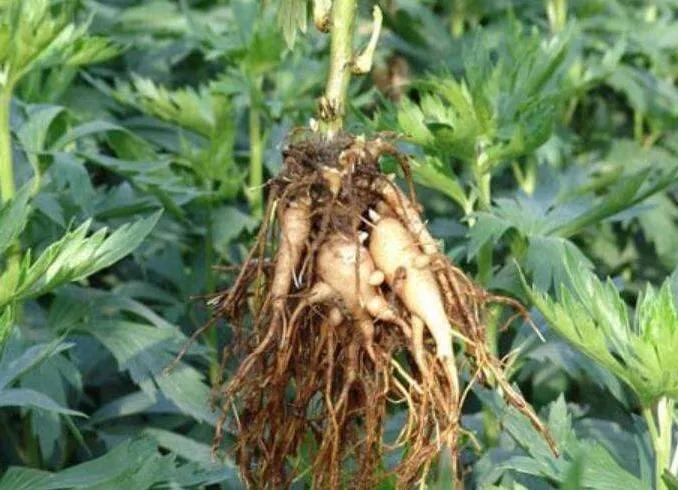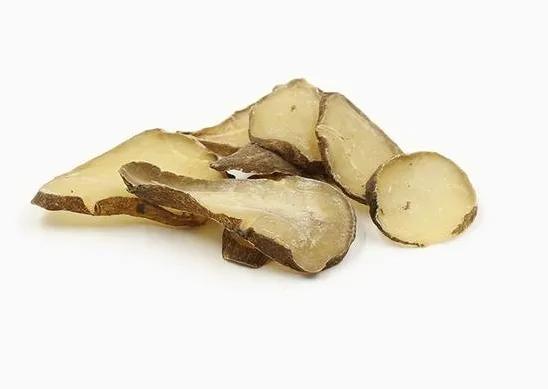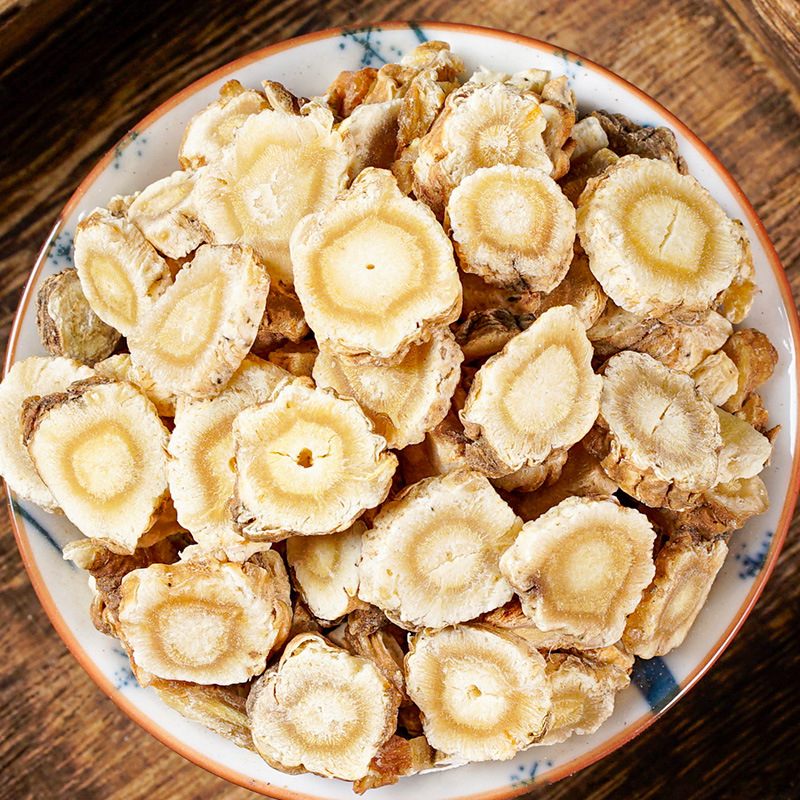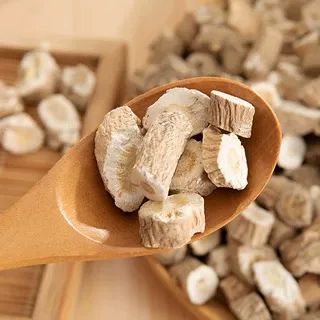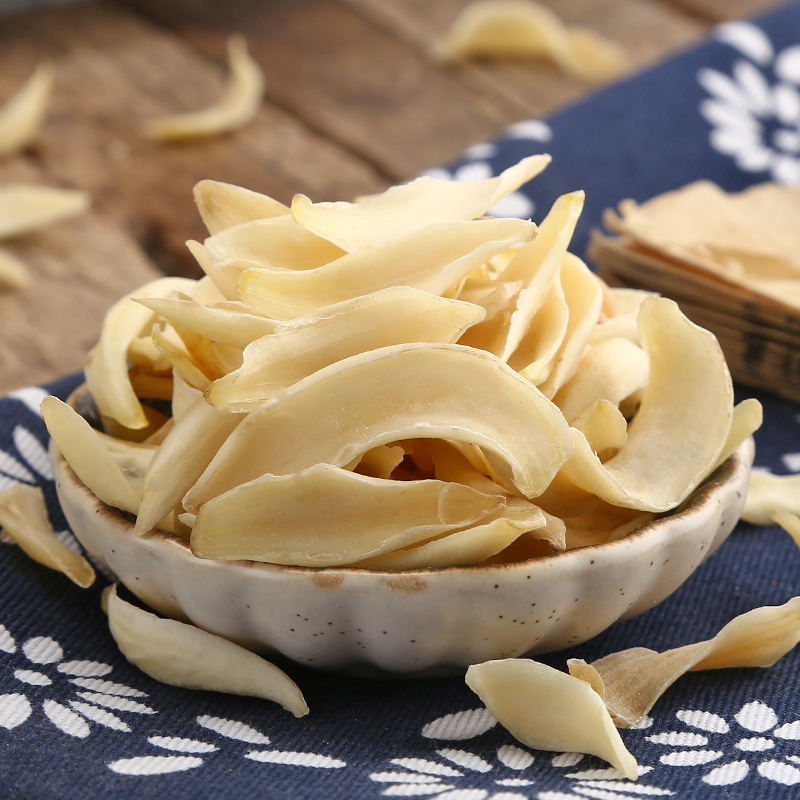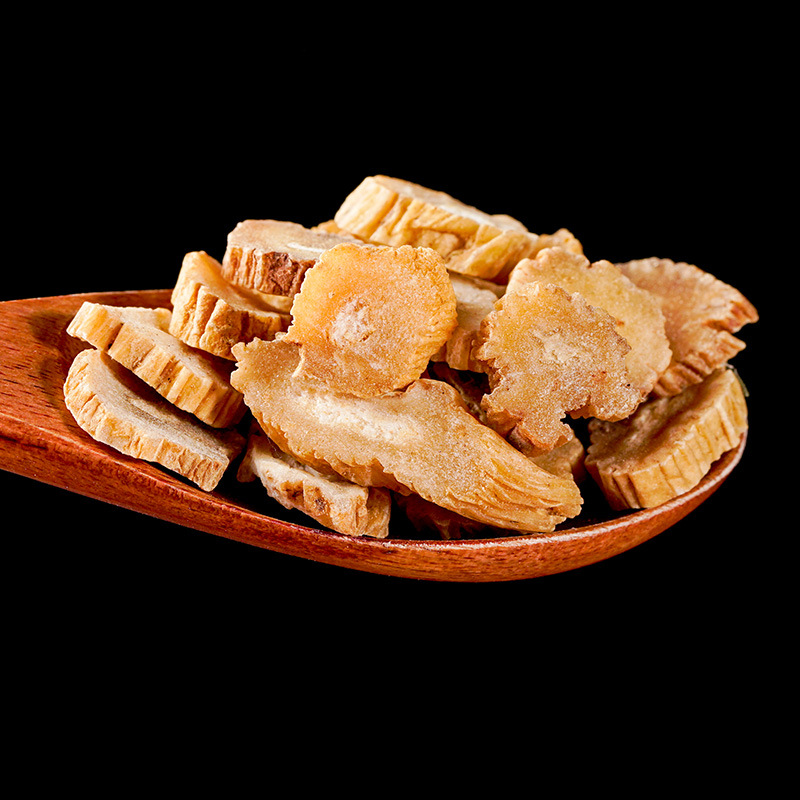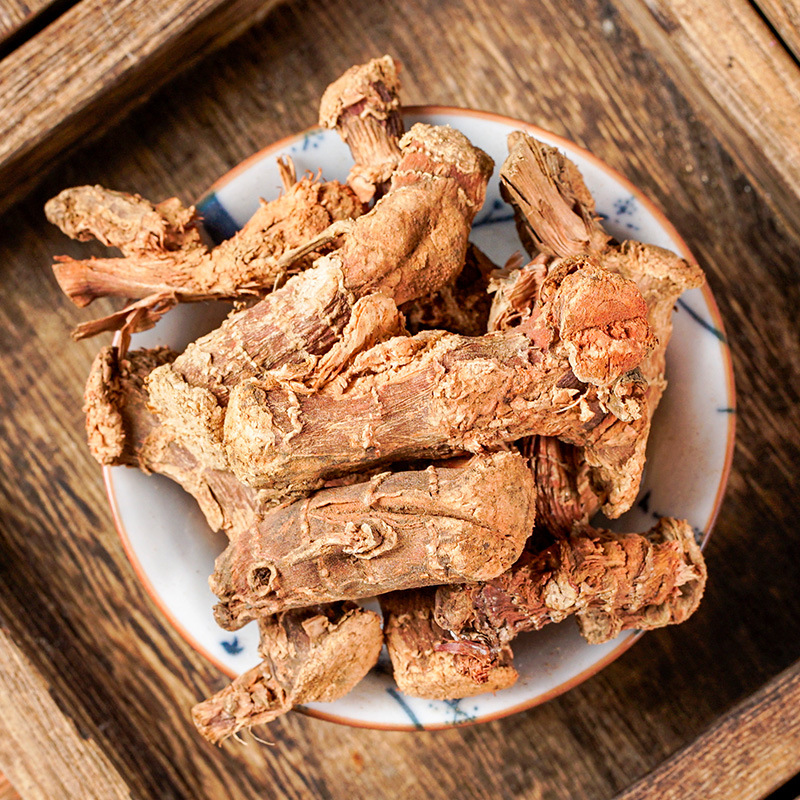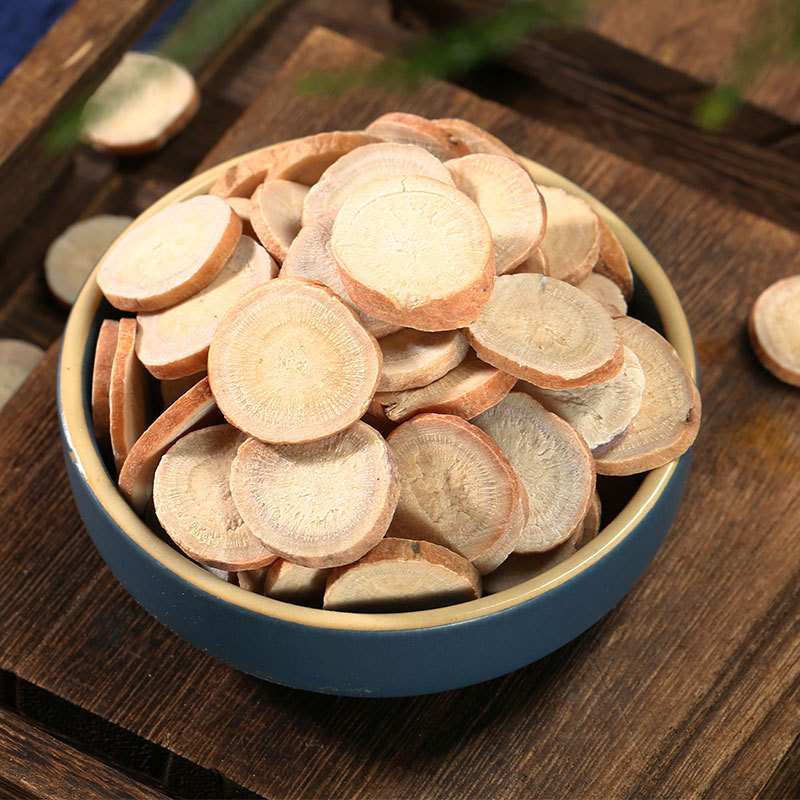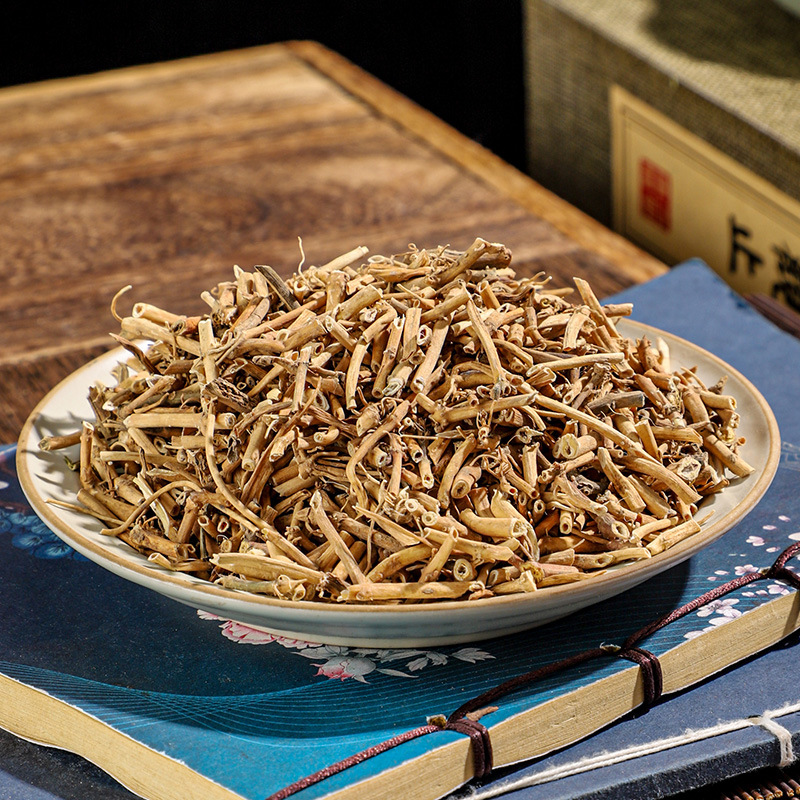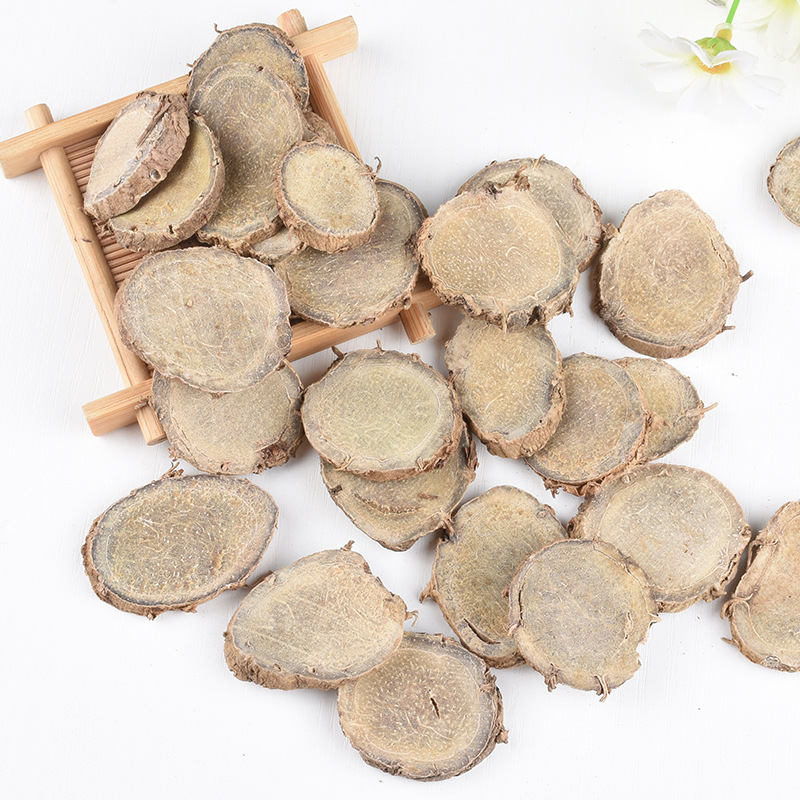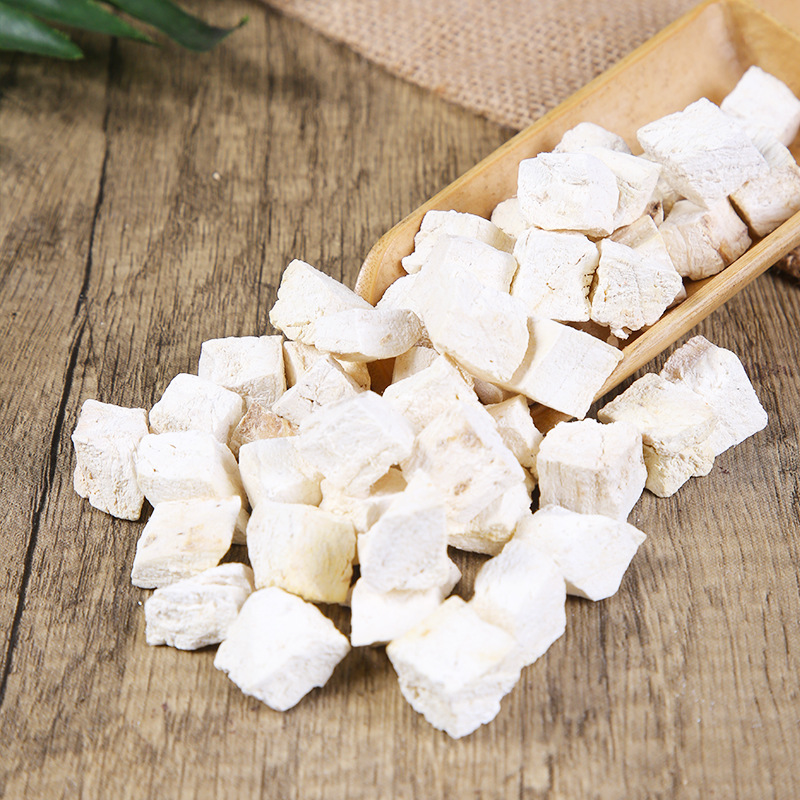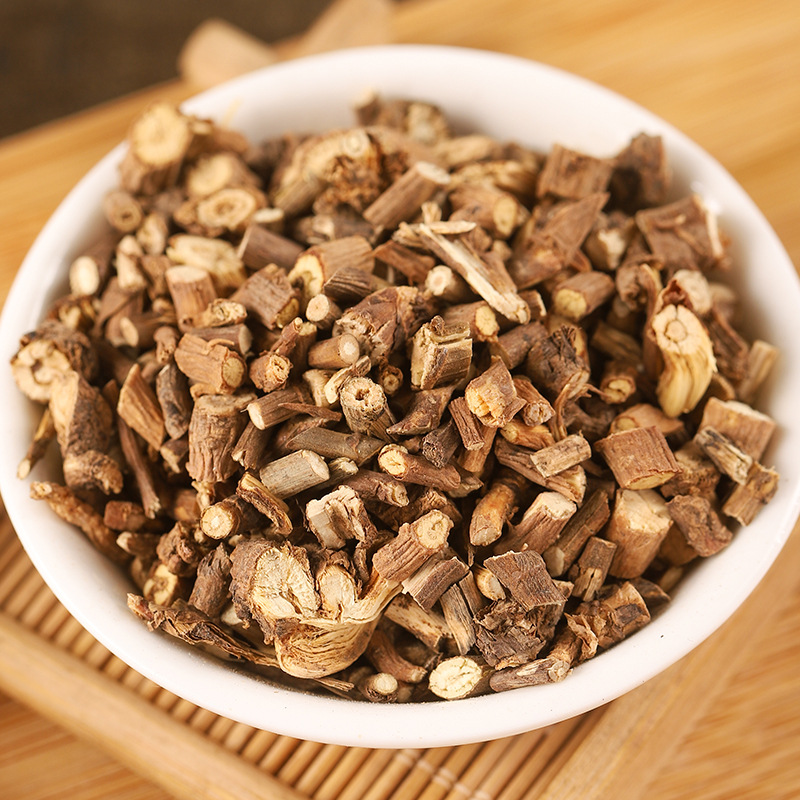
Aconite is the processed product of the lateral root of the Aconitum plant from the Ranunculaceae family.
Li Shizhen said: "The initial planting yields aconite, resembling the head of a crow. That which grows attached to aconite is monkshood, like a child clinging to its mother. Aconite is like the main tuber of taro, while monkshood is like the taro's offshoots; they are essentially the same plant. There are also wild aconite and white monkshood, hence these are commonly referred to as black monkshood and Sichuan aconite to distinguish them."
Wang Ang said, "The mother is Wutou, the one attached to it is Fuzi, the one growing in a row is Cezi, the slender one is Tianxiong, and the forked one is Wuhui. These five things come from the same source but have different names."
Zhang Xichun said, "When aconite is planted in the ground, the lateral growths that emerge in the same year are called 'fuzi' (aconite lateral root), while the original planted aconite becomes 'wutou' (aconite main root). If no lateral aconite grows after planting, and only the original plant grows larger, resembling a single-headed garlic without cloves, it is called 'tianxiong' (aconite main root without lateral growths). Because its potency does not disperse laterally, its warming and tonifying effects are even greater, making it uniquely powerful and thus deserving the name 'tianxiong' (heavenly hero)."
Aconite is mainly produced in Sichuan, Hubei, Hunan and other places, with the best quality coming from the Jiangyou area of Sichuan. Nowadays, it is mostly cultivated. Depending on the processing methods, it can be classified into raw aconite, salt-processed aconite, black shunpian (processed aconite), yellow aconite, and white aconite slices. The term "shunpian" refers to slicing along the grain, while slicing across the grain is called "hengpian."
I. Efficacy and Application
Aconite tastes pungent, its nature is extremely hot and purely yang, and it is toxic. It belongs to the heart, kidney, and spleen meridians.
Efficacy can restore yang to rescue from collapse, supplement fire to assist yang, and dispel cold to relieve pain. Its characteristics are floating rather than sinking, moving rather than staying, traversing the twelve meridians both superficially and internally, reaching everywhere, and it is hailed as the essential medicine for restoring yang to rescue from collapse; one of the four main medicinal herbs in traditional Chinese medicine (ginseng, gypsum, rhubarb, aconite). Zhang Jingyue said: "Aconite and rhubarb are like good generals."
It is commonly used for the treatment of conditions such as collapse due to yang deficiency, cold limbs and faint pulse, insufficiency of heart yang, chest impediment and heart pain, vomiting and diarrhea due to deficiency cold, cold pain in the epigastrium and abdomen, decline of kidney yang, impotence and uterine cold, edema due to yin cold, external contraction due to yang deficiency, and painful obstruction due to cold dampness.
Based on the physical characteristics of people today, traditional Chinese medicine is more suitable to be guided by the "Fuyang Theory" during the dialectical process. This also makes many classical formulas in the "Treatise on Cold Damage Diseases," such as Sini Decoction, Mahuang Fuzi Xixin Decoction, and Shenqi Pill, particularly important. To apply these formulas effectively, in a sense, it is essentially about learning the application of aconite.
Summary of Famous Works by Renowned Authors
"Ben Jing": "Wind-cold cough with adverse qi, cold-dampness causing flaccidity and paralysis, contracture and knee pain, inability to walk. Breaks hard accumulations and blood stasis, treats metal wounds."
Bie Lu: "Cold and wind in the lumbar spine, cold and weak foot qi, cold pain in the heart and abdomen... also causes miscarriage."
"Compendium of Materia Medica": "Aconite is a potent medicinal herb that restores yang energy, dispels yin cold, expels cold phlegm, and unblocks the joints. For all conditions characterized by genuine yang deficiency, where deficient fire rises upward, causing throat discomfort and difficulty swallowing, and where taking cold-natured medicines worsens the symptoms, aconite serves as the primary remedy for the life gate. It can penetrate its dwelling and summon it back, guiding the fire to return to its source, thereby extinguishing the floating, wandering fire. In all cases of yang deficiency and extreme yin, where there are no signs of heat in the lungs and kidneys, taking it can yield remarkable life-saving effects."
Changsha Materia Medica: Warms water and dries earth, drains dampness and dispels cold, travels through the middle palace to warm the spleen, enters the lower burner to warm the kidneys, replenishes the dwindling fire seed, continues the nearly severed yang root, treats cold hands and feet, opens yin stagnation in the organs, relieves pain in the waist and abdomen, eases spasms and stiffness in the ankles and knees, unblocks cold stasis in the meridians, dissolves cold accumulations of hernia and abdominal masses, lowers and erodes yin counterflow rising upward, can reverse hiccups and belching, lifts clear yang sinking downward, effectively stops distention and fullness.
"Medical Principles and True Transmission": "Aconite is pungent and hot, capable of supplementing the true yang in the kidney. True yang is the seed of the sovereign fire; supplementing true fire is equivalent to strengthening the sovereign fire. ... Aconite is pungent and hot, capable of supplementing the innate true yang; licorice has a sweet taste, capable of supplementing the acquired spleen earth. When earth is nourished by fire, the middle qi can be restored; when fire is covered by earth, the fire can be sustained for a long time. The two substances are used together in mutual need, which also implies the meaning of restoring yang, as well as the meaning of supplementing both the innate and acquired aspects."
"Compendium of Materia Medica": "It can guide qi-tonifying drugs to restore the dissipated primordial yang, guide blood-tonifying drugs to nourish the insufficient true yin, guide dispersing drugs to open the interstices and expel wind-cold in the exterior. It guides warm drugs to reach the lower jiao to dispel cold-dampness in the interior. It treats three yin cold damage, cold stroke and wind stroke, qi syncope and phlegm syncope, cough with counterflow, retching and hiccup, diaphragm obstruction and dysphagia, spleen diarrhea, cold dysentery and cold diarrhea, cholera with cramping, spasm and wind impediment, concretions, conglomerations, accumulations, and gatherings, governor vessel disease with spinal rigidity and syncope, infantile chronic fright, pox sores with grayish-white appearance, welling-abscesses and flat-abscesses that do not close, and all conditions of deep-lying cold and stubborn cold."
"Medical Records of Integrating Chinese and Western Medicine": "Aconite has a pungent taste and is extremely hot in nature. It is the primary herb for supplementing primordial yang. Its power can ascend and descend, reach internally and disperse externally. It can open and unblock all congealed cold and stubborn cold that accumulates in the viscera, adheres to the sinews and bones, and obstructs the meridians, collaterals, and blood vessels. Within its warming and unblocking properties, it also possesses a strong astringent force. Therefore, it treats excessive sweating leading to yang depletion, intestinal cold with diarrhea, lower jiao yang deficiency with yin leakage, and cold essence with spontaneous emission. Commentators say it excels at supplementing the ministerial fire of the life gate, and taking it can accelerate the heartbeat, indicating that it greatly benefits both the sovereign and ministerial fires."
II. Compatibility and Application
1. For Yang depletion syndrome, symptoms include spontaneous cold sweating, cold limbs, and faint pulse on the verge of disappearing. Aconite can assist heart Yang above to unblock the pulse, tonify kidney Yang below to benefit fire, and rescue the dissipating primordial Yang, making it a key herb for restoring Yang and rescuing from collapse. For treating Yang deficiency on the verge of collapse, with symptoms such as spontaneous cold sweating, cold limbs, clear diarrhea, and faint pulse on the verge of disappearing, it is often combined with dried ginger and honey-fried licorice to jointly achieve the effect of restoring Yang and rescuing from collapse, as seen in the first formula for restoring Yang and rescuing from collapse in "Treatise on Cold Damage Disorders," the Sini Decoction.
If treating Shaoyin syndrome with clear-food diarrhea, cold limbs, and faint pulse on the verge of expiration, increase the dosage of dried ginger in the Major Sini Decoction to urgently restore spleen yang, which is the Tongmai Sini Decoction.
In cases of treating yang depletion and qi collapse, profuse sweating, and rapid breathing with panting, aconite is often combined with ginseng to restore yang and secure collapse, as seen in the Ginseng and Aconite Decoction.
In treating heart failure or critical and severe conditions, Li Ke, based on his exploration of the Sini Decoction, also referenced Zhang Xichun's Laifu Decoction and the concept of supporting yang. Using a large dose of Sini Decoction as the foundation, he combined it with ginseng, Cornus officinalis, dragon bone, oyster shell, musk, and other ingredients, resulting in the proven emergency formula in traditional Chinese medicine known as the Pogejuxin Decoction.
Sini Decoction is also one of the most highly regarded classical formulas by contemporary "Fire God School" physicians. Based on this formula, they have refined the "Sini Method," which guides clinical treatment for many stubborn and severe diseases with remarkable efficacy, truly opening a new path in traditional Chinese medicine.
Zheng Qin'an said, "The Sini Decoction is the primary formula for restoring yang and rescuing from collapse. Many people fear it because they do not understand Zhang Zhongjing's intention in formulating this prescription. This formula is listed for cases where cold enters the Shaoyin meridian, with symptoms such as cyanotic nails, abdominal pain and diarrhea, profuse sweating, aversion to cold, faint pulse on the verge of disappearing, and cold limbs. All these symptoms indicate a condition dominated by yin qi. At this point, if Sini Decoction is not used to restore yang and rescue from collapse, the faint yang qi will be on the verge of extinction. Zhang Zhongjing's approach here focuses solely on restoring yang to dispel yin, which is an unchangeable and precise method. Upon careful consideration, since this formula can restore yang and rescue from collapse, it can be used for all conditions characterized by yang deficiency and yin excess."
2. For yang deficiency syndrome. Aconite is adept at supplementing fire and assisting yang, suitable for all cases of yang qi weakness in the kidneys, spleen, and heart. For treating kidney yang deficiency and life gate fire decline, presenting with aversion to cold, cold limbs, sore waist and weak legs, impotence, and frequent urination, it is often combined with cinnamon, prepared rehmannia root, cornus officinalis, and Chinese yam, as in the Kidney Qi Pill.
If treating internal exuberance of yin cold and nonvigor of spleen yang, presenting with cold pain in the lower abdomen and loose stool, it is often combined with spleen-warming and qi-boosting medicinals such as ginseng, white atractylodes rhizome, dried ginger, and licorice, as in Aconite Center-Regulating Pill.
If treating spleen and kidney yang deficiency, internal retention of water qi, dysuria, limb edema, and other syndromes, it is often combined with spleen-strengthening and diuretic herbs such as Atractylodes macrocephala, Poria cocos, and Paeonia lactiflora, which is the first formula for treating "water qi disease," Zhenwu Decoction. If Zhenwu Decoction is modified by removing ginger and adding ginseng, it becomes Fuzi Decoction, which warms and tonifies kidney yang.
If treating heart yang deficiency, palpitations, shortness of breath, chest pain, and other symptoms, it is often combined with warming yang and tonifying qi herbs such as ginseng and cinnamon twig; if accompanied by excessive phlegm and fluid retention, severe wheezing, edema, and oliguria, one can refer to the usage of Xiao Qinglong Tang, increasing the dosage of aconite and combining it with ginseng, ginkgo seed, aster root, coltsfoot flower, dragon bone, and oyster shell, which is Li Ke's Xiao Qinglong Tang Xu Hua Tang.
3. For yang deficiency with external contraction of wind-cold syndrome. Aconite can warm the yang of the whole body and can be used for any yang deficiency condition. For treating constitutional yang deficiency with external contraction of wind-cold in the Shaoyin and Taiyang syndromes, it is often combined with ephedra and asarum, as in the Ephedra, Asarum, and Aconite Decoction.
Mr. Wu Peiheng, the great physician known as the Fire God Thunderbolt, was most adept at applying this prescription. He treated conditions such as cold-induced headaches in the Shaoyin meridian, sore throat, clear nasal discharge, toothache, rheumatic joint pain, and common colds with remarkable efficacy, making his methods highly worthy of study.
Wu Peiheng said, "I am most confident in using this prescription to treat diseases, and I have applied it extensively in clinical practice. It can be said to be a hundred percent effective, with results as immediate as the sound of a drum."
4. For Bi syndrome, it is particularly suitable for cases with predominant cold-dampness and severe pain in the joints throughout the body. Aconite can dispel cold and remove dampness, warm the meridians, and relieve pain. For treating cold-dampness Bi syndrome and general body pain, it is often combined with warming and dispersing cold, dispelling wind, and removing dampness herbs such as cinnamon twig, peony root, white atractylodes rhizome, ephedra, and asarum. Many classical formulas, such as Aconite Decoction, Cinnamon Twig and Aconite Decoction, Cinnamon Twig Plus Aconite Decoction, Cinnamon Twig, Peony, and Anemarrhena Decoction, Licorice and Aconite Decoction, and Ephedra, Asarum, and Aconite Decoction, all provide guiding significance.
Zhang Yuansu: "Aconite, assisted by Atractylodes, is a holy medicine for dispelling cold-dampness, with a small amount of dampness medicine added to guide the meridians. It also replenishes the source of fire to eliminate yin shadows, thus regulating urination and defecation, as seen with Aconite and Prepared Aconite."
Zhang Xichun said, "Zhang Zhongjing used the pungency of aconite in three methods: the Cinnamon Twig and Aconite Decoction, the Cinnamon Twig and Aconite Decoction with Cinnamon Twig Removed and Atractylodes Macrocephala Added, and the Licorice and Aconite Decoction, using pungent and drying properties to dispel wind-dampness."
5. For the syndrome of deficient yang floating outward (Kan yang floating outward). Aconite can tonify fire and assist yang, strengthening the gate of life. For treating kidney yang deficiency with the syndrome of deficient yang floating outward, it is often combined with Amomum villosum, tortoise plastron, and licorice, which is the famous formula Qian Yang Dan by Zheng Qin'an. This formula also laid the foundation for the development of the later Fire God School in traditional Chinese medicine and the proposal of the "warming and sinking method."
Mr. Zhu Weiju applied the method of warming and descending to formulate prescriptions for treating insomnia caused by deficient yang floating outward and disharmony between the heart and kidneys. He often combined aconite with magnetite, dragon bone, oyster shell, sour jujube seed, and poria with hostwood to collectively achieve the effects of guiding fire back to its source, warming and unblocking the heart and kidneys, descending yang and calming the mind, with remarkable therapeutic outcomes. This method is also one of the most profound areas of knowledge in traditional Chinese medicine today and should be thoroughly understood.
Zheng Qin'an said: "This syndrome often arises from the weakness of the sovereign fire, which fails to subdue and contain the multitude of yin, leading to the upward surge of yin qi that obstructs the great void and causes swelling, hence the face appears bluish-black. The excessive yin qi forces out the primordial yang, resulting in a sensation of floating and rootlessness when the eyes are closed. The true yang is obstructed by the multitude of yin and cannot return to its root. To return to its root, it is necessary to thoroughly disperse the multitude of yin and restore the vigor of the firm yang. Moreover, the heavy body and desire to sleep fully reveal the true nature of Shaoyin. The method should focus on subduing yang."
6. For yang deficiency with cold accumulation, presenting symptoms such as abdominal pain and constipation, knotting and pain below the navel, persistent pain around the navel, cold hands and feet, white tongue coating without thirst, and deep, wiry, and slow pulse. Aconite can warm and strengthen spleen yang, dispel cold accumulation. For treating yang deficiency with cold accumulation, it is often combined with rhubarb, mirabilite, dried ginger, ginseng, etc., forming the famous formula for warming and purging cold accumulation, known as Wen Pi Tang.
If treating yang deficiency with cold accumulation, abdominal and hypochondriac pain, and constipation, it can be combined with rhubarb and asarum to achieve the effects of warming yang, dispelling cold, promoting bowel movements, and relieving pain, known as the Rhubarb and Aconite Decoction. This formula not only eliminates cold accumulation and cleanses the intestines and stomach but is also frequently used in the treatment plans for many critical kidney diseases. The approach of combining cold and warm properties, as well as attacking and tonifying, is often employed to achieve the goals of supporting the body's vital energy, dispelling pathogenic factors, removing stasis, and eliminating turbidity. It is truly an excellent prescription in traditional Chinese medicine for treating various substantial diseases and severe conditions, holding significant clinical importance.
Hu Xishu said: "Aconite has an excitatory effect. It can be used for functional decline, urinary incontinence, sweating, and heart failure. For example, Tongmai Sini Decoction uses a large amount of aconite for severe heart failure, as this herb can stimulate the functions of the human organs. Secondly, aconite is a warming herb that can dispel cold and dampness, so it is commonly used to treat rheumatic pain. Whether for restoring yang or dispelling wind-dampness and relieving pain, it is often combined with Atractylodes and aconite to jointly dispel external dampness and expel water qi."
III. Usage and Dosage
Aconite is often used in decoctions and can also be made into pills or powders. When used in decoctions, it should be decocted first or for a long time to reduce its toxicity.
Regarding the usage and dosage of aconite, it can be said to be the most complex, profound, and difficult knowledge to master in traditional Chinese medicine. Since aconite is the tuberous root of the monkshood plant and inherently contains highly toxic aconitine alkaloids, clinical practitioners often use it with great caution, and some even dare not use it extensively throughout their lives. As a result, this excellent medicinal substance for treating diseases cannot fully demonstrate its efficacy, which is truly a regrettable matter.
The specific application of aconite can be learned from the following three aspects.
Regarding the dosage of application, it is the most complex matter. This must be determined based on various factors such as the patient's constitution, the nature of the disease, the processing method, the decoction method, and specific compatibility. Taking processed aconite as an example, for general conditions, the usual dosage ranges from a few grams to over ten grams. For safety considerations, later physicians often decoct it for 30 to 60 minutes first to reduce its toxicity. As for whether aconite needs to be decocted first, there is still debate. For instance, in the "Treatise on Cold Damage Disorders," aconite was not decocted first, whereas the vast majority of later physicians decoct it first when using it. The safe application of aconite actually lies in prolonged decoction to remove toxicity. Therefore, regardless of whether it is decocted first, it must be decocted for a long time. The larger the dosage of aconite used, the longer the decoction time should be to ensure safety. Taking the time from when the pot boils as an example, the decoction time should be no less than 2 hours. If the dosage exceeds 30 grams, the decoction time should be extended further for greater safety.
Wu Peiheng said, "The safe application of aconite lies not in thorough processing, but in thorough boiling," which truly hits the mark. Mr. Wu used aconite in remarkably large doses, often ranging from tens to over a hundred grams, which was quite common. However, the boiling time for aconite indeed needed to be very long to ensure relative safety. Even when rescuing critically ill patients, the fire under the medicine pot was kept burning continuously, ensuring the herbal medicine was always in the process of boiling. Mr. Wu's experience in using aconite holds the greatest reference and learning value.
Therefore, when encountering critical and severe illnesses, or skilled fire physicians who are adept at using aconite, the dosage of aconite is often relatively large, ranging from tens of grams to over a hundred grams. However, the application of aconite is akin to a mountaineer climbing Mount Everest—it is not something that anyone can blindly attempt. While aspiring medical practitioners may study it, they must not blindly copy or recklessly apply it in actual clinical practice, driven by a desire for quick success. Aconite, though a life-saving golden elixir, is also a double-edged sword. If not handled properly or if there is insufficient experience in its application, it can easily lead to issues, even endangering lives. Beginners in traditional Chinese medicine must keep this in mind.
2. Three Forms of High-Dose Application of Aconite.
The first type is the direct and straightforward approach. As long as the diagnosis is accurate and experience is abundant, large doses are applied from the very beginning, often exceeding tens of grams. Representative figures include Wu Peiheng, Fan Zhonglin, and other great masters of the Fire God school.
The second method is the daily accumulation approach. It involves starting with a small dosage of aconite in the prescription and then gradually increasing the dosage each day until the patient exhibits mild "toxic" reactions, after which the dosage is slightly reduced. This method offers greater flexibility and is relatively safer, with Li Ke being a representative figure.
The third type is the frequent administration of mild doses. That is, the dosage of aconite in each dose is not large, but when encountering critical and severe conditions, several doses can be taken consecutively in a day to enhance efficacy. In this way, the total daily dosage of aconite can also reach tens of grams or more. The advantage of this prescription method is also relatively safe and stable, with representative figures such as Wu Tianshi and Li Ke. All three methods of applying large doses of aconite mentioned above are worth learning from and studying. Regardless of the method, safe medication is always the top priority.
3. Compatibility Methods for the Safe Application of Aconite. To safely use traditional Chinese medicines such as Aconitum carmichaelii and Aconitum kusnezoffii, it is essential not only to follow strict processing methods but also to pay attention to compatibility. According to Li Ke's experience, when applying large doses of Aconite, it is often combined with honey, licorice, black beans, and Saposhnikovia divaricata to counteract its toxicity, which is worth learning. Additionally, some works mention that Cinnamomum cassia, Polygala tenuifolia, and Huanglian Jiedu Decoction can also detoxify Aconite, serving as references.
IV. Application Notes
Special populations such as the elderly and children should use with caution, and it is contraindicated for pregnant women.
To safely use aconite, accurate syndrome differentiation and rational application are fundamental prerequisites, and also a reflection of a practitioner's level in traditional Chinese medicine. Secondly, the decoction method must be compliant, with a sufficiently long boiling time, and no shortcuts should be taken. Thirdly, the quality of processing must be qualified, and the dosage should be applied with caution.
When using aconite in prescriptions, one must have a clear plan, effective methods, and remain calm in the face of changes. After administering aconite, it is essential to be aware of the potential adverse reactions patients may experience and the corresponding management strategies. A thorough understanding of the "critical state" of aconite poisoning is also necessary.
Regarding the issue of the Eighteen Incompatibilities, previous articles have provided detailed explanations for reference. However, beginners should exercise extra caution when applying them and try to avoid combinations that fall under the Eighteen Incompatibilities.
Wang Haogu said Using aconite to supplement fire must guard against drying up water For instance if a person with yin deficiency takes yangsupplementing medicine for a long time the deficient yang will become even more intense the true yin will be increasingly depleted essence and blood will daily wither and qi will have nothing to attach to thus many become incurable
~
Appendix: Aconite
Wang Ang said, "Aconite has the same efficacy as monkshood but is slightly milder. Monkshood is heavy and potent, warming the spleen and dispelling cold; aconite is light and dispersing, warming the spleen and dispelling wind. For cold ailments, monkshood is suitable; for wind ailments, aconite is suitable."
Practical Notes on Traditional Chinese Medicine: 20.11.11