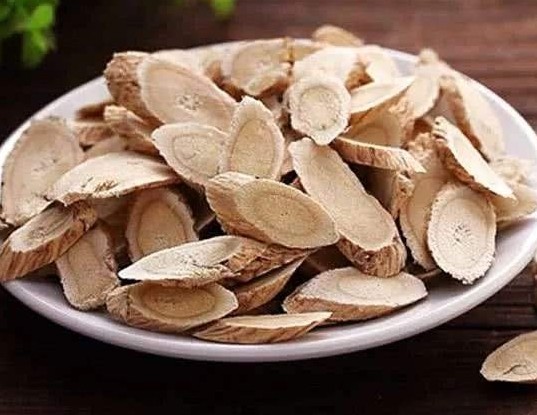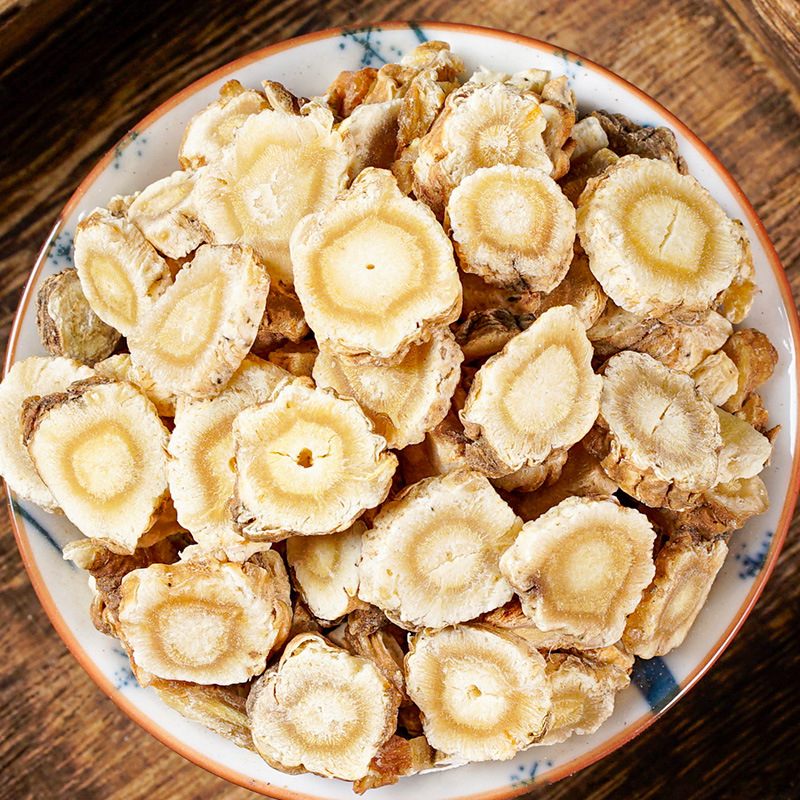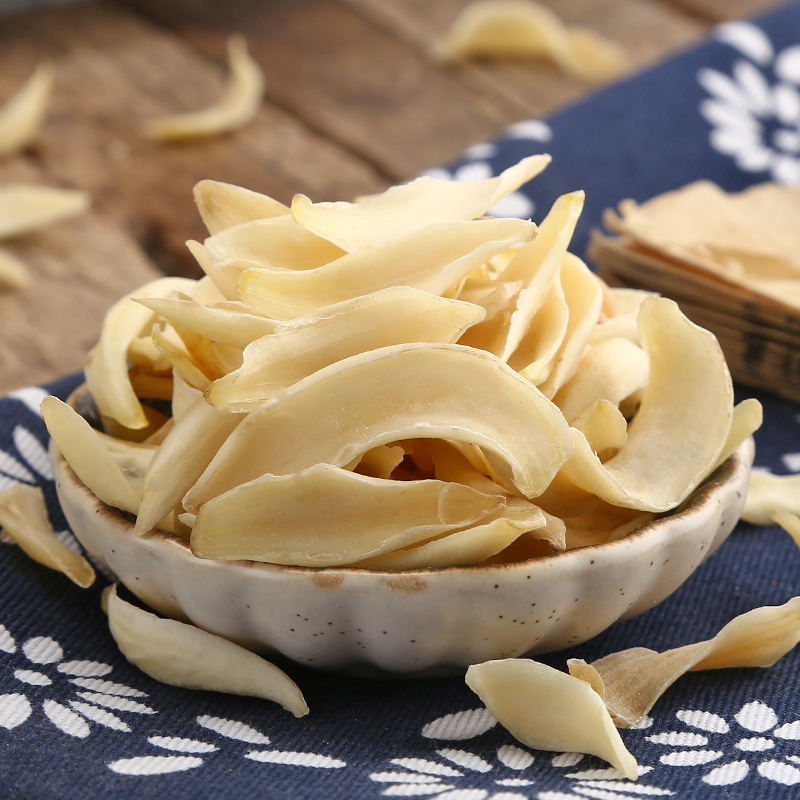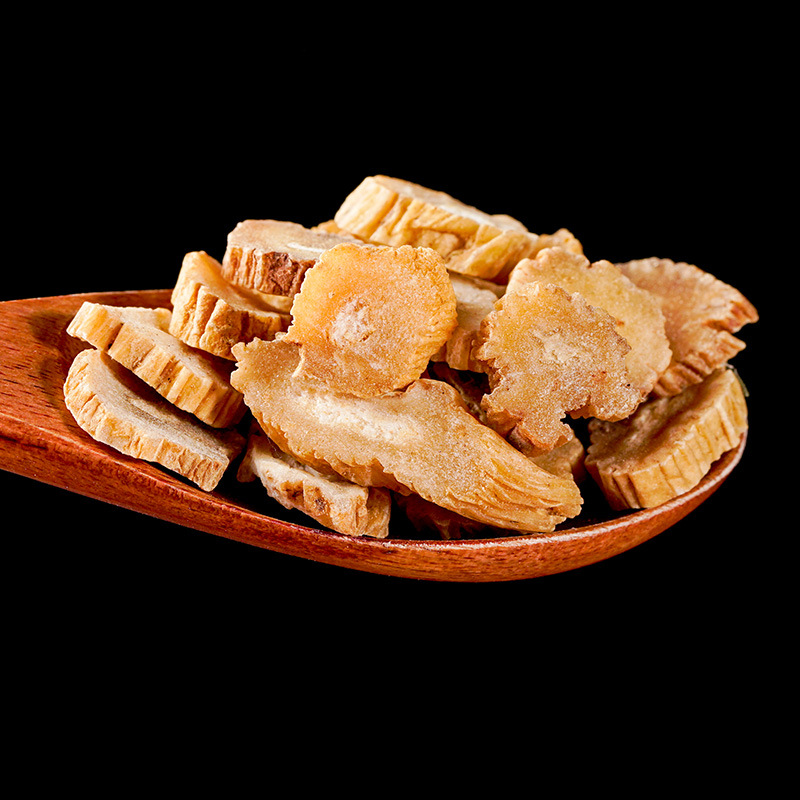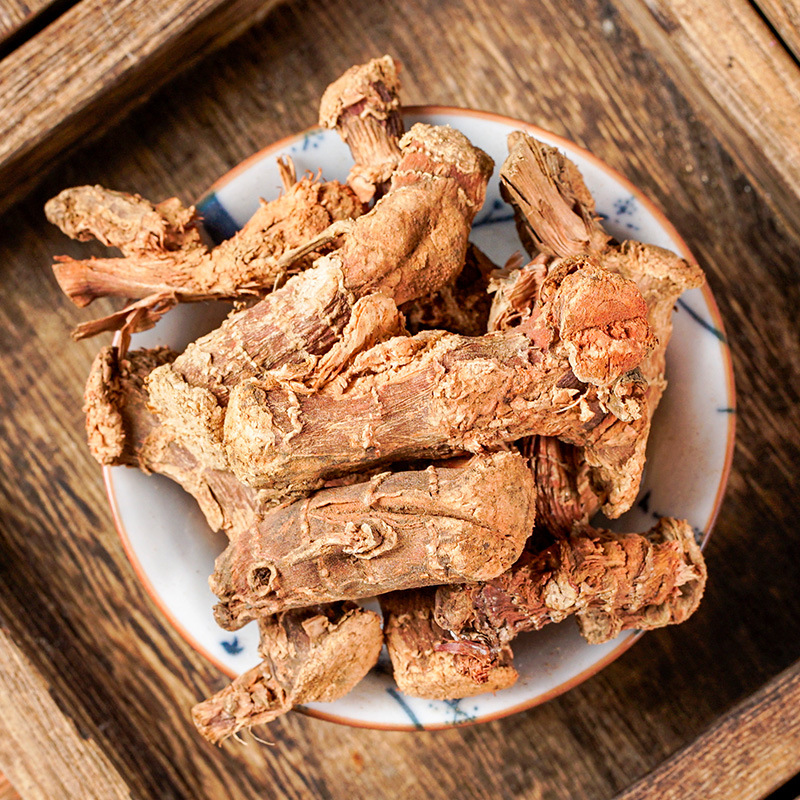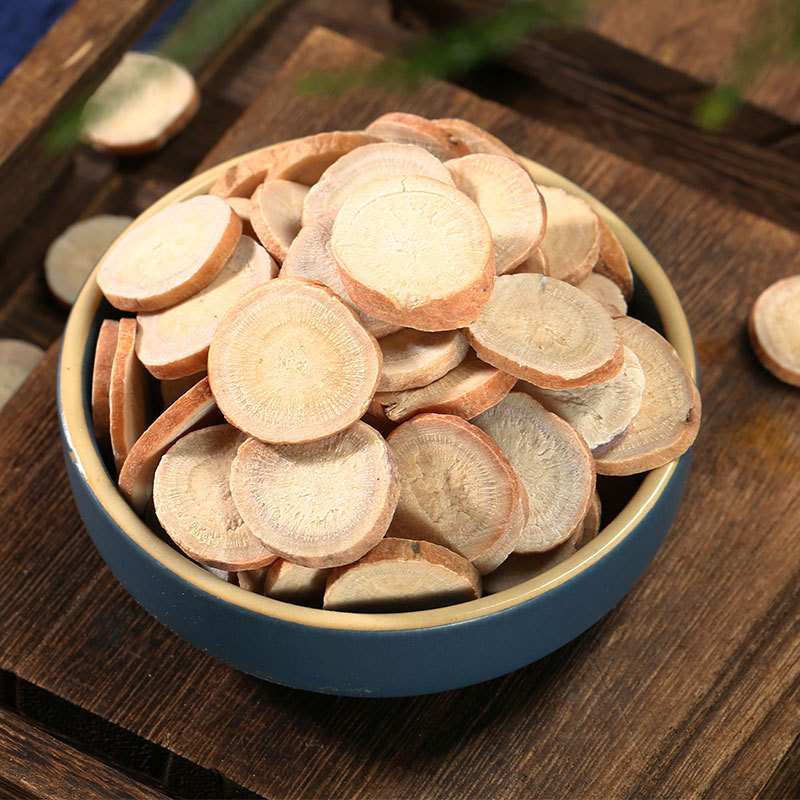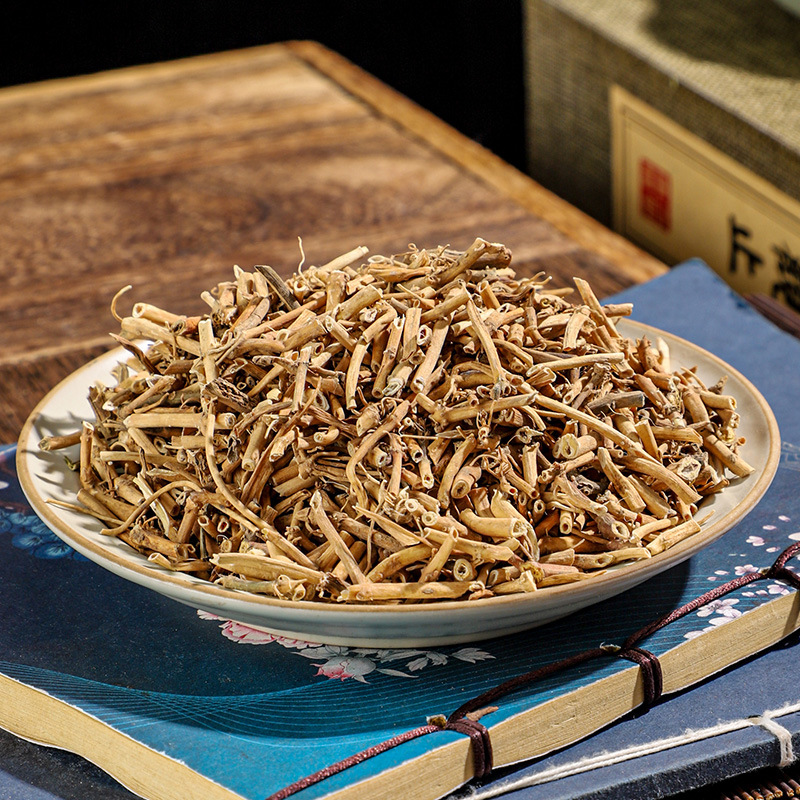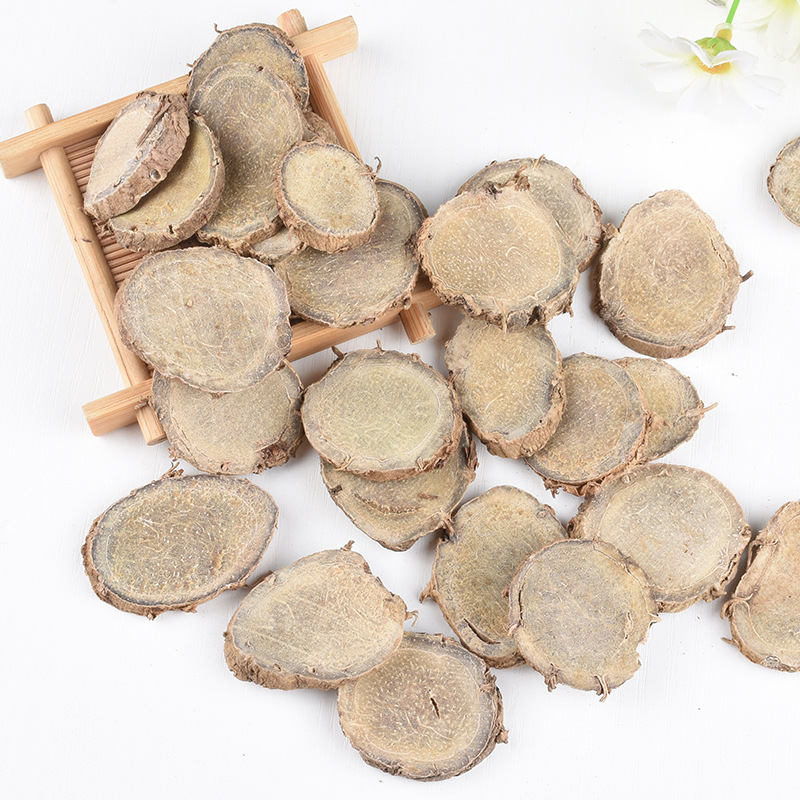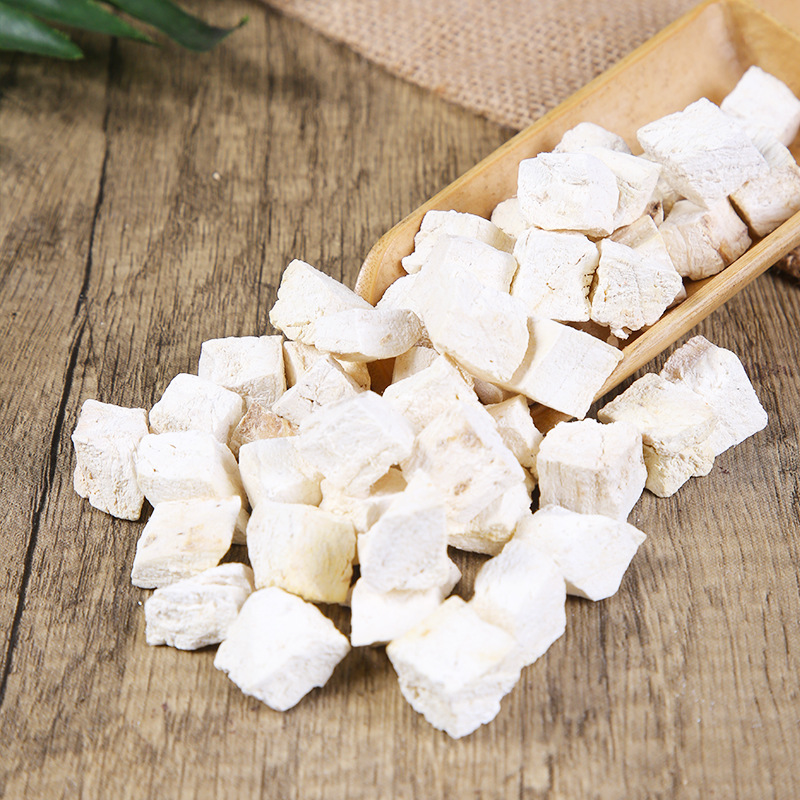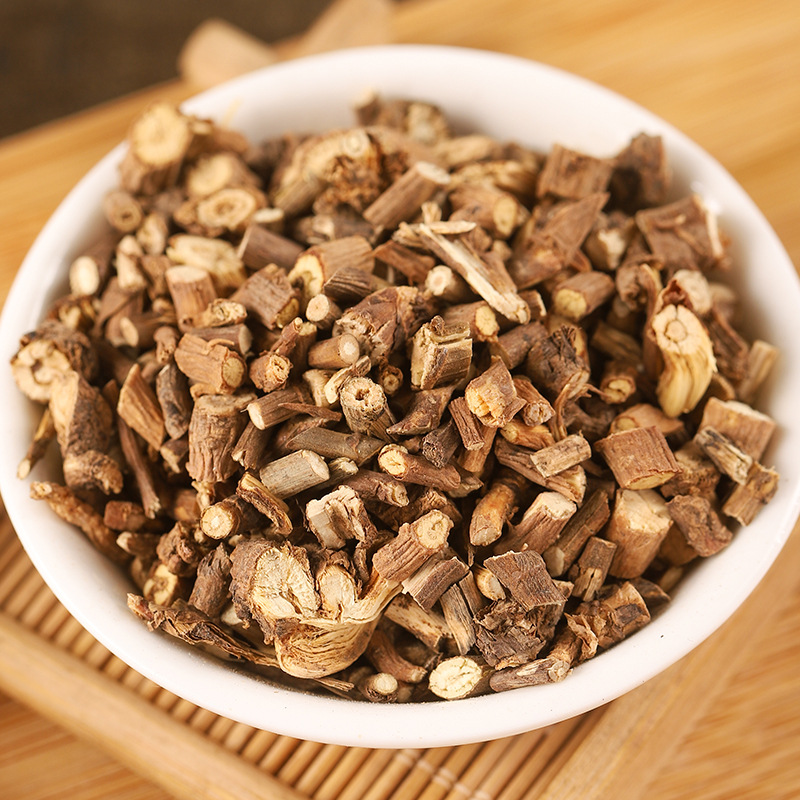
Astragalus is also known as Northern Qi, and it is the root of the leguminous plants Astragalus membranaceus and Astragalus mongholicus. It is mainly produced in Inner Mongolia, Heilongjiang, Gansu, Shanxi, and other regions. Generally, those that have grown for many years are of better quality, with wild varieties being of even higher quality and more expensive. After harvesting, it is dried in the sun, moistened thoroughly, and sliced. It is often used raw or processed with honey.
I. Efficacy and Application
Astragalus tastes sweet and is slightly warm. It belongs to the spleen and lung meridians.
Efficacy: It can tonify qi and raise yang, benefit qi and consolidate the exterior, expel toxins and promote tissue regeneration, and promote diuresis to reduce swelling. Its characteristics include strong qi-tonifying ability, adept at supporting healthy qi and eliminating pathogenic factors, and promoting tissue regeneration from within. It is known as the essential herb for tonifying qi and raising yang, and the sacred herb for sores. In ancient texts, it is also called Huangqi, meaning the leader of tonifying herbs.
Commonly used for the treatment of symptoms such as qi deficiency and fatigue, reduced appetite and loose stools, chronic diarrhea, organ prolapse, spontaneous sweating, edema, non-healing sores, qi deficiency and blood stasis, blood impediment and hemiplegia.
Astragalus has an extremely wide range of applications, is low in cost, and has significant therapeutic effects, making it one of the most frequently used herbs in traditional Chinese medicine clinical practice.
Summary of Famous Works by Renowned Authors:
The Classic of Materia Medica: "It primarily treats long-standing non-healing sores and ulcers, expels pus and relieves pain, addresses severe wind-induced skin diseases, five types of hemorrhoids and scrofula, replenishes deficiency, and treats various pediatric diseases."
"Bie Lu": "Tonifies the husband's deficiency and damage, five fatigues and emaciation. Stops thirst, abdominal pain, diarrhea and dysentery, boosts qi."
Rihuazi Materia Medica: "Assists qi, strengthens sinews and bones, promotes muscle growth, and nourishes blood."
The Pearl Pouch: "Astragalus is sweet, warm, and purely yang in nature. It has five main uses: first, to tonify various deficiencies and insufficiencies; second, to boost primordial qi; third, to strengthen the spleen and stomach; fourth, to clear muscular heat; fifth, to expel pus, relieve pain, invigorate blood, generate blood, and internally support yin-type abscesses, making it a sacred herb for sores and ulcers."
Tangye Bencao: "Astragalus strengthens defensive qi, serving as an exterior medicine; it benefits the spleen and stomach, acting as a middle jiao medicine; it treats cold damage with a weak chi pulse and tonifies kidney essence, functioning as an interior medicine."
Huangqi is a tonic agent that can boost vital energy, strengthen the spleen and stomach, expel pus and relieve pain, invigorate blood circulation, and treat critical conditions.
Changsha Materia Medica: It enters the lung and stomach to tonify qi, travels through the meridians to nourish the nutrient qi, treats conditions such as yellow sweat and blood impediment, heals ailments like skin edema and wind-dampness, is most effective for swollen and painful joints, even better for consumptive disease with internal urgency, excels at reaching the skin and interstices, and specializes in unblocking the muscular exterior.
Ben Cao Bei Yao: "When used raw, it consolidates the exterior, capable of inducing sweating when there is none and stopping sweating when there is. It warms the muscles, firms the interstices, drains yin fire, and resolves muscular heat. When roasted, it supplements the center, boosts original qi, warms the triple burner, and strengthens the spleen and stomach. It generates blood and promotes flesh growth, expels pus and supports from within, making it a holy medicine for sores and abscesses. It is suitable for pox conditions that do not erupt and for yang deficiency without heat."
II. Compatibility and Application
1. For syndromes of spleen and lung qi deficiency or middle qi sinking. The spleen is the source of biochemical transformation, and the lungs govern the qi of the entire body. Spleen and lung qi deficiency manifests as reduced appetite, loose stools, shortness of breath, and fatigue. If accompanied by middle qi sinking, it can lead to chronic diarrhea, rectal prolapse, or uterine prolapse; if qi fails to control blood, it may cause bloody stools or abnormal uterine bleeding. Astragalus can tonify spleen and lung qi and has the effect of raising yang qi, making it suitable for the aforementioned syndromes. It is indeed a key herb for tonifying qi and lifting yang to address sinking. For treating spleen deficiency with qi sinking or middle qi sinking, it is often combined with Codonopsis pilosula, Angelica sinensis, Atractylodes macrocephala, and Bupleurum chinense, as seen in the famous formula for raising yang and lifting sinking, the Bu Zhong Yi Qi Tang (Tonify the Middle and Augment the Qi Decoction).
If treating qi deficiency with sinking, metrorrhagia and metrostaxis, blood collapse, or even yang depletion and critical condition, it is often combined with ginseng, honey-fried licorice, and cimicifuga, etc., to jointly achieve the effects of tonifying qi and lifting, arresting bleeding and securing collapse, which is known as Juyuan Decoction.
Zhang Xichun, inspired by the Ginseng and Astragalus Decoction for Tonifying the Middle and Augmenting Qi, treats cases of sinking of the great qi in the chest, shortness of breath insufficient for respiration, or imminent cessation of breathing with critical danger, often using a large dose of astragalus as the main ingredient, combined with anemarrhena, bupleurum, cimicifuga, and platycodon, which is known as the Decoction for Raising the Sinking.
Zhang Xichun said, "Astragalus can tonify qi and also elevate qi, and is effective in treating the sinking of the great qi in the chest."
2. For deficiency of both qi and blood. Astragalus can tonify qi and generate blood, used for physical weakness and various syndromes of deficiency of both qi and blood, with the wonderful effect of mutual generation of qi and blood. For treating various syndromes of blood deficiency, it is most commonly combined with Angelica sinensis, known as Danggui Buxue Tang. This formula is also the foundational formula for tonifying qi and nourishing blood, containing the profound principles of yin and yang, and should be deeply understood.
If treating deficiency of both qi and blood in the heart and spleen, palpitations and severe palpitations, forgetfulness and insomnia, sallow complexion, or syndrome of spleen failing to control blood, it is often combined with ginseng, Chinese angelica, longan aril, spina date seed, costus root, etc., to jointly achieve the effects of replenishing qi and nourishing blood, strengthening the spleen and nourishing the heart, which is the spleen-restoring decoction.
Ben Cao Meng Quan: "One liang of astragalus and two qian of angelica sinensis is called the blood-tonifying decoction. Although there are many qi-tonifying herbs, it is said to tonify blood because qi can generate blood, and angelica sinensis serves as a guide."
3. For symptoms such as spontaneous sweating due to deficiency of defensive qi. Astragalus can tonify defensive qi, consolidate the exterior, and stop sweating. To treat spontaneous sweating due to exterior deficiency, it is often combined with oyster shell, light wheat, and ephedra root, known as Oyster Shell Powder; if combined with white atractylodes rhizome and saposhnikovia root, it is known as Jade Screen Powder.
If treating yin deficiency with night sweats, it is often combined with Shengdi and Huangbai and other yin-nourishing and fire-reducing substances, known as Danggui Liuhuang Decoction.
Now there is a ready-made medicine called "Astragalus Granules," which is processed from a single herb, astragalus. It also has the effect of replenishing qi, strengthening the exterior, and stopping sweating. It is very convenient to purchase and use, making it worth considering.
Li Dongyuan said, "Astragalus membranaceus, when combined with Saposhnikovia divaricata, enhances its efficacy significantly, as they mutually restrain each other but also mutually assist in function."
Zhu Danxi said, "Astragalus greatly tonifies yang deficiency and spontaneous sweating. If there is external deficiency with pathogenic factors and sweating cannot be induced, taking this can also induce sweating."
4. For abscesses that do not rupture or fail to heal for a long time due to deficiency of qi and blood. Astragalus can tonify qi and support the body's vital energy, promoting tissue regeneration and healing. For abscesses that do not rupture, it is often combined with Angelica sinensis and Gleditsia sinensis, known as Tou Nong San.
In the treatment of chronic illness with physical weakness and non-healing ulcers, it is often combined with ginseng, angelica, cinnamon, and licorice to jointly achieve the effects of replenishing qi, supporting the body's vital energy, and promoting tissue regeneration. This is the renowned formula for tonifying deficiency known as the Ten Complete Great Tonifying Decoction.
Wang Ang said: Qi can generate blood, and when blood is abundant, flesh grows. The Classic states that blood gives rise to flesh. When toxic qi transforms, it becomes pus, and tonifying qi thus enables internal support. For abscesses and ulcers that fail to form pus, death is inevitable, as toxic qi is excessive while primordial qi is depleted. The same principle applies to smallpox.
Huang Yuanyu said, "For all sores and ulcers, it is crucial to avoid inward sinking, and Astragalus is always appropriate."
5. For edema with scanty urine. Astragalus has the effect of tonifying qi and promoting diuresis to reduce swelling, so it is suitable for edema of the limbs and face, as well as difficulty in urination caused by qi deficiency and impaired transportation, leading to the accumulation of water and dampness. For treating wind-water or wind-dampness syndrome due to defensive qi deficiency and insecurity, it is often combined with Stephania Root, Licorice, and Atractylodes Macrocephala, as seen in the formula Fangji Huangqi Tang (Stephania Root and Astragalus Decoction).
6. For symptoms such as limb numbness, joint pain, or hemiplegia caused by qi deficiency and blood stasis. Traditional Chinese medicine states that "qi is the commander of blood, and blood is the mother of qi." Astragalus can replenish the body's vital qi and has a driving force. When combined in formulas that promote blood circulation and unblock meridians, it can significantly enhance therapeutic effects. For treating blood impediment and deficiency fatigue, as well as skin numbness and insensitivity, it is often combined with cinnamon twig, white peony root, ginger, and jujube to jointly achieve the effects of replenishing qi, warming the meridians, harmonizing blood, and unblocking impediments, as seen in the Astragalus and Cinnamon Twig Five Substances Decoction.
If treating rheumatic pain in the shoulders and arms, it is often combined with Notopterygium root, Saposhnikovia root, Chinese angelica root, and turmeric rhizome, known as Juanbi Decoction.
In the treatment of hemiplegia as a sequela of stroke, it is often combined with blood-activating and stasis-resolving herbs such as Angelica sinensis, Ligusticum chuanxiong, peach kernel, and safflower, as seen in the formula Buyang Huanwu Decoction.
Huang Yuanyu said, "Astragalus clears deficiency and harmonizes flow, specifically traveling through the meridians and benefiting the defensive qi. It astringes what is rebellious, lifts what is sunken, moves what is stagnant, and unblocks what is obstructed. It is an essential herb for regulating the defensive qi and also a superior product for harmonizing the nutritive and blood aspects."
8. For conditions such as diabetes and deficiency heat due to qi deficiency and fluid depletion. Although Astragalus has a sweet and warm medicinal nature, when applied appropriately, it can instead eliminate deficiency heat and promote the generation of body fluids. This method is known as "seeking yin within yang" and "using sweet and warm herbs to treat severe heat," reflecting profound medical principles. For treating diabetes due to qi deficiency, it is often combined with qi-tonifying, yin-nourishing, and fluid-generating herbs such as Ginseng, Rehmannia, Ophiopogon, and Trichosanthes root.
Zhang Xichun established two prescriptions, Yuye Decoction and Zicui Decoction, for the treatment of diabetes, both of which heavily utilize raw Astragalus. The discussion is detailed and can serve as a reference.
III. Usage and Dosage
Astragalus is often used in decoctions and can also be made into pills or powders. The typical dosage in decoctions ranges from over ten grams to over a hundred grams, varying depending on the condition being treated and the specific application.
The specific dosage of Astragalus should be flexibly determined based on the desired therapeutic effect, without rigidly restricting the amount. For general formulas aimed at tonifying deficiency, around ten grams is sufficient. In the Danggui Buxue Decoction, the dosage of Astragalus is five times that of Angelica sinensis, reflecting the principle that "qi can generate blood, and yang can seek yin." Another example is the Buyang Huanwu Decoction, in which Wang Qingren used a heavy dose of four liang of Astragalus, equivalent to over 120 grams in modern measurements. The above dosages are based on the assumption that the Astragalus used is wild. If cultivated Astragalus is used today, the dosage should be appropriately increased.
Today's practitioners of traditional Chinese medicine, although they study ancient texts and use ancient formulas, the medicines they use are far from what they were in the past. Therefore, when prescribing medications, the primary consideration should be the quality of the drugs. This is also one of the biggest challenges facing the entire traditional Chinese medicine industry today.
It is generally believed that raw use is often for tonifying qi, expelling toxins, and promoting tissue regeneration; while honey-fried use is suitable for warming and tonifying qi and blood.
Huang Yuanyu said, "Use after honey-frying. When used raw, it is slightly cool, suitable for clearing the exterior and stopping sweating."
Wang Ang said: "It is the chief of tonics, hence the name Qi. The yellow-skinned and white-fleshed, firm ones are of good quality. For use in tonics, it should be pounded flat and roasted with honey. For reaching the exterior, it should be used raw."
IV. Application Notes
Astragalus replenishes qi and promotes yang, easily assists fire, and also stops sweating. Therefore, it is not suitable for conditions such as external excess with pathogenic factors, qi stagnation and dampness obstruction, food stagnation, yin deficiency with yang hyperactivity, early stages of abscesses, or when heat toxins are still abundant after ulceration.
When using Astragalus, Zhang Xichun often pairs it with half the amount of Anemarrhena to prevent its warm and drying nature, which can be considered an excellent method and is worth referencing.
Traditional Chinese Medicine Practical Notes 20.11.8 Evening