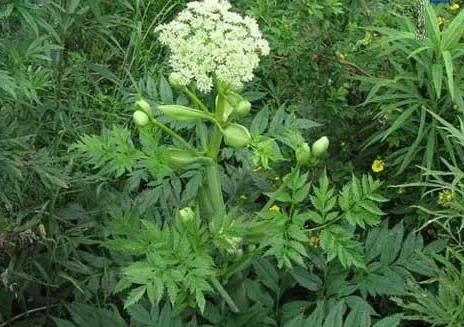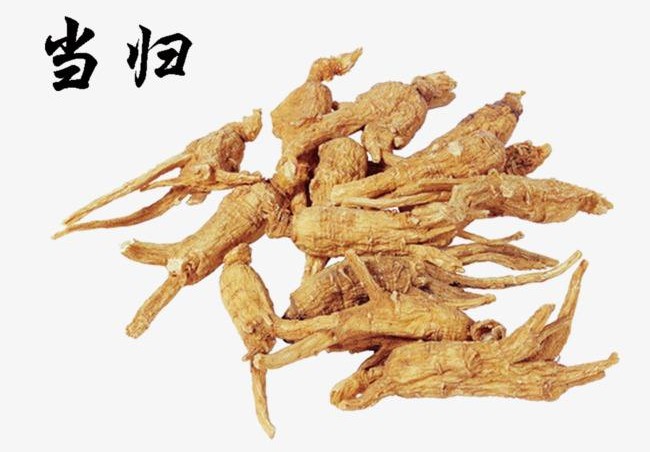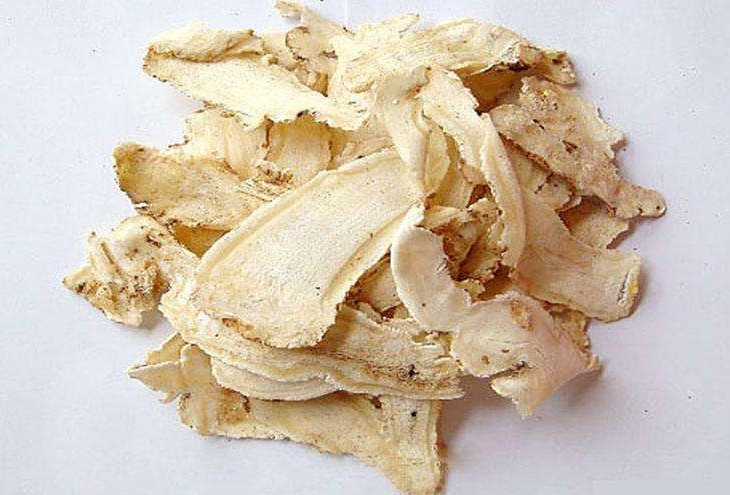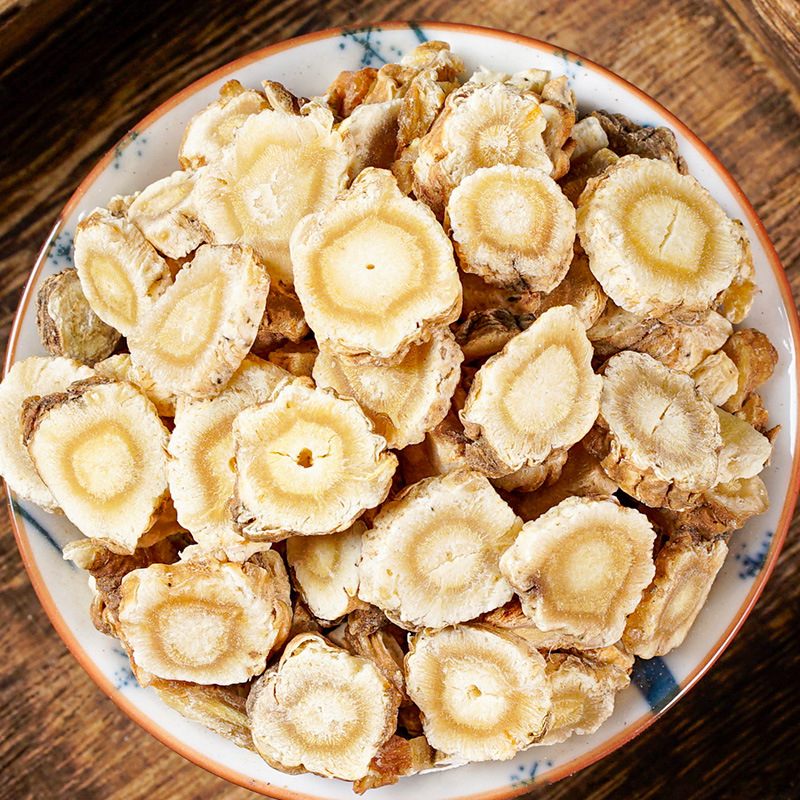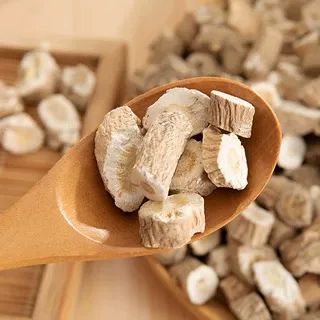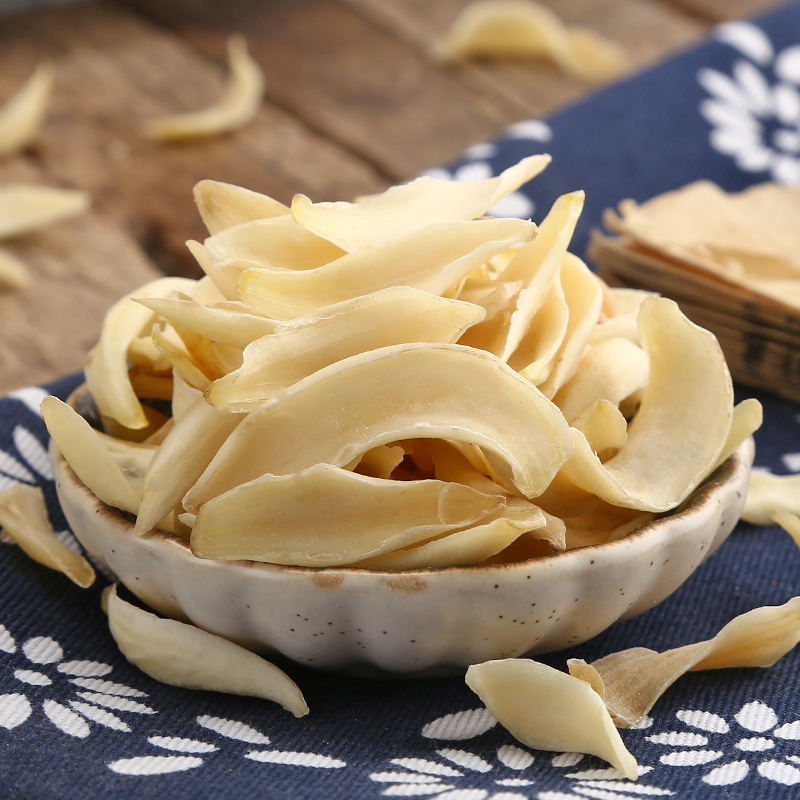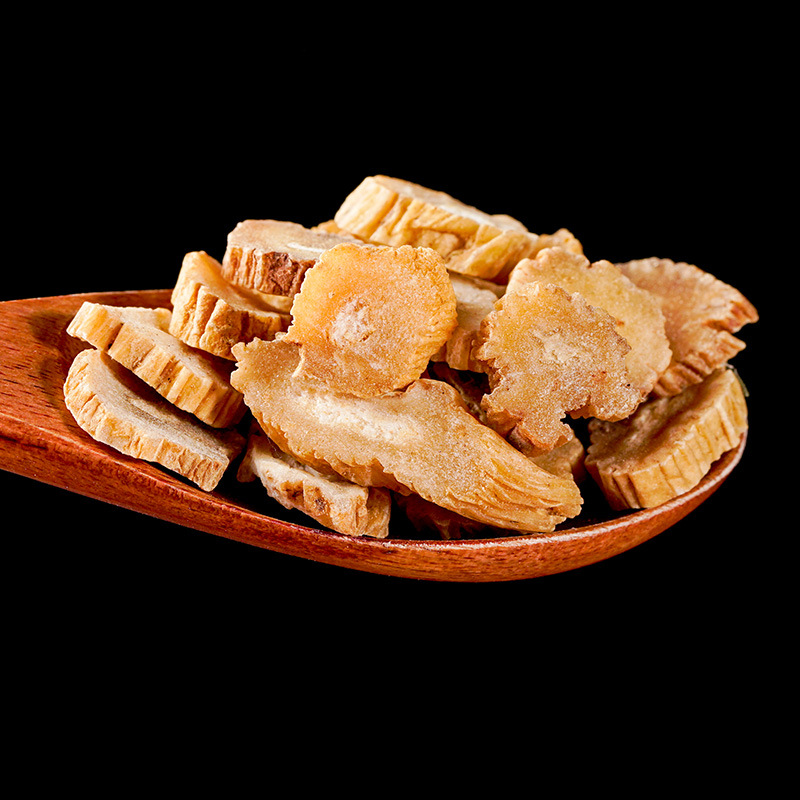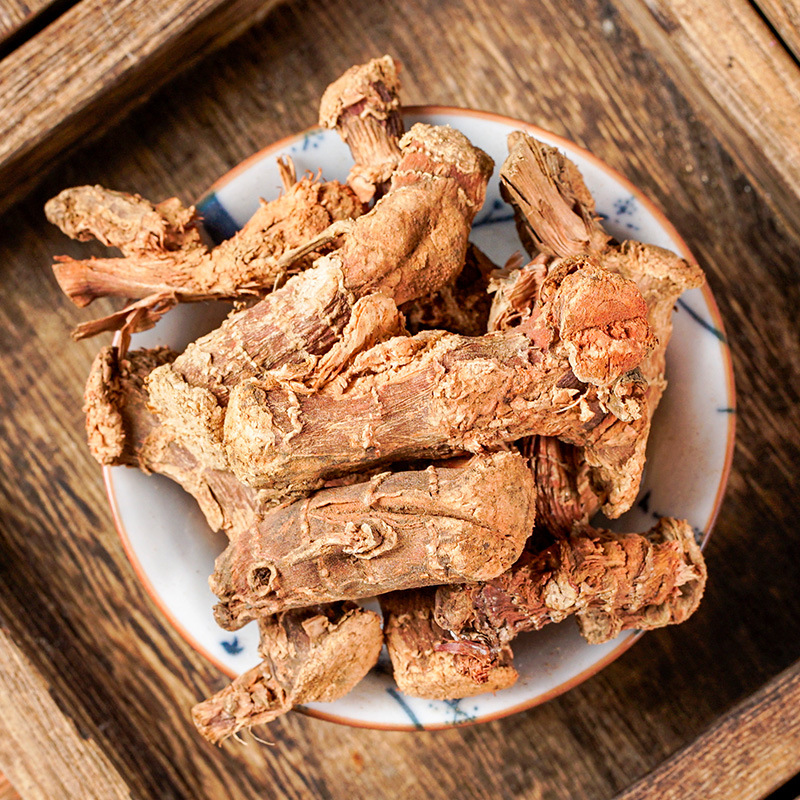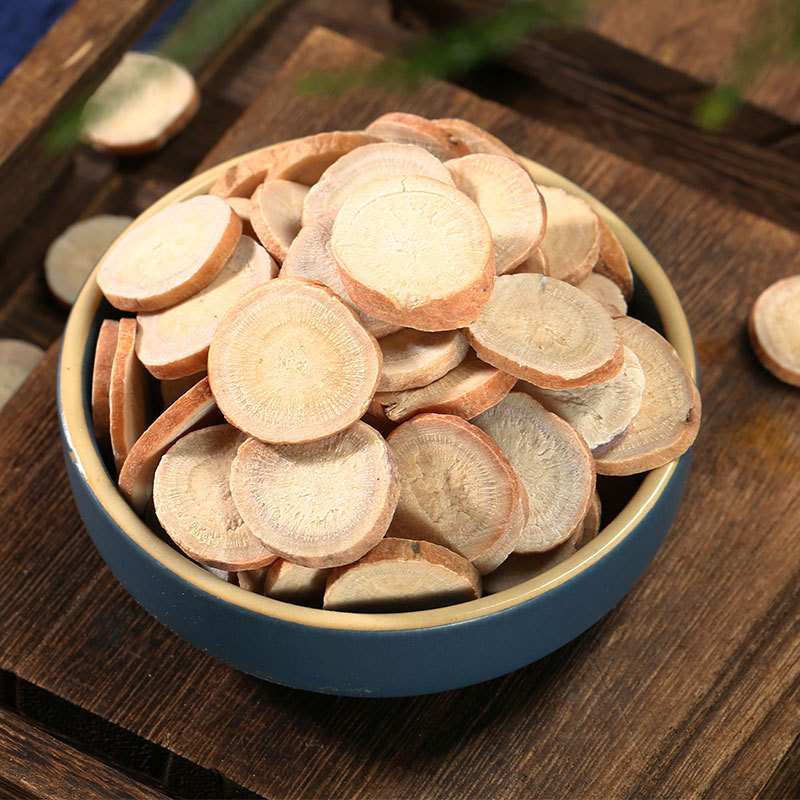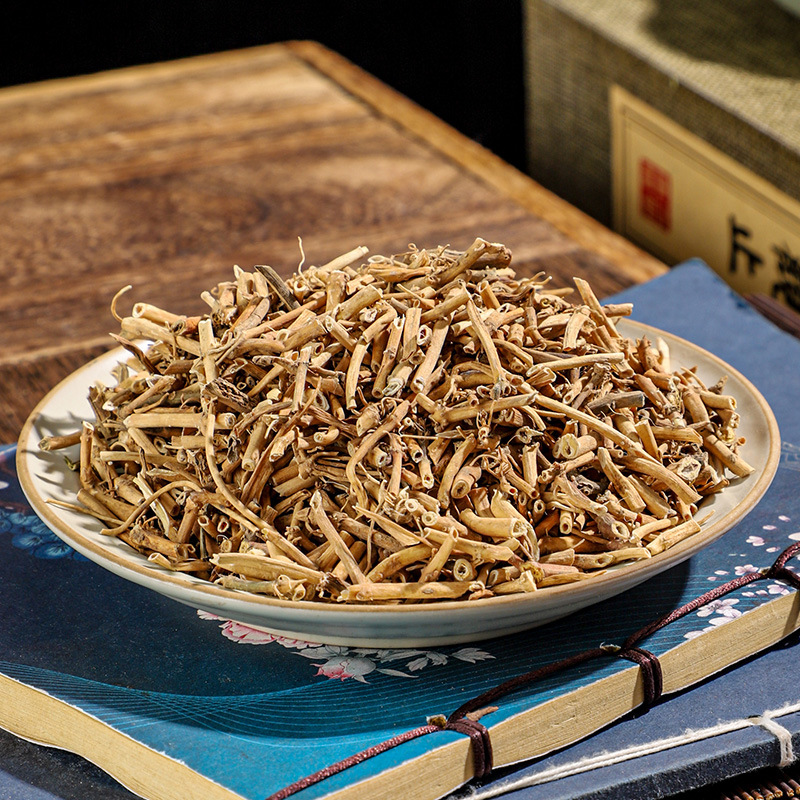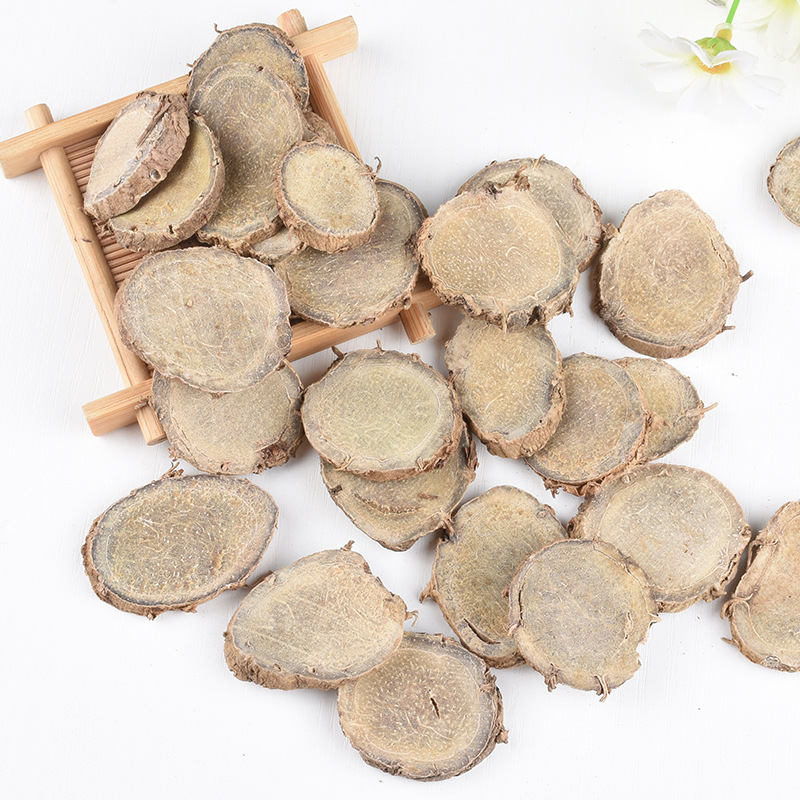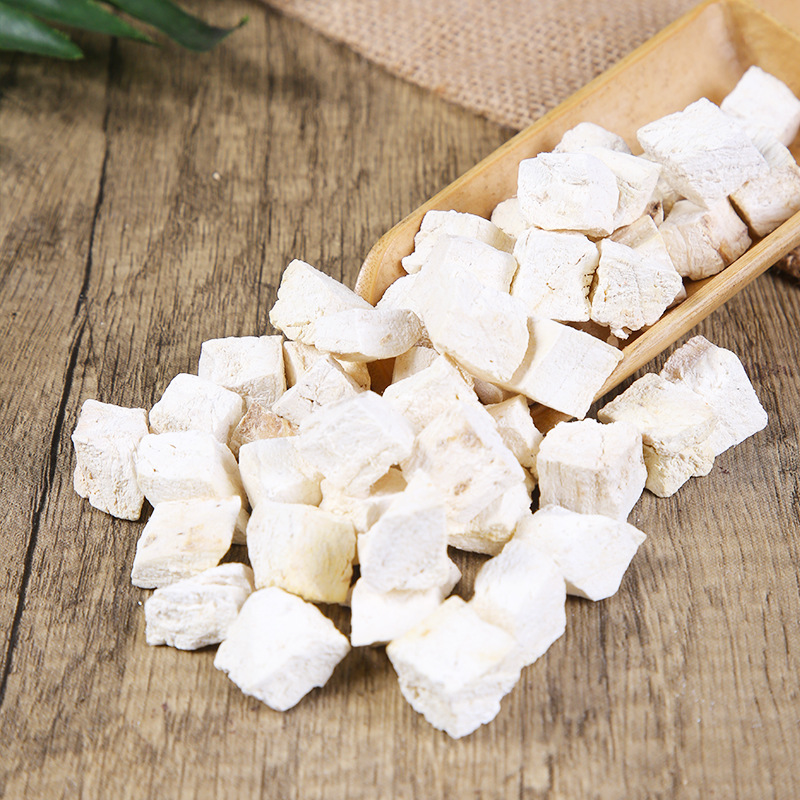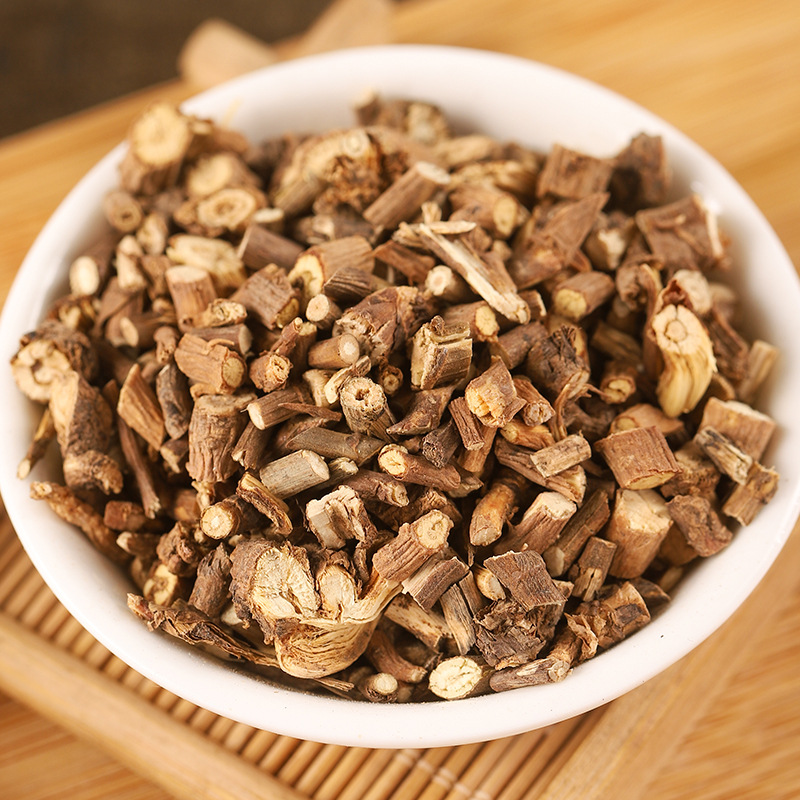
Angelica sinensis is the root of the plant Angelica sinensis from the Apiaceae family. The quality of Angelica sinensis produced in the Minxian area of Gansu Province is considered superior, hence it is also known as Min Angelica. Additionally, it has other names such as Qin Angelica, Gan Angelica, Western Angelica, and Qian Angelica. Angelica sinensis is named for its ability to regulate qi and blood, as it "guides qi and blood to their respective places." For medicinal use, Angelica sinensis can be used raw or stir-fried with wine. Depending on the part used, it can be classified as whole Angelica, Angelica body, or Angelica tail.
I. Efficacy and Application
Angelica sinensis tastes sweet and pungent, and is warm in nature. It belongs to the liver, heart, and spleen meridians.
Function: It can tonify blood, promote blood circulation, regulate menstruation, relieve pain, moisten intestines, and promote bowel movements. Its characteristics include promoting blood circulation while tonifying blood, tonifying without causing stagnation, and it is particularly effective in treating various women's diseases, earning it the reputation as an essential medicine for nourishing blood and regulating menstruation.
Commonly used for the treatment of blood deficiency with sallow complexion, dizziness and palpitations, irregular menstruation, amenorrhea and dysmenorrhea, abdominal pain due to deficiency cold, rheumatic arthralgia, traumatic injuries, abscesses and sores, intestinal dryness and constipation, among other conditions.
Summary of Masterpieces by Renowned Authors
"Ben Jing": "It primarily treats women's uterine bleeding and infertility, various malignant sores and ulcers, and metal-inflicted wounds."
Materia Medica Properties: "Treats dysentery and abdominal pain."
Rihuazi Materia Medica: "Dispels stagnant blood, nourishes new blood, and treats abdominal masses and cold intestines and stomach."
Compendium of Materia Medica: "Treats headaches, various pains in the heart and abdomen, moistens the intestines and stomach, muscles and bones, and skin, treats abscesses and ulcers, expels pus and relieves pain, harmonizes blood and replenishes blood."
"Medical Enlightenment": "Angelica has three uses: first, it is a fundamental herb for the heart meridian; second, it harmonizes blood; third, it treats various diseases that worsen at night."
Compendium of Materia Medica: "For all diseases that worsen at night, it is a blood disorder and should be treated with it; for all diseases characterized by deficiency and cold, it is due to yang having nothing to attach to and should be treated with it."
Compendium of Materia Medica: "Angelica sinensis, its taste is sweet and heavy, thus it specifically nourishes blood; its qi is light and pungent, thus it also moves blood. It moves while nourishing, and nourishes while moving. Truly, it is a qi medicine within the blood, and also a sacred medicine for blood."
Changsha Materia Medica: Nourishes blood and enriches the liver, clears wind and moistens wood, revives the subtlety of the meridians, restores warmth to cold limbs, alleviates internal urgency and soothes abdominal pain, regulates postpartum conditions and protects before childbirth, promotes urination during pregnancy, lubricates the large intestine in postpartum women, essential for treating running piglet syndrome, beneficial for vomiting of roundworms, highly effective for cold hernia, and most effective for warming the meridians.
"Compendium of Materia Medica": Sweet and warm, it harmonizes the blood; pungent and warm, it disperses cold; bitter and warm, it assists the heart in dispersing cold, serving as a qi-regulating herb within the blood. It treats consumptive diseases with alternating chills and fever, cough and rebellious qi, warm malaria, dysentery, headaches and lower back pain, various pains in the heart and abdomen, wind-induced convulsions without sweating, atrophy and paralysis, abdominal masses, abscesses, sores, and ulcers. For women with various deficiencies, all blood disorders, and cases of yin deficiency where yang has nothing to attach to. It moistens the intestines and stomach, nourishes the skin, enriches the blood, promotes tissue regeneration, expels pus, and relieves pain.
"Medical Records of Integrating Chinese and Western Medicine": "The primary herb for generating and activating blood. Its potency can both ascend and descend, internally moistening the organs and externally reaching the skin and muscles. It can moisten the dryness of the lung metal, relax the urgency of the liver wood, and supplement and benefit spleen blood, making one's skin radiant and lustrous. Generating new blood while also resolving stasis, thus it can treat general numbness, limb pain, sores, ulcers, swelling, and pain; activating blood while also stopping bleeding, thus it can treat vomiting blood, nosebleeds, and bleeding from the bowels and bladder; moistening the large intestine while also promoting urination. It is suitable for all conditions of blood deficiency, blood depletion, and yin deficiency."
II. Compatibility and Application
1. For various blood deficiency syndromes. Angelica sinensis is an excellent blood-tonifying herb, suitable for various syndromes caused by blood deficiency. In clinical application, it is often used together with qi-tonifying herbs to take advantage of the mutual generation of qi and blood. For treating blood deficiency syndrome, it is often combined with a large dose of Astragalus membranaceus, known as Danggui Buxue Tang.
2. Used for gynecological conditions such as irregular menstruation, amenorrhea, and dysmenorrhea. Angelica sinensis not only nourishes blood and promotes blood circulation but also excels in relieving pain, making it a key herb for regulating menstruation in gynecology. For treating blood deficiency in women and various menstrual disorders, it is often combined with Rehmannia glutinosa, Ligusticum chuanxiong, and Paeonia lactiflora, forming the renowned blood-nourishing and menstruation-regulating formula known as Si Wu Tang. This formula serves as the foundational prescription for nourishing blood and regulating menstruation, with endless variations based on clinical modifications, and should be mastered thoroughly.
If treating women with blood deficiency abdominal pain, or accompanied by lower limb edema, dysuria, it is often combined with Chuanxiong, Shaoyao, Baizhu, etc., which is Danggui Shaoyao San.
If treating blood deficiency and blood stasis, amenorrhea, one can use Siwu Decoction as the base, then combine with peach kernel, safflower, and other blood stasis-removing and menstruation-promoting ingredients, which is Taohong Siwu Decoction.
For treating various chronic diseases or difficult and complicated conditions caused by qi stagnation and blood stasis, the combination of Siwu Decoction and Sini Powder with additional ingredients can be used. Together, they promote blood circulation, remove blood stasis, eliminate decay, and generate new tissue. This approach often yields remarkable effects in treating stubborn illnesses, specifically known as Xuefu Zhuyu Decoction.
If treating irregular menstruation due to liver depression and blood deficiency, disharmony between liver and spleen, it is often combined with Bupleurum, Peony, Poria, and Atractylodes, which is known as Xiaoyao Powder.
If treating gynecological disorders such as deficiency and cold in the thoroughfare and conception vessels, blood stasis obstruction, irregular menstruation, and incessant spotting, it is often combined with Evodia Fructus, Donkey-Hide Gelatin, Moutan Cortex, Paeoniae Radix Alba, and Chuanxiong Rhizoma to jointly achieve the effects of warming the meridians, dispelling cold, nourishing blood, and removing stasis, which is known as Wenjing Tang.
For treating menstrual abdominal pain and qi stagnation pain, the Four Substances Decoction can be used as the base formula, combined with qi-moving and pain-relieving herbs such as Cyperus Rhizome and Corydalis Rhizome, which is known as the Modified Four Substances Decoction.
Wang Ang said, "Blood belongs to yin, and the Four Substances Decoction can nourish yin. When yin is nourished, blood naturally regenerates; it is not that the Four Substances Decoction itself generates blood. For individuals with qi deficiency and blood weakness, ginseng should be used, as it promotes the generation of yin blood through the flourishing of yang."
3. For deficiency-cold abdominal pain, blood stasis pain, traumatic injuries, and arthralgia with numbness, etc. Angelica sinensis can tonify blood and activate blood circulation, effectively alleviating pain due to blood deficiency and blood stasis. Its warm nature also helps to dispel cold. For treating deficiency-cold abdominal pain, it is often combined with Minor Center-Fortifying Decoction, known as Angelica Center-Fortifying Decoction.
If treating cold hernia with abdominal pain and hypochondriac pain with internal urgency, or postpartum abdominal colic pain in women, deficiency and fatigue with insufficiency, it is often combined with mutton and ginger, known as Danggui Shengjiang Yangrou Tang. This formula can also be used for dietary therapy today, truly a good prescription.
If treating various pains due to blood stasis in the heart and abdomen, it is often combined with Salviae Miltiorrhizae Radix et Rhizoma, Olibanum, and Myrrha, known as Huoluo Xiaoling Dan.
For treating traumatic injuries, it is often combined with rhubarb, peach kernel, and safflower, known as the Fuyuan Huoxue Decoction.
If treating joint pain or muscle numbness, it is often combined with wind-dispelling and dampness-removing herbs such as Notopterygium, Cinnamon Twig, and Large-leaf Gentian Root, as seen in the formula Juanbi Decoction.
If treating blood deficiency with cold limbs, cold hands, or pain in the waist, hips, legs, feet, shoulders, and arms, it is often combined with cassia twig, asarum, peony, and licorice, known as Danggui Sini Decoction.
4. For carbuncles, sores, and ulcers that do not heal for a long time. Angelica sinensis can tonify blood and promote blood circulation, with the effects of reducing swelling, relieving pain, expelling pus, and promoting tissue regeneration. Therefore, it is commonly used in surgical treatments for sores and ulcers. In the early stages of carbuncles and sores with redness, swelling, and pain, it is often combined with honeysuckle, angelica dahurica, fritillaria, spina gleditsiae, frankincense, and myrrh, as in the formula known as Xianfang Huoming Yin.
If treating physical weakness and chronic non-healing sores, often combine Siwu Tang and Sijunzi Tang with additional herbs to tonify qi and blood, expel pus, and promote tissue regeneration, which is known as Shiquan Dabu Tang.
5. Used for fetal restlessness, fetal leakage syndrome, and pregnancy abdominal pain syndrome. Angelica sinensis can nourish blood and promote blood circulation, with the effect of nourishing without stagnation, making it an essential herb in gynecology. For treating abdominal pain during pregnancy, it is often combined with peony, white atractylodes, chuanxiong, and poria, known as Danggui Shaoyao San.
If treating the syndrome of qi and blood deficiency with unstable fetal origin, it is often combined with ginseng, astragalus, atractylodes, amomum, mistletoe, and dipsacus to jointly achieve the effects of replenishing qi, strengthening the spleen, nourishing blood, and calming the fetus, which is known as Taishan Panshi Powder.
If treating deficiency and damage of the thoroughfare and conception vessels, excessive menstruation, or restless fetal movement during pregnancy, fetal spotting with abdominal pain, etc., it is often combined with donkey-hide gelatin, mugwort leaf, prepared rehmannia root, and peony root, which is the famous formula for stopping bleeding and calming the fetus, the Gelatin and Mugwort Decoction.
6. For blood deficiency and intestinal dryness constipation and others. Angelica sinensis has the function of nourishing blood and moistening the intestines. To treat blood deficiency and intestinal dryness constipation, it is often combined with Cistanche deserticola, hemp seeds, Polygonum multiflorum, and other blood-nourishing and intestine-moistening herbs.
For treating liver and kidney yin deficiency and liver qi stagnation, it is often combined with nourishing yin and soothing liver herbs such as Radix Adenophorae, Radix Ophiopogonis, Radix Rehmanniae, Fructus Lycii, and Fructus Toosendan, which is known as Yiguan Decoction.
For treating blood dryness and damp-heat, sores on the head and face, acne and pimples, and rosacea, it is often combined with Fritillaria and Sophora flavescens to promote blood circulation, dissipate nodules, clear heat, eliminate dampness, and promote diuresis and relieve stranguria, as seen in Danggui Kushen Wan.
In summary, Angelica sinensis is one of the most frequently used herbs in Traditional Chinese Medicine clinical practice, with numerous formulations and applications. Countless classical and renowned prescriptions have been passed down to this day, making it a crucial herb that every student of Traditional Chinese Medicine should master.
III. Usage and Dosage
Angelica sinensis is often used in decoctions and is also suitable for making pills and powders. The usual dosage in decoctions ranges from over ten grams to several tens of grams, and the specific amount should be flexibly determined; if used for moistening the intestines and promoting bowel movements, the dosage can be increased further in the short term.
Different parts of Angelica sinensis used in medicine have distinct effects. The body of Angelica sinensis is more inclined to tonify blood, the tail is more inclined to invigorate blood circulation, while the whole Angelica sinensis is more inclined to harmonize blood. Angelica sinensis stir-fried with wine can enhance its blood-activating effect.
Li Dongyuan said, "The head stops bleeding and moves upward, the body nourishes blood and stays in the middle, the tail breaks blood and flows downward, the whole herb activates blood without dispersing."
Li Shizhen said, "For treating the upper part, use the head; for treating the middle part, use the body; for treating the lower part, use the tail; for comprehensive treatment, use the whole."
Wang Ang said: "It makes qi and blood return to their respective places, hence the name. It can unblock stagnant blood, supplement deficient blood, moisten withered blood, and soothe chaotic blood. Its pungent and warm nature can move the qi aspect, thereby regulating qi and harmonizing blood."
IV. Application Precautions
Angelica sinensis is greasy and has the disadvantage of promoting bowel movements, so it should be avoided in cases of excessive dampness, abdominal fullness, and diarrhea.
"Ben Cao Jing Shu": "For those with weak intestines and stomach, suffering from diarrhea and loose stools, as well as all spleen and stomach disorders characterized by aversion to food, lack of appetite, and indigestion, it is strictly prohibited. It should not be used even during the postpartum period or before childbirth."
Huang Yuanyu said, "Its nature is moist and stagnant, most damaging to the spleen and stomach and slippery to the large intestine. For those with yang deficiency, dampness in the earth, indigestion, bloating, and loose stools, it is highly unsuitable. If absolutely necessary, it should be supplemented with ginger, cinnamon, poria, and other similar herbs."
Wang Ang said: "It lubricates the large intestine, so those with diarrhea should avoid using it. There are many cases where excessive consumption of the Four Substances decoction, which is yin and stagnant in nature, has instead caused harm."
Zhang Xichun said, "It is contraindicated for those with consumptive disease, excessive sweating, and loose stools."
Author's Note: For individuals with a constitution of deficiency and fatigue, especially those with weak spleen and stomach, large doses of Chinese angelica or formulas primarily based on Chinese angelica should not be used. It hinders the spleen and stomach's transformation and transportation, which is detrimental to the recovery from deficiency and fatigue diseases. Therefore, although Chinese angelica is commonly used in many tonifying deficiency formulas, medical practitioners must not blindly rely on it.
Practical Notes on Traditional Chinese Medicine: November 9, 2020, Evening