The seven interactions of traditional Chinese medicine refer to the seven different forms in which Chinese medicinal herbs are specifically applied or combined. They specifically include: single use, mutual reinforcement, mutual assistance, mutual restraint, mutual suppression, mutual antagonism, and mutual incompatibility.
In the treatment of diseases with medication, sometimes a single herb is sufficient, but more often, multiple herbs need to be combined to achieve therapeutic effects. The more complex and critical the disease, the more intricate the medication tends to be, and the relationships between the herbs become more complicated. This is a profound aspect of traditional Chinese medicine and also the most fundamental knowledge regarding prescription and medication, which requires focused mastery.
The specific meanings of the "seven emotions" in traditional Chinese medicine compatibility:
1. Single Prescription: It refers to using a single herb to treat an illness. For ease of understanding, the author uses the number "1" to represent it. A formula composed of a single Chinese medicinal herb is called a "single-action formula" or "single prescription," such as Dusheng Powder, Dushen Decoction, and Yiyi Shuyu Drink, all of which use only one Chinese medicinal herb. Apart from using a single herb, the other six methods all emphasize the relationship of compatibility.
2. Mutual reinforcement: It refers to the combination of drugs with similar properties and effects, which can enhance their original therapeutic efficacy. It can be numerically represented as a "1+1>2" relationship. For example, the combination of gypsum and anemarrhena, ephedra and cinnamon twig, immature bitter orange and magnolia bark, etc., can all mutually enhance their therapeutic effects.
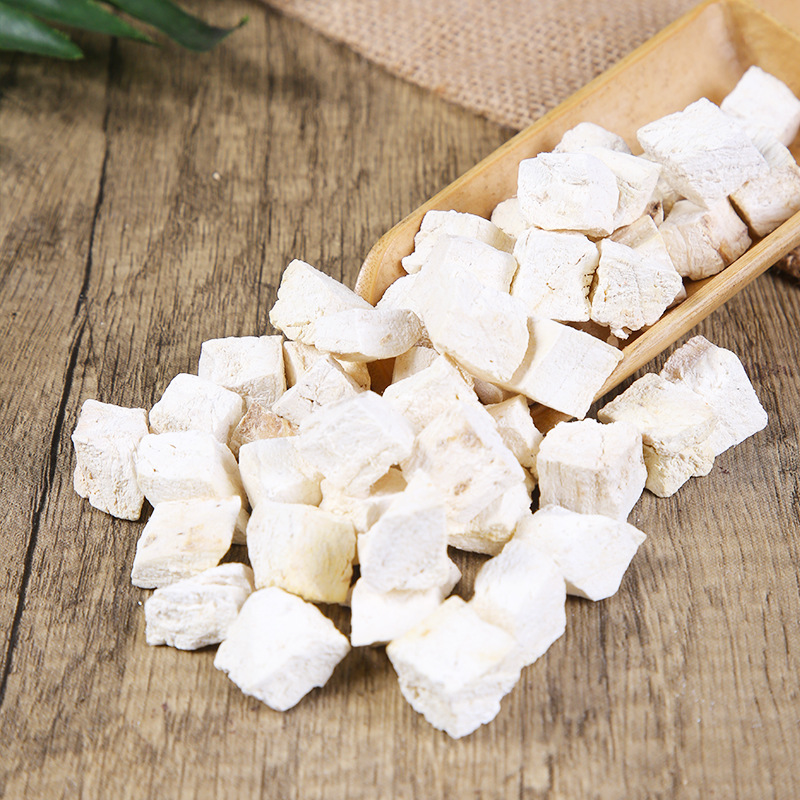
3. Mutual Assistance: It refers to the combination of drugs that have some commonality in terms of properties and efficacy, with one drug as the main agent and another as the auxiliary agent, which can enhance the therapeutic effect of the main drug. This relationship can be numerically expressed as "2+1>3". For example, when Astragalus is combined with Poria, or Cinnamon Twig is combined with Licorice, the auxiliary drugs can enhance the efficacy of the main drugs.
4. Mutual Restraint: This refers to the toxicity or side effects of one drug being reduced or eliminated by another drug. It can be represented numerically as the relationship "1 fears 2 = 1 restrains 2." Restraint means fear or apprehension. For example, the toxicity of raw Pinellia can be reduced or eliminated by ginger, so raw Pinellia restrains ginger.
5. Mutual Killing: It refers to one drug reducing or eliminating the toxicity or side effects of another drug. This relationship can be numerically expressed as "1 fears 2 = 2 kills 1." Killing means restraint, such as ginger reducing or eliminating the toxicity or side effects of raw pinellia, so it is said that ginger kills raw pinellia. Both mutual fear and mutual killing can be utilized in the compatibility or processing of traditional Chinese medicine to produce positive effects.
6. Mutual Antagonism: This refers to the combination of two drugs where one drug reduces or even nullifies the original efficacy of the other. It can be numerically represented as a "1+1<2" relationship. "Antagonism" means dislike or aversion. For example, ginseng antagonizes radish seeds because radish seeds can weaken the qi-tonifying effect of ginseng. If mutual antagonism is properly utilized, it can also produce positive effects.
7. Incompatibility: Refers to the toxic reactions or side effects that may occur when two drugs are used together. This relationship can be represented numerically as "1+1=poison." For example, in traditional Chinese medicine, the so-called "Eighteen Incompatibilities" and "Nineteen Antagonisms" fall into this category. Whether issues truly arise from the "Eighteen Incompatibilities" and "Nineteen Antagonisms" will be discussed in detail later.
The application of herbal combinations is the fundamental form of traditional Chinese medicine usage. When herbs are combined according to certain principles and dosage ratios to form appropriate formulations, they are referred to as prescriptions. Prescription science represents a higher form of drug application and development, as well as foundational knowledge in the study of traditional Chinese medicine. In the "Essence of Materia Medica," some related content will also be mentioned in passing.
The significance of herbal compatibility in disease treatment can be simply expressed as follows: single herbs treat simple diseases; multiple herbs combined into formulas can treat complex diseases; multiple formulas combined into compound prescriptions can treat more complex diseases or severe illnesses.