The reason why Chinese medicine can treat or prevent diseases is because it possesses its own inherent bias. As the saying goes, "Humans obtain the completeness of the five elements, while things obtain the bias of the five elements." Using the bias of things to correct the bias in the human body is the principle of using medicine to treat diseases.
The degree of bias in medicinal properties can represent both the level of toxicity and reflect the nature, taste, and meridian tropism, all of which are valuable experiences continuously summarized by people through long-term life practice.
I. Four Qi of Traditional Chinese Medicine:
The so-called four qi in traditional Chinese medicine refer to the four characteristics of cold, hot, warm, and cool. Among them, warm-hot and cold-cool are two opposite characteristics, representing the extremes of medicinal properties. The concepts of "cold, hot, warm, and cool" in traditional Chinese medicine are conclusions drawn based on the reactions produced by drugs in the human body, and they are also related to the nature of the diseases being treated.
Just like the concept of Yin and Yang in traditional Chinese medicine theory, the four qi of Chinese medicine is also a relative concept. Without comparative reference, it is impossible to define specific medicinal properties.
Understanding the four properties of traditional Chinese medicine has guiding significance for treating diseases The Shennong Bencao Jing states treat cold with hot medicine treat heat with cold medicine The Suwen Zhi Zhen Yao Da Lun states treat cold with heat treat heat with cold both are theories guiding its application
II. The Five Flavors of Traditional Chinese Medicine:
The five flavors of traditional Chinese medicine refer to the five tastes: pungent, sweet, sour, bitter, and salty. Additionally, some Chinese medicines also have bland and astringent tastes, so the actual flavors of Chinese medicine are more than five.
Each flavor of traditional Chinese medicine has common efficacy characteristics, so this pattern can be utilized when applying Chinese medicine. The reason why ancient people could infer the efficacy of a drug by tasting it is precisely because they made use of this pattern.
The specific effects of the five flavors (seven flavors) of traditional Chinese medicine are as follows
1. Pungent flavor: It has the effects of dispersing, promoting qi, and promoting blood circulation. Generally, drugs that treat exterior syndromes, such as Ephedra and Mint, or drugs that treat qi and blood stagnation, such as Aucklandia and Safflower, have a pungent flavor.
2. Sweet flavor: It has the effects of tonifying, harmonizing, and relieving urgency. Generally used for nourishing and strengthening herbs to treat deficiency syndromes, such as Codonopsis pilosula and Rehmannia glutinosa, or herbs that alleviate spasmodic pain and harmonize the properties of other herbs, such as maltose and licorice, all have a sweet flavor. Sweet-flavored herbs are often moist in nature and are good at moistening dryness.
3. Sour Taste: It has the functions of astringency and consolidation. It is generally used to treat symptoms such as spontaneous sweating, diarrhea, and asthmatic breathing, such as Cornus officinalis and Schisandra chinensis, which can astringe essence and stop sweating, while Galla Chinensis can astringe the intestines and stop diarrhea.
4. Astringent Flavor: The astringent flavor has similar effects to the sour flavor. It is often used to treat conditions such as spontaneous sweating, diarrhea, frequent urination, seminal emission, and bleeding. For example, Longgu (Dragon Bone) and Muli (Oyster Shell) can astringe essence, while Chishizhi (Red Halloysite) can astringe the intestines and stop diarrhea.
5. Bitter taste: It has the functions of purging and drying. The meaning of purging is broad, including promoting bowel movement, such as rhubarb used for constipation due to heat accumulation; lowering adverse qi, such as apricot kernel used for cough and asthma due to lung qi ascending counterflow; and clearing heat, such as gardenia used for symptoms like restlessness due to excessive heat. As for drying, it is often used for dampness syndromes, which are further divided into cold-dampness and damp-heat. For example, the warm bitter herb atractylodes and the cold bitter herb coptis have naturally similar effects and usage.
In addition, some bitter herbs have the effect of consolidating yin. For example, both Phellodendron chinense and Anemarrhena asphodeloides can be used for flaccidity syndrome caused by kidney yin deficiency and hyperactivity of ministerial fire, meaning they have the significance of purging fire and consolidating yin.
6. Salty flavor: It has the effect of softening hardness and dissipating masses, as well as purging. It is generally used to treat conditions such as scrofula, phlegm nodules, abdominal masses, and constipation due to heat accumulation. For example, seaweed and kelp can treat scrofula, while mirabilite can promote bowel movements and relieve constipation.
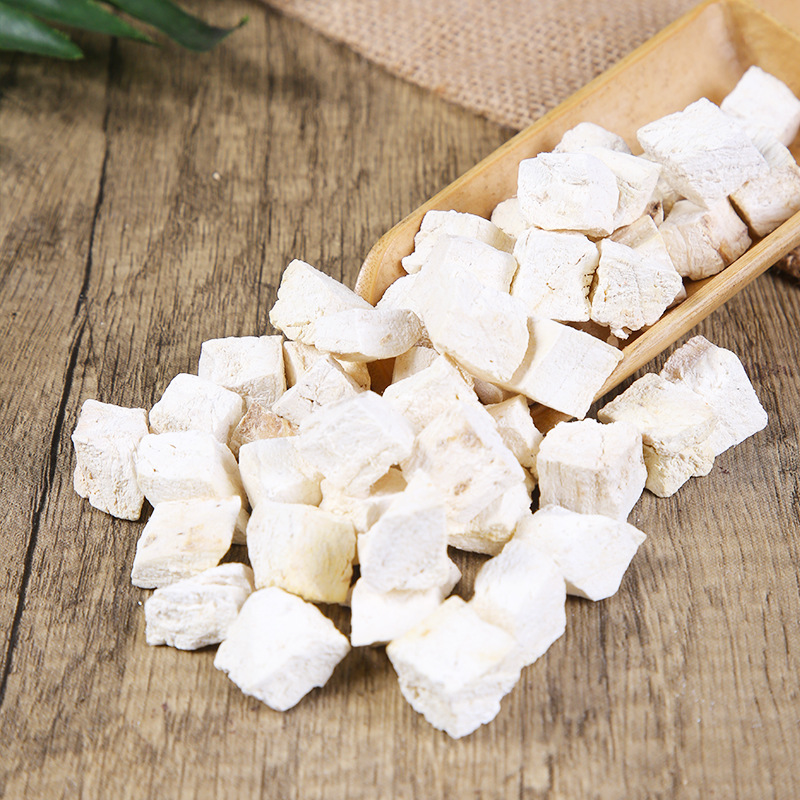
7. Bland flavor: It has the effect of promoting diuresis and draining dampness. It is generally used to treat conditions such as edema and dysuria. For example, Poria, Polyporus, and Medulla Tetrapanacis are all substances that promote diuresis and drain dampness.
Each traditional Chinese medicine possesses the properties of four qi and five flavors, so in practical application, both aspects often need to be comprehensively analyzed and judged. For example, two medicines may both be cold in nature, but based on their different flavors, they can be further categorized as bitter-cold or pungent-cold, and their effects naturally differ. Therefore, the nature and flavor of traditional Chinese medicine should not be considered in isolation.
Knowing the four qi and five flavors of traditional Chinese medicine not only helps to understand the characteristics of individual herbs but also aids in recognizing the commonalities among certain drugs which is of great significance for our study of traditional Chinese medicine