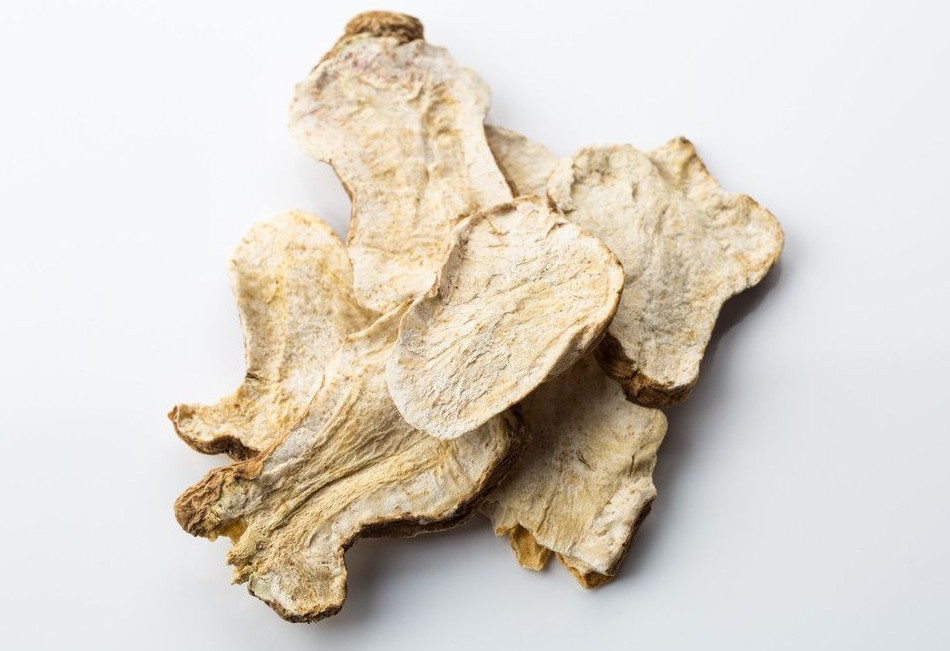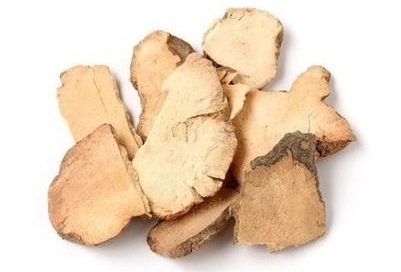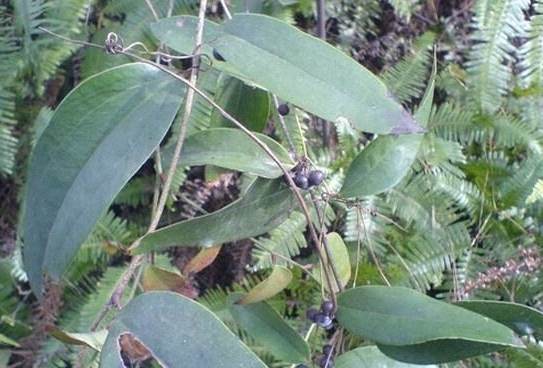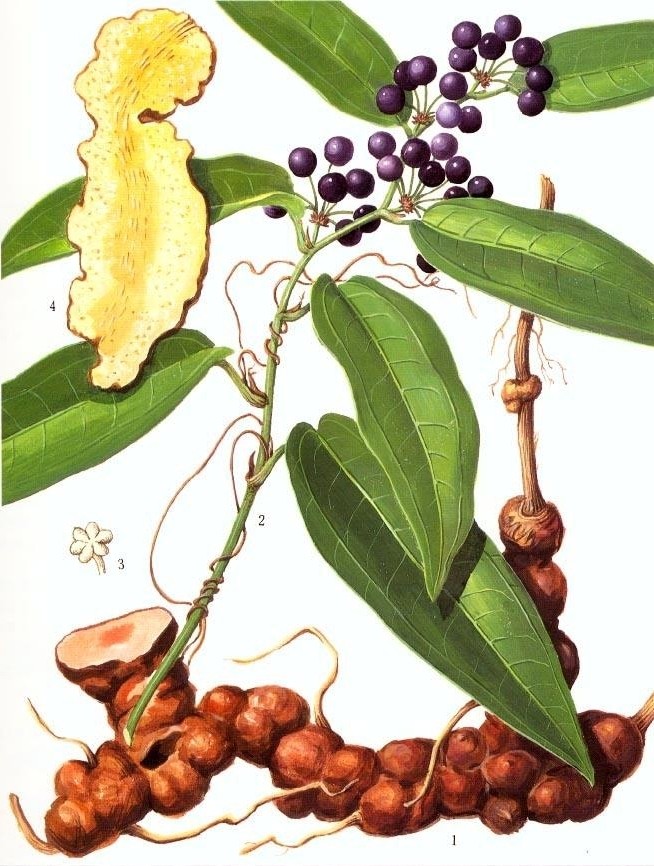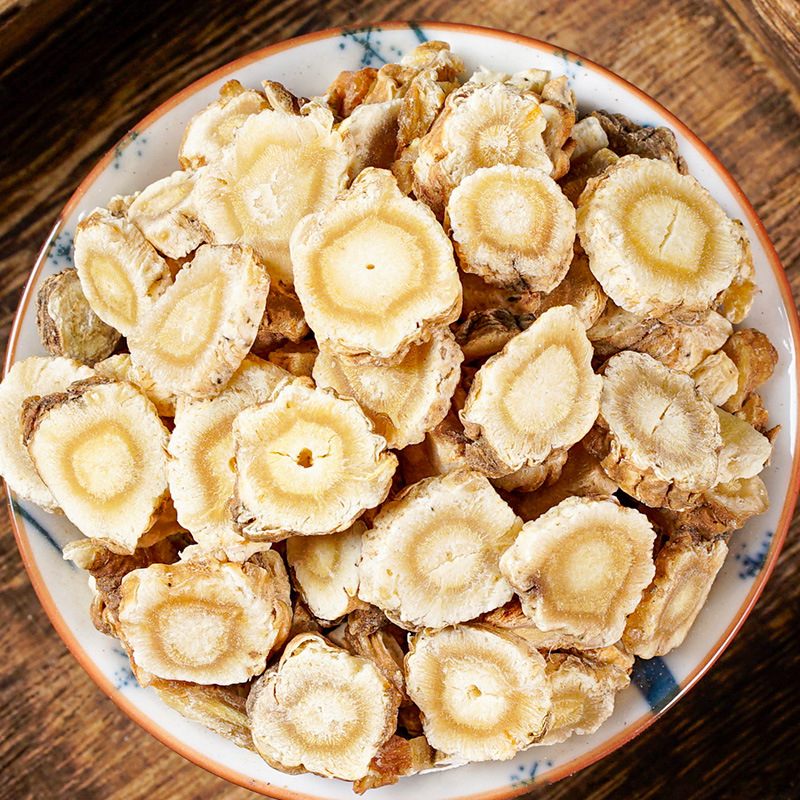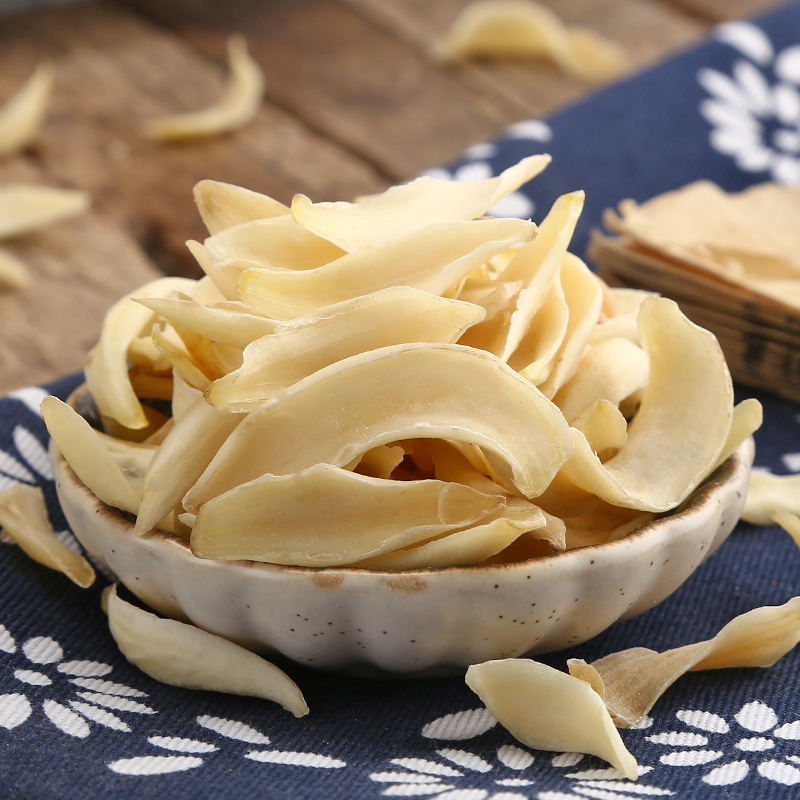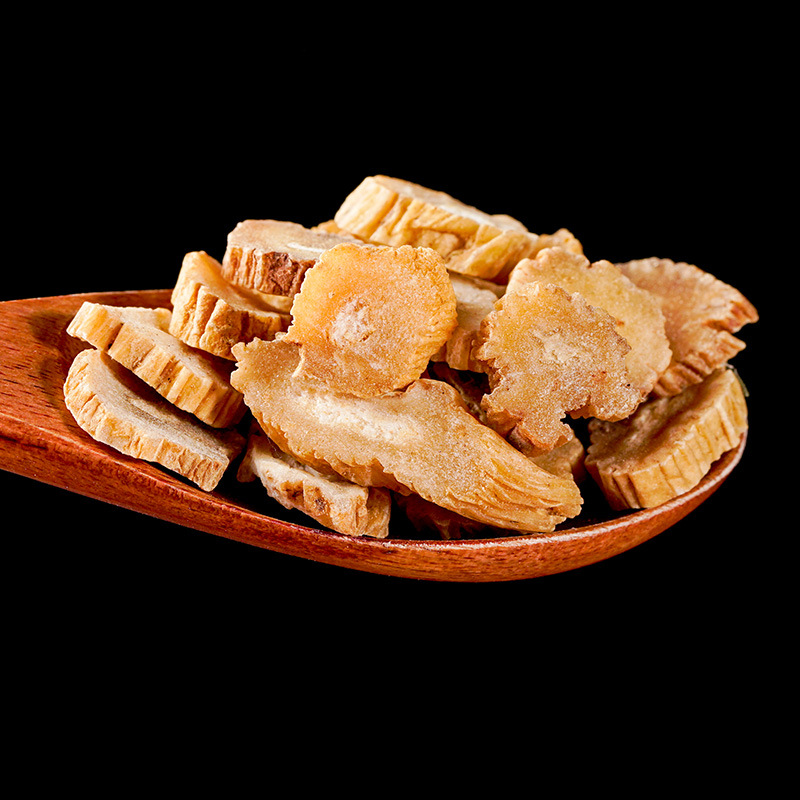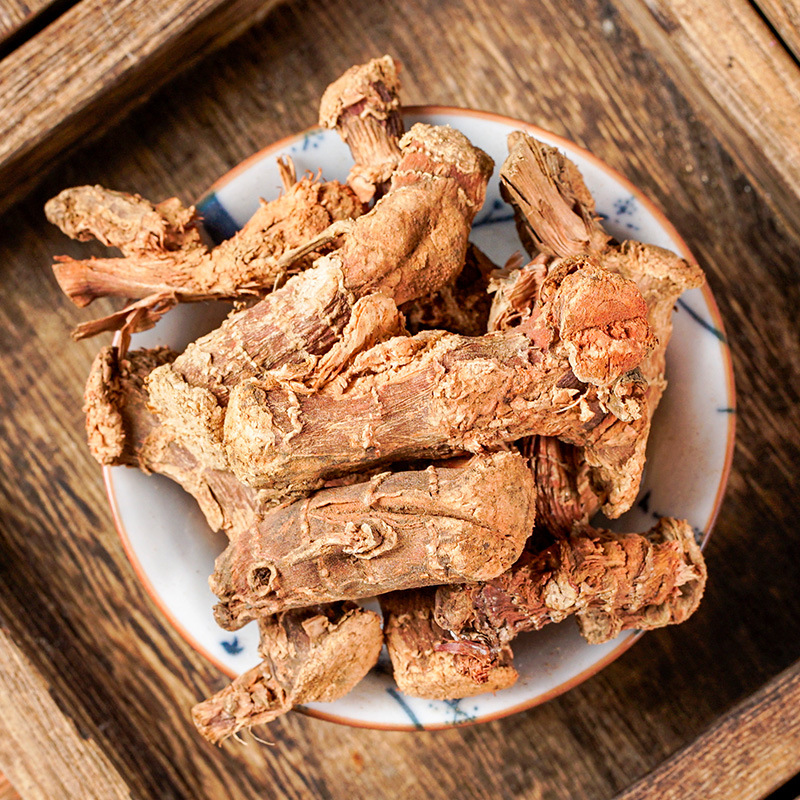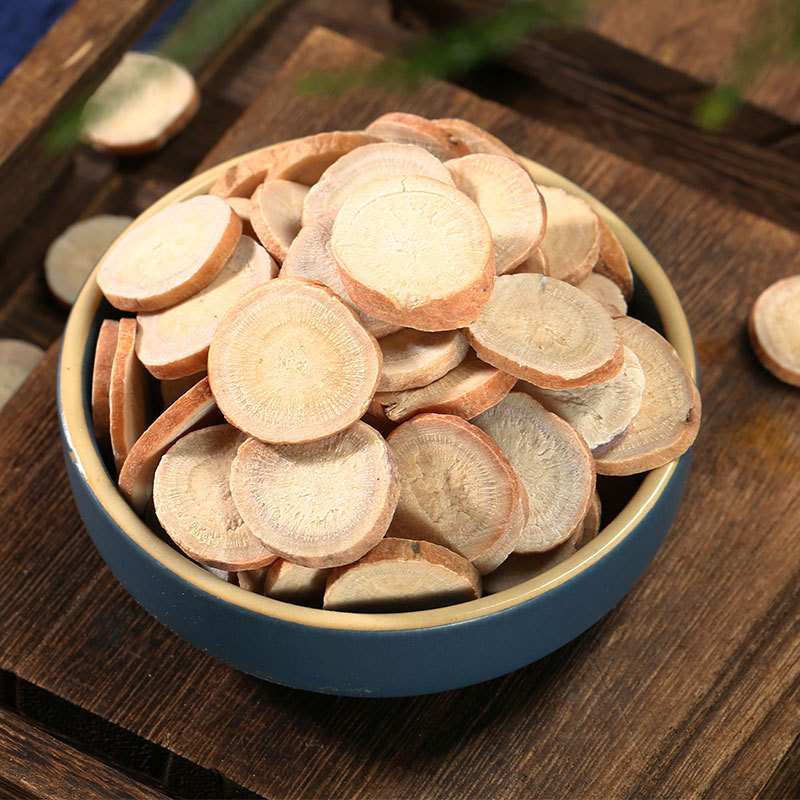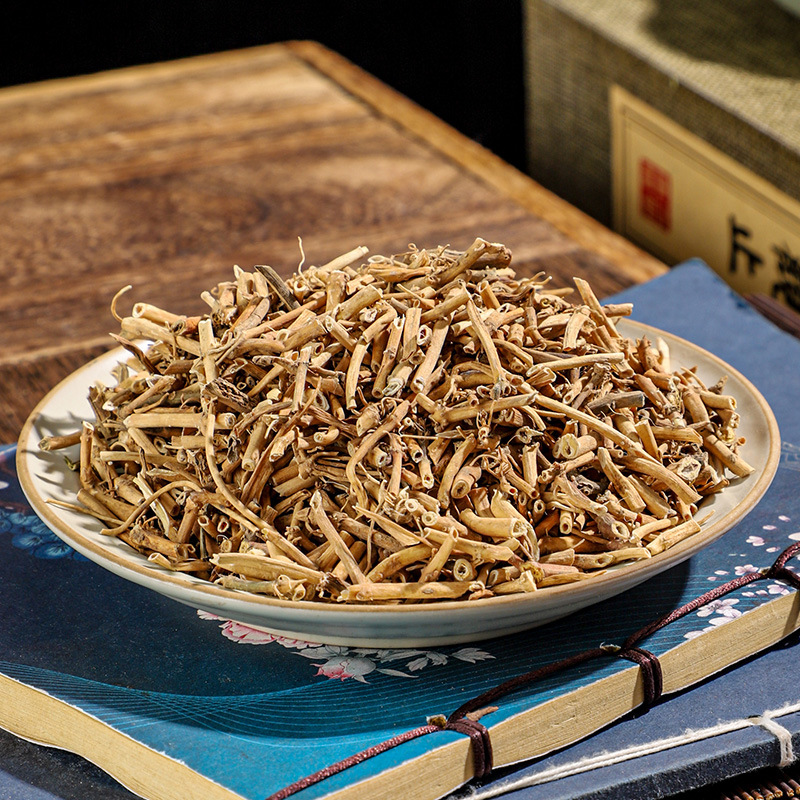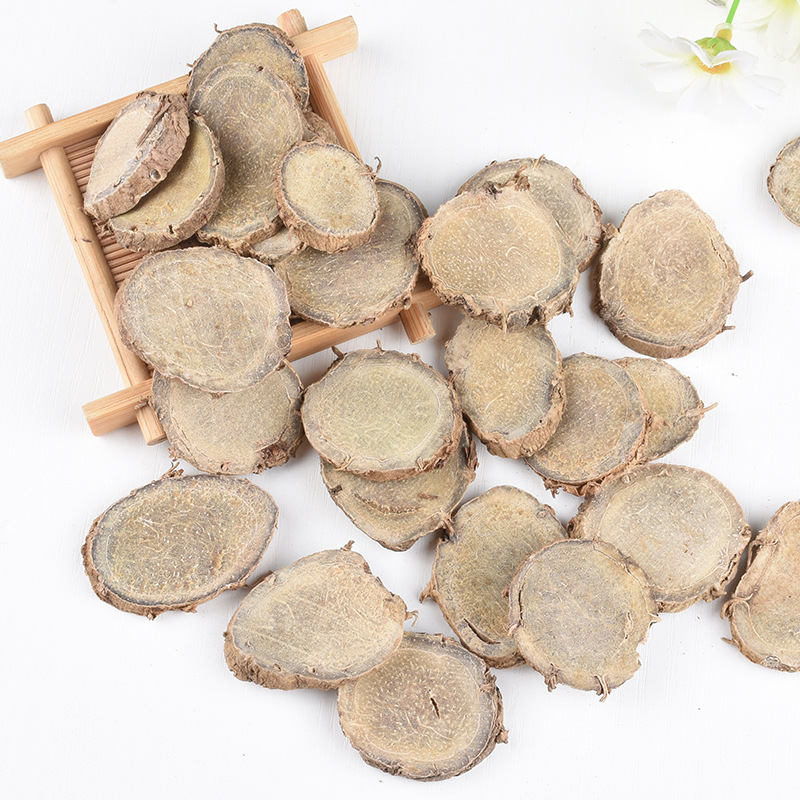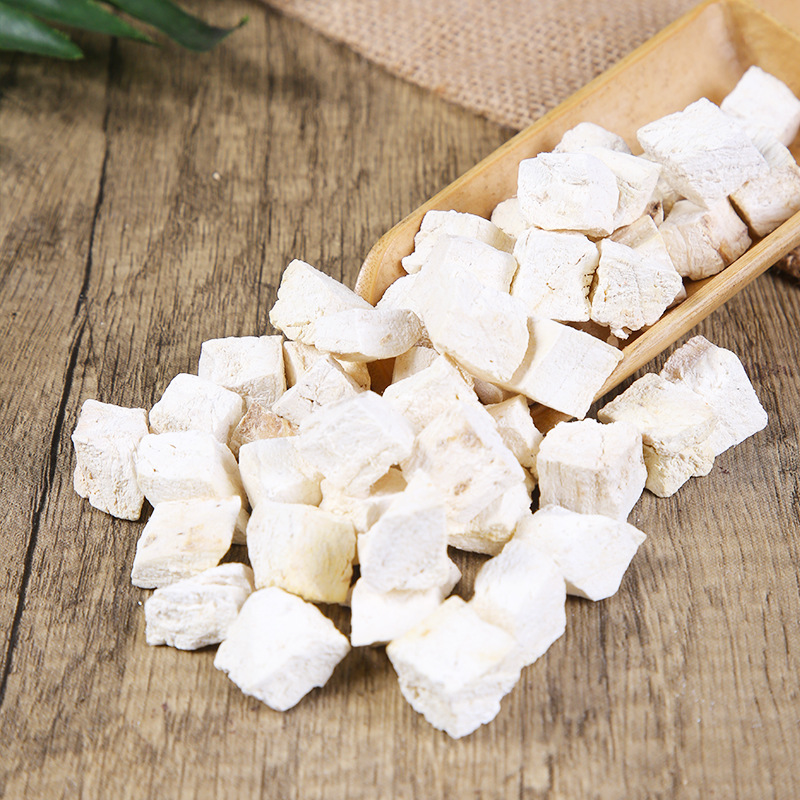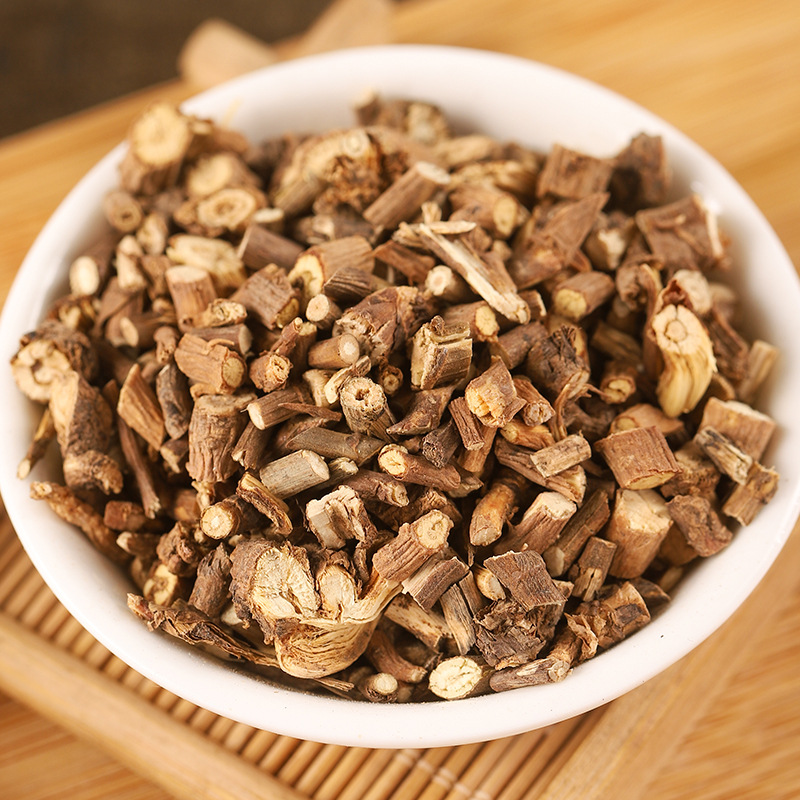
Smilax glabra is the dried rhizome of the plant Smilax glabra in the Liliaceae family. It mostly grows on slopes or under forests, and only its dried rhizome is selected for medicinal use. It is distributed in various provinces in the southern part of the Yangtze River basin. It can be harvested throughout the year, with better quality when collected in late autumn and early winter. After removing residual stems and fibrous roots, it is washed and dried for medicinal use; or it can be sliced thinly when fresh and then dried for medicinal use.
I. Efficacy of Smilax Glabra Rhizome:
Smilax glabra tastes sweet and bland, and is neutral in nature. It belongs to the liver and stomach meridians. Its effects includeDetoxification, elimination of dampness, and promotion of joint mobilityIts characteristic is its efficacy in treating syphilis and mercury poisoning caused by the treatment of syphilis.
Commonly used inSyphilitic and mercury poisoning induced limb contracture, bone and joint pain; damp-heat strangury with turbid discharge, leukorrhea, abscess, scrofula, scabies and tineatreatment of conditions such as
Summary of Famous Works by Renowned Authors:
"Compendium of Materia Medica": "Strengthens the spleen and stomach, fortifies tendons and bones, dispels wind-dampness, benefits the joints, stops diarrhea. Treats muscle spasms and bone pain, malignant sores and abscesses. Neutralizes the toxicity of mercury powder and cinnabar."
Compendium of Materia Medica: "Smilax glabra, promotes diuresis and removes heat, can enter the collaterals, and searches for and eliminates the accumulated toxins of damp-heat. It detoxifies mercury and calomel poison by promoting upward movement and drawing out toxins, while this herb focuses on promoting downward percolation and diuresis. Therefore, it specifically treats syphilitic sores that penetrate deep into the hundred collaterals, causing joint pain and even ulceration, as well as toxic fire ascending to cause throat pain and ulceration, and all other malignant conditions."
"Southern Yunnan Materia Medica": "Treats five types of strangury and leukorrhea, also treats syphilitic sores and erysipelas."
Jade Qiao's Medicinal Explanation: "Tu Fu Ling dries earth and drains dampness, strengthens bones and tendons, stops diarrhea and astringes the intestines, with extremely remarkable effects. It is excellent for treating abscesses, scrofula, and syphilitic sores."
"Compendium of Materia Medica": Sweet, bland, and neutral. A key herb for the Yangming meridian. Strengthens the spleen and stomach, dispels wind-dampness. When the spleen and stomach are strong, the nutritive and defensive qi flow harmoniously; when wind-dampness is eliminated, the sinews and bones become flexible. Promotes urination, stops diarrhea and leakage. Treats sinew and bone spasms, syphilitic sores, scrofula, and abscesses.
II. Compatibility and Application of Smilax Glabra Rhizome:
1. Used for syphilis or limb contracture caused by taking mercury preparations for syphilis. Smilax glabra has the effects of detoxification and benefiting joints, especially effective in treating syphilis and mercury poisoning. It can be decocted in large doses alone, or combined with honeysuckle, dictamnus dasycarpus, licorice, etc., namelyCompound Tufuling Decoction。
If treating syphilis and gonorrhea, it can also be combined with honeysuckle, lacca, madder, loquat leaf, processed aconite, myrobalan, gardenia, frankincense, abutilon seed, safflower, and dianthus, which is a Mongolian medical prescriptionFourteen Ingredient Smilax Glabra Decoction。
Wang Ang said: "Syphilis was not recorded in ancient prescriptions. It emerged in the Lingnan region during the Zhengde period of the Ming Dynasty. Its symptoms are mostly related to the Yangming and Jueyin meridians, but also involve other meridians. This is because the ministerial fire resides in the Jueyin meridian, and the muscles belong to the Yangming meridian. Physicians used calomel as a potent remedy; its nature is dry and intense, entering the Yangming meridian to expel phlegm and saliva through the mouth and teeth, causing the sores to dry up and heal. However, the toxic qi penetrates into the meridians, sinews, and bones, leading to depletion of blood and fluids, loss of nourishment to the sinews, resulting in contractures, abscesses, and fistulas, ultimately causing chronic disability. Smilax glabra can detoxify calomel and remove damp-heat from the Yangming meridian. Use one liang as the sovereign herb, along with five fen each of coix seed, honeysuckle flower, saposhnikovia root, akebia stem, papaya, and dictamnus root bark, and four fen of gleditsia seed. For qi deficiency, add seven fen of ginseng; for blood deficiency, add seven fen of Chinese angelica root. This formula is namedSearch Wind and Detoxify Decoction.
2. For conditions such as fire toxin carbuncles and furuncles, and heat strangury with dark urine and painful urination. Smilax glabra has the effects of detoxifying and eliminating damp-heat. For treating sores and toxins, it is most commonly used together with honeysuckle. For treating heat strangury, it is often combined with Akebia quinata, dandelion, and Polygonum aviculare.
Wang Ang said: "When dampness stagnates and transforms into heat, and the harmony between the nutritive and defensive qi is disrupted, sores and swellings arise. The Classic states: 'Dampness harms the skin, flesh, sinews, and vessels.' Smilax glabra is bland and can drain dampness, sweet and can tonify. For those suffering from suppurative scabies, boiling it into a decoction to drink as tea is highly effective."
3. For headache and gout. Smilax glabra can promote diuresis to drain dampness and clear heat, as well as strengthen the spleen and stomach, and dispel wind-dampness. For treating headache caused by accumulation of dampness-heat, it can be used in large doses in combination with other drugs that dispel wind and unblock collaterals, with significant therapeutic effects.
For the treatment of gout due to damp turbidity and blood stasis, it is often combined with herbs such as Dioscorea hypoglauca, Stephania tetrandra, Clematis chinensis, and Bombyx batryticatus.
III. Usage and Dosage of Smilax Glabra Rhizome:
Poria cocos is often used in decoctions, as well as in pills and powders. The usual dosage in decoctions ranges from over ten grams to several tens of grams.
Compendium of Materia Medica: "There are two types of Smilax glabra, red and white. The white variety is superior for medicinal use."
IV. Application Notes of Smilax Glabra Rhizome:
Use with caution in cases of liver and kidney yin deficiency, avoid tea while taking the medication.
"Compendium of Materia Medica": "Avoid tea when taking it."
Ben Cao Cong Xin: "Do not take if there is deficiency of liver and kidney yin."