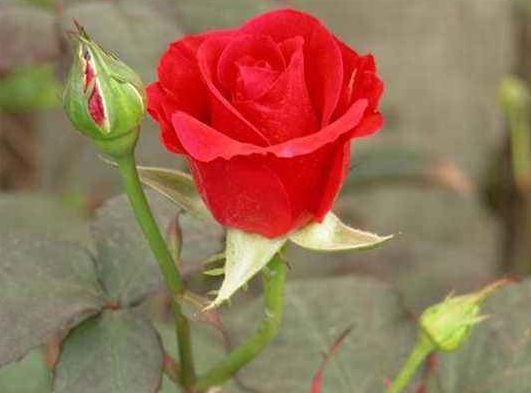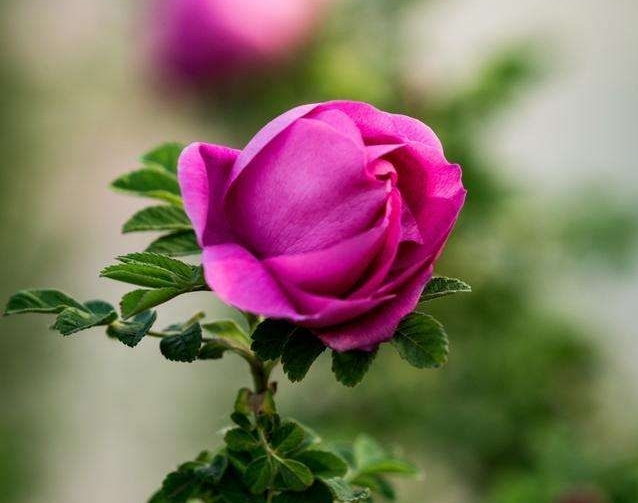
Rose is the flower bud of the plant Rosa rugosa from the Rosaceae family. It symbolizes love and can also regulate the body. It is mainly produced in Jiangsu, Zhejiang, Fujian, Shandong, and other regions. The flower buds are harvested in batches when they are about to bloom, after which the flower stalks and calyxes are removed, and they are dried for medicinal use.
I. Efficacy of Roses:
Rose flower has a sweet and slightly bitter taste, and is warm in nature. It belongs to the liver and spleen meridians. Its effects includePromoting Qi Flow to Relieve Stagnation, Harmonizing Blood and Dissipating StasisIts characteristics are pleasing to the eye and uplifting to the mood, making it suitable for use in floral tea.
Commonly used forLiver and Stomach Qi Pain, Irregular Menstruation, Red and White Vaginal Discharge, Breast Distension and Pain, Dark Spots on the Facetreatment of conditions such as
Summary of Masterpieces by Renowned Authors:
"Compendium of Materia Medica": "The rose has the strongest fragrance, clear but not turbid, harmonious but not fierce. It soothes the liver, awakens the stomach, promotes qi flow and blood circulation, and clears stagnation without any harsh, warm, or drying side effects. It is undoubtedly the most effective and gentle among qi-regulating medicines, unmatched by any other aromatic herbs."
"Investigation of Medicinal Properties": "Promotes blood circulation, breaks up accumulations, treats injuries, and alleviates pain from blood stasis."
Compendium of Materia Medica Supplement: "Harmonizes and activates blood, regulates qi, treats wind impediment, dysentery with inability to eat, breast abscess, early stage of swelling and toxin, liver-stomach qi pain."
Food Materia Medica: "Primarily benefits the lungs and spleen, nourishes the liver and gallbladder, wards off evil qi. Its consumption is fragrant and sweet, refreshing the spirit."
"Suixiju Diet Manual": "Regulates the middle, activates blood circulation, soothes depression, dispels foulness, and harmonizes the liver. Brewing it into wine can dissolve breast lumps."
II. Compatibility and Application of Rose:
1. For disharmony between the liver and stomach, hypochondriac pain and epigastric stuffiness, epigastric distension and pain, etc. Rose flower can promote qi flow to relieve depression, soothe the liver and harmonize the stomach. It is often combined with finger citron, cyperus tuber, and turmeric root tuber.
If treating liver and stomach qi pain, one can also use a single herb of rose flower, brewed as tea for consumption.
2. For liver qi stagnation, irregular menstruation, premenstrual breast distension and pain, mastitis, as well as injuries and blood stasis pain. Rose not only soothes the liver and regulates qi but also harmonizes blood and disperses stasis. For nourishing blood and regulating menstruation, it is often combined with Angelica sinensis, Lycopus lucidus, Ligusticum chuanxiong, and Paeonia lactiflora. It is also frequently included in formulas such as Siwu Tang and Xiaoyao San to enhance efficacy.
For the initial stage of mastitis accompanied by liver depression, rose flowers can be used alone, decocted with yellow wine for oral administration. Alternatively, it can be combined with cloves and decocted with yellow wine for oral administration. Both are proven formulas and worth learning.
If treating injury and stasis pain, it can be combined with Spatholobus suberectus, Corydalis yanhusuo, and red peony root.
If treating new or chronic wind impediment, it can be combined with safflower and whole Chinese angelica, decocted in water to remove the dregs, and taken with yellow wine.
3. For removing facial spots. Rose flowers can soothe the liver and regulate qi, harmonize blood and regulate menstruation, thus having the effect of removing facial spots. For those with facial spots accompanied by liver depression and qi stagnation, especially middle-aged women, drinking rose tea can regulate mood and improve complexion.
If there is liver stagnation and blood deficiency, with severe facial spots, or accompanied by irregular menstruation, dysmenorrhea, or poor menstrual flow due to blood stasis, a large dose of rose can be combined with blood-activating and menstruation-regulating herbs such as Chinese angelica, Szechuan lovage root, white peony root, nutgrass flatsedge rhizome, safflower, and peach kernel to achieve good results. It can also be combined with formulas such as Siwu Tang, Sini San, Xiaoyao San, and Wenjing Tang to jointly achieve the effects of soothing the liver, relieving depression, activating blood circulation, and regulating menstruation, which is indeed an excellent method.
III. Usage and Dosage of Rose Flowers:
Rose is often used in decoctions and is also suitable for making herbal tea. The typical dosage in decoctions ranges from a few grams to over ten grams, and it can be increased to several tens of grams if it serves as the main ingredient in a formula. For tea infusions, a few grams or several petals per serving is sufficient, with the key being to create a sense of ritual.
When using roses for medicinal purposes, those with compact and small buds are of superior quality. If the flowers have already bloomed, their essence dissipates, leading to reduced efficacy.
IV Application Precautions of Rose
Roses can soothe the liver and regulate menstruation, thereforeThose with weak constitution and excessive menstrual flow should use with caution; pregnant women are prohibited from using。