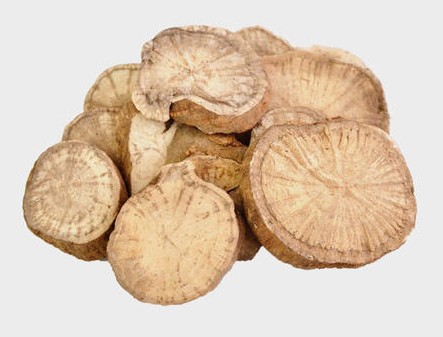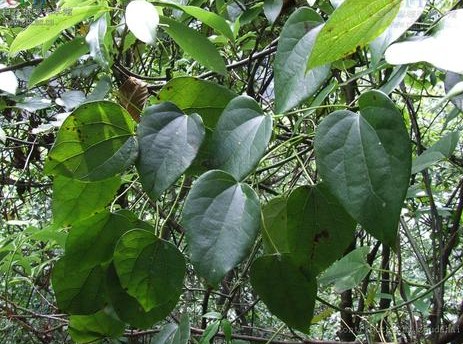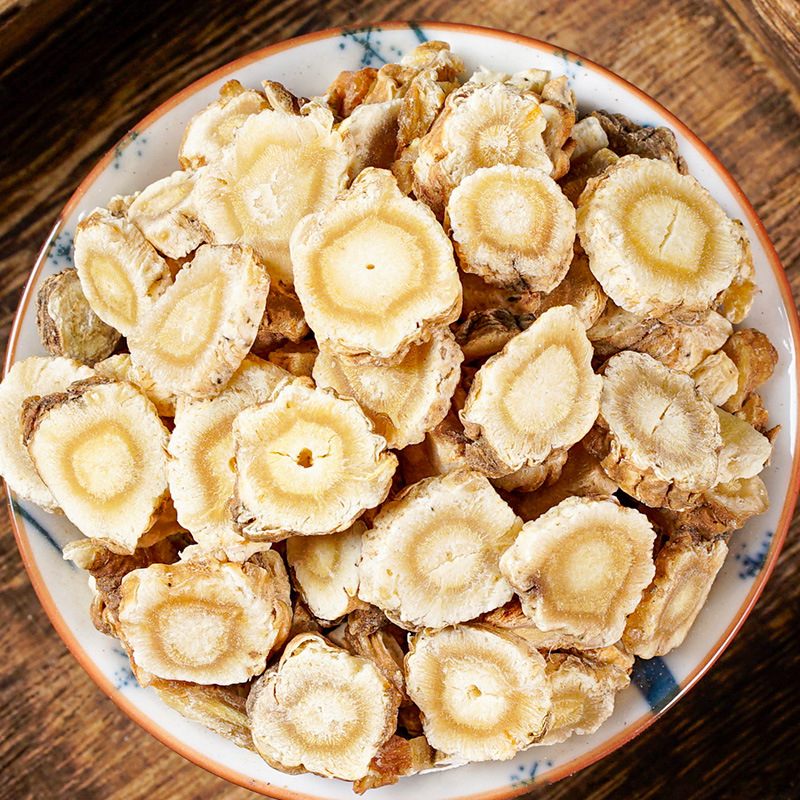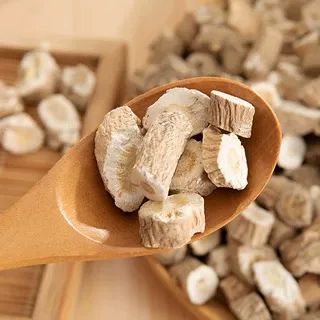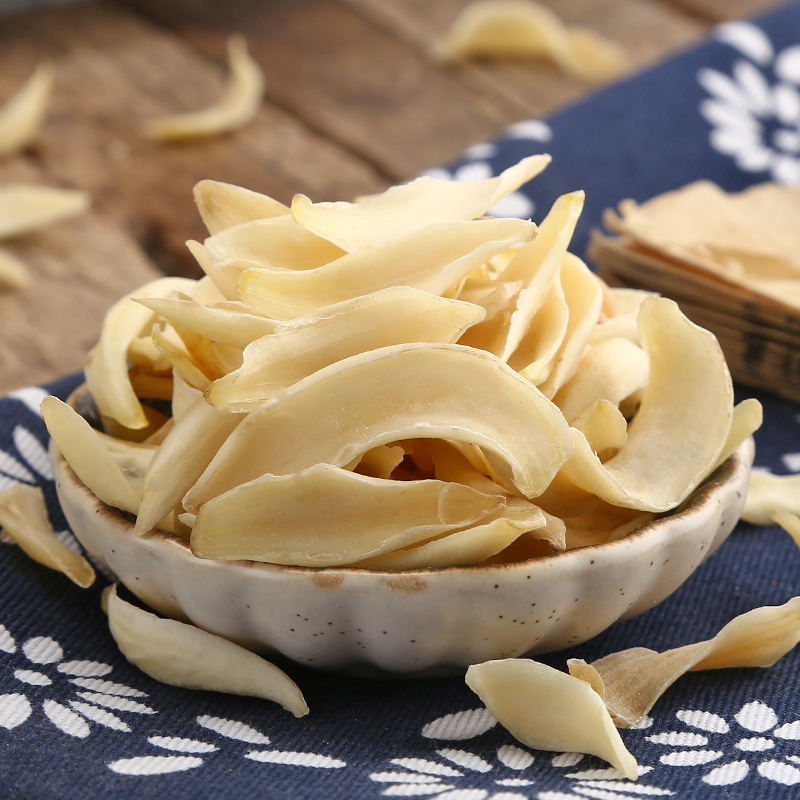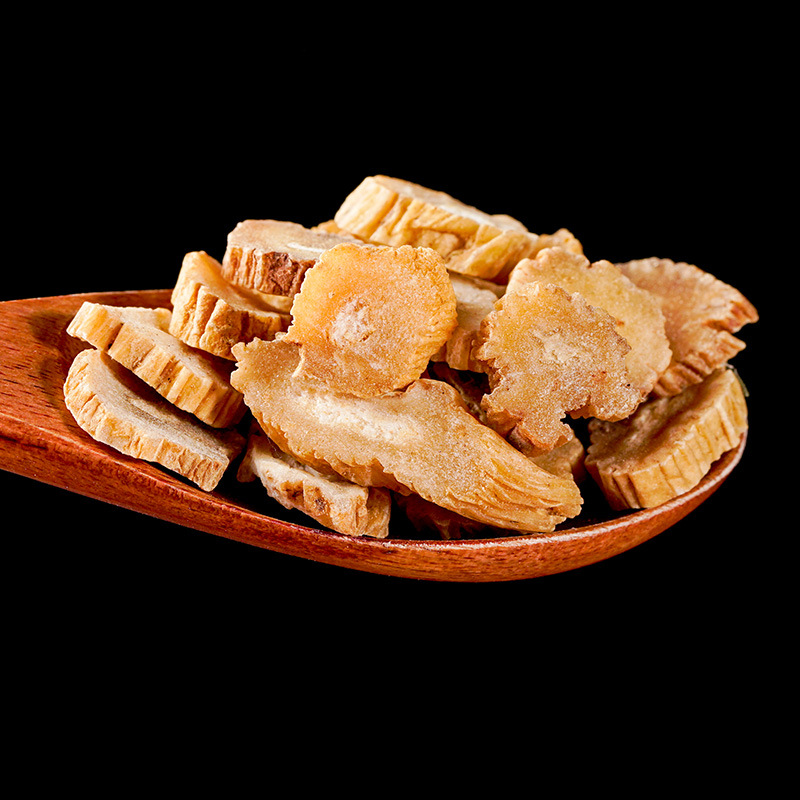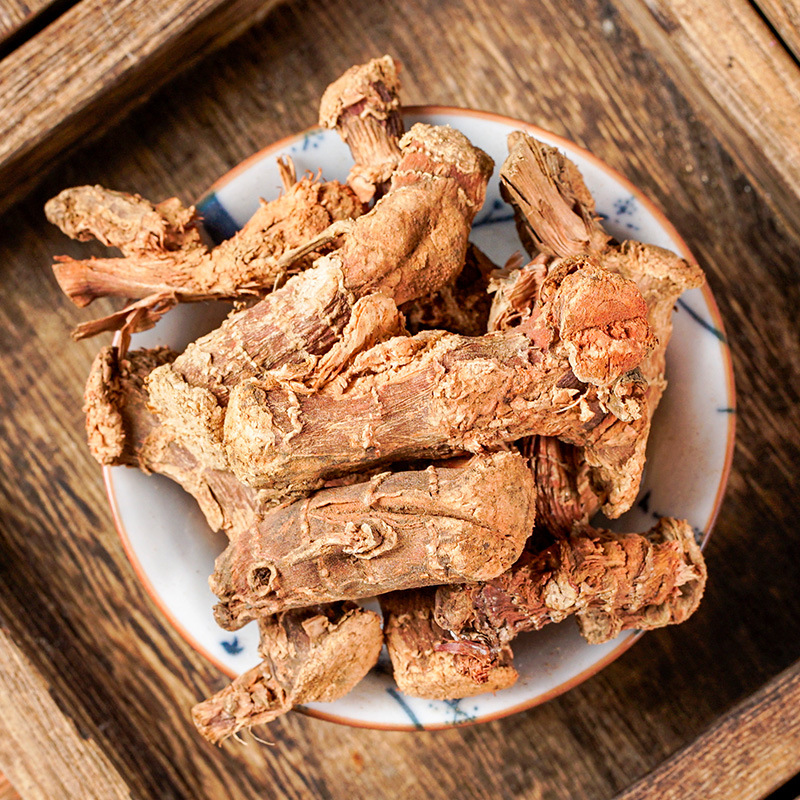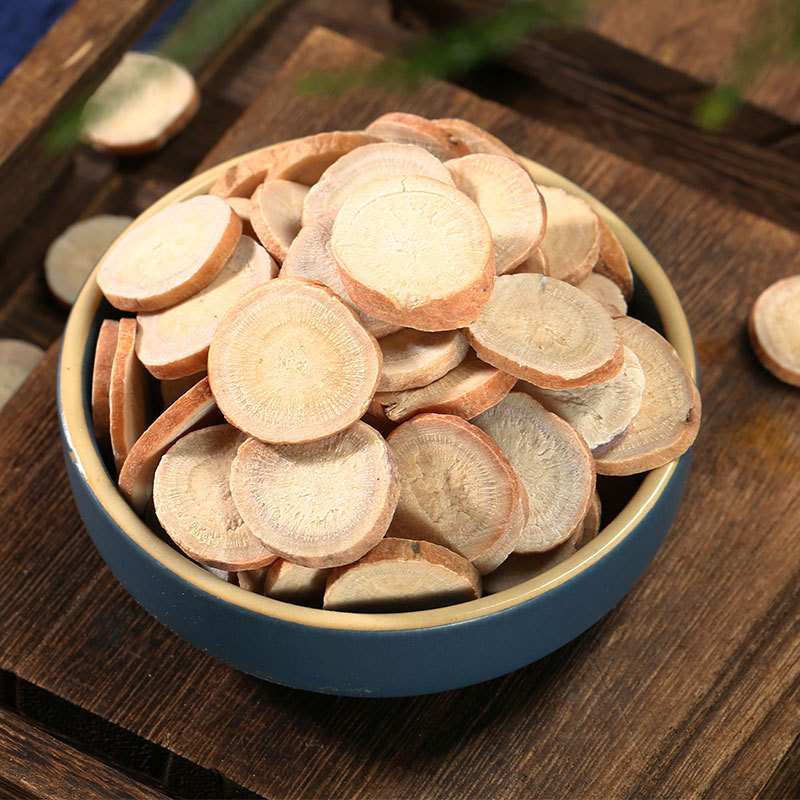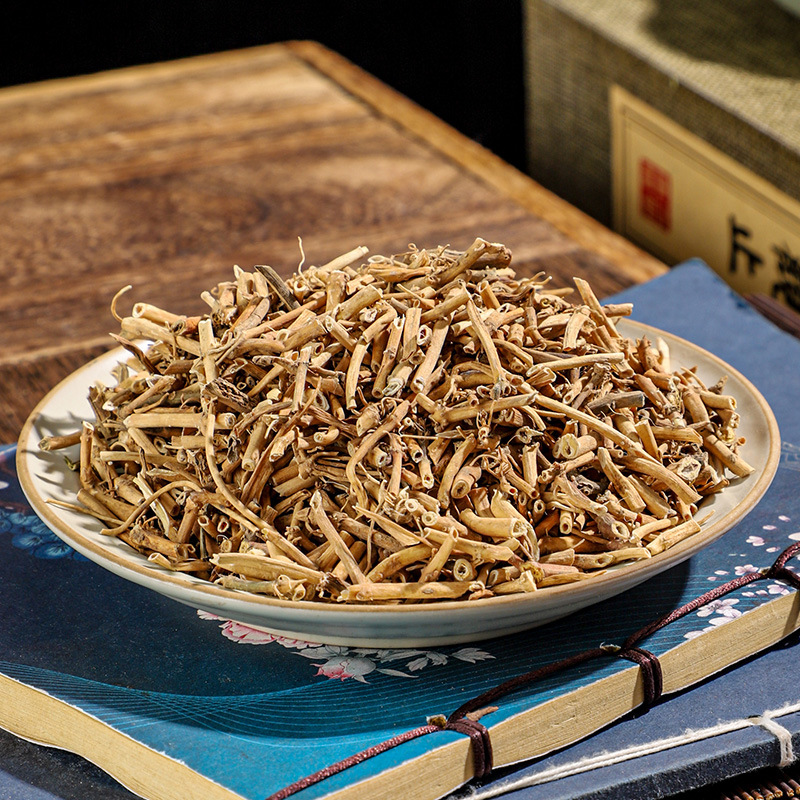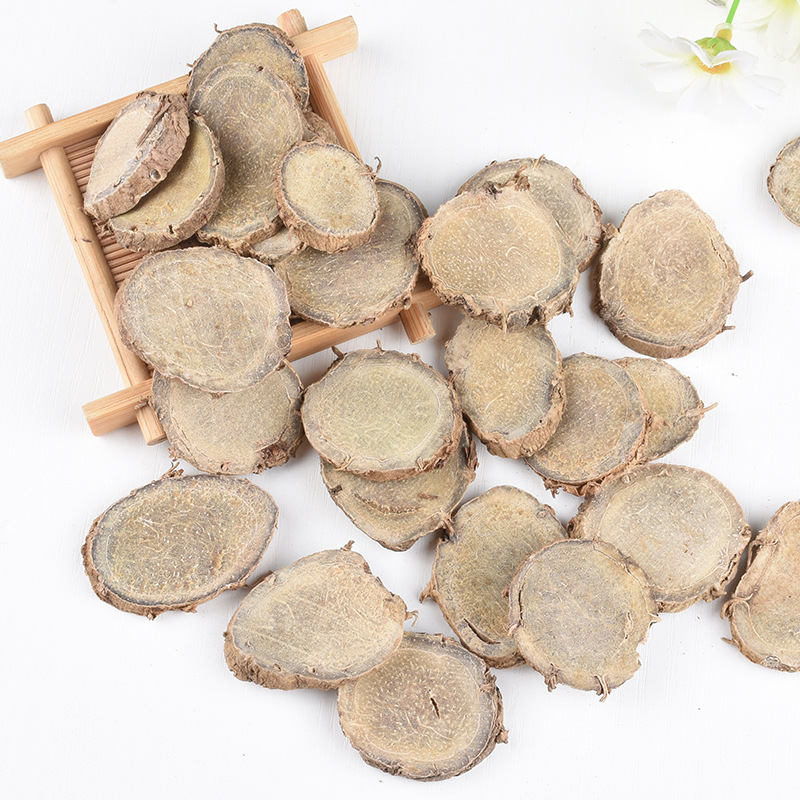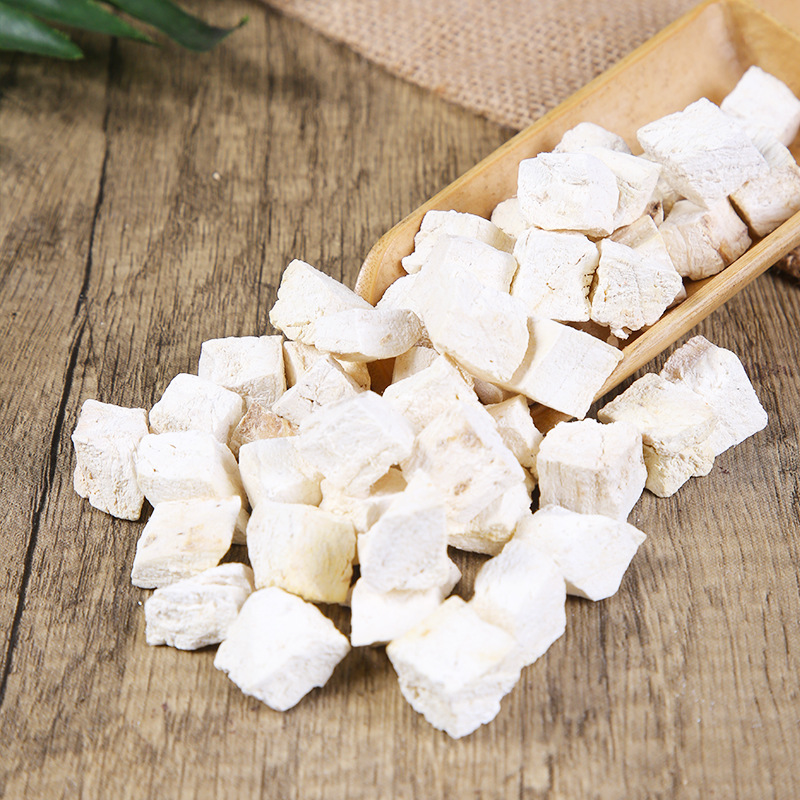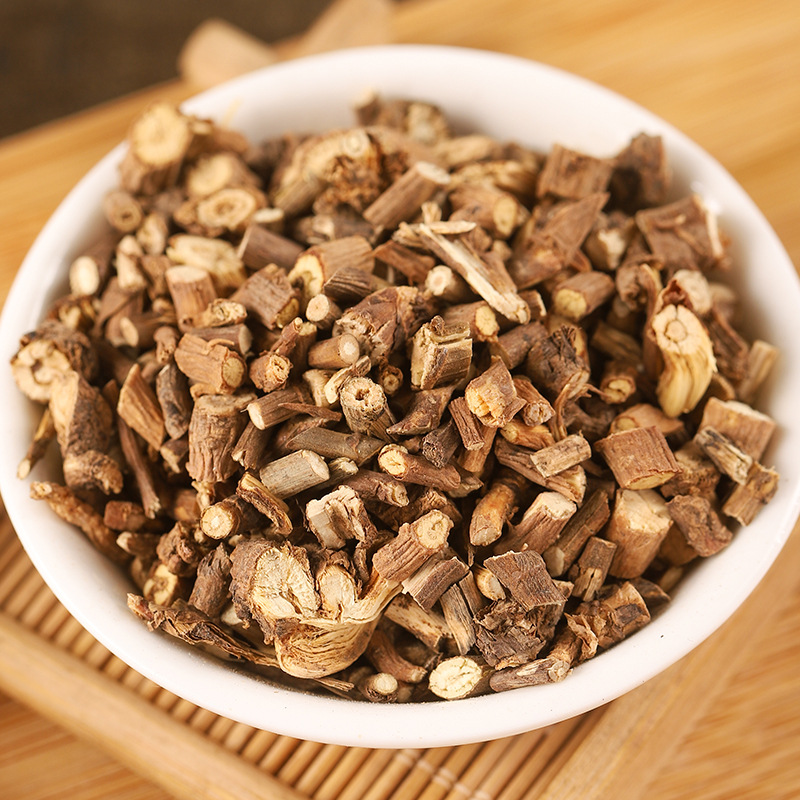
Fangji is the root of the woody vine Stephania tetrandra of the Menispermaceae family or the herbaceous plant Aristolochia fangchi of the Aristolochiaceae family. Stephania tetrandra is also known as Hanfangji, while Aristolochia fangchi is also called Mufangji. Due to the potential for kidney damage with large or long-term use of Mufangji, it is now prohibited. Today, Fangji refers exclusively to Hanfangji, but it is essential to distinguish between genuine and counterfeit products to avoid adverse consequences from mistakenly using Mufangji. Hanfangji is primarily produced in Zhejiang, Anhui, Jiangxi, Hubei, and other regions. It is harvested in autumn, processed, sliced, and used raw.
I. Efficacy of Fangji:
Fangji tastes bitter, pungent, and cold. It belongs to the bladder, kidney, and spleen meridians. Its effects includeDispelling wind to relieve pain, promoting diuresis to reduce swellingIts characteristic of being cold in nature can clear heat, making it more suitable for treating rheumatic heat arthralgia syndrome.
Commonly used inRheumatic pain and numbness, edema and beriberi, difficulty in urination, eczema and sorestreatment of conditions such as
Summary of Masterpieces by Renowned Authors:
Bie Lu: "Treats cold damage with alternating chills and fever, pathogenic factors, wind stroke with spasms and rigidity of the hands and feet, opens the interstices, benefits the nine orifices, stops diarrhea, disperses abscesses and swellings, malignant accumulations, various scabies, ringworm, insect sores."
Compendium of Materia Medica: "For wind-dampness in the middle, with muteness and contracture, deviation of the mouth and eyes, it drains damp-heat from the blood."
Ben Cao Shi Yi: Han Fangji is used for water qi, Mu Fangji is used for wind qi, promoting circulation and unblocking.
Ben Cao Qiu Zhen: "Fangji, bitter, acrid, and extremely cold in nature, with a risky and robust character, excels at moving downward, skilled in dispelling dampness, unblocking orifices, and promoting the flow of pathways. It can purge damp-heat from the lower jiao blood aspect and is an essential medicine for treating wind-water disorders."
Changsha Materia Medica: "Han Fangji (Stephania tetrandra) expels dampness from the meridians and collaterals, while Mu Fangji (Aristolochia fangchi) expels water pathogens from the viscera and bowels. For conditions such as internal retention of phlegm and fluid, external stagnation of dampness pathogens, dark and yellow skin, heat and obstruction in the bladder, spasms and contractures of the hands and feet, and swelling and pain in the joints, Fangji is entirely suitable."
"Compendium of Materia Medica": "It can travel through the twelve meridians, open the interstices, benefit the nine orifices, and purge damp-heat from the lower jiao blood aspect, making it a crucial herb for treating wind-water disorders. It treats lung qi wheezing and cough, various heat-induced epilepsy, warm malaria, beriberi, edema, wind-swelling, abscesses, and malignant sores. If damp-heat flows into the twelve meridians, causing obstruction of the two yin orifices, this herb is indispensable."
Li Dongyuan said: "Fangji is extremely bitter and cold, capable of draining damp-heat from the blood, unblocking stagnation, and eliminating accumulated heat in the bladder. For damp-heat obstruction in the twelve meridians and downward pouring foot qi, this medicine is indispensable. It is truly an immortal medicine for moving through the meridians, with no substitute."
II. Compatibility and Application of Fangji:
1. For rheumatic arthralgia. Fangji is effective in dispelling wind-dampness and relieving pain. Due to its cold nature, it is more suitable for heat-bi syndrome, but it can also be applied to cold-bi syndrome with proper compatibility. For rheumatic arthralgia with predominant damp-heat, soreness and heaviness of limbs, redness, swelling, and pain in joints, as well as damp-heat body pain, it is often combined with Talcum, Coix Seed, Silkworm Feces, and Gardenia, namelyXuanbi Decoction。
If treating wind-cold-damp impediment with spasms of the four limbs, it is often combined with Ephedra, Cinnamon, and Poria, namelyFangji Decoction。
2. For conditions such as edema and ascites, which are related to water and qi disorders. Stephania root can promote diuresis and reduce swelling, while also clearing damp-heat in the lower jiao. To treat the accumulation of fluid in the epigastrium and abdomen, with audible sounds in the intestines, abdominal fullness, constipation, and difficulty urinating, it is often combined with Zanthoxylum seeds, Lepidium seeds, and rhubarb, namelyJijiao Lihuang Pill。
Huang Yuanyu said, "When water accumulates in the intestines, it obstructs the middle qi, preventing its ascent and descent, thus causing abdominal fullness. Fangji and Jiaomu drain dampness and promote water movement, while Tingli and Dahuang dredge the flow and break up stagnation."
If treating wind edema or wind-dampness syndrome due to exterior deficiency and insecurity, it is often combined with Astragalus, Atractylodes, and Licorice, namelyFangji Huangqi DecoctionThis formula is now commonly used to treat chronic glomerulonephritis, cardiogenic edema, rheumatic arthritis, and other conditions characterized by wind-water or wind-dampness accompanied by exterior deficiency.
If treating skin edema as a disease, with swelling of the four limbs, water qi in the skin, and trembling of the four limbs, it is often combined with Poria, Astragalus, Cinnamon Twig, Licorice, etc., namelyFangji Fuling Decoction。
The above three prescriptions are all from the Synopsis of the Golden Chamber, with Stephania tetrandra as the main ingredient. They have been widely used in later generations, showing significant therapeutic effects and are worthy of study.
3. For cold-damp beriberi with edema. Fangji can dispel wind-dampness and also reduce edema, making it particularly effective for treating beriberi with edema. It is often combined with herbs such as Mugua, Niuxi, Guizhi, and Zhiqiao.
If treating beriberi with swelling and pain in the lower legs, heaviness, and numbness, it is often combined with medicinal herbs such as Evodia rutaecarpa, Areca catechu, and Chaenomeles speciosa.
Wang Ang said: "Foot cold-dampness is known as beriberi. Cold-dampness stagnates and transforms into heat; dampness causes swelling, while heat causes pain. Stephania root is the primary herb. For dampness, add coix seed, atractylodes, chaenomeles, and akebia; for heat, add scutellaria and phellodendron; for wind, add notopterygium and dioscorea; for phlegm, add bamboo sap and arisaema; for pain, add cyperus and aucklandia; for promoting blood circulation, add the Four Substances Decoction; for constipation, add peach kernel and safflower; for difficulty in urination, add achyranthes and alisma; for pain extending to the arm, add cinnamon twig and clematis; for pain extending to the ribs, add gentian."
III. Usage and Dosage of Fangji:
Stephania tetrandra is often used in decoctions and rarely in pills or powders. The usual dosage in decoctions ranges from a few grams to over ten grams.
Wang Ang said: "It comes from Hanzhong. The root is large and hollow, with patterned core, yellow in color, named Han Fangji. Those with black spots, yellow and fishy, and hard wood are named Mu Fangji, which are not good."
IV. Application Notes for Fangji:
Fangji is quite bitter and cold, and should not be taken in large doses to avoid damaging stomach qi, soContraindicated for those with spleen and stomach deficiency cold, yin deficiency, and absence of damp-heat。
When applying, it is necessary to distinguish whether it is Han Fangji, as Mu Fangji is cheaper and is often used as a substitute for Han Fangji, which must be carefully observed.
Wang Ang said, "It is risky and potent in nature, and is contraindicated for those with yin deficiency and damp-heat in the upper jiao's qi aspect."