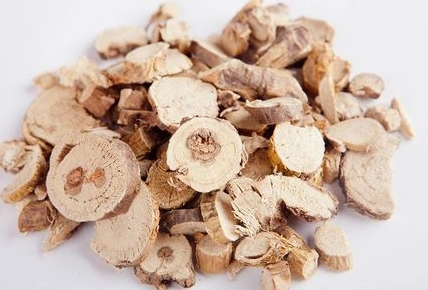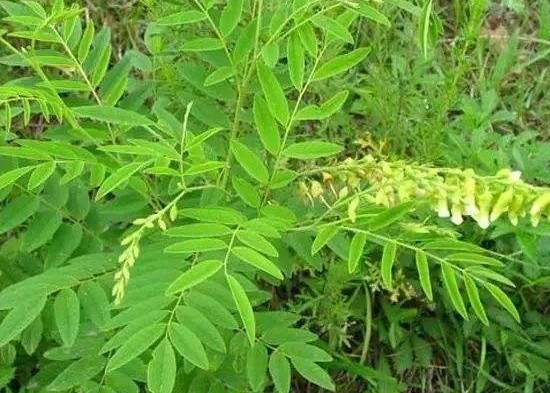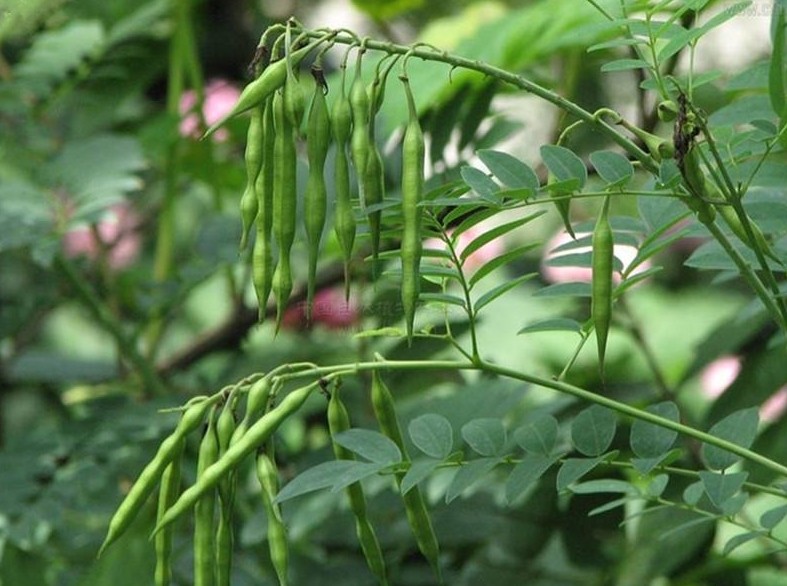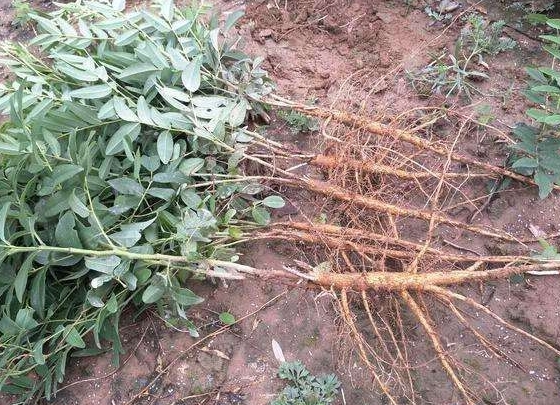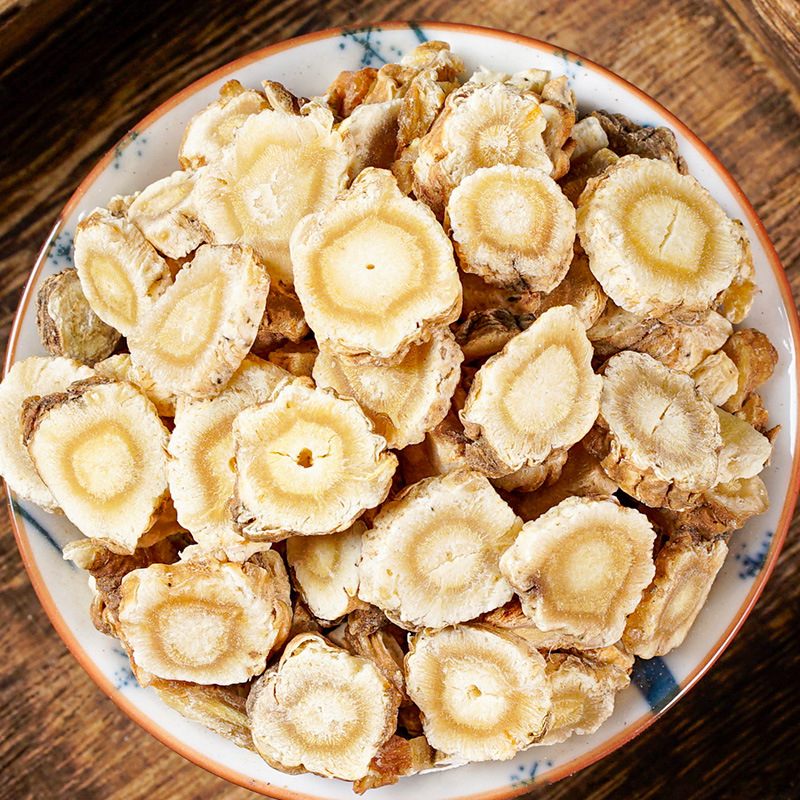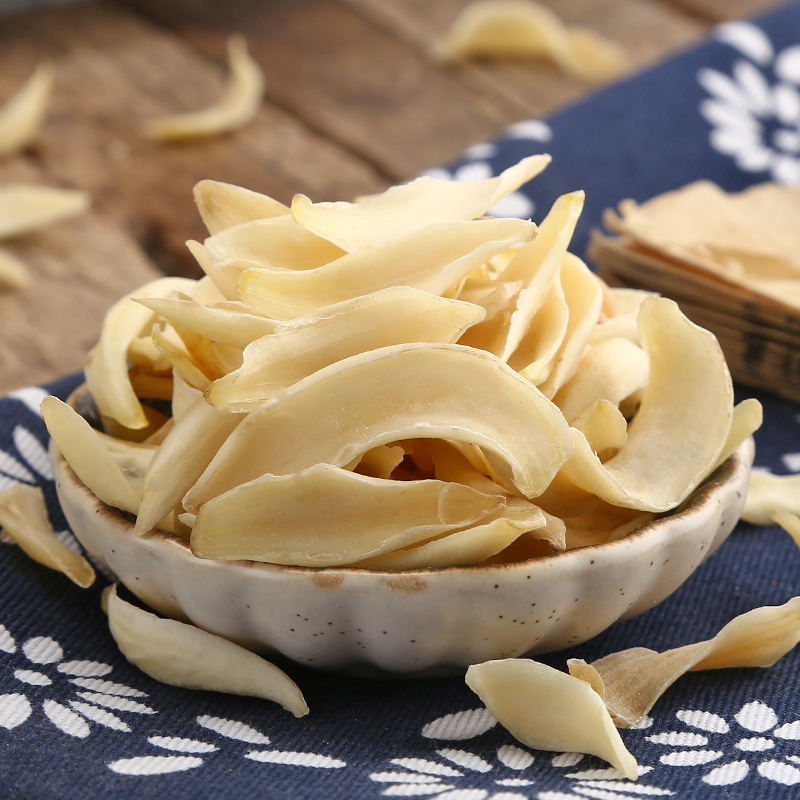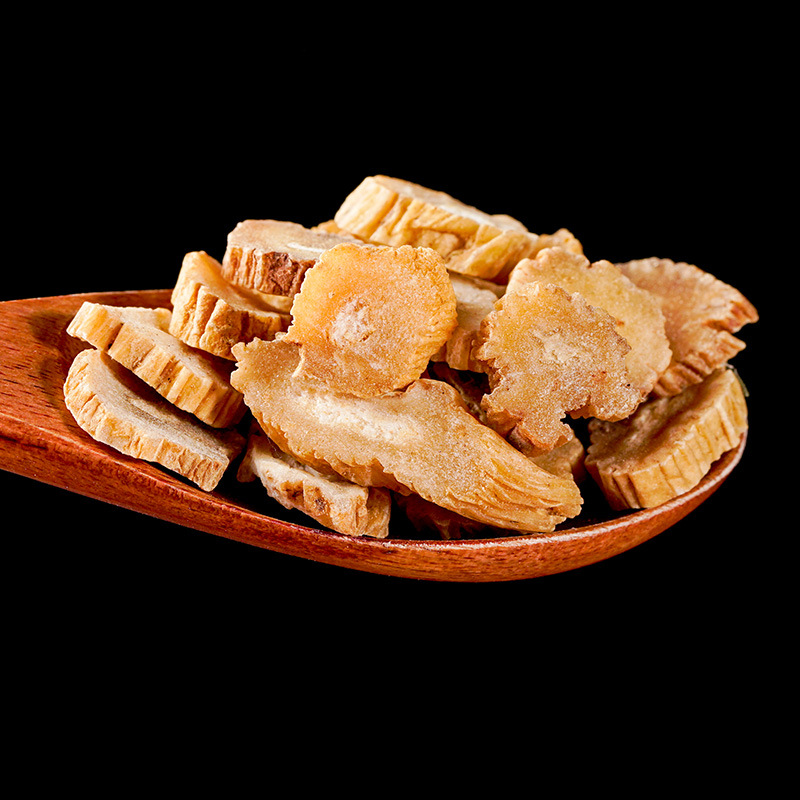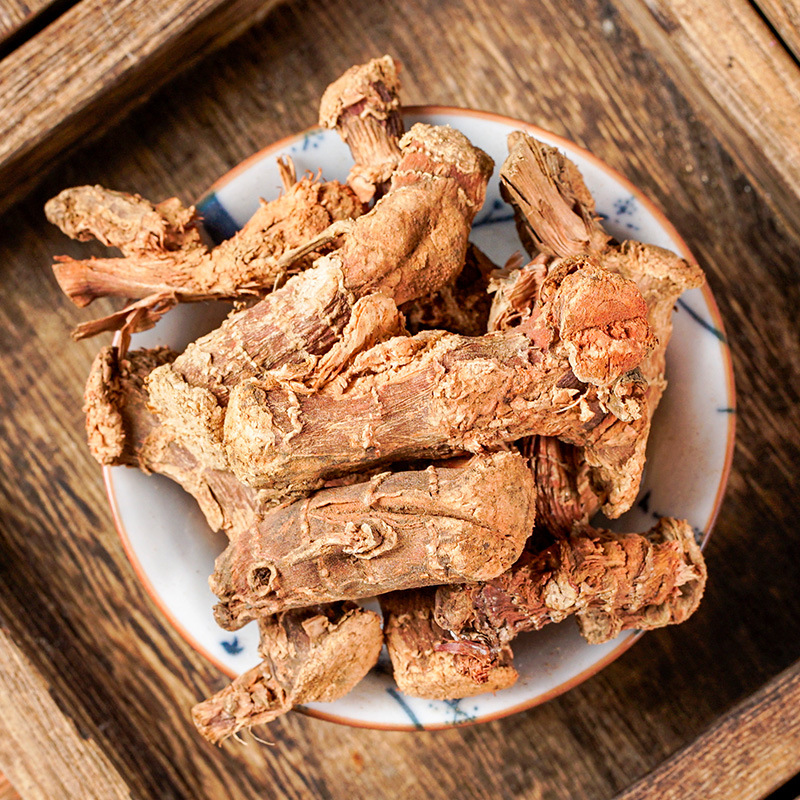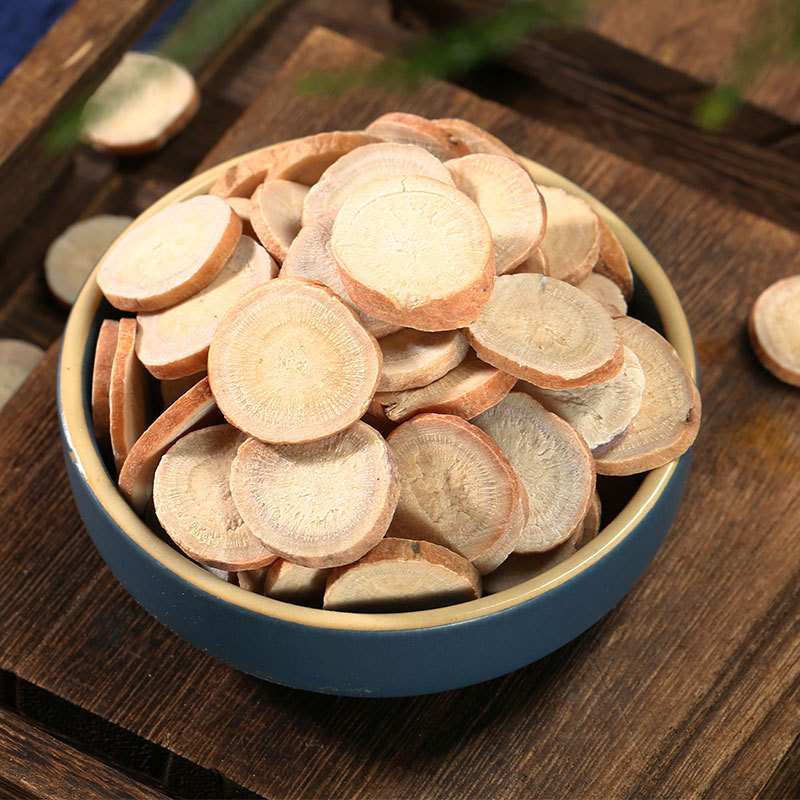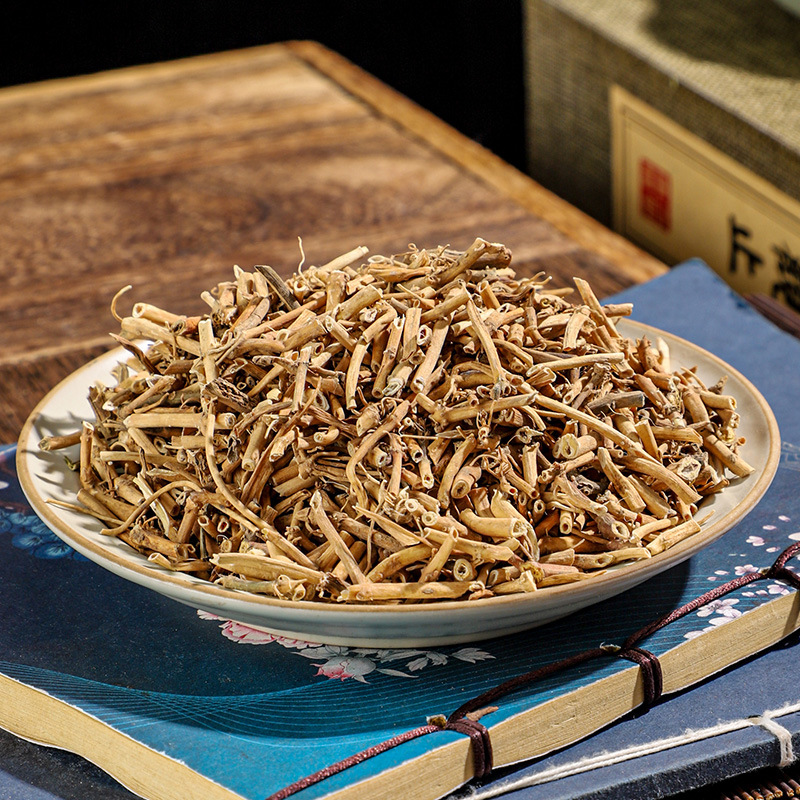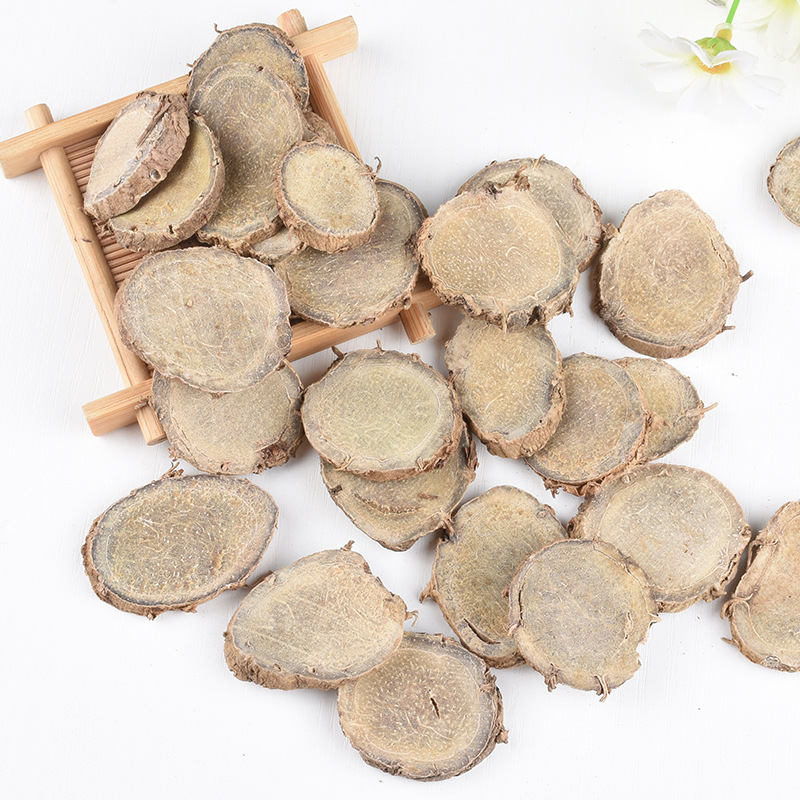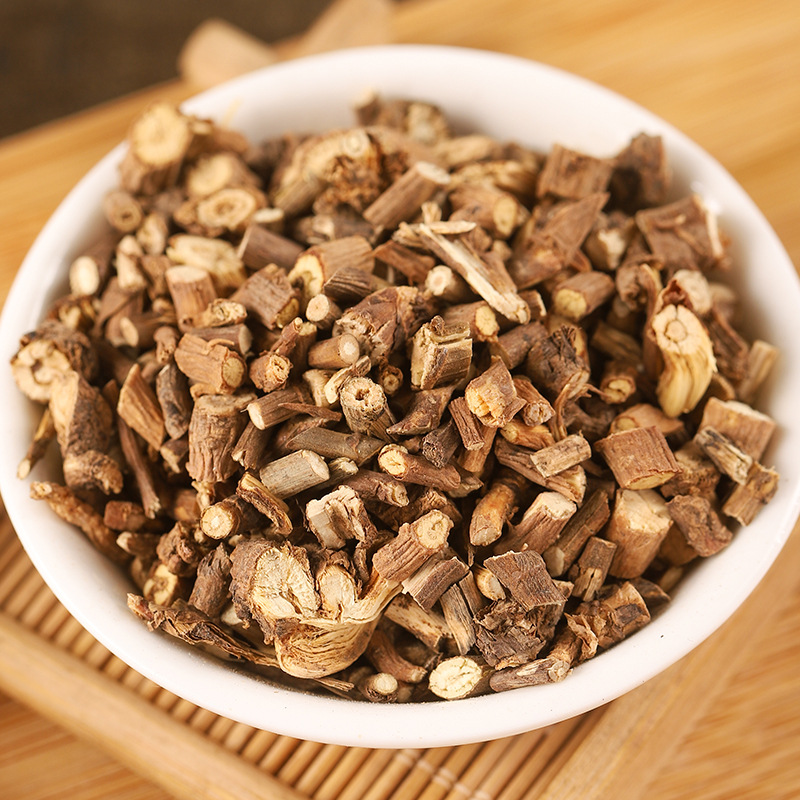
Sophora flavescens is the dried root of the plant Sophora flavescens from the legume family. Its shape resembles ginseng, and its taste is extremely bitter, hence the name. Its seeds are the Chinese medicinal herb Brucea javanica. It is produced throughout the country. It is often harvested in spring and autumn, sliced, dried, and used raw.
I. Efficacy of Sophora Flavescens:
Sophora flavescens tastes bitter and is cold in nature. It enters the heart, liver, stomach, large intestine, and bladder meridians. Its effects includeClearing heat and drying dampness, killing parasites and promoting urinationIts characteristic is an extremely bitter taste, making it difficult to swallow.
Commonly used inHeat dysentery, hematochezia, jaundice with urinary retention, red and white vaginal discharge, swelling and itching of the vulva, eczema, damp sores, skin itching, scabies and leprosyIt is used for the treatment of conditions such as etc; externally, it can treat trichomonal vaginitis.
Abstracts of Famous Works by Renowned Authors:
Ben Jing: "It governs binding qi in the heart and abdomen, concretions, conglomerations, accumulations, and gatherings, jaundice, dribbling urinary block, expels water, and eliminates welling-abscesses and swellings."
Bie Lu: "It eliminates hidden heat and intestinal dysentery, quenches thirst and sobers up from alcohol, treats yellow and red urine, and heals malignant sores and lower body ulcers."
"Treating heat-toxin wind, skin and muscles vexed and agitated engendering sores, red lai with eyebrow loss, mainly eliminates great heat with somnolence, treats cold pain in the abdomen, abdominal pain due to central malignity, eliminates bodily oppression, treats accumulations and gatherings in the heart and abdomen."
Changsha Materia Medica: "Sophora flavescens clears heat and eliminates dampness, treats sores and kills parasites. Its various therapeutic effects include treating nasal congestion, stopping toothache, reducing abscesses and swelling, eliminating scabies and leprosy, calming scrofula, regulating hemorrhoids and fistulas, and treating jaundice, dysentery, gingival bleeding, and hematochezia."
"Compendium of Materia Medica": "Bitter to dry dampness, cold to overcome heat. Sinking yin governs the kidneys. Nourishes yin and benefits essence, nourishes the liver and gallbladder, calms the five organs, benefits the nine orifices, promotes fluid production and quenches thirst, brightens the eyes and stops tears. Treats warm disease with bloody dysentery, intestinal wind and red urine, jaundice and alcohol toxicity. Heat generates wind, dampness generates parasites; it can also dispel wind, expel water, and kill parasites, treating large intestine scabies and leprosy."
II. Compatibility and Application of Sophora Flavescens:
1. Used for damp-heat jaundice, diarrhea, dysentery, leukorrhea, vaginal itching, and other syndromes. Sophora flavescens is particularly effective in clearing heat, drying dampness, and detoxifying. For treating damp-heat jaundice, it is often combined with Gardenia jasminoides, Gentiana scabra, and other herbs.
If treating damp-heat dysentery, it can be used alone or combined with Aucklandia root and licorice root, namelyXiang Shen Wan。
If treating yellow, thick, and sticky leukorrhea or itching in the genital area, it can be decocted alone for fumigation and washing, or combined with herbs such as Phellodendron chinense, Angelica dahurica, and Cnidium monnieri.
For treating external genital itching and dampness, one can also combine Sophora flavescens with Phellodendron chinense, Arnebia euchroma, Angelica dahurica, Cnidium monnieri, Clematis chinensis, Alum, Zanthoxylum bungeanum, Saposhnikovia divaricata, fresh Artemisia argyi leaves, and Realgar, decoct them into a medicinal soup for fumigation and washing, which can serve as a reference.
In recent years, there have also been processed products primarily composed of Sophora flavescens, such as Sophora flavescens suppositories, which can treat various vaginal inflammations with excellent efficacy.
2. For conditions such as skin dampness and itching, impetigo, scabies, and tinea. Sophora flavescens can dispel wind and relieve itching, and kill parasites. It can be decocted for oral administration or used externally. For treating skin itching and impetigo, it is often decocted into a decoction for external washing. For treating scabies and tinea, it is often combined with alum and sulfur to make ointments for external use.
For treating eczema, it is often combined with Cortex Dictamni, Radix Cynanchi Paniculati, Radix Arnebiae seu Lithospermi, Cortex Moutan, Periostracum Cicadae, Cortex Phellodendri, Rhizoma Smilacis Glabrae, Radix Glycyrrhizae, and other herbs. If itching is severe, Caulis Polygoni Multiflori can be added. If there is excessive exudate, even with yellow fluid, Rhizoma Atractylodis, Rhizoma Atractylodis Macrocephalae, and Semen Coicis can be added. If spleen function is impaired, Fructus Crataegi, Fructus Aurantii, and Semen Arecae can be added. If triggered by consuming fish, shrimp, or seafood, Folium Perillae and Rhizoma Phragmitis can be added. If there is no exudate but dryness, Radix Rehmanniae can be added. For external washing with decoction, Radix Sophorae Flavescentis can be combined with Cortex Dictamni, Herba Portulacae, Radix Cynanchi Paniculati, Fructus Cnidii, Herba Schizonepetae, and Radix Saposhnikoviae, often achieving good results.
If treating sores on the head and face, acne, and eczema with itching caused by blood dryness and damp-heat, it is often used in combination with Angelica sinensis, namelyDanggui Kushen Wan。
In the "Synopsis of the Golden Chamber," it is recorded that for treating fox-like sores eroding the lower part of the body, using a decoction of Sophora flavescens for fumigation and washing can serve as a reference.
Huang Yuanyu said, "The liver governs the tendons, and the anterior yin is the gathering place of the ancestral tendons. When earth is damp and wood sinks, stagnation transforms into heat, giving rise to parasitic sores that erode the anterior yin. Sophora flavescens clears heat and dispels dampness, heals sores, and kills parasites."
3. For conditions such as damp-heat accumulation, dysuria, burning and painful urination, etc. Sophora flavescens has a significant effect of clearing heat and promoting diuresis. It can be used alone or combined with heat-clearing and strangury-relieving herbs such as dandelion and pyrrosia leaf.
If treating pregnancy with difficult urination and normal diet, it is often combined with Angelica sinensis and Fritillaria, namelyAngelica Fritillaria Sophora Pill。
Huang Yuanyu said, "Due to dampness in the earth and stagnation of wood, heat is generated through depression, which fails to drain water. The heat then transfers to the bladder, leading to difficulty in urination. Sophora flavescens clears damp-heat and relieves urinary obstruction."
4. Other Compatibility Applications.
For insomnia caused by liver depression transforming into fire or excessive heart fire, Sophora flavescens can be combined with Coptis chinensis, Poria cocos, and licorice to reduce fire, relieve restlessness, calm the heart, and tranquilize the mind.
If treating chyluria and strangury with milky urine caused by deficiency of both the spleen and kidney, combining Sophora flavescens with Euryale ferox, Rosa laevigata, Acorus tatarinowii, Dioscorea hypoglauca, Alpinia oxyphylla, Dioscorea opposita, Rehmannia glutinosa, and Dioscorea opposita often yields good results.
Recent studies have found that Sophora flavescens is also effective against various types of tachyarrhythmias, with effects including reducing myocardial contractility, slowing heart rate, delaying atrial conduction, and decreasing automaticity.
III. Usage and Dosage of Sophora Flavescens:
Kushen is often used in decoctions, can also be made into pills or powders, and is frequently applied externally. The typical dosage in decoctions ranges from a few grams to over ten grams; for external use, apply an appropriate amount.
IV Application Precautions of Sophora Flavescens
Kushen has a bitter taste that is hard to swallow, and its bitter-cold nature can damage the middle jiao, thereforeContraindicated for those with spleen and stomach deficiency cold and weak constitution。
"Compendium of Materia Medica": "Previous scholars claimed that Sophora flavescens tonifies the kidney and nourishes yin, which is a grave misconception. This herb has a bitter taste and a pungent odor, making it a yin-drying substance that is foul and difficult to consume. It is only suitable for those with excessive kidney qi and damp-heat; it is not appropriate for those with deficient fire and cold essence, insufficient primordial yang, or the elderly with weak stomach qi and deficient energy. Moreover, prolonged use can lead to heaviness in the waist, as it primarily descends without ascending, thereby harming the kidney. How can it possibly have the effect of tonifying the kidney and nourishing yin?"
Wang Ang said, "It is extremely bitter and cold, and should not be taken by those with deficiency of the liver and kidney and without heat."
Zhang Congzheng said, "All medicines are toxic. Even bitter ginseng and licorice cannot be said to be non-toxic. Prolonged use will inevitably lead to an imbalance and cause harm."
In addition, there has been a long-standing claim that Sophora flavescens is incompatible with Veratrum nigrum, but this cannot be verified and is provided for reference only.