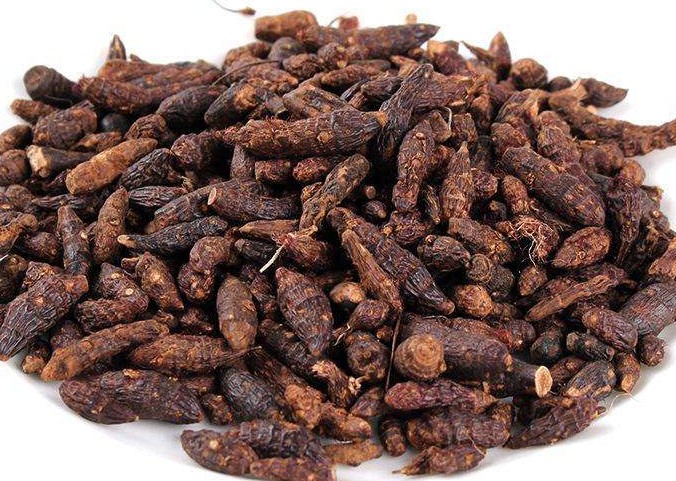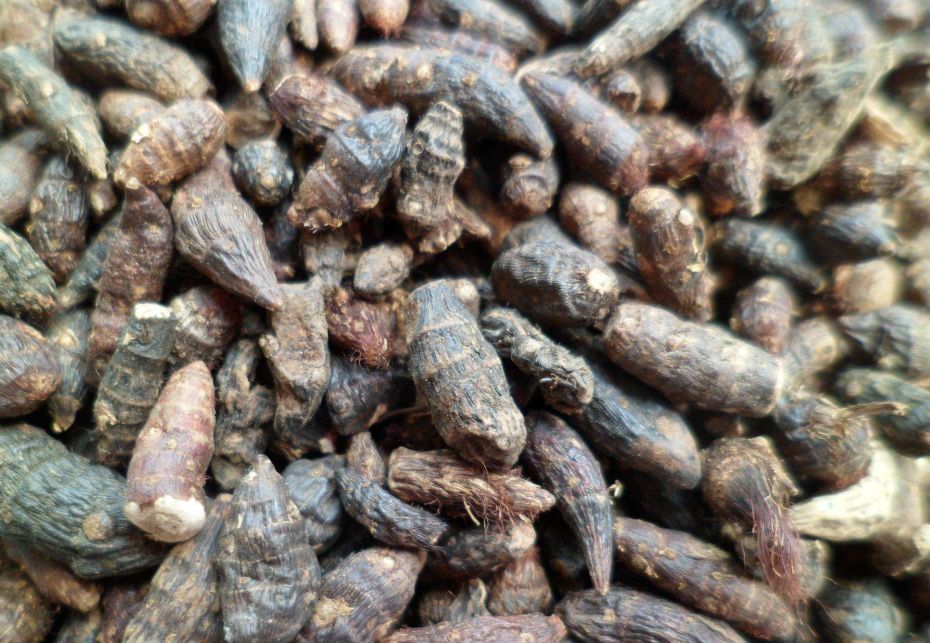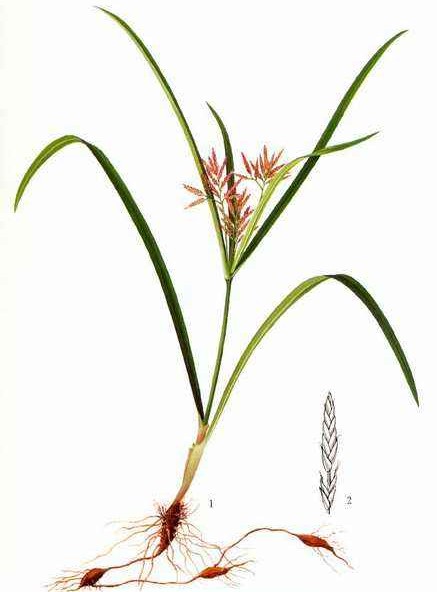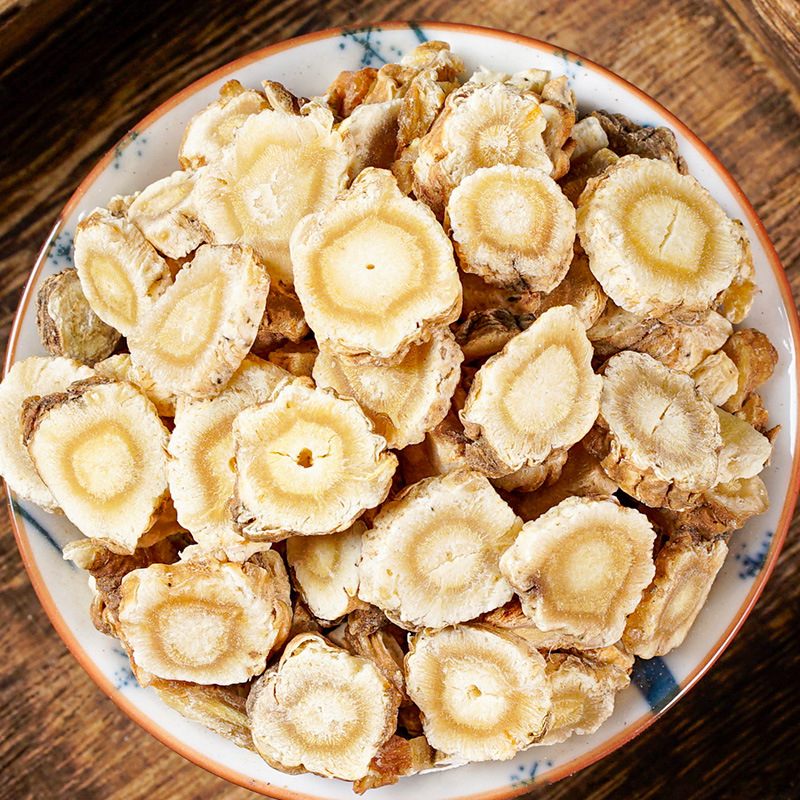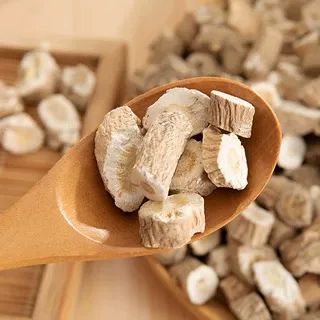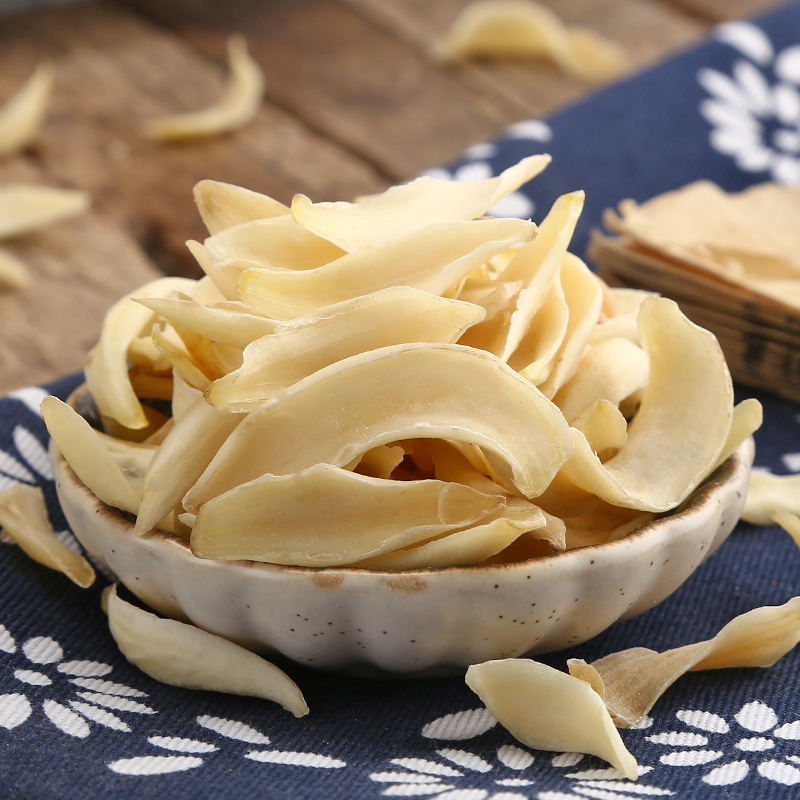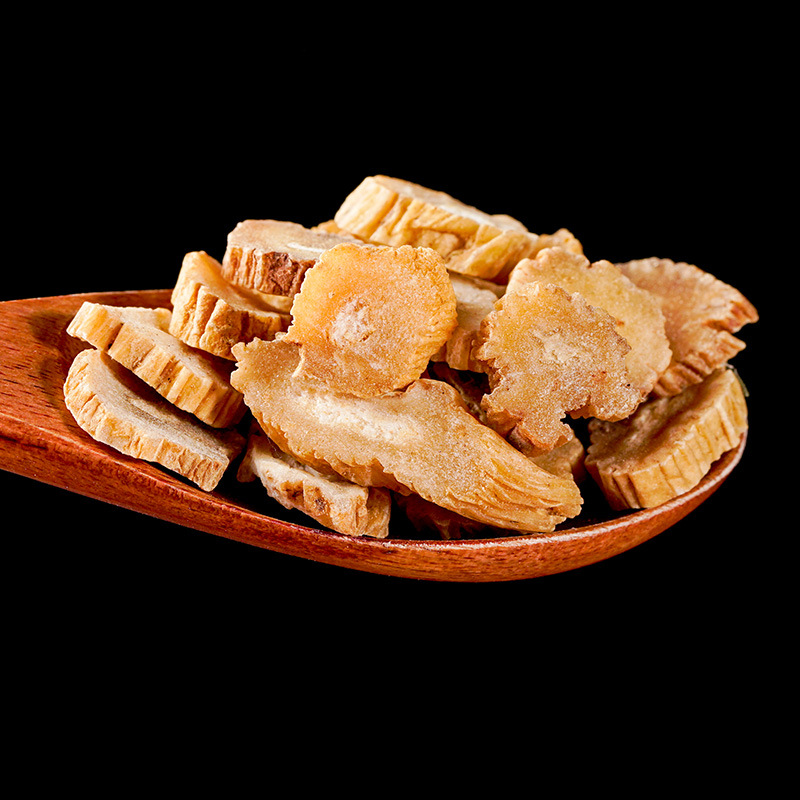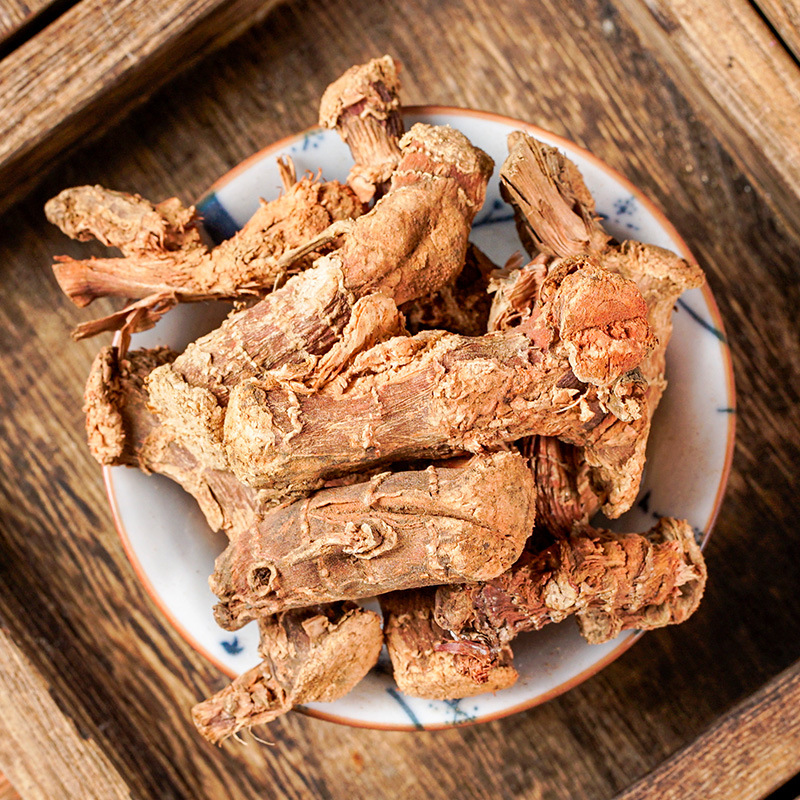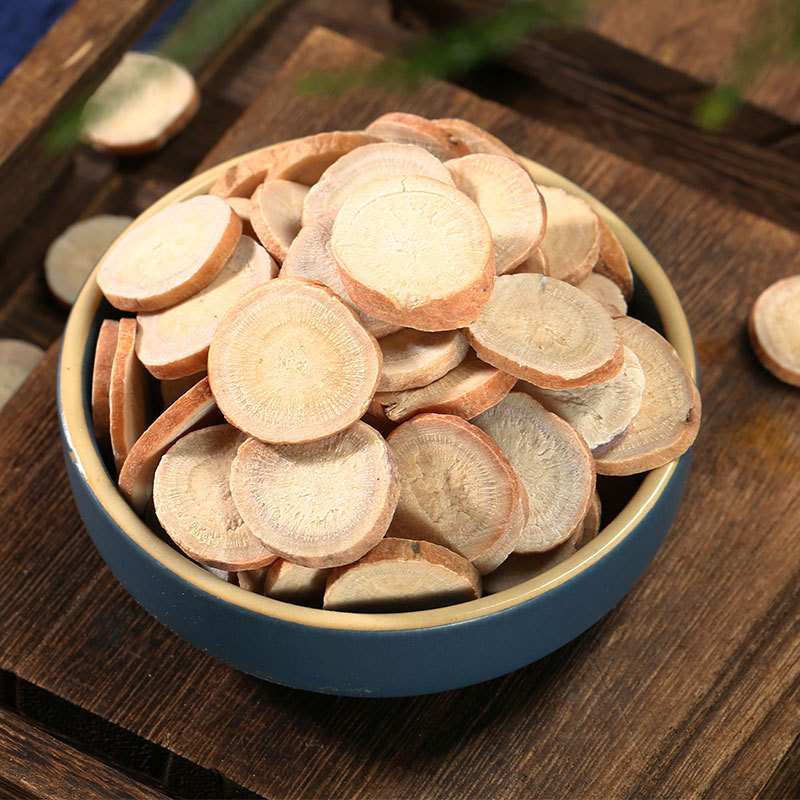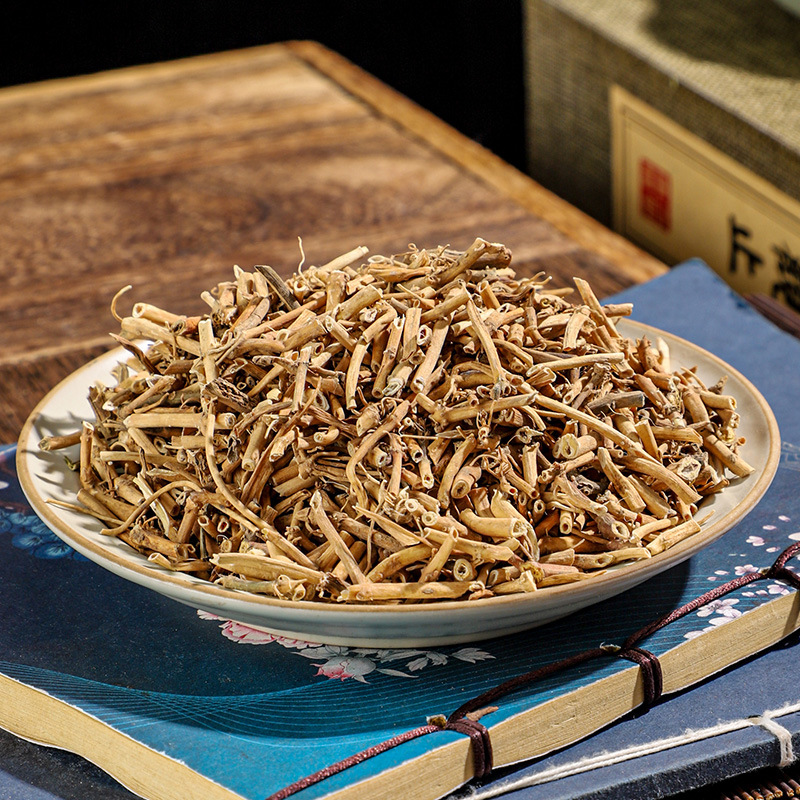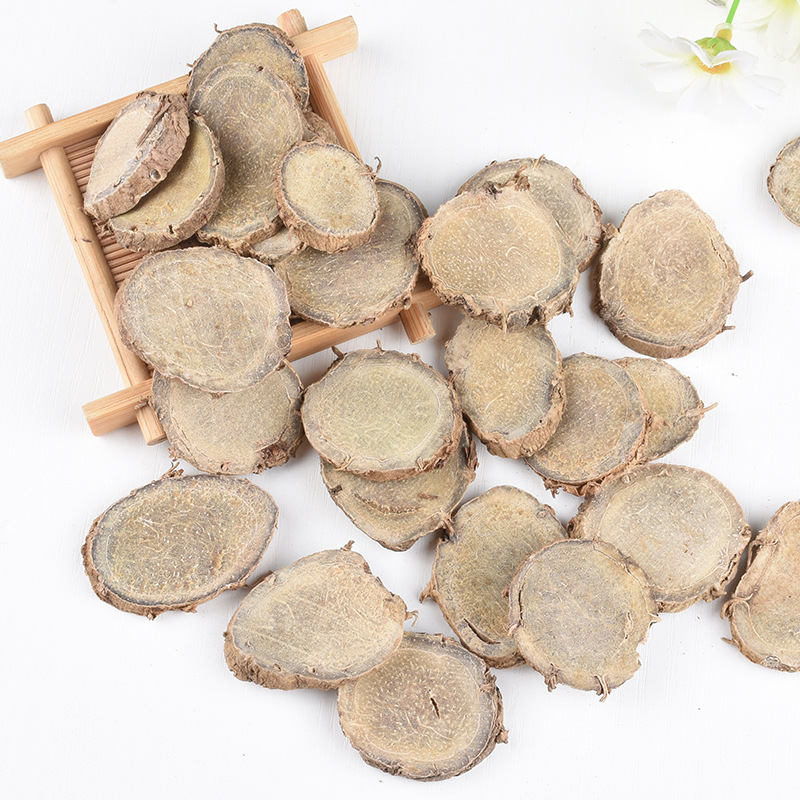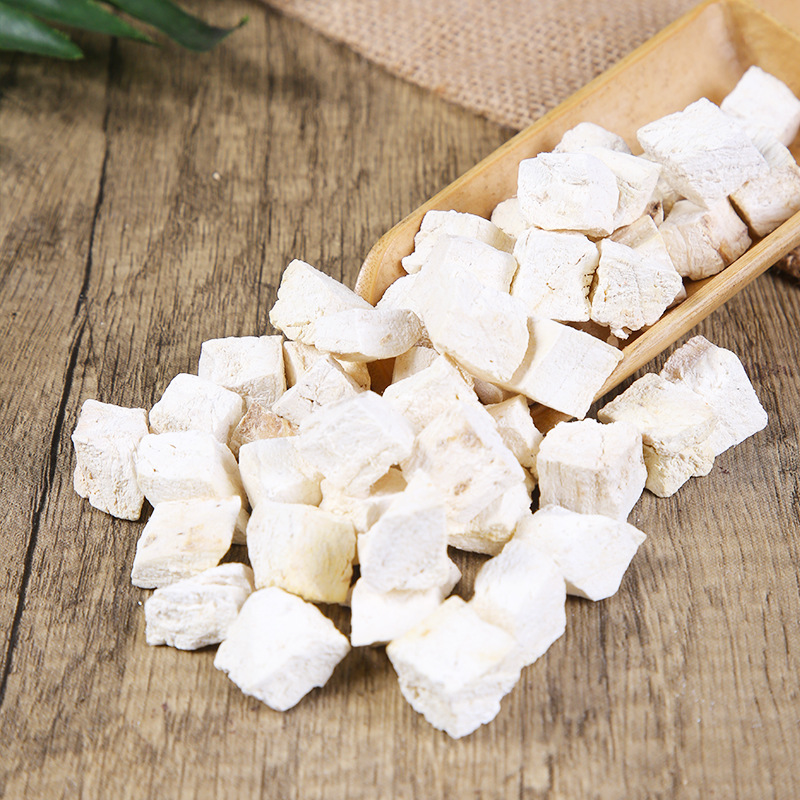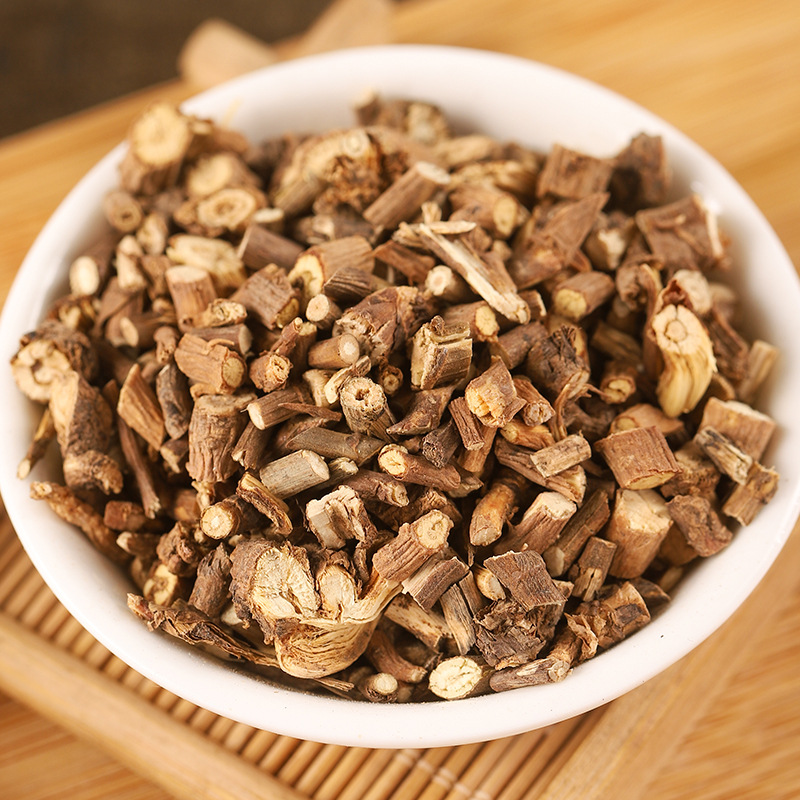
Cyperus rotundus is the rhizome of the plant Cyperus rotundus L. It is produced in most regions of the country, mainly in Guangdong, Henan, Sichuan, and other areas. It is often harvested in autumn, with the fibrous roots removed by burning, and then dried in the sun. It is used raw or stir-fried with vinegar.
I. Efficacy of Cyperus Rotundus:
Cyperus rhizome tastes pungent, slightly bitter, and slightly sweet, with a neutral nature. It belongs to the liver and triple energizer meridians. Its effects includeSoothing the liver to relieve depression, regulating qi to soothe the middle, and regulating menstruation to relieve painIts characteristics are mild in nature, applicable regardless of cold or heat; Li Shizhen called it "the commander of qi disorders, the main general of gynecology."
Commonly used forLiver Qi Stagnation, chest and hypochondriac distending pain, hernia pain, breast distending pain, spleen and stomach Qi stagnation, epigastric and abdominal stuffiness and oppression, distension and fullness pain, irregular menstruation, amenorrhea and dysmenorrheaTreatment of conditions such as
Summary of Famous Works by Renowned Authors:
Compendium of Materia Medica: "It benefits the triple energizer, resolves six types of stagnation, eliminates food accumulation, phlegm retention, abdominal distension, edema, and beriberi, alleviates pain in the heart, abdomen, limbs, head, eyes, teeth, and ears, treats women's metrorrhagia, leukorrhea, irregular menstruation, and various diseases before and after childbirth."
Ben Cao Zheng Yi: "Xiang Fu has a very pungent taste and a strong aroma, both of which are related to its qi properties, making it particularly effective in treating disorders caused by qi stagnation."
Jade Carving Medicine Explanation: "Relieve depression and alleviate pain, treat various symptoms of the liver system."
"Compendium of Materia Medica": "It has a neutral nature and fragrant qi, a pungent taste that can disperse, slightly bitter that can descend, and slightly sweet that can harmonize. It is a qi-regulating herb in the blood, circulating through the twelve meridians and eight extraordinary vessels in the qi aspect, and governs all types of qi. It benefits the triple burner, resolves the six stagnations, and relieves various pains. It treats excessive anger and worry, phlegm retention and fullness, swelling and abdominal distension, food accumulation, cholera with vomiting and diarrhea, kidney qi and beriberi, abscesses and sores, vomiting blood and bloody stools, uterine bleeding and leukorrhea, irregular menstruation, and various diseases during pregnancy and childbirth. It can eliminate the old and promote the new, which is why many texts describe it as benefiting qi."
II. Compatibility and Application of Cyperus Rotundus:
1. Used for pain in the hypochondriac region, abdominal distension and pain, and hernia pain caused by liver qi stagnation. Cyperus rotundus has a pungent taste that can disperse, a slightly bitter taste that can descend, and a slightly sweet taste that can harmonize. Its nature is neutral, neither cold nor hot, and it is particularly effective in soothing the liver, regulating qi, promoting qi flow, and relieving pain. For treating hypochondriac pain due to liver depression, it is often combined with Bupleurum, White Peony Root, Bitter Orange, and Szechuan Lovage Rhizome, namelyChaihu Shugan Powder。
If treating liver qi invading the stomach, with impeded qi movement in the middle jiao, it is often combined with herbs such as Aucklandia root and Finger citron.
If treating cold stagnation and qi stagnation, stomach pain, it is often combined with galangal, namelyLiangfu Wan。
If treating cold hernia with abdominal pain, it is often combined with fennel, lindera root, and other herbs.
If treating the six stagnations, namely phlegm stagnation, fire stagnation, qi stagnation, blood stagnation, dampness stagnation, and food stagnation, it is often combined with Atractylodes, Chuanxiong, Shenqu, and Gardenia, that isYueju Pill。
For treating migraine and headache, it is often combined with Ligusticum chuanxiong, ground into powder, and taken with tea.
2. For irregular menstruation, dysmenorrhea, and breast distension and pain. Cyperus rotundus is a commonly used herb in gynecology, especially suitable for irregular menstruation caused by liver qi stagnation. It is often combined with herbs such as Angelica sinensis, Ligusticum chuanxiong, Paeonia lactiflora, and Bupleurum chinense to soothe the liver, promote qi flow, and harmonize qi and blood.
For treating breast lumps and premenstrual distension in women, it is often combined with herbs such as Bupleurum, Angelica, Trichosanthes, and Green Orange Leaf to promote qi circulation, harmonize the nutrient system, soothe the liver, and dissipate nodules.
If treating carbuncles and abscesses caused by pent-up anger, one can take Cyperus rotundus alone ground into powder for consumption, that isDusheng Pill。
Li Shizhen said: "When combined with ginseng and atractylodes, it tonifies qi; with angelica and rehmannia, it tonifies blood; with aucklandia, it disperses stagnation and harmonizes the middle; with sandalwood, it regulates qi and awakens the spleen; with eaglewood, it regulates the ascent and descent of various qi; with ligusticum and atractylodes, it resolves all types of stagnation; with gardenia and coptis, it clears and reduces fire and heat; with poria, it harmonizes the heart and kidneys; with fennel and psoralea, it guides qi back to its source; with magnolia bark and pinellia, it breaks up congestion and reduces distension; with perilla and scallion white, it induces sweating and disperses pathogenic factors; with sparganium and zedoary, it disperses accumulations and dissolves masses; with mugwort, it treats blood and qi, and warms the uterus. It is the chief regulator of qi disorders and a miraculous medicine for women's health."
III. Usage and Dosage of Cyperus Rotundus:
Cyperus rhizome is often used in decoctions and also made into pills or powders. The usual dosage in decoctions ranges from a few grams to over ten grams.
There are many methods for processing Cyperus rotundus, and different processing methods result in varying effects.
Wang Ang said: "Remove the hairs before use. When used raw, it ascends to the chest and diaphragm, and reaches outward to the skin; when cooked, it descends to the liver and kidneys, and extends to the waist and knees. Soaked and stir-fried with child's urine, it enters the blood aspect to tonify deficiency; soaked and stir-fried with salt water, it enters the blood aspect to moisten dryness; stir-fried with green salt, it tonifies kidney qi; soaked and stir-fried with wine, it moves through the meridians; soaked and stir-fried with vinegar, it disperses accumulations; stir-fried with ginger juice, it transforms phlegm and fluid retention; stir-fried until black, it can also stop bleeding."
IV. Application Notes for Cyperus Rotundus:
Cyperus rhizome is good at soothing the liver, soQi deficiency without stagnation, yin deficiency and blood heat contraindicated。
"Ben Cao Jing Shu": "In cases where menstruation occurs early, it is due to blood heat, and the method should be to cool the blood; this medicine is contraindicated."
Ben Cao Hui Yan: "Sole use, excessive use, or prolonged use depletes qi and damages blood."
Li Zhongzi said, "This is a remedy for treating the symptoms, suitable only for those with strong qi and blood that is not severely deficient. Otherwise, it may damage qi and dry out blood, thereby worsening the illness."
Huang Yuanyu said, "The liver, with its wind-wood qi, if it fails to ascend and reach properly, will generate wind-dryness. The subduing nature of Xiangfu is most unsuitable, and its fragrant-dry qi is also directly opposite. The various formulas of Xiangfu used by mediocre practitioners are fabricated, absurd, and illogical."